Table of Contents >> Show >> Hide
- What “400 Square Feet” Really Means (and Why It’s a Sweet Spot)
- Meet the Amazon-Style 400-Square-Foot Tiny House (The One That “Packs Tons In”)
- How 400 Square Feet Can Feel Shockingly Big
- What You Actually Get When You Buy a Tiny House on Amazon
- The Not-So-Tiny Checklist Before You Click “Buy Now”
- Land and Zoning: The Plot Twist Nobody Likes
- Utilities Can Cost More Than Your Sofa, Your Bed, and Your Optimism Combined
- Foundation vs. Wheels: Decide What You’re Building Toward
- Delivery Logistics: Can a Truck Actually Get to Your Site?
- Verify the Seller, the Warranty, and the Fine Print
- Financing and Insurance: Tiny Homes Don’t Always Fit Traditional Systems
- Design Moves That Make 400 Square Feet Feel Like a “Real” House
- Who a 400-Square-Foot Amazon Tiny House Is Perfect For
- Who Should Think Twice
- The 400-Square-Foot Reality Check: Experiences That Come With Tiny Living (About )
- Conclusion: Tiny House, Big Strategy
- SEO Tags
There are two kinds of people in the world: the ones who look at a 400-square-foot tiny house and say,
“Where would I put my stuff?” and the ones who say, “Perfectfinally, my stuff won’t have a zip code.”
If you’ve been doomscrolling real estate listings, staring at rent prices, and whispering “surely there’s another way,”
Amazon’s tiny-house universe starts to look less like a meme and more like a plot twist.
And yes, we’re talking about an actual tiny house concept you can find on Amazonoften listed around the 400-square-foot mark
designed to cram a surprising amount of “real home” into a footprint smaller than many studio apartments.
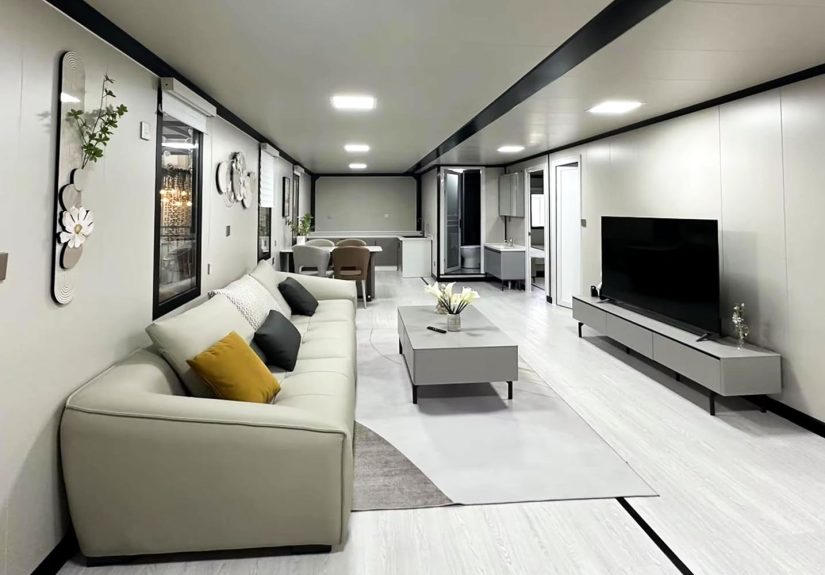
Depending on the seller and model, you’ll see layouts with a living area, a legit bathroom, a kitchen zone, and one or more bedrooms
sometimes even a loft or a rooftop deck. The tiny house movement has officially entered its “Swiss Army knife” era.
What “400 Square Feet” Really Means (and Why It’s a Sweet Spot)
Four hundred square feet isn’t just an arbitrary number. In the U.S., it shows up in building-code conversations about tiny houses,
including “Appendix Q” (and newer code editions with similar tiny-house appendices), which are aimed at homes at or under 400 square feet
and address realities like lofts, ladders, and compact stair designs. Translation: 400 square feet is often treated as a meaningful threshold
for “tiny, but still a house.” In many local jurisdictions, your exact rules still depend on zoning and enforcement, but the 400-square-foot
benchmark is a common reference point in the tiny-home world.
Practically speaking, 400 square feet can feel dramatically more livable than ultra-micro tiny homes because you can actually separate spaces:
a sleeping area that isn’t also your kitchen, a bathroom where your knees don’t high-five the sink, and enough circulation space to walk
around without doing the sideways “excuse me” crab shuffle.
Meet the Amazon-Style 400-Square-Foot Tiny House (The One That “Packs Tons In”)
One widely discussed Amazon listing in this category has been described as a 400-square-foot prefab tiny house with a “maximize every inch”
layout, a galvanized steel frame, aluminum windows, insulation for multiple climates, and even air conditioningplus a multi-year warranty
advertised alongside the build. That combination matters because it signals a shift from “cute shed energy” to “this is trying to behave like housing.”
It’s also worth saying out loud: Amazon is a marketplace. Listings change, sellers rotate, specs vary, and the same model name can be used
loosely across vendors. So the smart move is to treat any particular listing as a starting pointthen verify the details like you’re buying a car,
not a novelty toaster.
How 400 Square Feet Can Feel Shockingly Big
1) A Floor Plan That Avoids the “Everything Everywhere All at Once” Problem
The best 400-square-foot layouts create zones. Not walls everywherezones. You’ll usually see a living area that can fit a small sofa or
loveseat, a kitchen run (often galley-style), and a bathroom tucked where plumbing runs are efficient. Bedrooms vary: some models go one-bedroom,
others squeeze in two small bedrooms, and a few go bold with multiple sleeping rooms or loft solutions.
2) Storage That’s Sneaky (In a Good Way)
Tiny homes win when storage is designed, not “added later.” Think: built-in cabinetry that climbs the wall, benches with lift-up tops,
drawers under platforms, and closets sized for real clothing (not just the fantasy version of you who owns three perfect outfits).
A 400-square-foot footprint gives you enough room to hide storage in plain sight without making the space feel like a moving box.
3) Light and Window Placement Do Half the Work
If you’ve ever toured a small apartment that felt like a cave, you already know: daylight is a square-foot multiplier.
Many Amazon-listed tiny homes emphasize larger windows, double-pane glazing in some models, and glass doors that visually extend the room
toward the outdoors. The result is psychological elbow roomwhich is still elbow room.
4) A Real Bathroom (Not a “Camping Situation”)
Some models are marketed as coming with a full bathroom setupshower, toilet, vanity sinksometimes paired with a water heater and basic fixtures.
That matters if you’re planning anything beyond weekend cabin vibes. A genuine bathroom also expands your placement options because you can plan
for conventional hookups (where available) instead of relying entirely on off-grid workarounds.
5) Comfort Systems That Make It Feel Like Home
Heating and cooling aren’t glamorous, but they’re what separates “cute idea” from “I can live here.”
Some 400-square-foot prefab listings specifically mention insulation and climate-ready construction, and a few even note built-in air conditioning.
If you’re in a hot, humid, or very cold region, comfort systems aren’t optionalthey’re the difference between “tiny living” and “tiny suffering.”
What You Actually Get When You Buy a Tiny House on Amazon
Here’s where people get tripped up: “tiny house” can mean a kit, a modular shell, a foldable/expandable structure, or a near-turnkey unit with
pre-installed wiring and plumbing. On Amazon, you’ll see all of the above.
-
Cabin kits often arrive as materials that you assemble on-site. They can be gorgeous, but you typically still need foundations,
roofing decisions, utilities, and interior finishing. Think “adult LEGO,” except the pieces are heavy and mistakes cost money. -
Prefab or modular units are marketed as faster paths to occupancy. Some listings claim plumbing and electrical are already installed,
along with bathroom and kitchen fixtures, and that setup is relatively quick once delivered. -
Expandable/foldable models aim to ship compact and then expand into larger living space. These are popular because they promise
more interior room without requiring oversized transport.
For example, one widely circulated Amazon-listed tiny home has been described as nearly 400 square feet with multiple bedrooms and
pre-installed plumbing and electrical components, including fixtures like a shower, toilet, sink, and water heaterpositioned as “move-in ready”
once it’s placed and assembled. Another popular two-story concept in the same size neighborhood has been described as including wiring, plumbing,
insulation, and an upper deck designed for lounging (or dramatically sipping coffee like you’re in a tiny-house commercial).
The Not-So-Tiny Checklist Before You Click “Buy Now”
Land and Zoning: The Plot Twist Nobody Likes
The house may be “cheap,” but the land and legality might not be. Many buyers discover that placing a tiny home is the real project.
Some areas treat tiny homes on wheels like RVs, while tiny homes on foundations may be treated more like ADUs or small residences.
Your local zoning office is the final bosstalk to them early.
Utilities Can Cost More Than Your Sofa, Your Bed, and Your Optimism Combined
Even if a unit arrives with wiring and plumbing inside the structure, you still need to connect it to power, water, and sewer/septic.
Depending on your site, that can mean trenching, permits, inspections, and fees. Financial experts routinely warn that utility installation,
transport, and setup can add serious costssometimes thousands to tens of thousandsso your “$10K house” doesn’t stay $10K for long.
Foundation vs. Wheels: Decide What You’re Building Toward
If your goal is a backyard guesthouse or a legit ADU, a permanent foundation may make your life easier with permits, insurance, and utilities.
If your goal is flexibility and relocation, wheels can be appealingbut may trigger RV rules and restrictions depending on your location.
Pick your lifestyle first, then pick the build category.
Delivery Logistics: Can a Truck Actually Get to Your Site?
A delivery estimate isn’t the same thing as delivery reality. Ask about: shipping method, unloading requirements, whether you need a crane or forklift,
access road width, slope, turning radius, and who’s responsible if the driver shows up and can’t place the unit. This is not a “leave it on the porch”
situationunless your porch is also a loading dock.
Verify the Seller, the Warranty, and the Fine Print
On reputable listings, you may see warranties advertised, materials spelled out (steel framing, insulation, window types), and clear scope-of-work notes.
But you still want to confirm what’s included: appliances, interior finishes, electrical panel, plumbing hookups, HVAC, and documentation for compliance.
If you can’t get straight answers, that’s your answer.
Financing and Insurance: Tiny Homes Don’t Always Fit Traditional Systems
Tiny homes can fall into awkward categories for lenders. Some may not qualify for traditional mortgages; units on wheels may align more with RV loans.
Insurance can also vary depending on classification, placement, and build quality. If you’re planning to finance, talk to lenders before you buy
not after your cart checkout confetti pops.
Design Moves That Make 400 Square Feet Feel Like a “Real” House
Use Furniture That Earns Its Rent
If a piece only does one job, it better do that job spectacularly. Tiny-house heroes include:
storage ottomans, lift-top coffee tables, nesting side tables, a dining banquette with drawers, and a sofa that can host a guest without turning your
living room into a misery mat.
Go Vertical (But Keep It Calm)
Tall cabinets, shelves above doors, and wall-mounted organizers help you store more without eating floor space. The key is to avoid visual clutter:
closed storage below, open storage above, and a consistent system so your house doesn’t look like a thrift store got hit by a tornado.
Make the Kitchen Small but Legit
A tiny kitchen can still cook. Prioritize counter space, a real sink, and storage you can actually reach. If the layout allows,
include a pantry cabinet. In 400 square feet, “pantry cabinet” is basically a love language.
Doors Matter More Than You Think
Pocket doors, sliding barn-style doors (the quiet kind, please), or well-placed swing doors can prevent awkward dead zones.
In tiny spaces, door math is real math.
Who a 400-Square-Foot Amazon Tiny House Is Perfect For
- Singles and couples who want simplified living without feeling like they moved into a closet.
- Remote workers who want a backyard office that doesn’t share a wall with the laundry pile.
- Families needing space for guests, aging parents, or adult kidsan ADU-style solution, where legal.
- Short-term rental hosts looking for a photogenic small footprint (again: permits first).
- Minimalists in training who want their home to gently bully them into owning fewer novelty mugs.
Who Should Think Twice
- Anyone who hates decluttering and believes “storage unit” is a retirement plan.
- Large families who truly need separate bedrooms and breathing room.
- People who want appreciation like traditional real estatetiny homes can behave differently as assets.
- Buyers who haven’t checked zoning (because surprise: your dream can be illegal by Tuesday).
The 400-Square-Foot Reality Check: Experiences That Come With Tiny Living (About )
Let’s talk about what it’s actually like to live in 400 square feetnot the Pinterest board version, the real version.
Many tiny-home owners describe the first week as a weird mix of freedom and muscle memory. You keep walking to places that don’t exist.
You reach for a junk drawer and realize you don’t have one. Then you feel proud… and slightly offended.
Mornings can be fantastic in a small space. You wake up, take five steps, and you’re in the kitchen. The coffee routine becomes a little ritual
instead of a cross-country expedition. If your tiny house has big windows, sunlight can make the place feel airy and calm.
People often say the space “forces” tidy habits, but it’s more accurate to say the space makes messes visible. In a big house, clutter can hide in
a spare room. In a tiny house, clutter sits on the counter and stares at you. Judgingly.
Cleaning is the plot twist everybody loves. A quick sweep, a wipe-down, a small bathroom scrubdone.
You can realistically reset the whole home in 20 minutes. That’s not just convenient; it changes your weekends.
When you’re not maintaining a larger home, you can actually do the things homes are supposed to support: cook, read, go outside, see friends, take trips,
or just sit there and exist without a to-do list breathing down your neck.
The hard part is storage discipline. Tiny homes reward people who treat every item like it’s auditioning for a role.
If it doesn’t work hard, it doesn’t get cast. Owners often develop “one in, one out” rules, especially for clothes and kitchen gadgets.
And yesthis includes the waffle maker you use twice a year. If you truly love it, you’ll make space. If you don’t, it can go live its best life
at a thrift store.
Hosting is different, too. A couple friends for dinner? Great, especially if you’ve got a porch, deck, or outdoor seating.
Overnight guests? Possible, but you’ll need a planlike a sleeper sofa, a loft setup, or a guesthouse arrangement.
Privacy becomes a design feature: curtains, doors, sound insulation, and even white-noise machines can matter more than you’d expect.
If you’re sharing the tiny house with a partner, you learn quickly that alone time is not a luxuryit’s an essential utility,
like water and electricity.
And then there’s the “placement” experience. People often underestimate how emotional the land and setup part can be.
When you’re waiting for permits, scheduling hookups, and figuring out delivery logistics, the tiny house feels less like an object and more like a project.
But once it’s placed, powered, and functional, owners often describe a satisfying shift: the home finally feels settledlike a small, intentional space
built around life instead of stuff. In 400 square feet, the house doesn’t run the show. You do.
Conclusion: Tiny House, Big Strategy
A 400-square-foot Amazon tiny house can be an impressively “complete” little homeespecially when the layout is smart and the build is designed for
real-world living (insulation, windows, bathroom, kitchen, and comfort systems). The magic isn’t that it’s small; the magic is that it’s efficient.
When it’s done well, 400 square feet doesn’t feel like deprivationit feels like clarity.
The winning approach is simple: treat the purchase like a housing project, not an impulse buy. Verify the seller. Confirm what’s included.
Budget for delivery, setup, and utilities. Check zoning and permits early. Do that, and this tiny house really can pack “tons” into a compact footprint
without packing your life full of expensive surprises.