Table of Contents >> Show >> Hide
- Meet Zoe: The Chatty Bengal Who Turned “Meow” Into a Mood
- How a Cat “Talks” Without Talking: The Secret Is in the Trill
- The Real-Life Power Behind the Cuteness: Why Cat Companionship Works
- Wholesome Advice + Viral Cat Videos: The Perfect Internet Cocktail
- From Cute to Community: How an Advice-Giving Cat Builds a Fanbase
- If Your Cat Is Going to Be a Life Coach, Do It Responsibly
- How to Create Wholesome “Advice Cat” Content Without Being Cringe
- What Zoe Really Teaches Us (Besides the Value of Naps)
- Experiences: of Relatable Life Lessons From Living With a Wholesome “Advice Cat”
- Conclusion
Some cats bring you a toy mouse. Others bring you a dead leaf and act like they just paid your rent. And then there’s this kind of cat: the one who brings comfort, comedy, and the emotional equivalent of a warm blanket straight to your timelinewhile looking like she knows something you don’t.
Meet the modern internet miracle: a chatty Bengal cat whose “conversations” with her human don’t just fill the quiet in an empty homethey also hand out bite-size, surprisingly wholesome advice to strangers who didn’t even realize they needed it. Fans don’t just like the posts. They melt. Because when a tiny furry roommate appears to “say” the exact encouragement you’ve been dodging all week, it hits different.
This is the story of a cat who keeps her owner company, turns cat noises into comfort content, and somehow becomes a pint-sized life coach for the masseswithout charging a subscription fee (unless you count treats).
Meet Zoe: The Chatty Bengal Who Turned “Meow” Into a Mood
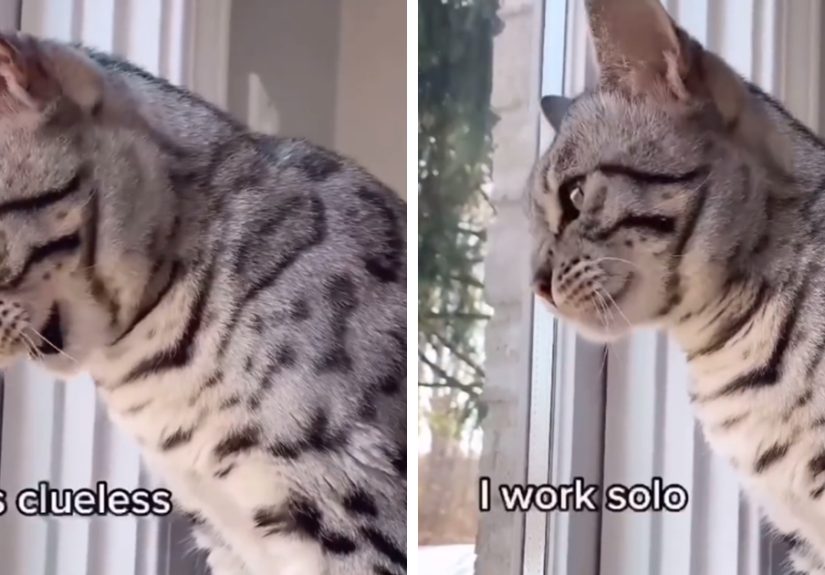
At the center of this wholesome chaos is Zoe, a Bengal cat who became famous for being unusually “conversational.” Her owner, Emily, adopted Zoe during the pandemic era when loneliness was doing its best work on everyone’s mental health. Zoe didn’t just exist in the same spaceshe filled it. With sound. So much sound.
But here’s the twist: the content isn’t just “look at my loud cat.” The posts frame Zoe’s chirps and trills like actual dialoguetiny call-and-response moments where Zoe appears to answer questions, react to the day, and (most importantly) deliver uplifting one-liners that feel like the kind of encouragement you wish your brain came with preinstalled.
Zoe’s also got a partner-in-crime: Zeke, her Bengal “little brother,” who pops up in the household dynamic like the supporting character who didn’t come for the spotlight but keeps stealing scenes anyway. Together, they’re the kind of duo that makes viewers think, “Maybe I don’t need a self-help book. Maybe I need… a cat who’s aggressively positive.”
Why People Can’t Get Enough of a Wholesome Advice Cat
Because it’s not just cute. It’s comforting. A lot of viral cat videos are pure entertainment. Zoe’s vibe adds something extra: emotional support wrapped in humor. It’s like if a fortune cookie wore leopard-print pajamas and demanded belly rubs.
And unlike some “inspirational” internet content that feels like it was written by a motivational poster in an airport hallway, advice from a cat lands softly. It’s low-pressure. It’s safe. It’s not yelling “GRINDSET” at you. It’s more like: “Hey. You’re still here. That counts.”
How a Cat “Talks” Without Talking: The Secret Is in the Trill
So… is Zoe actually speaking English? Not unless she’s been hiding a Duolingo streak. What’s really happening is a blend of feline vocal behavior and human storytellingaka the internet’s favorite sport: giving meaning to adorable noises.
Trills, Chirps, and the Friendly Cat “Hello”
Cats make a surprisingly wide range of sounds. Beyond the classic meow, many cats use soft trills (sometimes described as a “murmur”) during friendly approaches and social moments. In plain terms: it often shows up when a cat is feeling safe, engaged, and connected.
That matters because Zoe’s signature sound is exactly the kind of vocalization people associate with friendliness and interaction. When Emily “asks” something and Zoe trills back, it feels like a tiny conversationeven if, technically, it’s more like: “Hi human. Yes human. Also, bird.”
Why We Hear “Advice” in Cat Noises
Humans are meaning-making machines. We look at clouds and see dragons. We hear a cat trill and think, “She understands my taxes.” Add captions and timing, and suddenly Zoe isn’t just vocalizingshe’s “responding.”
The result is a surprisingly powerful storytelling format: short, funny, comforting micro-moments that are easy to watch, easy to share, and weirdly effective at improving someone’s mood in under 15 seconds.
The Real-Life Power Behind the Cuteness: Why Cat Companionship Works
Here’s where the wholesome advice cat story gets deeper than “aww.” Zoe’s fame taps into something very real: pets help people cope. Not in a magical, cure-all waybut in a steady, day-to-day way that’s easy to underestimate until you live it.
Loneliness Is Loud. Cats Can Be the Quiet Counterweight.
Loneliness and social isolation have been recognized as serious public health issues, and pets are often discussed as one way people manage those feelings. Research on pet ownership and loneliness is nuancedresults vary by population, circumstance, and life stagebut many studies suggest pets can support social and emotional wellbeing, especially during periods when human contact is limited.
Even outside research papers, the lived reality is familiar: a cat doesn’t solve your problems, but she changes the emotional temperature of your home. There’s a difference between silence and shared silence. A cat turns “alone” into “alone, but supervised.”
Stress Relief, Routine, and the Tiny Rituals That Keep You Standing
Cat companionship often creates structure: feeding times, play sessions, litter box upkeep, the daily negotiation over whose chair is whose. That routine can be grounding. And simple interactionspetting, play, even just watching a cat do something ridiculouscan help lower stress and improve mood for many people.
Importantly, Zoe’s story started in a season of life when routine and comfort were in short supply for a lot of folks. That context matters. A chatty cat wasn’t just cute; she was a steady presence that made a home feel lived-in again.
Wholesome Advice + Viral Cat Videos: The Perfect Internet Cocktail
Let’s be honest: the internet is rarely a calm place. It’s a bustling mall food court of opinions, algorithms, and someone always filming a “life-changing” smoothie. So when people stumble into a video where a cat appears to offer gentle encouragement, it feels like finding a quiet bench near a fountain.
Why “Advice Cat” Content Feels Safer Than Human Advice
Human advice can be complicated. It can come with ego, judgment, or the subtle vibe of “I’m right and you’re wrong.” Cat advice is… not that. A cat has no résumé. No agenda. No reason to pretend she isn’t motivated by snacks.
That’s why wholesome advice cat content often works best when it’s simple:
- Encouragement that doesn’t demand anything from the viewer
- Humor that softens the message (because laughter is a shortcut to breathing again)
- Relatability that feels human, without the pressure of human conflict
It’s emotional support content that doesn’t lecture. It just… sits with you. Like a cat on your laptop.
From Cute to Community: How an Advice-Giving Cat Builds a Fanbase
Zoe’s fandom isn’t just about watching a cat “talk.” It’s about a shared emotional experience in the comments: people showing up, admitting they’re having a rough day, and being met with jokes, kindness, and the collective agreement that this tiny Bengal is basically everyone’s unofficial coworker.
The Comment Section as a Mini Support Group
In the best cases, pet communities become gentle corners of the internet where strangers are nicer than expected. People swap stories about their own cats, celebrate small wins, and feel seensometimes for the first time all day.
That’s the hidden genius of wholesome advice cat content: it doesn’t just entertain. It creates a place where kindness is the default setting.
The “Petfluencer” Reality (Yes, It’s a Real Thing)
Pet influencer culture has grown into a legitimate marketing world. Some famous pet accounts have brand partnerships, product lines, and management teams. The best creators treat it like a craft: storytelling, consistency, and community-buildingwhile keeping the animal’s wellbeing at the center.
And if a creator does partner with brands, ethical transparency matters. Sponsored content should be clearly disclosed so audiences know what’s an ad and what’s just a cat being a cat.
If Your Cat Is Going to Be a Life Coach, Do It Responsibly
A wholesome advice cat should never come at the cost of the cat’s comfort. Viral content is not worth stressing out an animal. The healthiest pet accounts usually share a few things in common: the cat looks relaxed, the interactions look natural, and nothing feels forced.
Watch for Stress Signals (Because Cats Don’t Send Emails About Burnout)
Cats can show stress through behaviors like hiding, withdrawal, not eating, increased aggression, dilated pupils, or twitchy body language. If filming seems to make a cat uneasy, that’s your cue to stop and resetnot to keep rolling for “one more take.”
Consent Isn’t Just a Human Thing
Your cat can’t sign a release form, but she can communicate comfort or discomfort through body language. Respect it. If she walks away, that’s a “no.” If she stays and leans in, that’s a “keep going.”
And pleaseno rough handling for the sake of content. Gentle, cat-friendly handling practices are widely recommended in veterinary guidance because reducing fear helps both cats and people.
How to Create Wholesome “Advice Cat” Content Without Being Cringe
If Zoe’s story makes you want to capture your own cat’s personality and sprinkle in some positivity, you canwithout turning your pet into a stressed-out actor or your captions into a motivational megaphone.
1) Let the Cat Lead the Scene
Start with what your cat already does: chirps at birds, “talks” at dinner time, patrols the hallway like a tiny security guard. Build the story around that natural behavior.
2) Keep the Advice Small and Specific
The best wholesome advice is bite-sized, like:
- “Drink some water. Then do one small thing.”
- “You don’t have to solve your whole life today.”
- “Rest is productive. Ask any cat.”
3) Don’t Give Medical or Mental Health Instructions
Encouragement is great. Diagnosing strangers is not. Keep it in the lane of kindness, coping, and everyday support. When in doubt, aim for messages that help people breathe, not messages that tell people what to do with their lives.
4) If You Ever Do Brand Deals, Be Clear About It
If your cat becomes a true cat influencer (it happens), and you partner with brands, be transparent with your audience. Clear disclosures protect viewers and keep trust intact. Plus, it prevents your comment section from turning into a courtroom drama starring someone’s aunt who “just has questions.”
What Zoe Really Teaches Us (Besides the Value of Naps)
Zoe’s “wholesome advice” works because it’s the opposite of complicated. It reminds people of basic truths they forget when life gets loud:
- Presence matters. A small, steady companion can change an entire day.
- Kindness scales. One gentle message can ripple through thousands of people.
- Joy isn’t frivolous. Sometimes joy is survival with better lighting.
- Rest is allowed. Cats have been trying to tell us this forever.
In a world that often rewards urgency, an advice-giving cat is a soft rebellion. She’s a reminder to slow down, be kinder to yourself, and accept that sometimes the best plan is “snack, stretch, nap, repeat.”
Experiences: of Relatable Life Lessons From Living With a Wholesome “Advice Cat”
If you’ve ever lived with a cat who shadows you from room to room like a tiny, judgmental therapist, you already know the first lesson: companionship isn’t always loud, but it is always felt. A cat doesn’t ask you to explain your emotions in complete sentences. She just shows upon the couch, on the bed, on the exact piece of paper you needed five minutes agoand quietly insists you’re not going through the day alone.
One surprisingly common experience cat owners share is how a cat can “reset” a spiraling moment. You sit down, your brain starts speed-running every embarrassing thing you’ve ever said since middle school, and then a cat walks up and bumps her head into your hand. That tiny gesture forces a pause. You notice warmth, texture, weight, breathing. It’s not a cure, but it’s a grounding pointan interruption that says, “Come back to the room.”
Then there’s the routine. A wholesome advice cat doesn’t let you drift too far into chaos because she has standards. Breakfast is not “whenever.” Breakfast is now, and she will file a complaint with your ankles if you delay. Over time, those small ritualsfeeding, refreshing water, scooping the litter, tossing a toy down the hallwaycreate structure that can be oddly comforting when the rest of life feels unpredictable. You might not control the world, but you can control whether your cat’s favorite mouse gets thrown exactly three times before she dramatically loses interest.
Living with a “chatty” cat adds another layer: it feels like having a roommate who narrates your day in squeaks and trills. You start responding out loud. Not because you’ve lost it (although your cat would like you to think so), but because it’s soothing to name what’s happening: “Yeah, that email was stressful.” “No, I don’t know why the toaster is doing that.” “Yes, you’re adorable; no, you can’t have my sandwich.” And in that running commentary, you accidentally practice something that’s basically healthy: acknowledging your feelings without turning them into a full-scale crisis.
Wholesome advice cat content goes viral because it mirrors these everyday experiences. People see Zoe “answer” a question and think, “That’s what my cat does.” The difference is that Zoe’s owner adds captions that turn those moments into encouragementlittle reminders that it’s okay to be tired, okay to start small, okay to need comfort. And honestly, if a cat can normalize rest and gentleness while looking like a tiny leopard, maybe we can take the hint. If your cat’s biggest goal today is to find the sunbeam and commit to it fully, consider trying that approachmetaphorically or literallyfor at least ten minutes. Your inbox will survive. Your nervous system will thank you. And your cat will be thrilled to supervise your progress from the warmest spot in the house.
Conclusion
Zoe’s story is funny because it’s a cat “giving advice.” But it’s meaningful because it reflects what pets quietly do every day: they keep people company, create routine, and offer comfort in a way that doesn’t demand perfection. In the scrolling chaos of modern life, a wholesome advice cat feels like a small, steady kindnessone trill at a time.