Table of Contents >> Show >> Hide
- Why a dog maternity shoot works so well (and why the internet can’t handle it)
- The pit bull factor: why these photos matter beyond the frame
- Before the camera: what pregnant dogs actually need
- How to stage a safe maternity photoshoot for a pregnant dog
- The viral blueprint: when a rescue mama becomes the moment
- DIY at-home: a simple checklist for your own “glowing mama” shoot
- Beyond the photos: celebrating responsibly
- Experiences: what people commonly say after doing a pit bull maternity photoshoot (and what they learn)
- 1) “We planned for elegance… and got comedy. It was perfect.”
- 2) “Her comfort mattered more than our shot list.”
- 3) “The shoot helped us bondfast.”
- 4) “People treated her differently once they saw the pictures.”
- 5) “It made us think harder about prevention and aftercare.”
- 6) “We’d do it againbut we’d keep it simpler.”
- Conclusion
There are two universal truths in life: (1) people will do anything for a cute photo, and (2) a pregnant pit bull in a flower crown can
instantly reset your faith in humanity like a hard refresh button for your mood.
A “dog maternity photoshoot” sounds like something the internet invented during a collective sugar rushand yet, it’s also weirdly wholesome.
Done right, it’s not about turning a dog into a tiny influencer with paws. It’s about celebrating a mama-to-be, showing her as safe and loved,
and sometimes even helping her (and her future puppies) find the kind of home that uses the word “forever” unironically.
And if the star of the shoot is a pit bull-type dog? That glow hits different. Because the photos aren’t just pretty. They’re powerful.
They push back against tired stereotypes with the simplest counterargument imaginable: “Look at her face. Be serious.”
Why a dog maternity shoot works so well (and why the internet can’t handle it)
Human maternity photos are usually a mix of tenderness, anticipation, and at least one awkward pose where someone stares at a belly like it’s a crystal ball.
A dog maternity shoot keeps the tenderness and anticipationand drops the awkwardness because dogs do not overthink their angles.
They simply exist. Photographers call that “natural,” and dogs call it “I would like a snack now.”
The “glow” isn’t magicit’s comfort + good light
When people say a dog looks “glowing” in photos, they’re usually reacting to a few things at once: warm lighting, calm body language,
and an environment where the dog feels safe enough to be herself. When a pregnant dog is relaxed, her expression softens, her posture looks easier,
and the whole image reads as peaceful instead of posed.
Translation: the glow is less “filter” and more “this mama is being treated like she matters.” Which, frankly, is the best aesthetic there is.
The pit bull factor: why these photos matter beyond the frame
“Pit bull” is often used as an umbrella term for several bully-type dogs and mixes. And that’s part of the problem: broad labels get treated like personality tests.
In reality, dogs are individuals. Behavior is shaped by socialization, training, environment, health, and managementnot just what a dog looks like.
A maternity shoot featuring a pit bull-type dog does something quietly radical: it shows softness and trust. It reframes the conversation from
“scary dog” to “beloved family member,” without needing a single argument in the caption.
It also highlights something rescues and shelters know too well: pregnant and nursing dogs often arrive needing extra supportmedical care, foster placement,
and time to recover. When a story goes viral, it can bring attention (and resources) to that reality, and to the bigger issues of overbreeding and accidental litters.
Before the camera: what pregnant dogs actually need
If you’re going to celebrate a pregnant dog, you don’t start with props. You start with care. That means veterinary guidance, a calm routine,
and a plan for birth (whelping) and postpartum support.
Quick pregnancy timeline: what “expecting” looks like in dogs
Dog pregnancy is relatively shortabout two monthsso things move fast. Early on, you may see subtle changes: appetite shifts, mild lethargy,
and a growing belly as weeks pass. As the due date approaches, many dogs become restless and “nesty,” searching for quiet, safe places.
Most importantly: the last stretch is not the time for chaotic new routines. Keep life predictable. Keep stress low. Keep your vet’s number handy.
Whelping basics: what “normal” can look like (and when it’s not)
Many dogs deliver without complications, but you should still know the red flags. Prolonged, intense straining with no puppy delivered is one of the big ones.
So is obvious distress, extreme weakness, or anything that looks “not right” to you. When in doubt, call your veterinarian.
Trust your gutbecause your dog can’t exactly text you updates.
Nutrition and supplements: more isn’t always better
People love to “help” with extra supplements, but pregnancy is not the time for DIY nutrition experiments. Many veterinary sources emphasize
maintaining a balanced diet and avoiding random add-ons unless your vet specifically recommends them. In particular, adding supplements like calcium
without guidance can be a bad idea.
The big picture: healthy mama, steady body condition, and a plan for after birth.
How to stage a safe maternity photoshoot for a pregnant dog
The goal is a session that feels like enrichment, not an endurance sport. A good shoot is short, gentle, and built around what the dog already likes:
treats, praise, familiar people, and zero weird surprises.
1) Pick a setting that’s calm and familiar
A quiet backyard, a cozy living room with soft window light, or a peaceful park corner (not the busiest spot) works well. If your dog is anxious in new places,
don’t “push through” for a prettier background. Your best location is the one where her body language says, “I’m okay.”
2) Keep props simple, soft, and safe
Think: a blanket, a few flowers placed out of reach, a simple ribbon collar, a tiny chalkboard sign held by a human (not hung on the dog),
or a basket placed nearby (never something she’s expected to climb into).
Avoid anything that can tip, roll, tangle, or poke. Pregnant dogs can be clumsier as their center of gravity changes, and you don’t want a slip for the sake of a shot.
3) Use “comfort poses,” not “Pinterest poses”
Your best poses are the easiest ones:
- Side profile while she’s standing naturally (no stretching or twisting).
- Sitting on a blanket with her chest tall, looking toward a treat.
- Resting position (lying down) with gentle head turns for expression.
- Close-ups of her face, paws, and the sweet “mom energy” in her eyes.
If she doesn’t want to sit, don’t insist. If she wants to wander, let her wander. Some of the cutest photos happen between “poses,” when she’s just being her.
4) Watch stress signals like a hawk (a friendly hawk)
Dogs don’t say “I’m overwhelmed.” They show it. Common signs include lip licking, yawning when not tired, turning away repeatedly,
whale eye (showing lots of white), tucked tail, pinned ears, shaking off, pacing, or trying to hide.
If you see these signals, you don’t “work through it.” You take a break, simplify, or end the session.
5) Keep it short, reward-heavy, and end on a win
A great shoot can be 10–20 minutes with breaks, especially for a heavily pregnant dog. Use tiny treats and calm praise.
End with something she enjoys: a nap, a chew, or a slow sniff-walk (a dog’s version of a spa day).
The viral blueprint: when a rescue mama becomes the moment
The internet loves a storyline, and one of the most shareable versions goes like this:
a pregnant pit bull-type dog is found in a tough situation, a rescue steps in, and suddenly she’s not just “a problem” to solveshe’s a personality.
Then someone gives her a maternity shoot, and the photos say what a thousand comments can’t: “She deserves love.”
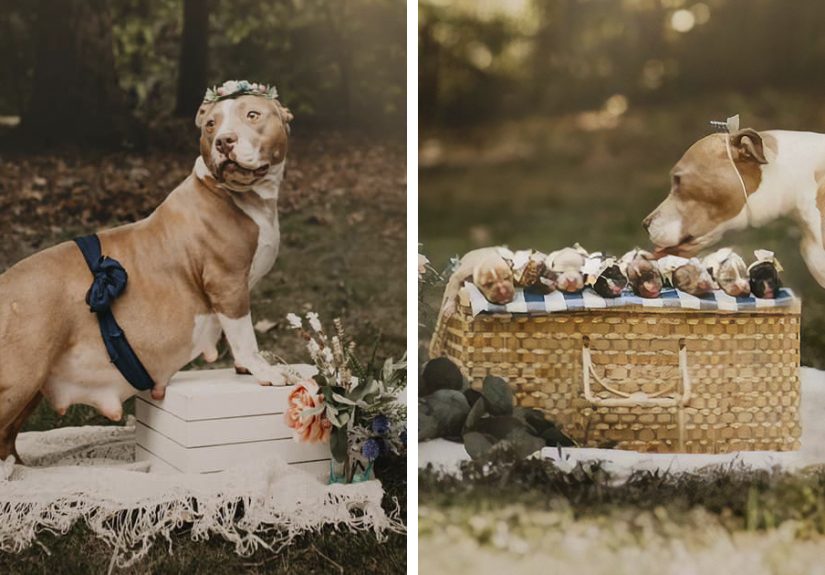
In one widely shared example, a rescue pit bull named Mama Pickles became a symbol of exactly thatsilliness, sweetness, and a big pregnant belly that did not
stop her from trying to be in everyone’s personal space (affectionately). The shoot wasn’t just for laughs. It helped people see her as a whole being,
not a label. And that shift in perception is often what makes adoption and support possible.
These stories also tend to carry a quieter message: many pregnant rescue dogs have been bred repeatedly, and pregnancy can be physically demanding.
That’s why rescues often emphasize postpartum care, veterinary attention, and ensuring mom and pups are spayed/neutered when appropriate.
The photos are the hookbut responsible follow-through is the heart.
DIY at-home: a simple checklist for your own “glowing mama” shoot
Prep (the day before)
- Pick a calm time of day (often morning or golden hour) when your dog is naturally relaxed.
- Choose one location and keep it familiar.
- Gather 2–3 props max, plus a clean blanket.
- Charge your phone/camera and clear storage (nothing kills romance like “Storage Full”).
- Recruit a helper: one person handles treats and attention, one person shoots.
During the shoot
- Start with “easy wins” (standing profile, sitting calmly, close-up face shots).
- Keep treats tiny and frequent.
- Get down to her eye level for more intimate, flattering photos.
- Stop early if she shows stress or fatigue.
After the shoot
- Offer water and a comfy rest spot.
- Make a note of any behavior changes and keep your routine steady.
- Continue preparing for whelping: a quiet space, a clean whelping area, and a vet contact plan.
Beyond the photos: celebrating responsibly
A maternity shoot is a moment. Pregnancy and birth are a season. If you’re caring for a pregnant dogespecially a rescueyour real “album”
is built from the unglamorous stuff: vet visits, clean bedding, careful monitoring, calm reassurance, and the kind of patience that deserves its own award.
The best stories end with health and stability: a safe birth, thriving puppies, a mom who gets to recover, and a future that doesn’t include another accidental litter.
Cute photos can open the door, but good care is what walks everyone through it.
Experiences: what people commonly say after doing a pit bull maternity photoshoot (and what they learn)
Because these shoots have become a real trend, a lot of pet parents, foster homes, rescue volunteers, and photographers share similar “we did itand here’s what surprised us”
takeaways. While every dog is different, the patterns are pretty consistent (and honestly, kind of heartwarming).
1) “We planned for elegance… and got comedy. It was perfect.”
Many people start with a Pinterest-level vision: tasteful florals, serene poses, cinematic lighting. Then the dog shows up and reminds everyone she is, in fact, a dog.
She may step on the blanket, knock over a decorative basket, or look regal for exactly 0.7 seconds before trying to lick the camera lens.
The surprise is that these “imperfect” moments often become the favorite imagesbecause they capture personality. The glow isn’t only visual; it’s emotional.
The best photo is frequently the one where the pit bull looks delighted, slightly confused, and utterly loved.
2) “Her comfort mattered more than our shot list.”
People commonly report that pregnancy changes how they approach photography. With a non-pregnant dog, you might do a longer session or try a few more setups.
With a pregnant dog, you quickly learn to watch breathing, energy, and body language. Many first-time foster families say the shoot taught them to “listen”
without words: if the dog sits down and won’t get up, you’re done. If she turns away from props, simplify. If she leans into you for reassurance,
your job becomes comfort, not content creation.
3) “The shoot helped us bondfast.”
In rescue contexts, maternity shoots often happen soon after intake or placement, when trust is still forming. Volunteers frequently describe how treats,
gentle praise, and short bursts of attention can create a positive feedback loop: the dog learns that humans bring good things, the humans learn the dog’s cues,
and the camera becomes less of a strange object and more of a background detail.
A lot of foster homes say they walked away feeling more confidentnot because they got great photos, but because they learned what makes the dog feel safe.
4) “People treated her differently once they saw the pictures.”
This is a big one for pit bull-type dogs. Shelters and fosters often say that photos can change the kind of messages they receive.
A dog who might be dismissed in a standard kennel photo can look gentle, funny, and deeply relatable in a warm, well-shot portrait.
Viewers see “family dog energy” instead of a scary stereotype. In social media comments, people tend to talk about her face, her sweetness,
her “mom vibes”and that language shift matters. It can increase adoption interest, donations, foster inquiries, and general support for the rescue’s work.
5) “It made us think harder about prevention and aftercare.”
A surprising number of people say the photoshoot was the easy part. The hard part was the responsibility that came after:
monitoring for signs of labor, keeping the space clean, supporting nursing, ensuring puppies are warm and thriving, and managing the mental load
of “tiny lives depend on us.” That often leads to a deeper appreciation for spay/neuter programs and responsible breeding practices.
For many fosters, the maternity shoot becomes a teaching moment they share with friends: pregnancy is not a cute accessoryit’s real work for a dog’s body.
The most meaningful “happy ending” is a mom who recovers fully and doesn’t have to go through repeated litters again.
6) “We’d do it againbut we’d keep it simpler.”
If you ask people what they’d change, the most common answer is: fewer props, shorter time, more patience.
A blanket, good light, and a helper with treats often outperform elaborate setups. People also mention that the dog’s pace should dictate everything.
The shoot doesn’t need to prove anything. It just needs to honor the moment: a mama dog who’s safe, supported, and surrounded by kindness.
That’s the kind of glow you can’t fake.
Conclusion
A pit bull maternity photoshoot can be funny, beautiful, and ridiculously shareablebut at its best, it’s more than a trend.
It’s a visual love letter to a dog who deserves gentleness, and a reminder that care is the real headline.
If you’re going to chase the perfect shot, chase the perfect conditions: calm, comfort, safety, and respect.
The glow will take care of itself.