Table of Contents >> Show >> Hide
- Quick Titanic Facts (So We’re All on the Same Deck)
- How Did the Titanic Sink? The Real Mechanics (No Hollywood Hole Required)
- 1) The iceberg strike: a side-swipe that opened multiple seams
- 2) Watertight compartments: strong idea, incomplete execution
- 3) Why “unsinkable” became a marketing boomerang
- 4) Speed, warnings, and the deadly calm of that night
- 5) Progressive flooding: the math that doom loves
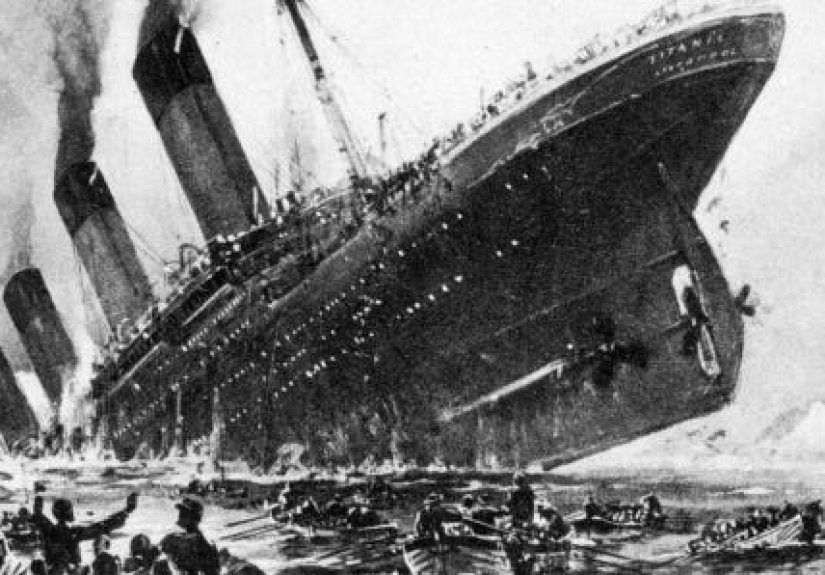
- 6) The breakup: when the ship became its own worst lever
- Did a Solar Flare Cause the Titanic to Sink? The Space-Weather Theory Explained
- Other “Extra Factors” People Debate (That Still Don’t Delete the Iceberg)
- What Titanic Changed Forever: Safety Rules Written in Ocean Water
- FAQ: Titanic Sinking Questions People Still Google at 2 A.M.
- Modern Experiences: What Titanic Facts Feel Like Today (A 500-Word Add-On)
- Conclusion
The RMS Titanic has been “explained” a thousand timesusually with a dramatic violin, a dramatic ocean,
and at least one dramatic hat. But the real story is more interesting (and more useful) than the myth.
Titanic didn’t sink because it was “cursed,” because it was “too big,” or because the ocean decided to
humble humans for fun (though the ocean does have that energy). It sank because of a chain of engineering
limits, human decisions, and bad-luck conditions that lined up like dominoes… and then fell into freezing water.
And what about the spicy modern question: Did a solar flare cause the Titanic to sink?
Not in the “Sun zap → ship explodes” way. But there is a real scientific discussion about whether
space weather (auroras and geomagnetic storms) could have nudged navigation or communications in ways that made
a terrible night even worse. Let’s sort the iceberg-sized facts from the internet-sized rumors.
Quick Titanic Facts (So We’re All on the Same Deck)
- Ship: RMS Titanic (White Star Line), on its maiden voyage to New York.
- When: Night of April 14–15, 1912.
- What happened: A collision with an iceberg led to flooding that exceeded the ship’s design limits.
- How long it took: Roughly 2 hours and 40 minutes from impact to final sinking.
- Why people still talk about it: It was a high-profile disaster that reshaped maritime safety rules worldwide.
How Did the Titanic Sink? The Real Mechanics (No Hollywood Hole Required)
1) The iceberg strike: a side-swipe that opened multiple seams
Titanic didn’t plow straight into an iceberg like a cartoon. The collision is widely understood as a glancing blow along
the starboard (right) side. That matters because a glancing blow can stress a long stretch of hull plating and fasteners,
potentially opening seams in several places instead of creating one dramatic “gash.”
Think of the hull like overlapping metal plates held by thousands of rivets. If the plates deform and rivets pop or fail
under shock and bending, seawater doesn’t need one huge doorwayit can slip through multiple narrow openings. In other words:
the ocean can get in through “lots of bad little news,” not just one big headline.
2) Watertight compartments: strong idea, incomplete execution
Titanic had watertight compartments separated by bulkheads, and that design was absolutely a safety upgrade for its era.
The catch: the ship was designed to survive limited floodingcommonly described as staying afloat with up to
a certain number of compartments breached (depending on which forward compartments and how the flooding progressed).
The iceberg damage compromised more compartments than the ship could tolerate. And here’s the brutal physics trick:
once water rises high enough in one compartment, it can spill over the top of bulkheads into the nextkind of like
an ice cube tray that becomes useless after you tilt it far enough. As the bow sank lower, the “waterline” inside the ship
climbed into places it was never meant to visit.
3) Why “unsinkable” became a marketing boomerang
Titanic was not officially branded as “literally cannot sink, even if Poseidon tries.” The “unsinkable” reputation grew from
confidence in the compartment design and public hype around modern engineering. The problem with hype is that it ages badly.
The ship was impressive, but it was still a machine operating in a chaotic environmentice, darkness, speed, and human judgment.
4) Speed, warnings, and the deadly calm of that night
Multiple ships reported ice in the area that day. Titanic was moving fast for known icy waters, and the night conditions
didn’t help: a calm sea can reduce the visible “breakers” around ice, and darkness makes a low, hard-to-see iceberg
blend into the horizon. The result: less time to spot danger and even less time to turn a 46,000-ton liner like it’s a jet ski.
When the iceberg was finally spotted, the window for avoidance was tiny. Even a correct maneuver can be too late if the
starting conditions are bad enough. Titanic’s size was a luxury and a liability: it couldn’t pivot quickly, and any contact
at speed meant tremendous force transferred into the ship’s structure.
5) Progressive flooding: the math that doom loves
Flooding isn’t just “some water.” It changes the ship’s trim (how it sits in the water), increases stress on the hull,
and forces the ship lower at the bow. As more seawater poured in, pumps couldn’t keep up. The ship’s fate became a clock:
every minute added weight, reduced buoyancy, and increased the angle that helped water spread.
6) The breakup: when the ship became its own worst lever
As the bow filled and sank, the stern lifted. That creates enormous bending forcesimagine holding a ruler on a table
and pushing down on one end until it snaps. The Titanic’s structure was not designed to be bent into that extreme posture.
The breakup wasn’t a “plot twist,” it was a predictable outcome once the ship’s buoyancy and weight distribution became
violently unbalanced.
Did a Solar Flare Cause the Titanic to Sink? The Space-Weather Theory Explained
Here’s the careful answer: The iceberg caused the physical sinking. A solar flare did not punch holes in steel,
and it didn’t summon an iceberg like a cosmic remote control. However, some researchers have proposed that
space weathera geomagnetic storm associated with solar activitymay have influenced navigation
and communications around the time of the disaster.
What a solar flare (and geomagnetic storm) can do on Earth
Solar flares and coronal mass ejections can disturb Earth’s magnetic field. When that disturbance is strong enough,
it can:
- Increase auroral activity (northern lights / aurora borealis).
- Introduce magnetic-field fluctuations that can affect magnetic instruments.
- Disrupt certain kinds of radio propagation, especially in high-latitude regions and under specific conditions.
Modern life notices these storms because we have satellites, GPS, and power grids. In 1912, ships relied heavily on
magnetic compasses, dead reckoning, celestial navigation, and early wireless radio. So the “space weather” question becomes:
could a geomagnetic storm have nudged instruments or signals enough to matter?
The “aurora over the Atlantic” claim: what’s being argued
Reports and later analysis suggest there may have been auroral activity around the time Titanic sank. The theorypopularized
in news coverage of a scientific paperargues that geomagnetic disturbances could have:
- Shifted compass readings slightly (by altering magnetic conditions), nudging a ship off its intended path.
- Added noise or reduced clarity in radio communications, potentially complicating distress messaging and coordination.
- Contributed to position errors during rescue navigationsmall angular mistakes can become miles over long distances.
Let’s put numbers on the “small errors matter” idea. A one-degree course error sustained over 400 miles equals about 7 miles
of lateral displacement (because 400 × sin(1°) ≈ 7). That’s not trivial when you’re trying to meet lifeboats in a vast ocean
or when you’re threading through regions with reported ice.
So… is it plausible? Yes-ish. Is it proven? Not really.
The strongest, safest conclusion is this: space weather is an interesting “contributing factor” hypothesis, not a replacement cause.
The Titanic struck an iceberg and suffered fatal flooding. Even if a geomagnetic storm created minor compass deviations or radio complications,
it would be part of the background friction, not the main engine of disaster.
Also, many Titanic decisions and conditions don’t require a solar explanation:
known ice warnings, high speed, limited visibility, and the physical vulnerability of a glancing collision all stand on their own.
Space weather could be a “maybe it didn’t help” detailnot a cosmic smoking gun.
Other “Extra Factors” People Debate (That Still Don’t Delete the Iceberg)
Optical illusion / mirage conditions
Another widely discussed idea involves unusual atmospheric conditions that can bend light and distort horizons over cold water.
In some scenarios, a thermal inversion can create superior mirages that make objects harder to judgeshrinking contrast, warping distance,
and turning “iceberg ahead” into “wait, is that a cloud… or doom?”
This doesn’t mean “the iceberg was invisible.” It means visibility and perception might have been worse than a typical night at sea.
Like space weather, it’s a supporting actor, not the villain.
Materials and rivets: the uncomfortable nerd detail
Investigations over the years have examined Titanic’s materialsespecially rivets and how hull seams might have behaved under impact.
The takeaway in plain language: if some fasteners were more brittle or weaker than ideal, a glancing collision could open seams more readily.
That still doesn’t “cause” the collisionbut it can help explain why damage became catastrophic.
What Titanic Changed Forever: Safety Rules Written in Ocean Water
Titanic’s legacy isn’t just triviait’s policy. The disaster accelerated changes that became modern expectations, including:
- More lifeboat capacity and improved evacuation preparedness.
- Better radio procedures and stronger standards for distress communications.
- Ice monitoring and warnings in the North Atlantic (including international coordination that persists today).
- Global maritime safety conventions that standardized safety requirements across nations and shipbuilders.
The not-fun truth is that safety rules often arrive after tragedy. Titanic became a worldwide lesson in why “meets minimum requirements”
is not the same thing as “prepared for worst-case reality.”
FAQ: Titanic Sinking Questions People Still Google at 2 A.M.
How long did it take for the Titanic to sink?
About 2 hours and 40 minutes from the iceberg collision to final sinkinglong enough for evacuation efforts, but not long enough for
a fully orderly, fully loaded lifeboat operation in the middle of the North Atlantic.
Did the Titanic have enough lifeboats?
No. It carried lifeboats for far fewer than the total number of people aboard. And to make it even more frustrating, some boats left
under capacity early on due to confusion, caution, and imperfect coordination.
Could Titanic have survived if it hit the iceberg head-on?
It’s debated, but many analyses suggest a head-on collision might have damaged fewer compartments (though it would still be violent and dangerous).
The glancing blow likely spread damage along the side, compromising more watertight sections than the ship could handle.
“Could have” isn’t “would have,” but it’s a reminder that physics loves cruel trade-offs.
Did a solar flare sink the Titanic?
The iceberg sank Titanic. The solar flare theory suggests geomagnetic conditions might have influenced navigation or communications in subtle ways,
but it’s best treated as an interesting hypothesisnot the primary cause.
Modern Experiences: What Titanic Facts Feel Like Today (A 500-Word Add-On)
Titanic isn’t just a history lessonit’s an experience people keep re-living in different formats, and that changes what “facts” mean.
For a lot of us, the first encounter is a movie scene. Then it turns into a late-night rabbit hole: diagrams, timelines, radio messages,
ship blueprints, and the kind of engineering arguments that start politely and end with someone typing in all caps about rivets.
One of the most common modern “Titanic experiences” is the museum effect. You walk into an exhibit expecting costumes and drama, and you walk out
thinking about logistics: how narrow corridors shape crowd flow, how hard it is to launch boats in darkness, how quickly cold air changes decisions.
You start to realize the story isn’t just about a ship; it’s about systems under stress. Titanic becomes a case study in what happens when a complex
machine meets a complex environmentand humans have to decide faster than they can fully understand.
Another modern experience is watching deep-sea exploration footage or reading about expeditions that mapped the wreck. Even when presented respectfully,
it can be startling to see how the ocean “edits” history. Metal becomes rust-colored formations, shapes soften, and the ship turns into a fragile archive.
That changes the tone of the conversation: it’s less “cool mystery” and more “time is real, and it takes everything.” It also makes the technical details
feel less theoretical. This wasn’t a legendthis was an engineered object that failed in a specific sequence.
And then there’s the most 21st-century Titanic experience of all: comparing it to modern technology. People read about early wireless radio and instantly
translate it into “texting with one bar of signal.” You hear about missed messages, interference, and confusionand suddenly the solar flare idea doesn’t
sound like science fiction. If you’ve ever had a GPS glitch or a call drop at the worst possible time, you understand how tiny tech problems can snowball.
That doesn’t prove the space-weather theory, but it makes the question emotionally plausible: what if the environment was messing with the tools people trusted?
Titanic also creates a personal “what would I do?” thought experiment. Would you take an ice warning seriously if you’d crossed the Atlantic safely before?
Would you slow down if your competitors didn’t? Would you believe a ship could actually disappear in under three hours if it was marketed as cutting-edge?
These are uncomfortable questions because they don’t flatter us. The real Titanic lesson isn’t “people back then were clueless.” It’s that humans everywhere
struggle with the same problems: overconfidence, incomplete information, and the temptation to treat low-probability risks as someone else’s problem.
Finally, there’s the oddly hopeful modern experience: seeing what changed after Titanic. Ice patrols, standardized safety conventions, better radio protocols,
training, drillsthese are the quiet, uncinematic outcomes that actually save lives. If Titanic is a tragedy (it is), its long tail includes real improvements.
That’s the best way to engage with the story today: learn the facts, respect the people involved, and keep the lesson alive so “unsinkable” never becomes
a substitute for “prepared.”
Conclusion
The Titanic sank because it struck an iceberg and suffered flooding beyond what its design could survivecompartment by compartment, minute by minute,
until physics did what physics does. The “solar flare” idea is fascinating because it’s rooted in real science: geomagnetic storms can affect magnetic fields
and radio behavior. But the most responsible view is that space weather, if it mattered at all, was a potential complication, not the cause.
The real Titanic story is more powerful than any cosmic twist: a modern marvel met a very old hazard, and a chain of small choices turned a survivable risk
into a historic disaster. If there’s one timeless fact to keep, it’s this: safety isn’t a labelit’s a system you maintain, even on the calmest night.