Table of Contents >> Show >> Hide
- What makes a disaster “bizarre”?
- 10. The St. Pierre Snake Invasion
- 9. The Shiloh Baptist Church Panic
- 8. The Great Boston Molasses Flood
- 7. The Pittsburgh Gasometer Explosion
- 6. The Gillingham Fire Demonstration
- 5. The Empire State Building Crash
- 4. The Tunguska Event
- 3. The Texas City Chain Reaction Explosions
- 2. The Basra Mass Poisoning
- 1. The Chandka Forest Elephant Stampede
- The common threads behind weird disasters
- of experiences to bring these bizarre disasters to life
- Conclusion
- SEO Tags
Some disasters are “normal” in the bleak way history can be normal: storms, fires, earthquakes, explosions. Then there are the
disasters that make you blink twice, like your brain is trying to auto-correct reality. A river that catches fire. A wave of molasses
that moves faster than your will to live. A deadly chain reaction that starts with people doing the exact thing a warning label told them not to do.
This article explores ten famously strange catastrophes often gathered under the banner “bizarre disasters,” along with what they reveal
about risk, human behavior, and the tiny everyday choices that can turn into headline-grade chaos. The goal isn’t to gawk. It’s to learn
and maybe to keep your own life from becoming a future museum exhibit titled “Well… That Was Avoidable.”
What makes a disaster “bizarre”?
A bizarre disaster usually has at least one of these ingredients:
- An unexpected trigger: a misunderstood word, a small leak, or a routine demonstration.
- A surreal hazard: snakes fleeing a volcano, sticky syrup flooding streets, or toxic grain sold as dinner.
- A mismatch between risk and reaction: crowds panic over the wrong threat, or spectators applaud a real tragedy.
- A “how did that happen?” domino effect: one incident sets off a chain reaction that multiplies harm.
In other words: the weirdness isn’t a joke. It’s a clue that our assumptions about safety can be dangerously fragile.
10. The St. Pierre Snake Invasion
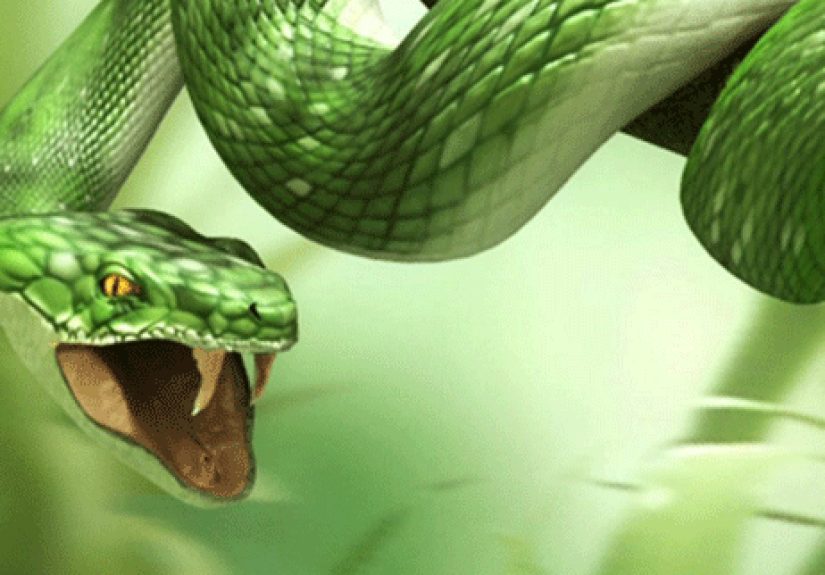
In 1902, Mount Pelée’s growing unrest on Martinique didn’t just mean ash and tremors. As conditions worsened, animals fled the slopes.
Reports describe poisonous snakes (including fer-de-lance) and other creatures pouring down toward Saint-Pierre, with dozens of people
allegedly killed by bites before the worst arrived.
Then came the main event: a catastrophic eruption and pyroclastic flow that devastated Saint-Pierre, killing roughly 30,000 people
in minutes. If the animal invasion sounds like a horror-movie prologue, that’s because it basically was.
Why it’s bizarreand what it teaches
Nature doesn’t send RSVP cards. When ecosystems destabilize, “secondary hazards” can become deadly before the primary disaster strikes.
Modern emergency planning increasingly accounts for cascading effectsbecause sometimes the warning sign is not the lava. It’s the wildlife
stampeding through your neighborhood like it’s late for something.
9. The Shiloh Baptist Church Panic
In Birmingham in 1902, thousands gathered to hear Booker T. Washington speak at Shiloh Baptist Church. After the speech, a disturbance
sparked a shout that was misunderstood: “fight” became “fire.” The crowd surged toward the exit and a stairwell became a choke point.
The result was a deadly crush that killed 115 peoplemostly by suffocation and trampling.
Why it’s bizarreand what it teaches
The most dangerous part of a crowded building is often not the crowdit’s the bottleneck. Crowd disasters can be triggered by confusion,
misinformation, or panic behavior that spreads faster than any actual threat. Clear communication, multiple exits, and thoughtful flow design
aren’t “nice to have.” They’re lifesaving infrastructure.
8. The Great Boston Molasses Flood
On January 15, 1919, a massive molasses storage tank in Boston’s North End failed, releasing a tidal wave of syrup through the streets.
The sticky flood wrecked buildings and infrastructure, and it killed 21 people while injuring around 150 more.
The details are both tragic and surreal: molasses moved with shocking force, swept people off their feet, trapped horses, and turned rescue
into a sticky nightmare. Cleanup reportedly took weeks, and locals long claimed the neighborhood smelled faintly sweet on hot days.
Why it’s bizarreand what it teaches
“Not a liquid hazard” is not the same as “not hazardous.” Industrial storage failures don’t care what’s inside the tankonly what physics
can do once containment breaks. One of the lasting lessons from this disaster is the importance of engineering oversight, inspections,
and not treating leaks like a personality trait.
7. The Pittsburgh Gasometer Explosion
In 1927, Pittsburgh had a gasometeressentially a giant container holding enormous amounts of gas. A leak was detected, and repair work
reportedly involved open flames or torches. The gasometer rose like a balloon and then exploded, killing 28 people and injuring many more.
Why it’s bizarreand what it teaches
This is one of history’s clearest examples of “the method is the hazard.” When the repair tool can ignite the thing you’re repairing,
you’re not fixing a problemyou’re scheduling an explosion. The broader safety lesson: procedures exist because the worst-case scenario
is not a metaphor. It’s a calendar invite.
6. The Gillingham Fire Demonstration
In 1929 in Gillingham, England, a firefighting demonstration featured a mock rescue in a temporary structure. Something went wrong:
a real fire began too soon, trapping participantsincluding childreninside. Spectators reportedly assumed it was part of the show and
even cheered at first. Fifteen people died.
Why it’s bizarreand what it teaches
The “performance frame” can delay recognition of real danger. It’s similar to how people sometimes fail to evacuate because they assume
an alarm is a drill. Safety planning has to consider human psychology: clear stop signals, unmistakable emergency cues, and systems that
prevent a staged scenario from becoming the real thing.
5. The Empire State Building Crash
In thick fog on July 28, 1945, a U.S. Army Air Forces B-25 bomber crashed into the Empire State Building. The impact and fire killed
14 people total (3 onboard, 11 in the building), injured others, and caused dramatic damageyet the building remained structurally intact.
The incident produced an almost unbelievable subplot: an elevator operator survived a terrifying plunge after cables were severed, thanks to
a mix of mechanical buffers and physics that werelet’s be honestdoing overtime.
Why it’s bizarreand what it teaches
Modern aviation safety is built on hard-won lessons about weather, navigation, and operational decision-making. This crash also highlights
resilient design: when buildings (and systems inside them) are built with redundancy, a freak event can be catastrophic without becoming a total collapse.
4. The Tunguska Event
On June 30, 1908, an object from space exploded in the atmosphere over Siberia, flattening a vast area of forest. It’s widely understood
as an airburst rather than a classic crater-forming impact. The blast was powerful enough to knock down trees across a massive region and
generate shockwaves detected far away.
Why it’s bizarreand what it teaches
Tunguska is bizarre because it’s a disaster with no villain, no warning, and no meaningful defense in the momentjust a reminder that
“rare” is not “never.” It’s also why scientists track near-Earth objects: you can’t evacuate from the sky, but you can at least avoid being surprised by it.
3. The Texas City Chain Reaction Explosions
In April 1947, a fire aboard the French ship Grandcamp at Texas City involved a massive load of ammonium nitrate fertilizer.
The situation escalated into an enormous explosion that triggered more blasts and fires, devastating the port and surrounding community.
More than 500 people died and thousands were injured, making it one of the deadliest industrial accidents in U.S. history.
Why it’s bizarreand what it teaches
The bizarre part is the sheer scale of the domino effect: one burning cargo becomes multiple explosions, industrial facility damage,
and widespread urban devastation. It’s a case study in hazardous materials management, emergency response coordination, and why “it’s just fertilizer”
can be one of the most dangerous sentences you’ll ever hear.
2. The Basra Mass Poisoning
In the early 1970s, treated seed graincolored and labeled as toxicwas consumed as food in Iraq after being stolen or diverted from intended
agricultural use. The grain had been treated with methylmercury to prevent rot, and the outbreak led to thousands of hospital admissions
and hundreds of confirmed deaths, with long-term neurological effects for many survivors.
Why it’s bizarreand what it teaches
The “bizarre” factor is the tragic mismatch between intent and outcome: a product designed to protect crops became an epidemic because of
communication failures, human desperation, and distribution problems. The lesson is brutally modern: risk communication must work in the real world,
across languages and literacy levels, and under pressure. If safety depends on perfect circumstances, it isn’t safetyit’s wishful thinking.
1. The Chandka Forest Elephant Stampede
This event is often described as occurring in 1972 during extreme heat and drought conditions, when elephants reportedly stampeded through villages,
killing two dozen people. The story has been repeated in “bizarre disaster” collections for decades.
It’s also the hardest on this list to verify in modern, primary reporting compared with the better-documented industrial and urban disasters.
That doesn’t mean it didn’t happen; it means details may be incomplete, filtered through retellings, or flattened into a neat anecdote.
Why it’s bizarreand what it teaches
Human–wildlife conflict is real, increasing in some regions due to habitat pressure and climate stress. The lesson here is bigger than one incident:
environmental extremes can push animals into contact with humans, and those encounters can escalate quickly. When survival resources shrinkwater, space,
foodeverybody competes, even if they don’t speak the same language (or have the same number of legs).
The common threads behind weird disasters
1) Small misunderstandings can kill
The Shiloh panic shows how one misheard word can turn a peaceful crowd into a deadly surge. The Basra poisoning shows how labels that don’t match
the audience are effectively invisible. “Communication” isn’t just informationit’s comprehension.
2) Secondary hazards are not secondary in impact
Snakes fleeing a volcano. Fires triggered by industrial blasts. Panic triggered by rumor. Disasters rarely stay in their lane. The initial event
often opens the door for the truly lethal consequences to walk in carrying a suitcase.
3) Systems fail where assumptions live
A tank that “probably won’t burst.” A repair method that “should be fine.” A demonstration that “isn’t real.” A cargo that “isn’t explosive.”
Bizarre disasters love assumptions the way housecats love knocking objects off tables: confidently and for no apparent reason.
of experiences to bring these bizarre disasters to life
If you want to understand why bizarre disasters stick in our memory, try mentally stepping into themsafely, from the distance of time and empathy.
Picture yourself walking through Boston’s North End on a crisp afternoon, where brick buildings and narrow streets look charming in a postcard way.
Now imagine hearing a low rumble that doesn’t belong to traffic or trains. The street ahead darkensnot with rain, but with a glossy, slow-moving wall
of molasses that suddenly behaves like a battering ram. It’s not the sweetness that gets you; it’s the surprise. Your brain doesn’t have a category for
“liquid dessert tsunami,” which is exactly why it’s so terrifying.
Or take New York City, where the Empire State Building is usually framed as romance, ambition, and skyline selfies. Imagine being inside on a foggy morning
when the building shudders with an impact that feels impossiblelike reality made a typo. The halls fill with smoke. The sound is wrong: not thunder,
not construction, but a hard metallic tearing. It’s the kind of moment where you realize that even “solid” thingssteel, stone, iconic landmarksare still
part of a world where accidents can arrive from above.
Texas City offers another kind of experience: the uneasy closeness of heavy industry and everyday life. A dock fire draws attentionbecause humans are
curious, and curiosity has never checked an SDS sheet before wandering closer. Then the blast comes, and the experience becomes less about what you see
and more about what you feel: pressure hitting the body, sound becoming a physical force, windows turning into flying hazards. The phrase “chain reaction”
stops being a science term and starts being a description of your entire environment unraveling.
Some experiences are stranger because they’re quiet. With mass poisonings like the Basra incident, the disaster can creep in through kitchens and shared meals.
There’s no dramatic explosionjust symptoms that start small and become irreversible. It’s a different terror: the idea that the most ordinary human act
(eating) can become dangerous when warnings don’t reach the right people in the right way.
And then there are the disasters that live in the mind like a myth you can’t quite shake, like an elephant stampede during punishing heat or snakes driven
downhill by volcanic unrest. Even if you’ve never been there, you can feel the logic: when conditions become extreme, behavior changesanimal behavior,
crowd behavior, organizational behavior. The experience, in every case, is the same uncomfortable lesson: the world doesn’t promise to be reasonable, but
we can choose to be prepared.
Conclusion
Bizarre disasters aren’t just weird trivia. They’re stress tests for the way humans build, gather, work, label, and assume. When you line these stories up,
a pattern emerges: tragedy often enters through the side door marked “That’s Unlikely.” The antidote isn’t paranoia. It’s humilityabout physics, crowds,
nature, and the limits of “common sense.”