Table of Contents >> Show >> Hide
- 1. The Salem Witch Bite Marks: Teeth as “Proof” of the Devil
- 2. Ohio v. Robinson: The First “Modern” Bite Mark Murder Case
- 3. Lollia Paulina’s Golden Teeth: A Deadly Case of Dental Envy
- 4. Adolf Hitler’s Dental Records: Confirming a Dictator’s Death
- 5. Josef Mengele: Tracking a War Criminal by His Teeth
- 6. Ted Bundy: The Bite Mark That Helped Seal the Case
- 7. Robert Berdella: Teeth as Souvenirs of a Serial Killer
- 8. Ray Krone: Death Row and the Danger of Bite Mark Evidence
- 9. Charles McCrory: “Junk Science” and a Life Behind Bars
- 10. “Wolfman” Peter Sullivan: Bite Marks, Nicknames, and a Vacated Conviction
- How Human Teeth Changed and Challenged Criminal Justice
- Real-World Experiences and Lessons from Teeth-Based Cases
Teeth are usually something you worry about at the dentist’s office, not in a courtroom exhibit tray next to a bloody shoe and a shell casing. Yet again and again, human teeth or the marks they leave behind have helped solve crimes, send people to prison, clear the wrongfully convicted, and even confirm the deaths of infamous historical figures.
Drawing on famous cases from history, forensic dentistry research, and criminal justice reporting, this “Top 10” tour shows how something as small as a chipped incisor or a gold crown can shape a verdict. You’ll see human teeth used as motive, as trophies, as identification, and as forensic evidence sometimes accurately, sometimes disastrously. Consider it a Listverse-style countdown where the star witness is the human mouth.
1. The Salem Witch Bite Marks: Teeth as “Proof” of the Devil
Bite Marks in the Witch Trials
One of the earliest known criminal cases in what would become the United States to lean on human teeth as evidence dates back to the Salem witch trials of 1692. Reverend George Burroughs was accused of witchcraft, and among the “proof” presented was that he supposedly bit his victims during satanic attacks. Judges compared alleged bite marks on victims with Burroughs’s teeth and treated the comparison as meaningful evidence, despite the complete lack of scientific basis at the time.
Today, the Salem bite mark story is mostly used as a cautionary tale. It shows how easy it is for a dramatic-sounding idea like matching teeth to skin to impress juries and judges long before science catches up. In modern forensic odontology, Salem is a reminder that every method needs rigorous testing, not just a spooky narrative and a confident expert.
2. Ohio v. Robinson: The First “Modern” Bite Mark Murder Case
Five Teeth, Five Bite Marks
Jump ahead to the late 1800s and you reach one of the first widely cited modern American criminal cases involving bite mark evidence: the Ohio v. Robinson case. A respected community member, A. I. Robinson, was suspected of murdering his mistress. On the victim’s arm, investigators found five distinct bite marks that seemed to line up with the attacker’s upper teeth. Robinson just happened to have only five maxillary anterior (front upper) teeth. A dentist, Dr. Taft, testified that the pattern of the bite matched Robinson’s unusual dentition.
That testimony helped secure a conviction and also helped launch bite mark analysis into the forensic spotlight. At the time, the idea that “no two sets of teeth are exactly alike” made bite marks feel as persuasive as fingerprints. Later research would reveal that human skin is a terrible canvas for exact measurements, but Ohio v. Robinson set the tone for decades of courtroom drama featuring dental experts.
3. Lollia Paulina’s Golden Teeth: A Deadly Case of Dental Envy
Teeth as Motive, Not Just Evidence
Long before bite marks were photographed and measured, teeth could still play a starring role in criminal stories. One famous historical case often discussed in forensic and history circles involves Lollia Paulina, a wealthy Roman noblewoman whose legendary golden dental work supposedly made her a target. According to retellings, her teeth adorned with gold were so valuable and coveted that they were believed to have contributed to her downfall and execution, with her teeth removed as trophies.
Whether every detail of Lollia’s legend is perfectly accurate or somewhat embellished over time, the core idea is chillingly plausible: dental work can become loot. In modern crime, thieves have been known to rip gold crowns from bodies or steal dentures made of precious metals, turning smiles into black-market merchandise. Human teeth aren’t just biology; sometimes they’re assets and that can be deadly.
4. Adolf Hitler’s Dental Records: Confirming a Dictator’s Death
Teeth as the Ultimate ID
In 1945, after World War II, the world wanted proof that Adolf Hitler was really dead and not hiding in another country. DNA testing didn’t exist yet, so forensic dentists stepped in. Soviet investigators recovered jaw fragments believed to be Hitler’s and compared them to his dental records and the testimony of his dentist’s assistants. The shape of the crowns, bridgework, and overall dental layout matched so closely that experts concluded the remains were his (and those of Eva Braun), putting most conspiracy theories on very shaky ground.
This case is one of the most famous examples of forensic dentistry used for postmortem identification rather than for catching a suspect. When bodies are burned, decomposed, or otherwise unrecognizable, teeth often survive. The Hitler identification showed the world that dental records could close the book on some of history’s darkest chapters.
5. Josef Mengele: Tracking a War Criminal by His Teeth
Finding the “Angel of Death” Decades Later
Another notorious World War II figure, Dr. Josef Mengele the “Angel of Death” of Auschwitz also had his fate confirmed via dental evidence. After the war, Mengele escaped justice and reportedly died in Brazil in the late 1970s. Decades later, remains believed to be his were exhumed. Forensic experts examined the skull and teeth, comparing them to existing dental records and photographs. The dental matches supported the conclusion that the remains did indeed belong to Mengele.
While the world never saw Mengele tried in a criminal court, his dental identification still counts as a critical legal and historical milestone. It underscores how teeth can confirm the identity of fugitive war criminals long after they vanish, providing a measure of closure however incomplete to victims and historians.
6. Ted Bundy: The Bite Mark That Helped Seal the Case
Crooked Teeth, Televised Trial
If there’s one criminal case most people associate with bite marks, it’s Ted Bundy. During his Florida killing spree in 1978, Bundy attacked women at the Chi Omega sorority house at Florida State University. One of his victims, Lisa Levy, had a distinctive bite mark on her body. Forensic dentists took dental impressions of Bundy’s mouth, noting his crooked, chipped teeth and unusual occlusion. Those features were compared with the bite mark photographs. Experts testified that the bite pattern matched Bundy’s teeth, and the jury saw dramatic overlays connecting the two.
The Bundy case became one of the first highly publicized trials to showcase bite mark evidence on live television. It helped convince many that forensic odontology was an incredibly powerful tool. Later, critics would point out that the case also had substantial non-dental evidence and that bite mark analysis is far less precise than it looked on TV. Still, Bundy’s teeth remain an iconic example of dental evidence in a capital murder case.
7. Robert Berdella: Teeth as Souvenirs of a Serial Killer
Collecting Teeth from Victims
Some criminal uses of human teeth are more macabre than scientific. Robert Berdella, a serial killer active in Kansas City in the 1980s, abducted and tortured multiple men. After some murders, he dismembered his victims and kept body parts, including skulls and teeth, as grisly souvenirs. Investigators later found human remains and dental fragments in his home, which helped confirm the identities of his victims and document his crimes.
In Berdella’s case, teeth weren’t exactly “forensic evidence” in the modern analytical sense; they were physical proof of cruelty and a key link between missing persons and the horrors in his house. The case shows a darker side of human teeth in crime: sometimes they’re not just identifiers but trophies evidence of how far some offenders will go to dehumanize their victims.
8. Ray Krone: Death Row and the Danger of Bite Mark Evidence
The “Snaggletooth Killer” Who Wasn’t
Bite mark evidence doesn’t always point to the right person. Ray Krone, a mailman and military veteran from Arizona, was convicted in the early 1990s of murdering a woman in a bar. Prosecution experts testified that a bite mark on the victim matched Krone’s teeth, especially a distinctive “snaggletooth.” He was sentenced to death and spent years behind bars. Later, DNA testing showed that the biological evidence at the crime scene belonged to someone else entirely. Krone was exonerated and released after more than a decade in prison.
Krone’s case became a symbol of what can go wrong when unvalidated forensic methods are presented as near-perfect science. Organizations like the Innocence Project now cite his story when arguing that bite mark comparison on skin is too subjective and unreliable to be used for identification in court. His experience demonstrates that human teeth can be a double-edged sword: powerful in theory, devastating when misused.
9. Charles McCrory: “Junk Science” and a Life Behind Bars
Questioning the Reliability of Bite Marks
In another troubling example, Charles McCrory was convicted of murdering his wife based largely on bite mark evidence. Forensic dentists testified that bite marks found on the victim matched McCrory’s teeth. Decades later, experts re-examined the case and questioned whether those marks were even human bites, let alone uniquely tied to McCrory. Journalists and legal advocates have since highlighted his case as a prime example of “junk science” influencing serious criminal verdicts.
Stories like McCrory’s helped spark broader scientific reviews of bite mark analysis. Panels of experts, including those convened by national academies and legal organizations, have warned that bite mark comparison on skin is often too distorted, variable, and subjective to meet modern standards of reliability. That scrutiny is slowly reshaping how courts view and limit such evidence.
10. “Wolfman” Peter Sullivan: Bite Marks, Nicknames, and a Vacated Conviction
From “Monster” to Wrongfully Convicted
In the UK, Peter Sullivan became infamous in the late 1980s after being dubbed the “Wolfman” by the press. He was convicted of the rape and murder of a young woman, with bite mark evidence on the victim presented as key support for the prosecution’s theory. Combined with questionable interrogation tactics and inconsistent statements, the bite mark testimony helped send Sullivan to prison for life.
Years later, advances in DNA testing told a different story. New analysis excluded Sullivan as the source of crucial biological evidence, and his conviction was eventually overturned after decades behind bars. Experts now point to his case as yet another warning that bite marks on skin should never be treated as conclusive identification. Human teeth were once used to label him a monster; better science finally helped clear his name.
How Human Teeth Changed and Challenged Criminal Justice
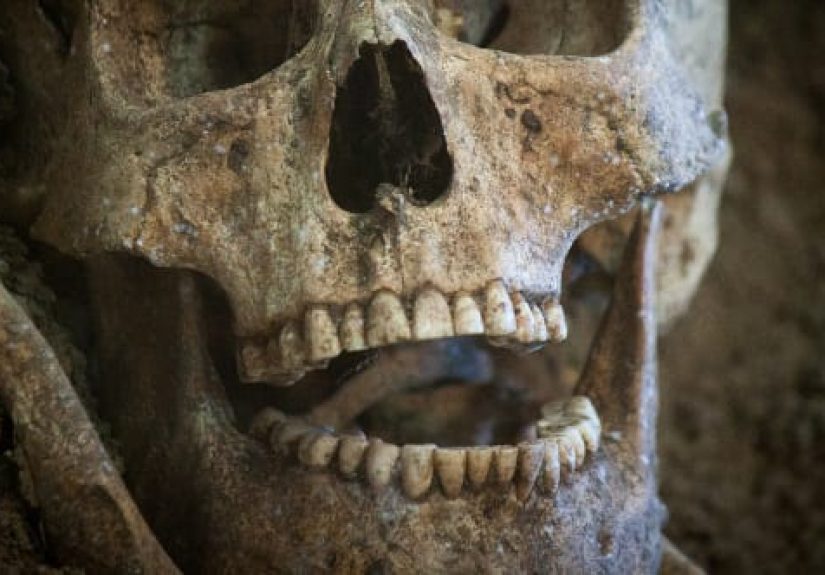
Look across these ten cases and you’ll see human teeth doing all kinds of legal work: pointing toward suspects, confirming deaths, identifying remains, and, unfortunately, helping to convict innocent people. Forensic dentistry also known as forensic odontology has proven invaluable when comparing dental records with skeletal remains or reviewing detailed dental charts and radiographs.
But when it comes to comparing bite marks on living or deceased skin, the story gets messier. Skin stretches, bruises, and heals; angles and lighting distort photographs; and human bias can seep into pattern comparisons. Scientific reviews and legal advocacy groups now urge extreme caution when using bite marks as evidence, especially if they’re the centerpiece of a prosecution.
In the end, human teeth don’t lie but the way we measure, interpret, and present them can. The future of forensic dentistry is likely to lean heavily on well-validated methods, like comparing solid dental records to hard tissue, while moving away from techniques that have led to wrongful convictions. These stories are a reminder that every impressive-sounding forensic tool needs constant scrutiny, or the bite of bad science can last a lifetime.
Real-World Experiences and Lessons from Teeth-Based Cases
What It Feels Like When Teeth Decide Your Fate
Imagine sitting at the defense table while a forensic dentist points to a blown-up photograph of a bruise on someone’s skin. They overlay a transparent image of your dental impressions and tell the jury, with absolute confidence, that the marks match your teeth. You know you didn’t do it, but the jury is staring at two pictures that look eerily similar. For many people later exonerated, that moment when a stranger’s expert opinion about their teeth outweighs everything else becomes the most surreal and terrifying experience of their lives.
Wrongfully convicted individuals like Ray Krone and others have described how powerless it feels when a single bite mark seems to matter more than alibis, character witnesses, or logical doubt. They weren’t undone by a confession or by an eyewitness who knew them well, but by a pattern on skin that could be misinterpreted. Their experiences underline why courts now ask tougher questions about how reliable a method really is, not just how confident an expert sounds.
The Forensic Dentist’s Dilemma
On the other side of the witness stand, many forensic dentists describe their own discomfort with how their specialty has been used. Practitioners trained decades ago often entered the field sincerely believing that every person’s bite was as unique as a fingerprint. They testified in good faith, only to later watch as scientific panels cast serious doubt on those assumptions. Some have publicly acknowledged that they might have contributed to wrongful convictions, an ethical burden that’s hard to shake.
Modern forensic odontology training tends to emphasize caution. Dentists are taught to clearly explain the limits of what teeth can and cannot prove. They may still help investigate bite marks for example, to determine whether an injury is consistent with abuse or whether a mark is even a bite at all but they are far more hesitant to say, “This specific person caused this mark,” especially if the conclusion could mean a death sentence or life in prison.
Jurors, TV Dramas, and the CSI Effect
Jurors bring their own baggage into the courtroom, including years of watching stylized crime shows where a single hair fiber or a perfect bite mark instantly solves the case. In reality, real-life forensics is slower, messier, and full of uncertainty and error bars. When jurors see graphic slides of teeth overlaid on bruised skin, it can feel like a final answer rather than an educated guess.
Some judges now specifically warn jurors against the so-called “CSI effect,” reminding them that no forensic technique is infallible. In cases involving human teeth, good judges and lawyers work hard to frame bite mark evidence if it’s allowed at all as just one piece of a much larger puzzle. Jurors’ experiences, expectations, and media habits all shape how persuasive that evidence feels, which is why clear, honest expert testimony is so crucial.
What Everyday Readers Can Take Away
For the rest of us, these cases offer a few important takeaways. First, forensic science is powerful but not magic. Whenever you hear that a case hinged on one type of evidence teeth, fibers, handwriting, even DNA it’s worth asking how strong that method really is and whether it was backed up by other proof. Second, human teeth can be incredibly helpful in identifying unknown remains, especially when dental records are available. That part of forensic dentistry has a long track record of success.
Finally, the most important lesson is humility. Methods that once seemed cutting-edge, like bite mark comparison on skin, are now under intense scrutiny. Science evolves, and so should the legal system. If you ever serve on a jury in a case involving teeth or any other dramatic forensic claim, you’ll be better prepared to ask the right questions. The stories behind these top 10 criminal cases involving human teeth are wild, unsettling, and sometimes darkly fascinating but they’re also a reminder that justice should never depend on an impressive picture alone.