Table of Contents >> Show >> Hide
- How This Ranking Works
- 1. Andrew Johnson
- 2. James Buchanan
- 3. Franklin Pierce
- 4. Warren G. Harding
- 5. Herbert Hoover
- 6. Donald Trump
- 7. Millard Fillmore
- 8. John Tyler
- 9. Richard Nixon
- 10. George W. Bush
- Why These Presidents Still Matter
- The American Experience of a Bad Presidency
- Final Thoughts
- SEO Tags
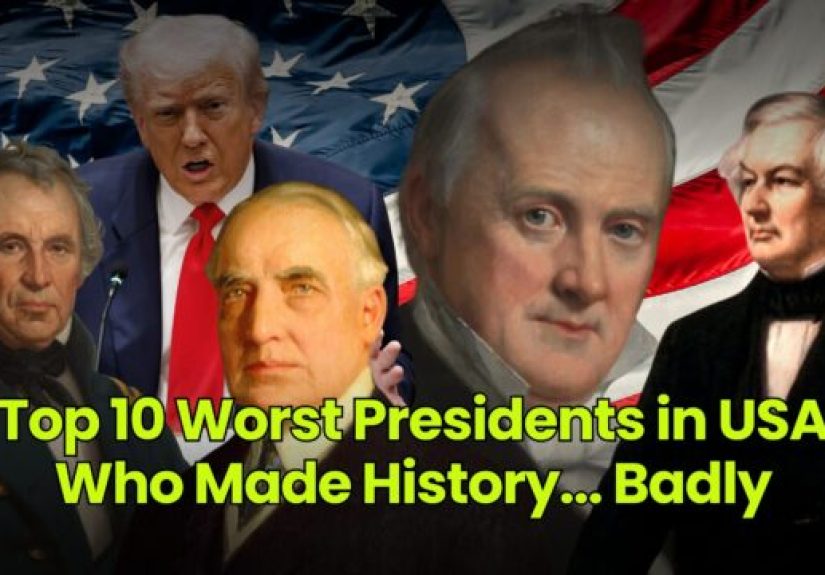
American presidents are usually remembered in one of two ways: as giants carved into civic mythology, or as cautionary tales that make historians sigh, teachers pause, and late-night comedians thank the universe for steady employment. This list is about the second group.
To be clear, ranking the worst presidents in U.S. history is not a perfectly objective science. Historians argue. Voters argue. Your uncle at Thanksgiving definitely argues. But some patterns are remarkably consistent. Certain presidents repeatedly land near the bottom because their decisions deepened national crises, weakened democratic norms, fueled corruption, or simply proved spectacularly unequal to the moment.
So, with that in mind, here is a fun but fact-based countdown of the top 10 worst presidents in American historyleaders who didn’t just make mistakes, but managed to make history badly.
How This Ranking Works
This ranking blends historian consensus with real-world damage. In other words, I did not just ask, “Who was unpopular?” I asked bigger questions: Who made a national crisis worse? Who empowered corruption? Who failed the country when leadership mattered most? Who left behind a legacy that historians still discuss with the same expression people use when their phone falls face-down on concrete?
The result is a list shaped by long-term historical judgment, not just partisan mood swings. It also weighs civil rights failures, corruption scandals, constitutional damage, economic disaster, and reckless crisis management. So yes, this is opinionatedbut it is opinionated with receipts.
1. Andrew Johnson
If Abraham Lincoln had been followed by a bridge-builder, Reconstruction might have looked very different. Instead, the nation got Andrew Johnson, a president whose stubbornness, racial hostility, and political incompetence helped wreck one of the most important transitions in American history.
Johnson opposed meaningful protections for formerly enslaved people and clashed repeatedly with Congress over Reconstruction. At the exact moment the United States needed moral clarity and political skill, he brought neither. He vetoed civil rights measures, fought efforts to remake the South on fairer terms, and effectively supported the restoration of the old white power structure minus slavery’s legal label. That is not exactly a Hall of Fame follow-up act.
His presidency also led to the first presidential impeachment. He survived removal by a single Senate vote, but the bigger historical verdict has been brutal. Johnson is often ranked at or near the very bottom because his failures were not merely administrative. They were foundational. He helped squander a rare chance to secure Black citizenship and equal protection after the Civil War. That damage echoed for generations.
2. James Buchanan
James Buchanan had the misfortune of governing right before the Civil War. He also had the talent for making an already bad situation worse. Historians hammer Buchanan because he failed to grasp the political reality of slavery and sectional division, then responded to the nation’s unraveling with the energy of a man waiting for someone else to answer the door.
Rather than confronting secessionist momentum, Buchanan largely drifted. He believed secession was illegal but also thought the federal government lacked authority to stop it. That position managed to be weak in two directions at once. He also backed pro-Southern constitutional arguments in a rapidly polarizing country and misread how deeply the national party system had fractured.
When history hands a president a fire alarm, the wrong move is to debate whether smoke is technically a house issue or a room issue. Buchanan did something close to that. By the time he left office, the Union was already cracking apart. His legacy is the political equivalent of watching a bridge collapse and announcing that traffic remains a complex matter.
3. Franklin Pierce
Franklin Pierce is one of those presidents who makes people ask, “Wait, he was president?” Historians remember him, unfortunately, because his administration accelerated the nation toward civil war.
Pierce backed the Kansas-Nebraska Act, which effectively blew up the Missouri Compromise and reopened the fight over slavery in the territories. That was not a small policy error. It was a historic accelerant. Instead of cooling sectional tensions, Pierce helped pour lamp oil on the campfire and then looked surprised by the flames.
The result was “Bleeding Kansas,” a preview of the violence to come. Pierce’s leadership style was too soft, too indecisive, and too dependent on pleasing competing factions in a moment that required strength and clear judgment. Historians often describe him as a president overwhelmed by events. That is a polite way of saying the job happened to him while the country paid the bill.
4. Warren G. Harding
Warren G. Harding is a reminder that even a short presidency can leave a very long stain. His administration became synonymous with corruption, cronyism, and scandalmost famously Teapot Dome, one of the great public-trust disasters in American political history.
Now, Harding did not personally invent every scandal in his orbit, but he staffed his administration so badly that it looked like he was conducting presidential hiring through a roulette wheel. Several associates and appointees used office for private gain, and the Senate’s investigation into Teapot Dome uncovered major corruption involving government officials and corporate interests.
Harding’s defenders point out that he had some political instincts and even a few constructive impulses. Fair enough. But presidents do not get graded only on speeches and vibes. They also get graded on judgment, accountability, and whether the federal government turns into a bargain-bin ethics experiment under their watch. Harding flunks that test in bold ink.
5. Herbert Hoover
Herbert Hoover entered office with an impressive résumé and a reputation for intelligence, competence, and humanitarian work. Then the Great Depression arrived, and his presidency became a case study in how good intentions can collapse under bad assumptions.
Hoover believed deeply in volunteerism and limited federal intervention. In normal times, that might have sounded principled. In a catastrophic economic collapse, it looked painfully inadequate. His response leaned heavily on encouraging business cooperation and local action rather than embracing the scale of direct federal relief many Americans desperately needed.
The symbolism of Hoover’s failure became almost legendary: Hoovervilles, breadlines, and the crushing image of the Bonus Army being driven from Washington. Fair or not, Hoover became the face of national suffering. Presidents do not control every crisis, but they are judged by how they meet one. Hoover met the Depression with caution while the public needed urgency. That mismatch buried his presidency.
6. Donald Trump
Donald Trump belongs on this list, though with one important caveat: his place in history is still evolving. Even so, many historians have already ranked him near the bottom because of the institutional damage associated with his first term.
Trump’s presidency was defined by permanent conflict, norm-breaking, and two impeachments. His refusal to accept the 2020 election result and his effort to undermine certification of that outcome pushed his legacy into especially dark territory. January 6 transformed debates about his presidency from arguments over style and policy into arguments about democratic stability itself.
Supporters still credit him for reshaping the Republican Party, remaking the federal judiciary, and forcing issues onto the political agenda that elites preferred to ignore. Those points help explain why his ranking remains contested. But on the negative side of the ledger, the damage is unusually large: democratic distrust, institutional strain, and a presidency defined by chaos as governing method. History tends to remember that kind of thing with a permanent red marker.
7. Millard Fillmore
Millard Fillmore rarely dominates modern political conversation, which is probably a mercy to Millard Fillmore. But historians do not forget his role in the Compromise of 1850 and, especially, enforcement of the Fugitive Slave Act.
Fillmore believed he was preserving the Union through compromise. Instead, he helped attach the federal government to one of the most morally repugnant laws in U.S. history. The Fugitive Slave Act required escaped enslaved people to be returned and compelled federal participation in that process, outraging many Northerners and deepening sectional bitterness.
Politically, his choices also helped shatter the Whig Party. Morally, they linked his presidency to the enforcement of human bondage. That is a difficult legacy to polish. Fillmore may not have caused the national fracture by himself, but he absolutely helped tighten the bolts on a machine that was already heading toward disaster.
8. John Tyler
John Tyler was the first vice president to become president after a president died in office, so he did make history. The problem is that his administration also became a showcase for sectional rigidity and political isolation.
Tyler alienated the Whig Party so thoroughly that much of his own cabinet resigned and he ended up politically stranded. His embrace of states’ rights and his southern worldview left him increasingly out of step with a changing nation. Historians tend to see him as a leader with limited connection to the broader American political future.
He did have some foreign-policy accomplishments, including movement toward Texas annexation, but even that fed the national struggle over slavery. Tyler’s legacy is not simply that he was unpopular. It is that he represented an old order that could not responsibly guide a country becoming more divided and more modern at the same time. He was historically significant, yesbut often in the way a cracked support beam is significant.
9. Richard Nixon
Richard Nixon is one of the hardest presidents to rank because his record contains real achievements and real disgrace. On foreign policy alone, he helped reshape relations with China and the Soviet Union. And yet Watergate swallowed almost everything else.
Nixon’s downfall was not just a burglary. It was a broader abuse of power, followed by a cover-up that reached the president himself and ended in resignation under threat of impeachment. That alone guarantees his place on any list of the worst U.S. presidents.
What makes Nixon historically worse than a merely flawed president is the institutional damage. Watergate fed a lasting public skepticism about executive power, political honesty, and the hidden machinery of the presidency. Even his achievements now live under a permanent shadow. When your legacy includes “constitutional crisis” as a main bullet point, the résumé is not exactly getting framed in gold.
10. George W. Bush
George W. Bush remains a divisive figure, and some historians have softened toward him over time. Even so, the case for his inclusion here is strong because the major failures of his presidency were enormous in scale.
The Iraq War became the defining burden of Bush’s legacy. The invasion and its aftermath deeply divided Americans, destabilized the region, and damaged U.S. credibility abroad. Add in the federal government’s painfully inadequate response to Hurricane Katrina and the 2008 financial crisis at the end of his presidency, and Bush’s record becomes a story of repeated crisis-era disappointment.
To be fair, Bush’s immediate response after 9/11 showed emotional leadership, and his supporters argue that history will keep distinguishing between his moral seriousness and the outcomes of some of his administration’s decisions. Maybe. But presidents are judged on outcomes too, not just intent. And when the outcomes include war, domestic mismanagement, and a cratered economy, your place near the bottom becomes pretty easy to explain.
Why These Presidents Still Matter
The worst presidents in American history are not just trivia answers or fun arguments for history nerds. They matter because they teach a brutal lesson: presidential failure is rarely random. It usually follows a patternvanity, blindness, corruption, moral indifference, ideological rigidity, or sheer inability to recognize the scale of a crisis.
Some of the men on this list failed because they were too weak for the moment. Others failed because they were too reckless. Some damaged civil rights. Some damaged trust in government. Some turned national emergencies into even bigger emergencies. All of them prove that the presidency is not a decorative office. When it goes wrong, the consequences spread far beyond Washington.
That is why Americans keep revisiting these rankings. We are not only judging the dead. We are trying to recognize warning signs while the living are still holding microphones.
The American Experience of a Bad Presidency
Living through a bad presidency rarely feels dramatic every single day. Most of the time, it feels exhausting. It feels like opening the news with a little dread already in your chest. It feels like hearing the same argument at work, in group chats, at dinner tables, and in the checkout line, except everyone is louder and nobody is happier. The experience is not only political. It becomes emotional, cultural, even personal.
When a president fails badly, ordinary people start measuring history in very practical ways. They remember the bills they could not pay, the fear they felt during unrest, the anxiety of a war dragging on, the bitterness of watching rights denied, or the humiliation of seeing national institutions behave like a reality show with nuclear codes. Historians write books later, but citizens feel the presidency in real time through prices, jobs, disasters, trust, and tension.
That is one reason rankings of bad presidents never stay confined to classrooms. For many Americans, these debates are really about memory. Grandparents remember Hoover through the vocabulary of scarcity and shame. Students learn Andrew Johnson not as a dull name on a chart, but as a warning that civil rights can be delayed for generations by terrible leadership. Nixon lingers in the public imagination because Watergate turned suspicion into a permanent feature of political life. George W. Bush still divides households because Iraq and Katrina were not abstract episodes; they were watched live, argued over constantly, and felt in the body of the country.
More recent presidencies make the experience even sharper because modern media never stops. A bad presidency today can feel like living inside a national group project where the loudest person grabbed the marker and started drawing on the Constitution. Every day becomes an update, a reaction, a counterreaction, a fact-check, an outrage cycle, and a fresh round of “Did that really happen?” It is history, yes, but with notifications turned on.
And yet there is something useful about studying these failures. Americans revisit bad presidencies because they want patterns, not just villains. They want to know what rot looks like before the beam snaps. They want to understand how corruption gets normalized, how democratic habits weaken, how injustice gets dressed up as order, and how cowardice can be mistaken for caution until the damage is done. In that sense, the experience of a bad presidency is also a civic educationan expensive one, unfortunately, usually paid for by everybody.
So the fascination with the worst presidents is not just morbid curiosity. It is self-defense. A republic survives partly by remembering what bad leadership looks like when it is wearing a flag pin and giving a speech. History does not always repeat, but it absolutely leaves clues.
Final Thoughts
Ranking presidents from worst to less-worst will always invite debate, and that is healthy. Democracy should argue about power. But some verdicts are hard to escape. Presidents who inflamed sectional conflict, obstructed civil rights, tolerated corruption, abused power, or failed catastrophically in crisis left scars that outlived their terms.
So yes, the title is playful. The history is not. These presidents made the United States remember themnot for wisdom, not for courage, and not for helping the country rise to the occasion, but for proving how much damage the Oval Office can do when the wrong person sits behind the desk.
And that, sadly, is how some leaders make history badly.