Table of Contents >> Show >> Hide
- What the Topos Workshop WW2 Folding Camp Bed Actually Is
- Where the WWII Folding Camp Bed Design Comes From
- Materials and Construction: Why Wood + Canvas Still Works
- Comfort Reality Check: How to Make a Camp Bed Sleep Like Furniture
- Why Designers Love WWII-Style Camp Beds Right Now
- How to Use a Folding Camp Bed at Home (Without Living Like You’re in a Tent)
- Shopping Checklist: What to Look For in a WW2-Inspired Folding Camp Bed
- Vintage Corner: The U.S. M-1938 Cot and Why Collectors Still Care
- Why This Bed Works as a “Design Story,” Not Just a Sleeping Surface
- Field Notes: of Real-Life Camp Bed Experience
- Conclusion
Every so often, a piece of “gear” sneaks into the design world and starts acting like it owns the place.
The WW2 Folding Camp Bed from Topos Workshop is exactly that kind of overachiever: it looks like something
you’d expect to find in a black-and-white photo of a field camp, yet it fits right in with clean modern interiors.
It’s a folding bed that doesn’t apologize for being practicaland somehow, that’s what makes it stylish.
This article breaks down what the Toposworkshop WW2 Folding Camp Bed is, why WWII-style folding cots were built
the way they were, and how you can actually live with one todaywithout turning your apartment into a reenactment.
We’ll talk materials, comfort, small-space logic, and what to look for if you’re shopping vintage military cots
(or just want the vibe without the tetanus risk). And yes: we’ll also cover the one universal truth of folding beds
they all make at least one sound that can be described as “haunted accordion.”
What the Topos Workshop WW2 Folding Camp Bed Actually Is
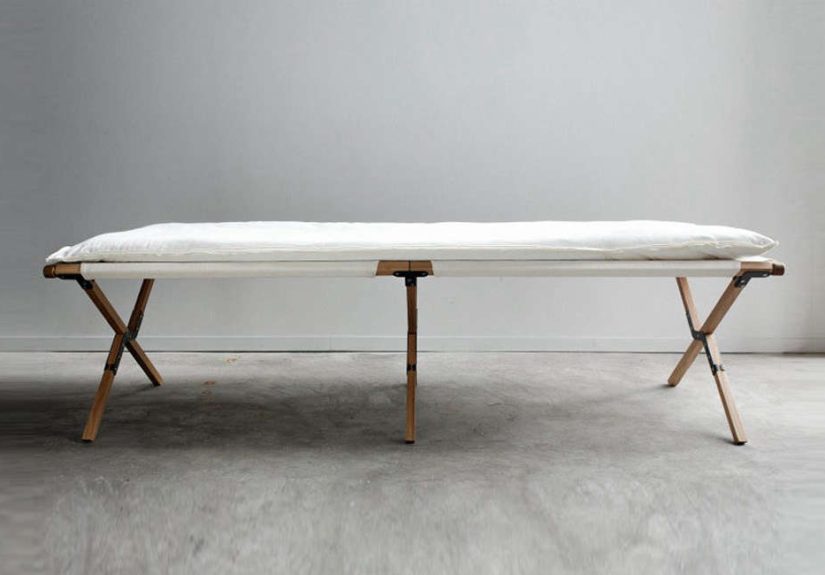
The Toposworkshop WW2 Folding Camp Bed is a compact, foldable bed inspired by WWII-era folding camp cots. In the Topos
Workshop version, you get a sturdy wooden frame paired with a taut fabric sleeping surface, plus a mattress layer added
for comfortso it’s not just a “sleep on canvas and think brave thoughts” situation.
Key idea: it’s a bed and a daybed
In modern terms, it functions like a daybed that can disappear when you don’t need it. That’s a big deal if you live in a
studio, host guests occasionally, or want an extra sleeping spot that doesn’t permanently occupy your floor plan. Unlike many
modern folding beds that scream “temporary,” this one reads like intentional furniturebecause it is.
What makes it feel “WW2” (without being a costume)
WWII folding camp beds were designed for portability, quick setup, and field-ready durability. The silhouette is simple: legs,
frame, and a tensioned surface. That simplicity is part of the appeal todayno thick upholstered bulk, no complicated mechanics,
just smart structure.
Where the WWII Folding Camp Bed Design Comes From
Folding camp beds are not a new invention. Variations have existed for centuries because humans have always loved two things:
sleeping off the cold ground and pretending they’re “roughing it” while still requiring eight hours and a supportive surface.
Topos Workshop even points to early military use long before WWII, noting that early camp beds are often associated with armies
on the move.
Why WWII made folding beds feel “necessary” instead of “nice”
WWII demanded massive, fast, repeatable solutions for housing soldiers and supporting medical operations. Sleeping systems had to be
light enough to transport, simple enough to deploy quickly, and repairable when things went wrong. That’s why the classic military cot
became a backbone item: not glamorous, but incredibly useful.
You’ll see this logic in U.S. military cots as well. The U.S. Army’s M-1938 style cot (wood frame with canvas) became a long-running workhorse,
used from before WWII through later conflicts, and it reflects a very specific kind of engineering: “Strong. Straightforward. Fixable.”
The materials also tell a wartime storywood and canvas weren’t just aesthetic choices; they were practical and, at times, tied to broader
supply realities.
Materials and Construction: Why Wood + Canvas Still Works
At first glance, a wooden frame and fabric sleeping surface can look “too simple” compared to modern gear that comes with aerospace aluminum,
tensioning levers, and marketing copy that suggests you’re sleeping on a cloud approved by science. But the old formula persists because it
solves real problems.
Wood: stable, repairable, and quietly handsome
A wooden frame brings warmthboth visually and literally. It doesn’t feel cold to the touch like metal can. It also ages in a way that feels
honest: scratches become character, not failure. If something loosens, you can usually tighten it. If something chips, you can sand and refinish
it. Wood is forgiving in a way that complicated folding hardware often isn’t.
Canvas (or sail cloth): supportive, breathable, and honest about physics
A taut fabric surface distributes weight differently than a mattress. Instead of compressing foam, you’re being held by tension. That can feel
surprisingly comfortableespecially if you like firm support and sleep well on your back or side. It’s also breathable, which matters in warm
weather or stuffy spaces (like a guest room that somehow becomes 14 degrees hotter the moment someone sleeps in it).
But here’s the deal: a fabric cot is not the same thing as a plush bed. Comfort depends on tension, your body, and what you layer on top.
This is why the Topos Workshop version adds a mattress layerbecause the design goal isn’t “authentic discomfort,” it’s “authentic form with
modern usability.”
Comfort Reality Check: How to Make a Camp Bed Sleep Like Furniture
A folding camp bed can be genuinely comfortable, but it helps to understand what you’re working with. The support comes from tension and frame geometry,
not thick cushioning. That means small tweaks make a big difference.
Layering: the secret sauce
If your camp bed includes a thin mattress, treat it like a head startnot a complete system. Add a fitted sheet and a breathable topper if needed.
In cooler weather, remember that sleeping surfaces with airflow underneath can feel colder than a traditional bed. A thin insulating layer (even a simple
foam pad) can make a noticeable difference without ruining the look.
Noise: yes, it might creakand that’s normal
Folding beds often talk back. A little creaking or shifting sound isn’t always a sign of weakness; it’s usually the frame settling under load.
If noise bothers you, check fasteners, make sure everything is fully seated, and consider a thin fabric buffer where parts contact (without compromising
folding function). Also, accept the truth: some cots creak like they’re telling ghost stories. It’s part of the charmuntil it’s 2 a.m.
Why Designers Love WWII-Style Camp Beds Right Now
Minimalist interiors have made people strangely allergic to bulky furniture. The modern home has become a place where everything is expected to do double duty:
sofa that becomes a guest bed, ottoman that hides storage, table that becomes a desk, desk that becomes a table because you ran out of tables.
A folding camp bed fits that lifestyle perfectly.
It’s the anti-blob
Many modern furniture pieces are visually heavybig upholstery, thick frames, massive silhouettes. A WW2-style folding camp bed is visually light. It takes up
less visual space even when it’s open. And when it’s closed, it’s not a sad lump in the corner; it’s a compact object that can tuck away cleanly.
It looks intentional in a way most folding beds don’t
Typical fold-out guest beds often signal “temporary and slightly desperate.” A well-designed camp bed signals “I planned for this.” That’s a very different
feelingespecially if you host often, run a short-term rental, or just enjoy being the person who has their life together (even if it’s mostly an illusion
maintained by throw blankets).
How to Use a Folding Camp Bed at Home (Without Living Like You’re in a Tent)
1) The guest-room cheat code
If you don’t have a dedicated guest room, a folding camp bed gives you a real sleep surface without sacrificing your daily layout. Store it in a closet or
along a wall. When guests arrive, set it up in minutes, add fresh linens, and suddenly you look like someone who hosts “effortlessly.”
2) A daybed that doesn’t hog the room
In a living room, it can function as a sleek daybedperfect for reading, stretching out, or pretending you’re going to take a “quick nap” that turns into a
full sleep cycle. Style it with a simple throw and one solid pillow so it looks curated, not like a cot waiting for inspection.
3) The porch/cabin/summer-house solution
Folding camp beds shine in spaces that fluctuate: cabins, beach houses, studios, and anywhere you sometimes need extra sleeping space but don’t want to commit
to a permanent bed. The breathable, lightweight build also makes sense in warm climates where heavy upholstered furniture can feel stifling.
Shopping Checklist: What to Look For in a WW2-Inspired Folding Camp Bed
Size and sleeping posture
Check length first. Many camp cots run shorter than a standard bed, and nobody wants the “feet dangling into the void” experience. If you’re tall, confirm
the usable sleeping length, not just the overall frame measurement.
Folded dimensions and storage reality
A folding bed only helps if it truly fits your storage plan. Measure your closet depth, under-bed clearance, or that one corner you swear is “fine” even
though it already holds a vacuum, a yoga mat, and three mysterious cables.
Material preferences: classic vs modern
If you want the heritage look, wood + canvas (or cotton sail cloth) delivers. If you want maximum weather resistance and low maintenance, modern aluminum
frames and synthetic sleeping surfaces can be betterthough they often look more utilitarian than furniture.
Load rating and stability
Many modern cots list weight capacities and are built for rugged use. If you’re buying for guests, think about stability more than minimal weight. A cot that
feels solid when someone sits down is worth far more than a cot that shaves a pound but wobbles like it’s making decisions in real time.
Vintage Corner: The U.S. M-1938 Cot and Why Collectors Still Care
If the Topos Workshop bed is the “design object” version of a camp bed, the U.S. M-1938 style cot is the “historical artifact that still works” version.
Collectors and design-minded homeowners often hunt these because they combine utility with a clean, modern silhouette.
What makes the M-1938 style cot distinctive
The wood-and-canvas build is instantly recognizable, and many examples show how durable the design was. People restore them, replace hardware, refinish wood,
and either repair or swap the canvas. It’s not always a quick projectbut it’s satisfying in the way that only “reviving an object built to survive history”
can be.
Condition tips (aka “don’t buy the romance, buy the structure”)
- Check joints and hardware: wobble is fixable, cracks can be harder.
- Inspect the sleeping surface: stains are common; rot is a dealbreaker unless you’re ready to re-cover.
- Look for honest repairs: replaced rivets and reinforced corners can be fine if done well.
- Smell test matters: if it smells like a damp basement, it may have lived a damp-basement life.
Why This Bed Works as a “Design Story,” Not Just a Sleeping Surface
The best design objects don’t just look goodthey carry meaning. A WW2-style folding camp bed is loaded with symbolism: mobility, resilience, practicality,
and the idea that good design can come from necessity.
Topos Workshop leans into that symbolism by treating the camp bed as more than a camping accessory. It’s framed as a daybed with design value, not just a
backup plan. That shiftgear to furnitureis exactly why this piece resonates now. We’re all living in flexible spaces. We’re all optimizing. We’re all trying
to make things work without adding more stuff that never gets used.
Field Notes: of Real-Life Camp Bed Experience
The first time I tried living with a WWII-style folding camp bed in a normal home setting, I assumed it would behave like a polite piece of furniture.
You know: silent, supportive, grateful to be included. Instead, it behaved like a helpful friend who shows up early, lifts all the heavy boxes, and then
refuses to stop narrating the process. Not loudlyjust with little creaks and snaps that sound like the bed is clearing its throat before offering
unsolicited advice.
Setup was fast. That part felt almost magical: unfold, lock, tensiondone. In a world where most furniture arrives in 47 parts and requires an Allen key
plus emotional resilience, a folding camp bed that becomes functional in minutes feels like a minor miracle. I threw on a fitted sheet, added a thin topper,
and suddenly my living room had a “guest suite” vibe. Not in a fancy waymore like “I can host you without making you sleep on a deflated air mattress that
slowly funnels you into the center like a sad tortilla.”
Night one taught me the first rule of camp beds: they are honest. A soft mattress can lie to you. A camp bed can’t. If your pillow is too flat, you’ll know.
If your sheet is wrinkled, you’ll feel it. If you try to sleep diagonally like a starfish, the frame will gently remind you that geometry has limits.
But once everything was dialed in, the support was surprisingly goodfirm in the right way, like the bed was saying, “I care about your spine.”
The second rule: airflow is both blessing and prank. On a warm evening, it felt greatcooler, less sticky, more breathable than a thick upholstered daybed.
On a cooler night, I understood why campers obsess over insulation. The air underneath doesn’t just exist; it participates. I slid a thin foam layer under the
topper, and suddenly the bed stopped feeling like it was subtly auditioning to become a refrigeration unit.
By the end of the week, the bed had earned its place. It wasn’t just an “extra” bedit became the spot where I read, answered emails, and occasionally took
a “five-minute break” that turned into a full nap with the confidence of someone who pays rent. The best part was folding it up afterward. The room snapped
back to normal, like the bed had never been thereno giant frame, no bulky mattress, no permanent sacrifice of space. Just a clean reset and the quiet smugness
of owning something functional and good-looking. Honestly, that combination is rarer than it should be.
Conclusion
The Toposworkshop / WW2 Folding Camp Bed hits a sweet spot: it borrows the proven logic of WWII-era folding camp cotsportability, simplicity, durability
and translates it into a modern design object you can actually live with. It’s practical without feeling temporary, compact without feeling flimsy, and
stylish without trying too hard. Whether you’re furnishing a small space, upgrading your guest setup, or just want a daybed that can disappear when life
demands your square footage back, this is one of those rare pieces that solves a real problem and looks good doing it.