Table of Contents >> Show >> Hide
- What “Curated Kitchen” Actually Means (and What It Doesn’t)
- Why the Curated Kitchen Is Trending Now
- The Curated Kitchen Playbook
- Step 1: Do a “Reality Check” Edit
- Step 2: Build Zones (Because Your Feet Deserve Fewer Steps)
- Step 3: Choose Containers With a Point (Not Just a Vibe)
- Step 4: Label Like You Mean It (But Don’t Label Your Soul)
- Step 5: Curate the Countertops (The Calm-View Strategy)
- Step 6: Fix the “Annoying Zones” Everyone Avoids
- Step 7: Add the Maintenance Ritual (Because Perfection Is Not a Plan)
- Curated Kitchen Ideas by Lifestyle
- Common Curated-Kitchen Mistakes (and Easy Fixes)
- of Real-World Curated Kitchen Experiences
- Conclusion: A Kitchen That Feels Like You
Some trends are loud. (Looking at you, avocado-green appliances of yore.) The curated kitchen trend is the opposite: calm, intentional, and just a little smug in the best waylike a countertop that can finally breathe.
If “organized kitchen” makes you picture a label maker sprinting through your house at midnight, take a beat. A curated kitchen isn’t about turning your pantry into a museum where no one is allowed to eat. It’s about designing your kitchen like a well-run shop: the right items, in the right place, easy to find, easy to put away, andbonusnice to look at.
This is why it’s trending across “organized home” circles right now: people want kitchens that work and feel good. Not sterile. Not chaotic. Just… curated.
What “Curated Kitchen” Actually Means (and What It Doesn’t)
Curated means edited, not empty
“Curated” is a fancy way of saying: you’re keeping what supports your real life, and letting go of what doesn’t. You’re not aiming for a kitchen with three forks and a single noble plate. You’re aiming for a kitchen where the tools you use all the time are within reachand the stuff you don’t use isn’t hogging prime real estate.
Curated means systems, not just pretty containers
Yes, uniform containers can look great. But the trend is less “buy 47 matching canisters” and more “create a system you can maintain.” Many organizing pros emphasize zones (grouping items by how you use them) and making categories easy to see and restock. That’s the secret sauce: function first, aesthetics follow.
Why the Curated Kitchen Is Trending Now
- Open-concept living: When your kitchen is basically on stage, “just shove it in a cabinet” stops working. (Or it works until the cabinet door won’t close.)
- Busy schedules: Weeknights demand speed. A curated kitchen reduces decision fatigue because you’re not hunting for the cumin like it’s a hidden-object game.
- Food costs and waste: When you can see what you haveand rotate ityou’re more likely to use it before it expires.
- The “reset” mindset: People want routines that keep spaces tidy without marathon cleaning sessions.
- Aesthetic comfort: A visually calmer kitchen can feel like a mental exhale.
The Curated Kitchen Playbook
Think of this as the practical, no-drama blueprint. It’s what professional organizers and food publications keep circling back to: edit, zone, contain, label, and maintain.
Step 1: Do a “Reality Check” Edit
Before you buy anything, do the most powerful organizing move: remove what you don’t actually use. Set a timer for 30 minutes and do one drawer or one cabinet at a time.
- Duplicates: Keep the best one. Donate the rest.
- “Someday” gadgets: If the avocado slicer hasn’t earned its rent in a year, it’s probably not going to.
- Broken or annoying items: If the lid doesn’t fit and it makes you mad every time, it’s not “storage,” it’s an emotional tax.
Curator’s rule: Keep what supports your cooking style. A curated kitchen is personalmore “signature collection,” less “generic showroom.”
Step 2: Build Zones (Because Your Feet Deserve Fewer Steps)
Multiple reputable outlets and organizing pros recommend arranging kitchens into logical zones so daily tasks flow naturallyprep tools near prep space, cooking tools near the stove, and so on.
Here are the core curated-kitchen zones to consider:
- Prep Zone: cutting boards, knives, mixing bowls, measuring tools
- Cooking Zone: oils, salt, spices, pans, utensils, sheet pans
- Baking Zone: flour/sugar, baking powder/soda, parchment, mixer tools
- Clean-Up Zone: dish soap, pods, towels, trash bags (close to sink/dishwasher)
- Breakfast/Coffee Zone: mugs, coffee/tea, sweeteners, breakfast staples
- Snack/Grab Zone: lunch items, kid snacks, bars, crackers
Pro tip: Put daily-use items at eye level or in the easiest-to-reach drawers. Reserve high shelves for backstock and occasional items.
Step 3: Choose Containers With a Point (Not Just a Vibe)
Clear bins and stackable baskets are popular because they make categories visible and can maximize vertical spaceespecially in pantries.
But curated kitchens aren’t “everything must be decanted.” A more realistic approach (often recommended by organizers) is to decant selectively:
- Decant: flour, sugar, rice, pasta, cerealanything that spills, stales, or looks identical in a crumpled bag.
- Keep in original packaging: items with key instructions, weird shapes, or fast turnover (like snack multipacks).
- Use bins as “category drawers”: put smaller packages in a bin labeled “Baking Add-Ins” or “Lunchbox Stuff,” then pull the whole bin out when needed.
Curated rule: Containers should reduce friction. If a container makes refilling so annoying you avoid it, it’s not helpingit’s just a fancy obstacle course.
Step 4: Label Like You Mean It (But Don’t Label Your Soul)
Labeling works best when it supports the system, not when it becomes the system. Some pros suggest labeling shelves or zones (even with “bookplate” style markers) so everyone in the house knows where categories live.
What to label first:
- Zones: “Breakfast,” “Snacks,” “Baking,” “Eat First.”
- Look-alike basics: flour varieties, rice types, grains, powdered sugar vs. cornstarch.
- Backstock: paper towels, extra coffee, repeat staples.
And yes, dating certain pantry items can help you rotate stockespecially if you buy in bulk.
Step 5: Curate the Countertops (The Calm-View Strategy)
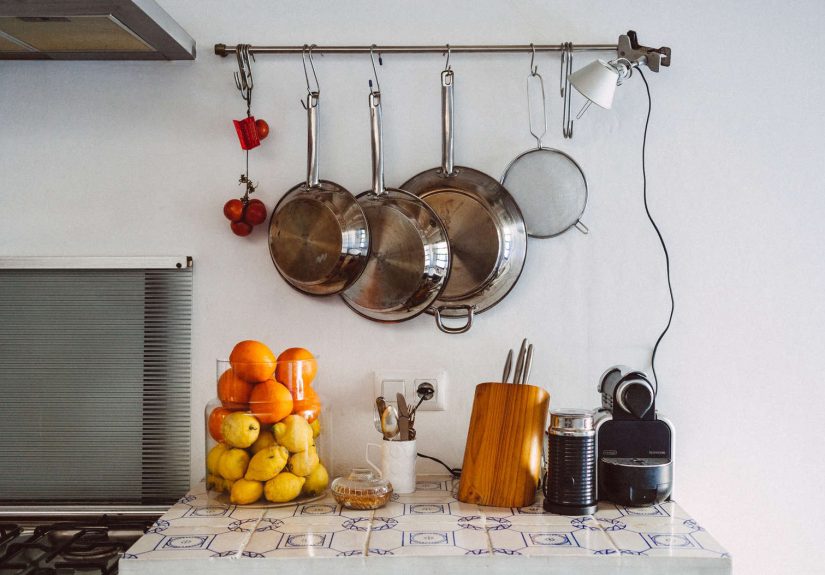
Curated kitchens usually have a “calm view”: when you walk in, the first thing you see isn’t ten small appliances shouting for attention.
A simple approach:
- Keep only daily drivers out: coffee machine, toaster, maybe a fruit bowl.
- Create stations: a coffee tray with mugs/sugar; a cooking caddy with oils/salt by the stove.
- Hide the rest: appliance garage, pantry shelf, or a dedicated cabinet zone.
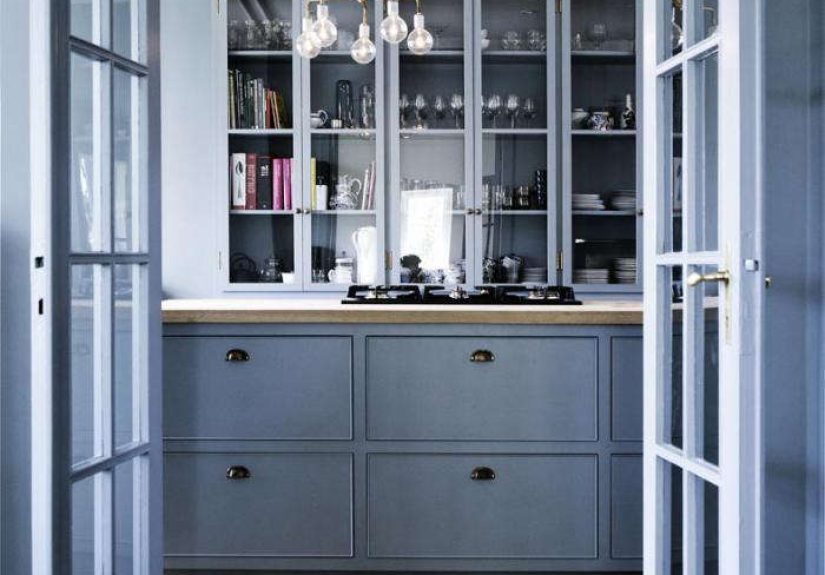
If you love the “curated” look, try one open shelf or a glass-front cabinet for your prettiest, most-used items (think: matching bowls or everyday plates). Just keep it honest: display what you actually reach for, not what you dust resentfully.
Step 6: Fix the “Annoying Zones” Everyone Avoids
Curated kitchens win because they solve the messy pain pointsespecially these:
1) The container-lid apocalypse
Food publications and organizers often recommend dedicated lid organizers or dividers to stop the “falling dominoes of plastic.”
2) The junk drawer that ate your scissors
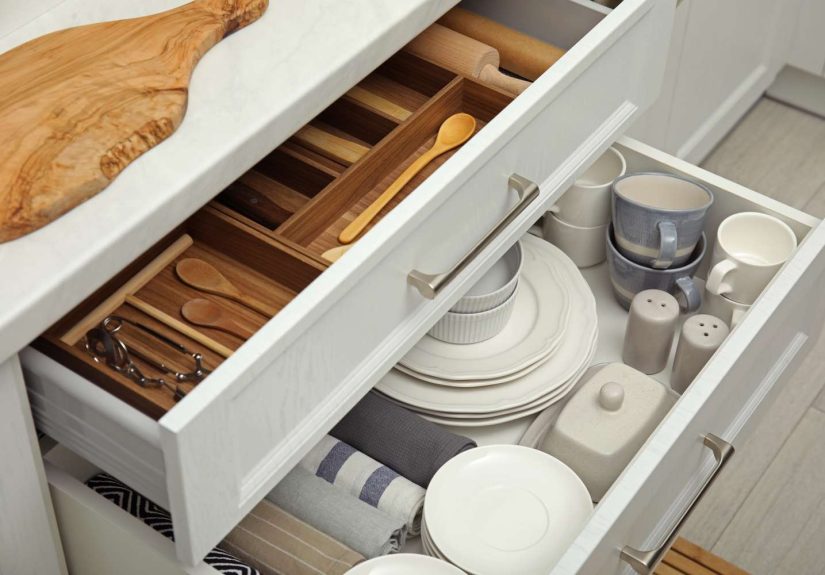
Use a simple drawer organizer with adjustable compartments (tested organizer roundups consistently point to modular dividers as the easiest upgrade).
3) The under-sink chaos cave
Use bins to group cleaning categories, a small turntable for frequently used bottles, and a tension rod for spray bottles. The goal is to prevent leaks from becoming a surprise science experiment.
4) The deep pantry “black hole”
Tiered risers, pull-out bins, and turntables help keep items visible so they don’t vanish behind the pasta you bought during your “I will become a person who makes homemade sauces” era.
Step 7: Add the Maintenance Ritual (Because Perfection Is Not a Plan)
A curated kitchen stays curated because it has tiny routines:
- Daily 5-minute reset: clear counters, return items to their zones, toss trash, quick wipe.
- Weekly “inventory glance”: check snacks, breakfast basics, and “eat first” items.
- Monthly mini-edit: one drawer or shelfjust enough to prevent creep.
Curated Kitchen Ideas by Lifestyle
The Weeknight Warrior Kitchen
If dinner is a sprint, curate for speed:
- Create a weeknight meals bin (pasta + sauce + tuna + beans in one pull-out category).
- Keep salt, pepper, oil, and your top spices by the stove.
- Use a snack/lunch zone so packing doesn’t destroy the whole pantry.
The Baker’s Curated Kitchen
Bakers win with a dedicated baking zone:
- Airtight containers for flour/sugar (less mess, better freshness).
- A small bin for extracts, food coloring, sprinkles, and “fun additions.”
- One drawer for measuring tools and parchment so you’re not digging mid-recipe.
The Entertainer’s “Guest-Ready” Kitchen
Entertainers curate to keep the main kitchen looking calm even when hosting. Design magazines and home outlets have highlighted the rise of support spaceslike butler’s pantries or even “back kitchens/dirty kitchens”to hide prep and cleanup from view.
No remodel required, though. You can fake it with:
- A rolling cart for barware or serving pieces
- A “hosting bin” with napkins, candles, matches, and a backup corkscrew
- A cabinet zone for platters and serving utensils near where you plate food
The Small-Space Superstar Kitchen
Small kitchens can be ultra-curated because every inch matters:
- Use stacking baskets and risers to maximize vertical space.
- Store everyday dishware in a deep drawer with dividers (less reaching, more control).
- Choose multi-use tools: one great chef’s knife, one great sheet pan, one great skillet.
Common Curated-Kitchen Mistakes (and Easy Fixes)
- Mistake: Organizing before decluttering.
Fix: Edit first. Always. - Mistake: Over-decanting everything.
Fix: Decant only what helps (spill-prone, stale-prone, hard-to-see categories). - Mistake: Labels no one follows.
Fix: Label zones and frequently confused itemsthen keep labels simple. - Mistake: A pantry that looks great but doesn’t “shop well.”
Fix: Put daily essentials front-and-center, backstock up high, and create an “eat first” spot. - Mistake: Buying organizers without measuring.
Fix: Measure shelves and drawers first. Containers should fit your kitchennot your fantasy kitchen.
of Real-World Curated Kitchen Experiences
Curated kitchens don’t live on a mood board. They live in real homes where someone is always hungry, late, or both. Here are common “curated kitchen” experiences that show why the trend sticksbecause it makes daily life smoother, not just prettier.
The Coffee Station That Saved Mornings
One of the most satisfying upgrades is a simple coffee/breakfast zone. When mugs, coffee, filters, sweeteners, and a spoon live together, the morning routine stops spilling into three cabinets and a drawer across the room. The payoff isn’t just speedit’s fewer abandoned items left on the counter because everything has a home. People often notice that once the coffee station is set, they naturally wipe the area down more often because it looks “finished,” like a tiny café corner instead of a half-built project.
The Snack Zone That Reduced Household Negotiations
In many homes, the pantry gets trashed during snack time. A grab-and-go snack bin (or two) changes that dynamic. Instead of rummaging through chips, crackers, and random boxes, kids (and adults) can pull from a single spot. The bin acts like a boundary: when it’s empty, it’s time to restockno dramatic scavenger hunts required. Bonus: it becomes easier to see what you actually consume, which helps with grocery planning and reduces the “Why do we have six bags of pretzels?” phenomenon.
The Lid Organizer That Ended the Tupperware Scream
Container lids are a universal comedy routine. A simple divider systemvertical slots for lids, stackable containers in one rowturns the daily frustration into a quick grab. Households often report that this one change improves the entire kitchen mood because it removes a frequent micro-stressor. When the “lid avalanche” stops happening, you don’t have to psych yourself up just to pack leftovers.
The “Eat First” Shelf That Cut Food Waste
Curated kitchens often include a small “eat first” spot: a bin or shelf for items nearing their best-by date, open snack bags, or that jar of sauce that’s been quietly aging in the back. The experience here is subtle but powerful: it reduces waste without requiring you to remember everything you own. You don’t need perfect inventory skillsjust a designated place that makes the decision obvious.
The Weekly Reset That Finally Felt Doable
The biggest “aha” moment many people have is realizing that maintaining an organized kitchen doesn’t require a monthly overhaul. A five-minute daily reset plus a quick weekly check (trash, counters, fridge glance, snack restock) feels manageable. The kitchen stays functional because the system is designed for real behavior: quick returns to zones, visible categories, and storage that doesn’t require a 12-step process. That’s the real curated-kitchen win: it’s not fragile.
Conclusion: A Kitchen That Feels Like You
The curated kitchen trend is popular because it’s not just about looking organizedit’s about living easier. When your kitchen is zoned for how you cook, stocked with what you actually use, and maintained with small resets, it becomes a space that supports your day instead of stealing your time.
Start small: one drawer, one zone, one “annoying area” fix. Build the system, then let the aesthetics show up naturally. That’s the curated-kitchen magic: calm, personal, and shockingly practical.