Table of Contents >> Show >> Hide
- First, a quick mindset shift: “routine” doesn’t mean “rigid”
- Before you leave: a pre-trip checklist that saves vacations
- Packing insulin and supplies: the non-negotiables
- Flying with insulin: airport security without the drama
- Time zones: the part where your watch lies to you
- Food and activity while traveling: keep it predictable-ish
- Keeping your monitoring routine on track
- What if something goes wrong? (Because travel loves plot twists)
- International travel: add a little paperwork, lose a lot of stress
- A “travel-day routine” you can copy
- Conclusion: travel can be spontaneousyour insulin plan shouldn’t be
- Travel Experiences: Real-Life Lessons From the Road (Extra)
Travel is basically a controlled experiment where you change everything at oncesleep, meals, stress, activity, time zonesand then act surprised when your blood sugar has opinions. If you have type 2 diabetes and use insulin, the goal isn’t “perfect numbers” on vacation. The goal is steady, safe, and preparedso you can actually enjoy the trip instead of spending it playing detective with your glucose meter.
This guide breaks down the real-world stuff that makes insulin routines wobble while traveling: packing and storage, airport security, time-zone chaos, unpredictable meals, and what to do when plans (inevitably) change. Expect practical steps, specific examples, and a little humorbecause if we can’t laugh at the fact that your hotel breakfast is somehow 90% pastries, what can we laugh at?
First, a quick mindset shift: “routine” doesn’t mean “rigid”
Your insulin routine at home probably relies on familiar cues: your usual breakfast time, your regular commute, your normal bedtime. Travel removes those cues and replaces them with “boarding group 9,” “mystery sandwich,” and “why is the sun still up?”
So instead of trying to replicate home perfectly, aim for:
- Consistency where it matters most (basal insulin timing, access to supplies, treating lows quickly).
- Flexibility where life happens (meal timing, activity, delays).
- Redundancy (backups for your backups).
Before you leave: a pre-trip checklist that saves vacations
1) Do a “travel consult” with your diabetes care team
If you’re crossing time zones, changing your activity level a lot (hello, theme parks), or traveling internationally, it’s smart to review your plan ahead of time. Ask about:
- How to handle basal insulin timing when days get longer/shorter.
- What to do if you’re eating later than usual (or skipping meals because your flight got delayed again).
- How to treat lows when you’re more active than normal.
- How to adjust if you get sick while traveling.
Tip: Put your clinician’s office number in your phone contacts (and write it down). If you lose your bag, this becomes a superhero move.
2) Pack double (yes, double) and split it up
A solid rule: bring at least twice what you expect to use. Then split supplies into two or three places so one lost bag doesn’t become a crisis.
The “carry-on is king” rule: Keep insulin and critical diabetes supplies in your carry-onnever checked luggage. Checked bags can be delayed, lost, or exposed to temperature extremes.
3) Build a “day bag” you never let out of your sight
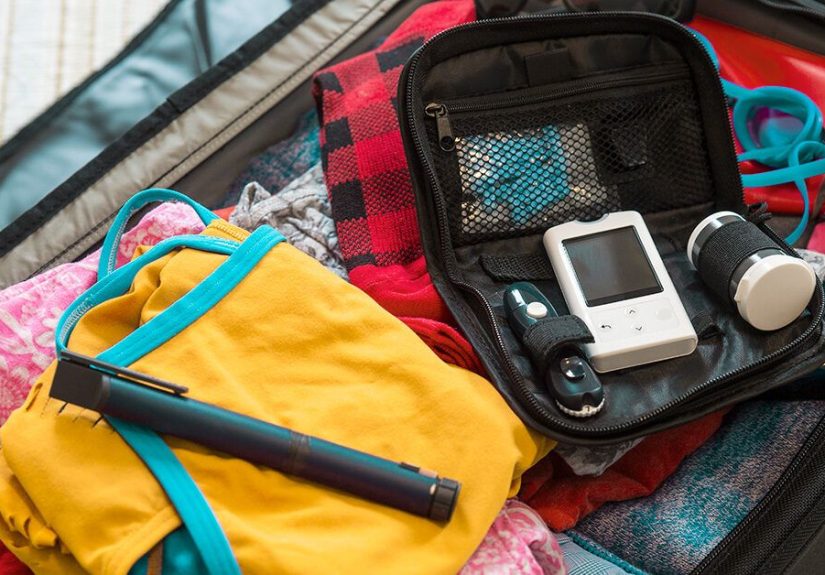
This is your mini emergency kit that stays with you at your seat (plane/train) or within arm’s reach (car). Include:
- Rapid-acting carbs: glucose tablets, small juice box, or gel
- Meter/CGM supplies (and a backup meter if you use CGM)
- Insulin + delivery supplies you’ll need in the next 24 hours
- Protein snack (nuts, cheese crackers, peanut butter pack)
- Medical ID
Packing insulin and supplies: the non-negotiables
Insulin storage: temperature is the hidden villain
Most insulin is happiest:
- Unopened: stored refrigerated (commonly around 36°F to 46°F).
- In use: typically okay at room temperature in a moderate range (often around 59°F to 86°F) for a limited timemany products are around 28 days, but always follow your specific label.
Travel takeaway: You’re not trying to keep insulin icy-cold. You’re trying to keep it stable and away from heat and freezing.
How to keep insulin safe on the road
- Use an insulated pouch with a cool pack if you’ll be in hot weather.
- Avoid direct contact with icefreezing can damage insulin.
- Never leave insulin in a parked car (hot or cold).
- Hotel strategy: If you need refrigeration, ask for a room fridge. If the mini-fridge is unpredictable, keep insulin in your insulated bag and monitor the environment.
Sharps and disposal
Bring enough pen needles/syringes, plus a safe disposal plan. A travel sharps container is ideal. If you’re in a pinch, a thick plastic bottle with a screw cap can work temporarilylabel it and dispose of it according to local guidance when you can.
Flying with insulin: airport security without the drama
TSA basics (the good news)
Diabetes supplies and medically necessary liquids (including insulin) are allowed through security. The practical move is to declare what you’re carrying and separate it for screening.
What to say at the checkpoint
Use a simple script:
“Hi, I have diabetes. These are medically necessary supplies and insulin.”
Pumps and CGMs
If you wear an insulin pump or CGM, follow the guidance for your specific device. Some manufacturers advise avoiding certain scanners or requesting alternative screening. If you’re unsure, ask for a hand inspection rather than guessing in the moment.
Make security easier with documentation
- Keep prescription labels on boxes when possible.
- Carry a clinician letter if you have one (especially helpful internationally).
- Consider assistance services if you anticipate challenges (for example, some travelers request extra help through TSA support programs).
Time zones: the part where your watch lies to you
Time-zone changes can mess with insulin timing because your body still wants a “24-hour day,” but travel can make your day shorter (eastbound) or longer (westbound). The larger the time shift, the more planning matters.
Practical strategies that help most people
- Decide what “time” you’re using on travel day (home time vs. destination time) and stick with it until you have a clear transition point.
- Use alarms for basal insulin and planned checksphones don’t get jet lag, they just get annoying (which is perfect).
- Expect appetite and sleep changes for 24–48 hours, which can change glucose patterns.
- If you cross several time zones, don’t wing it: get a personalized plan from your clinician.
A simple example: eastbound vs. westbound
Eastbound (day gets shorter): You may have “less time” between usual doses. The risk is stacking insulin too close together if you shift everything immediately.
Westbound (day gets longer): There’s a longer gap between usual times. The risk is running “light” if you go too long without basal coverage.
That’s why a quick pre-trip plan is worth itespecially if your schedule is tight or you use basal-bolus insulin.
Food and activity while traveling: keep it predictable-ish
You don’t need to eat perfectly on vacation. You do need a plan for “surprise variables.”
Airport and road-trip food: build a plate, not a mystery
When options are random, aim for a simple structure:
- Protein: eggs, Greek yogurt, chicken, tofu, deli turkey
- Fiber: salad, veggies, beans, whole grains, fruit
- Carbs you can estimate: one roll, one cup of rice, a small potatosomething countable
Pro tip: If the meal is mostly carbs (hello, muffin the size of your head), pair it with protein/fat to slow the spike and consider a walk afterward if it’s safe and realistic.
Walking is the travel “cheat code”
Even short walks after meals can help smooth post-meal glucose. On trips, walking also reduces stress (and lets you pretend you’re sightseeing when you’re really just looking for a pharmacy).
Hydration and heat
Dehydration can push glucose higher, and heat can affect insulin and devices. Carry water, especially in airports and warm climates. If you’ll be outside a lot, keep supplies shaded and check glucose more often until you see your patterns.
Keeping your monitoring routine on track
Travel is exactly when monitoring matters mostbecause you’re doing things you don’t usually do.
- Set “anchor checks”: wake-up, before a main meal, bedtime.
- Add checks when routines change: long walks, alcohol, unusual meals, late nights.
- Bring backup power: extra CGM sensors (if applicable), meter batteries/charger, and a power bank.
What if something goes wrong? (Because travel loves plot twists)
If you go low
Treat lows fast with a measured carb source you trust (glucose tabs, gel, juice). Recheck after treatment based on your care plan. Always keep rapid carbs within reachespecially during long lines, long hikes, or long explanations to the rental-car desk about why you didn’t buy the insurance.
If you get sick
Illness can raise glucose and increase dehydration risk. Keep fluids, continue monitoring, and follow your sick-day plan. If you’re vomiting, can’t keep fluids down, or readings stay very high despite correction per your plan, seek medical care promptly.
If insulin is lost or damaged
- Use your backup supply (this is why we pack double).
- Contact your pharmacy and clinician.
- If you’re away from home, urgent care or an emergency department can help bridge you safely.
International travel: add a little paperwork, lose a lot of stress
- Bring prescriptions (paper or digital) and keep meds in original packaging when possible.
- Pack a clinician letter describing your need for insulin and supplies.
- Learn key phrases: “diabetes,” “insulin,” “low blood sugar,” and “I need sugar.”
- Plan for access: know where you can find a pharmacy near your lodging.
A “travel-day routine” you can copy
The night before
- Lay out insulin + supplies + snacks
- Charge devices and pack backup power
- Set alarms for basal insulin and planned checks
The morning of travel
- Eat something predictable if possible
- Carry your day bag (snacks + glucose + insulin access)
- Keep supplies in your carry-on and easy to declare at security
During transit
- Check at anchor times (wake, before meals, bedtime)
- Expect delays and keep carbs handy
- Stay hydrated
Arrival day
- Pick your “new normal” time zone and adjust your schedule as planned
- Do a quick supply inventory (before you collapse into the hotel bed)
- Take a short walk if you canhelps glucose and jet lag
Conclusion: travel can be spontaneousyour insulin plan shouldn’t be
Sticking to your insulin routine while traveling with type 2 diabetes is less about perfection and more about preparation + patterns. Pack extra and keep insulin with you. Protect it from temperature extremes. Use alarms to stay consistent. Monitor a bit more until you see how your body responds to the new schedule. And if time zones or big activity changes are on the menu, get a personalized plan before you go.
Then do the most important travel step of all: look up from your glucose app long enough to actually see where you are. (Yes, even if it’s just the airport carpet. Some of those carpets deserve a documentary.)
Travel Experiences: Real-Life Lessons From the Road (Extra)
Sometimes the best travel advice isn’t a ruleit’s a moment where you think, “Well, I’m never doing that again.” Here are a few experience-based scenarios (the kind you hear in waiting rooms, group chats, or from a relative who starts every story with “So there we were…”), plus what they teach about keeping your insulin routine steady.
1) The Business Trip That Turned Into a Snack Audit
Imagine this: a quick two-day work trip. You packed well… except you assumed the conference would have “normal food.” Breakfast is pastries, lunch is sandwiches, and the afternoon “healthy option” is a bowl of candy with a single bruised apple guarding it like a bouncer. By day two, your glucose pattern looks like a mountain range.
Lesson learned: travel food is unpredictable, but your backup plan can be predictable. Pack at least two “rescue meals” you can count: a protein bar you’ve used before, a small pack of nuts, shelf-stable tuna with whole-grain crackers, or peanut butter packs. These aren’t glamorous, but they keep you from having to “guess-dose” a mystery muffin at 7 a.m.
2) The Road Trip Where “We’ll Eat Later” Became a Lifestyle
On a road trip, time gets weird. Someone needs a restroom. Someone else wants coffee. Traffic turns a three-hour drive into six. Meals slide, snacks happen, and suddenly it’s 4 p.m. and you’re in a gas station choosing between chips or… different chips.
Lesson learned: insulin routines do best with anchors. Even if meals move, try to keep a few fixed points: wake-up check, before your biggest meal, bedtime. And keep fast-acting carbs within reachnot in the trunk under three suitcases and a random souvenir snow globe. If you tend to run low with long stretches of driving (less movement, irregular food), plan small scheduled snacks you can estimate instead of grazing nonstop.
3) The Beach Vacation That Nearly Cooked the Supplies
Beach days are relaxing… until you remember insulin and devices do not enjoy being slow-roasted. Someone leaves the diabetes bag in direct sun “just for a minute,” and that minute turns into an hour because everyone is having fun. You return to a warm pouch and a bad feeling.
Lesson learned: temperature protection needs a system, not a wish. Use an insulated pouch, keep it shaded, and set a phone reminder if you’re the type to lose track of time (which is… everyone on vacation). Also, avoid placing insulin directly against ice packs; freezing can be just as damaging as heat. If you’re in extreme temperatures, consider carrying smaller amounts during the day and keeping the main supply in a more controlled environment.
4) The Red-Eye Flight Where Time Zones Played Tricks
Red-eye flights can scramble hunger cues and sleep. Maybe you eat a late airport dinner, doze off, then wake up in a new time zone where it’s “breakfast time” even though your body thinks it’s midnight. You’re tired, slightly dehydrated, and your glucose is doing interpretive dance.
Lesson learned: plan your transition moment. Decide in advance when you’ll switch from home time to destination time for your routineoften this is “after landing” or “after the first full night.” Use alarms so you don’t rely on jet-lagged memory. And give yourself grace: it may take a day or two to see the new pattern. During that adjustment window, monitor more frequently, keep treatment carbs close, and choose meals that are easier to estimate (protein + fiber + a portioned carb) until things stabilize.
If there’s one theme across these experiences, it’s this: travel success isn’t about controlling everythingit’s about being ready for anything. When you pack extra, protect your insulin, keep your “day bag” close, and use a few consistent monitoring anchors, you can handle the curveballs and still enjoy the trip.