Table of Contents >> Show >> Hide
- What’s Inside
- Quick Picks (Fastest Way to Choose)
- Our Favorite DeWalt Miter Saw Overall: DWS780
- How We Tested (Without Turning Your Garage into a Lab)
- Head-to-Head Reviews: The Best DeWalt Miter Saws
- Best Overall: DeWalt DWS780 (12" Double Bevel Sliding Compound)
- Best Value: DeWalt DWS779 (12" Double Bevel Sliding Compound)
- Best Cordless (Pro Power): DeWalt DCS781 (60V Max, 12" Double Bevel Sliding)
- Best Compact Cordless: DeWalt DCS361 (20V Max, 7-1/4" Sliding)
- Best Budget Corded: DeWalt DWS715 (12" Single-Bevel Compound)
- Best Small-Shop/Starter: DeWalt DWS713 (10" Compound)
- Buying Guide: How to Pick the Right DeWalt Miter Saw
- Practical Setup Tips for Better Cuts
- Safety Notes (Because Fingers Are Handy)
- FAQ
- Extra: of Real-World “Miter Saw Life” (What People Don’t Tell You)
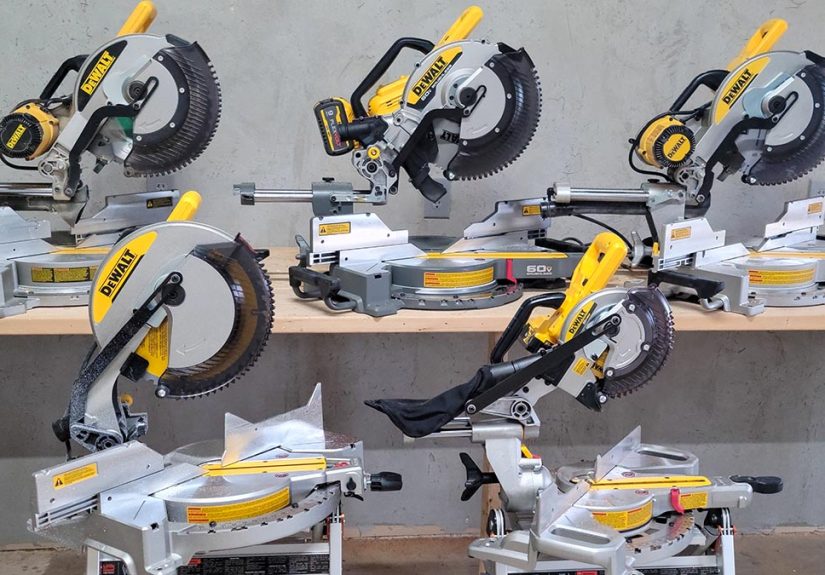
Shopping for the best DeWalt miter saw can feel like ordering coffee in a new city:
you think you want “medium,” but suddenly you’re choosing between double bevel, sliding rails, shadow lines,
and something called a “detent plate” like it’s a fancy cheese board.
So we did what any reasonable person would do: we compared the most popular DeWalt miter saws using a consistent,
real-world scorecard (cut capacity, accuracy features, dust control, portability, and value), cross-checked the
details against manufacturer specs and reputable tool-review testing, and then picked winners you can actually use
on a jobsite or in a garage shop without developing a new eye twitch.
If you’re here for one answer, here it is: our favorite is the DeWalt DWS780. It’s the “do-it-all”
sliding compound miter saw that keeps showing up in pro shops for a reasonbig capacity, clean visibility of the cut line,
and the kind of repeatable accuracy that makes trim work feel less like a spiritual trial.
Quick Picks (Fastest Way to Choose)
Here’s the shortlist for the most common needs. If you’re deciding between two models, scroll to the reviewsthere’s
a “who it’s for” section under each one.
| Pick | Model | Best For | Why It Won |
|---|---|---|---|
| Best Overall | DeWalt DWS780 | Trim + remodeling + serious DIY | Big capacity, excellent cut-line visibility, pro-grade features |
| Best Value | DeWalt DWS779 | Big cuts on a tighter budget | Similar capacity to the DWS780, usually less expensive |
| Best Cordless Power | DeWalt DCS781 (60V) | Jobsites without easy outlets | High runtime, strong dust capture, pro-focused design |
| Best Compact Cordless | DeWalt DCS361 (20V, 7-1/4″) | Punch-list work, light trim, portability | Lightweight and surprisingly capable for its size |
| Best Budget Corded | DeWalt DWS715 (12″) | Homeowners doing occasional projects | Simple, powerful, and easy to live with |
| Best Small-Shop/Starter | DeWalt DWS713 (10″) | Basic crosscuts + small footprint | Compact, fast blade speed, great for lighter work |
Our Favorite DeWalt Miter Saw Overall: DWS780
The DeWalt DWS780 is the miter saw equivalent of a pickup truck with a clean interior: it exists,
it’s practical, and it makes you wonder why you waited so long.
This 12-inch double bevel sliding compound miter saw is built to handle everything from big deck boards
to clean baseboard cuts without feeling like you’re wrestling a machine.
Why it’s our top pick
- Excellent cut-line visibility: DeWalt’s cutline/shadow-style system makes it easier to place cuts accurately.
- Big capacity: It’s designed for wide crosscuts and taller trim stock, which matters the second you stop cutting only 2x4s.
- Helpful adjustments: The detents, bevel scale, and fence design are aimed at repeatable work.
- Dust control that’s actually trying: It’s not magic, but it’s better than “dust everywhere, forever.”
Who should buy the DWS780
If you do remodels, trim, flooring, cabinetry, decks, framing, or you’re the household hero who fixes things on weekends,
this is the DeWalt miter saw that’s most likely to feel like a long-term “good decision.”
Who should skip it
If you need ultra-portability above all else (tiny vehicle, lots of stairs, constant moving), you’ll be happier with a compact
cordless option like the DCS361or a smaller, non-sliding corded saw.
How We Tested (Without Turning Your Garage into a Lab)
We didn’t just read one spec sheet and call it a day. Our “testing” approach mirrors how careful buyers and tool reviewers compare saws:
we used a consistent scoring rubric and verified claims using manufacturer documentation plus multiple independent tool-review evaluations.
Our scorecard (the stuff that actually changes your day)
- Cut capacity: Can it handle wide boards and common trim stock without awkward workarounds?
- Accuracy & repeatability: Detents, fence stability, smooth sliding rails, and reliable bevel/miter adjustment.
- Cut-line visibility: Shadow/cutline systems beat guessing and “I swear it was on the line.”
- Power delivery: Not just “amps,” but how confidently it handles dense stock without drama.
- Dust collection: Does it help, or does it merely witness the chaos?
- Portability & ergonomics: Weight, carry points, controls, and how annoying it is to move.
- Value: What you get for the moneyespecially if two models cut similarly.
Translation: we looked for the miter saws that feel dependable in real projectswhere the wood isn’t perfectly straight,
the room corners aren’t perfectly square, and you’d like to finish before the sun explodes.
Head-to-Head Reviews: The Best DeWalt Miter Saws
Best Overall: DeWalt DWS780 (12″ Double Bevel Sliding Compound)
The DWS780 is the flagship-style corded slider in DeWalt’s lineupand it behaves like it. The combination of a wide crosscut
capability, double bevel range, and cut-line visibility makes it an easy recommendation for anyone doing trim or remodeling.
What we liked
- Capacity for real work: Great for wide boards and common trim profiles (including crown and base held vertically).
- Confidence-friendly cut placement: The cutline/shadow approach helps with accuracy and speed.
- Designed for repetition: Detents and controls are built for “do this cut 47 times” days.
Watch-outs
- It’s not tiny: Sliders take space, and this is a full-size saw.
- Dust isn’t fully solved: A vacuum helps a lot; without one, you’ll still sweep.
Best for: Remodelers, trim carpenters, serious DIYers, anyone who wants one saw that covers almost everything.
Best Value: DeWalt DWS779 (12″ Double Bevel Sliding Compound)
The DWS779 vs DWS780 debate is basically a classic: “Do you want the premium visibility feature baked in, or do you want
similar cutting capability for less?” The DWS779 delivers the big-saw capacity and double bevel versatility that people want from a
DeWalt slider, often at a lower price point.
What we liked
- Big capacity without the premium price sting: Great “first pro saw” for many buyers.
- Double bevel flexibility: Helpful for trim angles and frequent bevel changes.
- Solid adjustment system: Built around repeatable accuracy, not guesswork.
Watch-outs
- Visibility features can vary by kit/version: Some buyers prefer the DWS780’s integrated setup if they’re doing lots of finish work.
- Still a full-size slider: If space is tight, consider compact cordless or a non-slider.
Best for: Buyers who want “big DeWalt slider energy” while staying budget-aware.
Best Cordless (Pro Power): DeWalt DCS781 (60V Max, 12″ Double Bevel Sliding)
If your worksite power situation is “there’s an outlet somewhere… probably… behind that mountain of scrap,” the
DCS781 is DeWalt’s cordless answer for serious cutting. It’s positioned as a pro-grade cordless slider with strong runtime,
dust capture, and updated controls.
What we liked
- Strong runtime: Built for lots of cuts per charge, which matters on a long trim or deck day.
- Dust capture emphasis: It’s engineered to capture a high percentage of dust when paired with a compatible extractor.
- Portability (for its class): For a 12″ cordless slider, it’s designed to be moved job-to-job.
Watch-outs
- Battery ecosystem cost: If you don’t already own FlexVolt batteries/chargers, budget accordingly.
- Still not “small”: Cordless doesn’t mean miniaturethis is a full-feature saw.
Best for: Pros and serious DIYers who need cordless convenience without giving up 12″ slider capability.
Best Compact Cordless: DeWalt DCS361 (20V Max, 7-1/4″ Sliding)
The DCS361 is the miter saw you pick when you want to carry the saw like a normal person. It’s compact, lightweight,
and aimed at finish/punch-list work, small trim, flooring, and light construction cuts.
What we liked
- Portability: This is one of the easiest DeWalt miter saws to move and store.
- Surprising capability: It handles common boards and trim without feeling underpowered for its size.
- Great “second saw” potential: Ideal to keep for punch-list work when the big slider stays parked.
Watch-outs
- Blade size limits capacity: It’s a 7-1/4″ sawamazing for what it is, but not a replacement for a 12″ slider for big stock.
- Battery runtime depends on pack size: Bigger batteries = more cuts = more happiness.
Best for: Apartment-friendly portability, trim touch-ups, mobile installers, and anyone who values “easy to carry” over “cuts everything.”
Best Budget Corded: DeWalt DWS715 (12″ Single-Bevel Compound)
Want a solid DeWalt miter saw without paying for a sliding mechanism? The DWS715 is a straightforward 12″ compound saw
that delivers strong performance for typical homeowner projects. It’s a great fit when you don’t need the huge crosscut capacity of a slider.
What we liked
- Simple and powerful: Plenty of speed for common lumber and trim.
- Lower cost of entry: Often a more approachable price than large sliders.
- Less space required: Non-sliding saws are easier to fit in a small shop or garage corner.
Watch-outs
- Single bevel: You’ll flip material more often than with a double-bevel saw.
- Not for super-wide boards: If you routinely cut wide stock, you’ll miss the slide.
Best for: Occasional DIY, homeowner projects, basic trim, and anyone who wants reliable cuts without a giant footprint.
Best Small-Shop/Starter: DeWalt DWS713 (10″ Compound)
The DWS713 is a classic “no-fuss” 10″ compound miter saw. It’s compact, quick, and best suited to standard crosscuts and
lighter trim work. If you’re building shelves, cutting studs, making basic furniture projects, or learning your way around finish carpentry,
this model is a practical starting point.
What we liked
- Compact footprint: Easier to store and set up than a 12″ slider.
- Fast blade speed: Helps deliver clean cuts with the right blade for the material.
- Beginner-friendly: Less complexity, fewer moving parts, fewer “how did I bump that setting?” moments.
Watch-outs
- 10″ capacity limitations: You’ll hit size limits sooner than with a 12″ saw.
- Not a wide-board specialist: For wider crosscuts, sliders win.
Best for: Beginners, small workshops, and projects that don’t require huge crosscut capacity.
Buying Guide: How to Pick the Right DeWalt Miter Saw
The best DeWalt miter saw for you depends less on “what’s the most powerful” and more on “what do you cut most often?”
Here’s how to choose without spiraling into a thousand-tab browser situation.
1) Sliding vs. non-sliding
A sliding compound miter saw (like the DWS780/DWS779) shines when you cut wider boardsthink shelving, stair treads,
wide trim, and deck boards. A non-sliding saw (like many budget models) is simpler, cheaper, and takes less space.
2) Single bevel vs. double bevel
Double bevel saves time on trim because you can bevel left or right without flipping the board. If you’re doing a lot of
crown/base/casing, double bevel is a quality-of-life upgrade. If you’re cutting mostly 2x lumber and occasional trim, single bevel can be enough.
3) 12-inch vs. 10-inch vs. compact blades
- 12-inch: Most versatile for capacity and typical remodeling tasks.
- 10-inch: Good balance for smaller shops and lighter work, often a bit more compact.
- 7-1/4-inch (compact cordless): Great portability and plenty for punch-list and light trim.
4) Corded vs. cordless
Corded is the easy choice if you always have power and want consistent all-day cutting. Cordless is fantastic for mobile work and
“no outlet nearby” realities. If you’re already invested in DeWalt batteries, a cordless miter saw can be an extremely satisfying upgrade.
5) The hidden upgrade: a good blade and stable support
If your cuts look rough, the saw might be innocent. A high-quality blade that matches your material (finish blade for trim, general-purpose for framing)
and stable work support often matter as much as the motor.
Practical Setup Tips for Better Cuts
These are project-friendly tipsnot a step-by-step operating guide. Always follow the tool manual and use appropriate safety gear.
Upgrade what touches the wood
- Blade choice: A fine-tooth finish blade helps trim and casing look crisp; framing blades are faster but rougher.
- Support the work: Long boards need support on both sides to reduce tear-out and wandering.
- Use a stable stand or bench: Wobble is the enemy of accuracy.
Make accuracy easier (especially on repeat cuts)
- Use a stop block for repeated lengths: Faster, more consistent, less measuring fatigue.
- Keep the fence clean: A tiny chip behind trim can create a tiny gap you’ll stare at forever.
- Check alignment occasionally: Especially if the saw travelsbumps happen, even to well-made tools.
Dust control is a workflow upgrade
A shop vac or dust extractor connected to the port can turn “sawdust storm” into “manageable mess.” It also makes your cut line easier to see,
which helps accuracy and sanity.
Safety Notes (Because Fingers Are Handy)
Miter saws are amazingbecause they’re powerful. Treat them with respect, keep distractions away, and follow the manufacturer’s safety guidance.
A few high-level reminders:
- Wear eye protection and hearing protection.
- Keep hands well away from the blade path and use clamps/supports when appropriate.
- Let the blade come to a complete stop before moving material or making adjustments.
- Use the correct blade for the material and keep guards in place.
- If you’re new to power tools, ask an experienced adult for help and supervision.
FAQ
What’s the difference between the DWS779 vs DWS780?
Both are 12″ double bevel sliding compound miter saws aimed at big capacity work. The DWS780 is commonly positioned as the more
premium “visibility and feature” option, while the DWS779 often delivers similar cutting capacity and core performance for less money.
If you do lots of finish/trim work, you may appreciate the DWS780’s out-of-the-box “premium feel.” If budget matters more, the DWS779 is
an easy value pick.
Is a cordless DeWalt miter saw worth it?
If you work in places where power access is inconvenient (or unreliable), yescordless can be a huge productivity boost.
If you mostly work in a garage shop with outlets everywhere, corded is usually simpler and more cost-effective.
Do I need a 12-inch saw?
Not always. A 12-inch miter saw is the most versatile for capacity, but a 10-inch (or a compact 7-1/4″ cordless slider)
can be the smarter choice if you prioritize space, portability, or you rarely cut wide/tall stock.
What’s the “cutline” or “shadow line” feature everyone talks about?
It’s a visibility feature that helps you see where the blade will cut by projecting a line/shadow at the kerf location.
In practice, it speeds up accurate cut placement and reduces “close enough” mistakesespecially on trim.
Extra: of Real-World “Miter Saw Life” (What People Don’t Tell You)
Here’s the part that doesn’t show up on spec sheets: living with a miter saw is less about maximum RPM and more about the rhythm of your projects.
In real homes and real jobsites, the “best” saw is the one that makes you faster, calmer, and less likely to re-cut the same piece of trim three times
while whispering, “Why is this wall like this?”
For example, a big 12-inch sliding saw (like the DWS780 or DWS779) is a dream when you’re cutting wide boards for shelves or ripping through a stack
of deck material. You set it up, dial in the angle once, and then it’s basically a repeatability machine. That’s the secret superpower: it turns
“measuring and hoping” into “measuring and knowing.” When you’re doing baseboards in multiple rooms, that consistency is the difference between a project
that feels smooth and one that feels like it’s personally mad at you.
But then there’s the other reality: sometimes you don’t want the biggest sawyou want the easiest saw. That’s where compact cordless models like the DCS361
earn their keep. If you’re bouncing between small tasks (a doorway casing here, a few flooring cuts there, a quick repair somewhere else), portability matters
more than capacity. A lighter saw gets used more often because it’s not a “whole event” to move it. In the real world, tools that are easy to deploy tend to
become the tools you actually rely on.
Another real-life factor: dust. Everyone says they care about dust collection, and then they cut inside a finished room and suddenly they really care.
The funny thing is, improving dust control doesn’t just keep things cleanerit helps your accuracy. Less dust means you can see your marks better. It also means
you aren’t constantly brushing off the fence, the table, and your own existence. If you’re doing indoor trim work, pairing the saw with a vacuum/extractor
is one of those upgrades that feels boring until you do itthen you wonder why you didn’t start there.
Then there’s the “human factor” stuff: detents that feel crisp, bevel locks that don’t fight you, and a cutline system that makes it obvious where the blade will land.
These aren’t flashy features, but they reduce small frustrations that add up over a long day. It’s like having a car with a cupholder in the right placenobody brags
about it, but you miss it immediately when it’s wrong.
Finally, a gentle truth: a miter saw can’t fix crooked lumber or out-of-square rooms. What it can do is help you work around them efficiently. A solid saw plus
smart workflow (stop blocks, stable support, the right blade) makes it easier to adapt when the material or the house doesn’t cooperate. That’s why our favorite
pick isn’t just “the strongest” or “the fanciest”it’s the one that consistently helps people get cleaner results with less fuss. And if your next project involves
baseboard corners that don’t meet, just remember: it’s not you. It’s the wall. It’s always the wall.