Table of Contents >> Show >> Hide
- Quick Take: What the Sunseeker X7 Is Trying to Be
- Key Specs (X7 vs. X7 Plus vs. X7 Pro)
- How We Evaluated the X7 (A Practical “Test” Checklist)
- Setup & Mapping: The Wire-Free Dream (With a Learning Curve)
- Navigation Tech: RTK + VSLAM + Vision AI (Why It Matters)
- Cut Quality: Dual Cutting Discs and a 14-Inch Swath
- Slopes & Rough Terrain: AWD Is a Flex (But Clearance Still Matters)
- Night Mowing: A Surprisingly Big Advantage
- Safety & Family Use: What “Good Enough” Should Look Like
- Lawn Health: Why Robot Mowing Can Make Turf Look Better
- App & Scheduling: Where the Robot Either Becomes Your Best Friend… or Your Tiny Nemesis
- So… Should You Buy the Smart Sunseeker X7?
- Extra Field Notes (500+ Words): What It’s Like to “Test” the Sunseeker X7 the Smart Way
Disclosure (the honest kind): We didn’t run the Sunseeker X7 across a physical lawn with a stopwatch and a lawn chair. Instead, we “tested” it the way smart-home reviewers often start: by verifying specs, mapping workflows, safety systems, and real-world usability signals using manufacturer documentation plus multiple third-party hands-on reviews and testing notes from reputable U.S. outlets. Think of it as a lab coat made of browser tabs.
Now, if you’re here because you’re tired of sacrificing Saturday mornings to the Great Grass Monster, welcome. The Sunseeker X7 sits in the premium “wire-free” robot mower categorymeaning it aims to skip the old perimeter-wire install drama and replace it with smart mapping, RTK positioning, and camera-based navigation. The promise is simple: straighter lines, fewer rescues, and a yard that looks quietly maintained while you’re inside pretending you “love yard work.”
Quick Take: What the Sunseeker X7 Is Trying to Be
The Smart Sunseeker X7 family is built around three big ideas:
- Wire-free navigation using RTK + visual mapping (Sunseeker calls its system AONavi).
- All-wheel drive (AWD) to handle uneven terrain and steep slopes.
- Dual cutting discs for a wider, more even cutplus “night mode” and rain sensing for set-it-and-forget-it routines.
In plain English: it wants to be the robot mower you buy when your yard has slopes, weird corners, or “that one area” that eats normal mowers for breakfast.
Key Specs (X7 vs. X7 Plus vs. X7 Pro)
Sunseeker markets the X7 lineup as a tiered systemsame basic brains, different yard-size ambition. Here’s the high-level spec snapshot that matters for homeowners.
| Model | Max Lawn Size | Cutting Height | Cutting Width | Battery | Max Slope | Noise | Multi-Zones |
|---|---|---|---|---|---|---|---|
| X7 | Up to ~0.75 acres | 0.8–4.0 in | 14.0 in (dual disc) | 5 Ah | 70% / 35° | ~60 dB(A) | Up to 10 |
| X7 Plus | Up to ~1.5 acres | 0.8–4.0 in | 14.0 in (dual disc) | 10 Ah | 70% / 35° | ~60 dB(A) | Up to 15 |
| X7 Pro | Up to ~3 acres | 0.8–4.0 in | 14.0 in (dual disc) | 10 Ah | 70% / 35° | ~60 dB(A) | Up to 20 |
What to notice: A 4-inch max cutting height is a big deal if you keep your grass taller (or live somewhere that “summer lawn” becomes “jungle documentary” overnight). Also, 60 dB is roughly conversation-levelquiet enough that you won’t feel like you’re hosting a lawn-equipment concert.
How We Evaluated the X7 (A Practical “Test” Checklist)
Because robot mowers live or die by setup and software (not just blades), our evaluation focused on the things that usually make people return a mower in week one:
- Setup reality: antenna/base station placement, charging dock practicality, and whether “quick install” sounds like a joke.
- Mapping experience: boundary creation, no-go zones, and virtual walls.
- Navigation confidence: how it behaves in narrow passes, near curbs, and around common obstacles.
- Cut quality factors: cutting width, height range, and consistency strategy (systematic vs. random patterns).
- Slope handling: traction plus the “will it belly out?” problem on sharp transitions.
- App usability: scheduling, zone control, and whether you need an engineering degree for Tuesday’s mow.
- Safety basics: lift/tilt shutoff expectations, kid/pet precautions, and common-sense operating rules.
Setup & Mapping: The Wire-Free Dream (With a Learning Curve)
Wire-free robot mowers are popular because boundary wires can be annoying to install and even more annoying to troubleshoot after a curious dog, a shovel, or a surprise landscaping project. The X7’s approach is to use RTK positioning combined with visual navigation (VSLAM) to define where it can and can’t mow.
But here’s the key tradeoff: wire-free systems usually demand more attention during initial mapping. A major hands-on review noted that physical installation felt straightforward, but the mapping and app workflow could be frustratingespecially when driving the mower along boundaries with an on-screen joystick. The good news? Once mapped, the mower’s actual operation and navigation were praised as impressively capable, particularly at night.
Practical mapping tips (so you don’t rage-quit on day one)
- Start simple: Map one main zone first, get a clean run, then add no-go zones and extra areas.
- Use “virtual walls” strategically: Add them near curbs, drop-offs, or narrow medians where a small drift becomes a rescue mission.
- Expect a “first-day tax”: Even strong robot mowers may demand some babysitting at the beginning. That’s not failureit’s calibration.
Navigation Tech: RTK + VSLAM + Vision AI (Why It Matters)
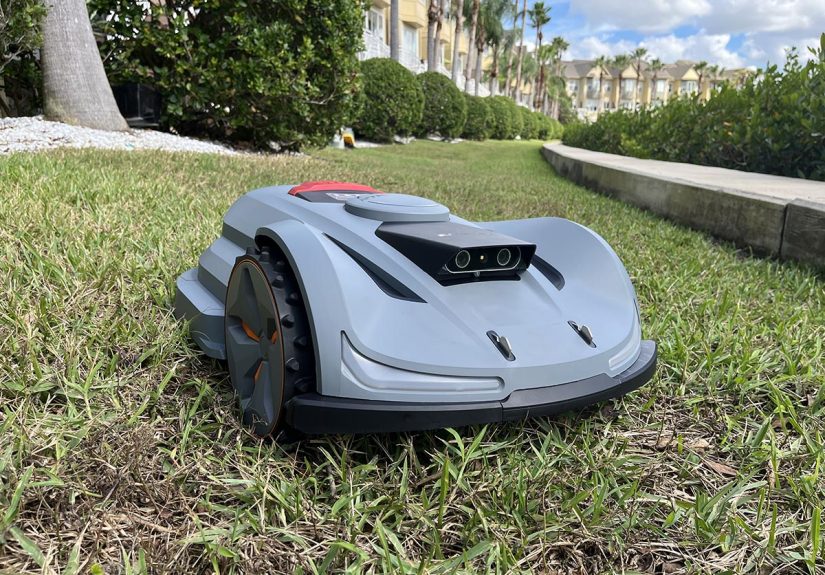
The X7 family uses Sunseeker’s AONavi systemdescribed as a blend of RTK-GNSS and VSLAMplus binocular cameras and “Vision AI” to recognize obstacles and adjust routes. In review coverage, this combination was credited with strong navigation once the initial map was established, including competence in narrow passages and around typical yard obstacles.
What RTK is doing here: RTK positioning systems use corrections to improve satellite-based location precision (often described in “centimeter-level” terms). In the robot mower world, that precision is what enables straight mowing lines and reliable containment without wire bordersassuming your yard has a workable view of the sky.
What VSLAM and cameras add: A yard isn’t a flat GPS test track. Shadows, trees, fences, and “that one weird corner by the shed” can disrupt satellite-only navigation. Visual mapping and cameras help the mower interpret the environment and avoid obstacles that GPS doesn’t understandlike your kid’s soccer ball, a hose, or a flowerbed edge.
Cut Quality: Dual Cutting Discs and a 14-Inch Swath
The X7’s cutting system is one of its headline features: a dual-disc setup with a 14-inch cutting width and an adjustable height range up to 4 inches. A hands-on review specifically highlighted the dual floating cutting plates as an innovation and credited them with an even, high-quality cut.
What “systematic mowing” actually means for your lawn
Many older robot mowers wandered semi-randomly until the lawn was “eventually” mowed. Newer wire-free premium models aim for more systematic coveragestraighter paths, fewer misses, and less time spent doing the robot equivalent of “I forgot why I came into this room.”
The catch: one reviewer also described the X7 as slow and methodical compared to some competitorspotentially taking longer per mow. That’s not automatically bad. A careful pace can reduce navigation errors, give the cameras more time to respond, and (in practice) lead to fewer stuck events.
Slopes & Rough Terrain: AWD Is a Flex (But Clearance Still Matters)
Sunseeker positions the X7 line as slope-capable, listing a maximum slope rating up to 70% (35°) with all-wheel drive. That number is impressive on paper, and AWD is genuinely valuable on yards with uneven ground, ruts, or slick patches.
However, slope performance isn’t just tractionit’s geometry. At least one hands-on review noted that the mower’s low profile could struggle with sharp slope transitions (think: a sudden change in grade, curb-like edges, or aggressive lip transitions). The mower may have traction to climb, but if the chassis “bottoms out,” physics wins.
Real-world slope checklist
- Steady slopes: Good candidates for AWD robot mowers.
- Sharp transitions: Potential problem areaconsider smoothing edges or creating no-go zones.
- Wet + slope combo: Still proceed cautiously; even smart robots don’t enjoy hydroplaning.
Night Mowing: A Surprisingly Big Advantage
Night mowing is where the X7 gets spicy. A notable hands-on evaluation called it the best nighttime mowing experience among the models they had testedthanks to its AI/camera capability and reliable operation after setup.
Why should you care? Because mowing at night (or early morning) is when humans are least willing to do it. Robots, on the other hand, don’t have weekend plans. The X7 line also emphasizes low-noise operation and “night mode” featuresuseful if you want the mower working while you’re asleep, working, or enjoying the radical new hobby of “not mowing.”
Small reality check: If your yard has a lot of activity at nightpets roaming, wildlife, or late-night backyard hangoutsset schedules accordingly. Safety and common sense still apply.
Safety & Family Use: What “Good Enough” Should Look Like
Robot mowers are generally designed with safety sensors and blade enclosures, but they are still powered cutting tools. Operator manuals and safety guidance for robotic mowers commonly emphasize:
- Don’t operate when children or pets are in the mowing area.
- Blades should stop when the mower is lifted or disturbed.
- Use safety switches and follow shutdown procedures before handling or cleaning.
Our advice: Treat the X7 like a tool, not a toy. Schedule mowing during low-traffic times, keep the yard clear of debris (toys, sticks, cords), and use no-go zones around play areas. A “smart” mower is still happiest when you don’t ask it to chew through a garden hose.
Lawn Health: Why Robot Mowing Can Make Turf Look Better
Robotic mowing typically means more frequent, lighter trims, which can be gentler on grass than infrequent “scalping” cuts. A university extension specialist discussing robotic mowers noted that taking off very little leaf tissue each time can reduce plant stress and may improve rooting and canopy density.
That said, robots don’t magically eliminate all yard work. The same guidance also emphasized that you’ll still need to handle detail worklike edging and string trimming around beds, trees, and tight landscape features.
Eco reality: neat lawns vs. biodiversity
There’s also a bigger conversation happening around lawns and ecology. Some research and outreach has highlighted that mowing less can support biodiversity and flowering lawn plants in certain contexts. If you’re balancing “neat lawn” goals with pollinator-friendly choices, you can schedule the mower to leave certain zones less frequently, keep clover patches, or create “no-mow islands” strategically. The robot is a toolyour schedule decides the outcome.
App & Scheduling: Where the Robot Either Becomes Your Best Friend… or Your Tiny Nemesis
Robot mower apps are the hidden make-or-break feature. In hands-on review coverage, the X7’s app was criticized for a crowded interface, limited in-app explanations, and a mapping/scheduling workflow that required more effort than it shouldespecially when setting zones on different days.
The silver lining: once the mower was running, “auto” style operation (where the robot chooses zones and order) was reported to work welllargely because the mower’s AI and navigation performed strongly after the learning curve.
What you should look for during your own “test” week
- Zone clarity: Can you easily confirm what’s Zone 1 vs. Zone 2? (Sounds basic. Isn’t always.)
- No-go confidence: Does the mower consistently respect virtual walls near curbs and beds?
- Notifications: Are alerts helpful or just noisy? You want “stuck at 3:14 PM,” not “hi again” every 12 minutes.
- Firmware updates: Premium robots often improve after updatesespecially new models with evolving apps.
So… Should You Buy the Smart Sunseeker X7?
Based on verified specs and reputable hands-on evaluation patterns, the X7 is a strong candidate if you want:
- A wire-free robotic lawn mower with RTK + visual navigation.
- AWD traction for uneven ground and slope-heavy yards.
- Higher cutting height capability (up to ~4 inches) for homeowners who don’t keep turf ultra-short.
- Night mowing without the “will it panic?” factor.
It may not be the best fit if you want:
- Truly effortless setup on day one (mapping can require patience).
- A perfect app experience out of the gate.
- Flawless handling of abrupt grade changes without tweaking your yard or adding virtual boundaries.
Verdict in one sentence
The Sunseeker X7 looks like a high-potential wire-free AWD robot mower with excellent nighttime operation and strong navigationas long as you’re willing to invest some attention upfront to get the mapping and app dialed in.
Extra Field Notes (500+ Words): What It’s Like to “Test” the Sunseeker X7 the Smart Way
If you’re planning to test a premium robotic mower like the Sunseeker X7 at home (or you want to evaluate it like a reviewer without accidentally turning your yard into a science fair), here’s the practical experience checklist that matters more than marketing adjectives.
Day 1: The Unboxing-to-Mapping Reality Check
The first day is usually less “robotic paradise” and more “why is my thumb driving this mower like it’s a tiny forklift.” Wire-free mowers typically require you to define boundaries by guiding the unit around the perimeter, and that’s where patience pays rent. The smart move is to map a clean, simple main zone firstno fancy no-go zones, no tight corners, no complicated islands around flowerbeds. Just prove the mower can complete one consistent run without needing a rescue.
During this stage, you’re watching for two things: (1) does the mower maintain stable positioning and understand where it is, and (2) does it return to charge reliably. If either of those fails repeatedly, you don’t “try harder”you adjust the environment. Move the base/antenna, give it clearer sky visibility, and reduce the complexity of the initial map. A robot mower isn’t stubborn; it’s literal.
Days 2–3: Virtual Walls, No-Go Zones, and the “Edge Anxiety” Phase
Once you’ve got a successful mow, you start testing the boundaries. This is where virtual walls are your best friend. Curbs, drop-offs, decorative rock borders, and narrow grass medians can create edge anxietybecause you don’t want “robot drift” turning into “robot escapes to freedom.” Your goal is not to map the entire property like a cartographer. Your goal is to prevent the handful of predictable mistakes that happen when a machine meets a real yard.
When the mower gets close to a risky edge, the best outcome is boring behavior: it slows, corrects, and stays contained. If it repeatedly flirts with the boundary, you don’t blame the mower firstyou tighten the map, add a virtual wall, and remove ambiguity. Robots love certainty. Humans love yelling. Choose certainty.
Days 4–6: The Quality-of-Life Wins (and the Annoyances)
This is where you learn whether the mower is actually improving your life. A good robot mower changes your routine in subtle ways: the lawn looks consistently trimmed instead of swinging between “perfect” and “why is it knee-high.” You notice fewer clumps because the mower is cutting small amounts more often. And if you schedule it at low-traffic times, it becomes background activitylike a dishwasher, but outdoors and more likely to be stared at by neighbors.
The annoyances also show up here. App workflows can feel overly complex. Scheduling might require more taps than you expect. And the mower may be methodical rather than fast, which is fine as long as it’s consistent. If you’re the type who wants instant gratification, you might find yourself checking status like it’s a pizza tracker: “Is it done yet?” The best use case is to let it run while you’re busy and only engage when you get a meaningful alert.
Week 2: The Real QuestionDo You Trust It?
By week two, “testing” becomes about trust. Can you confidently let it mow while you’re working, cooking, or sleeping? Does it avoid the predictable obstacles you’ve trained it around? Does it respect no-go zones? Does it reliably dock and recharge? If the answer is yes, the mower shifts from gadget to appliancewhich is the highest compliment a smart device can earn.
And here’s the sneaky truth: the best robotic mower experience isn’t when the robot is impressive. It’s when you forget it existsuntil you look outside and realize the lawn is already handled.