Table of Contents >> Show >> Hide
- What the #ShutTheFrontDoorDIY Party Is (and Why People Love It)
- Pick Your “Door Glow-Up” Level
- Paint Like a Pro (Without Turning Your Porch Into a Crime Scene)
- The “Small Details” That Make People Say “Wow”
- Seal the Deal: Weatherstripping, Thresholds, and Comfort
- Make It Safer, Smarter, and Less “Kick-In-able”
- The Porch Is the Party Venue: Decor That Welcomes (Without Cluttering)
- If You’re Thinking Resale: The Front Door Has Receipts
- Host Your Own #ShutTheFrontDoorDIY Party
- Troubleshooting: Common Door Drama and Quick Fixes
- Experiences from a #ShutTheFrontDoorDIY Party (Real-World Scenarios + Lessons)
- Wrap-Up: Shut the Front Door (In the Best Way)
If you’ve ever looked at your entryway and thought, “This door is giving… sad beige sweatshirt,” you’re in the right place.
The front door is basically your home’s profile picture: it’s the first thing guests see, it sets the mood, and it quietly
tells delivery drivers, “Yes, this is the house where the snacks live.”
So let’s throw a little DIY celebration: the #ShutTheFrontDoorDIY Partya door-centric, curb-appeal-boosting,
creativity-fueled moment inspired by the classic “Shut The Front Door” DIY week + link party vibes (with an extra wink and a
“knock-knock” on the side). Whether you’re painting, swapping hardware, sealing drafts, or upgrading security, this party has
room for every budget and skill level.
What the #ShutTheFrontDoorDIY Party Is (and Why People Love It)
A DIY “party” like this isn’t about fancy invitations or matching aprons (unless you want matching apronsno judgment).
It’s about a shared themefront doorsand a community-style approach to motivation:
pick a project, make progress, share your before-and-after, and collect ideas from other people’s wins (and “oops” moments).
The big idea: doors are high impact
Doors hit the sweet spot of home improvement: they’re visible, useful, and surprisingly upgradeable. A front door refresh can
improve curb appeal, comfort, and even peace of mind. Translation: fewer drafts, fewer sticky locks, and fewer moments where you
jiggle the knob like you’re trying to crack a safe in a movie.
Bonus: a party needs a theme (and maybe a knock-knock joke)
The original vibe behind #ShutTheFrontDoorDIY included sharing door projects, linking up ideas, and leaning into family-friendly
humorbecause if you can’t laugh while painting trim for the third time, what can you laugh at?
Pick Your “Door Glow-Up” Level
Not every project needs to be a full door replacement. Choose your adventure based on time, budget, and how much patience your
household has for “the front door is dryinguse the side entrance.”
Level 1: Quick wins (1–3 hours)
- Deep clean the door + glass (yes, it matters more than you think).
- Swap hardware: handle, deadbolt, kick plate, door knocker.
- Upgrade the “welcome zone”: new doormat, planters, house numbers.
- Refresh the porch light (or just the bulbsnobody looks good under spooky lighting).
Level 2: Medium projects (half-day to weekend)
- Paint the front door (classic for a reason).
- Add or replace weatherstripping and a door sweep to cut drafts.
- Install a smart lock or upgrade to a stronger deadbolt.
- Fix alignment issues (sticky door, misaligned latch, door sag).
Level 3: Big moves (weekend-plus)
- Replace the exterior door (steel/fiberglass options can be efficient and durable).
- Add sidelights or update the entry trim for a bigger visual change.
- Install a storm door for airflow and seasonal flexibility.
Paint Like a Pro (Without Turning Your Porch Into a Crime Scene)
Painting a front door is one of the highest “wow per hour” DIY projects. But the secret isn’t magic paintit’s prep.
Prep is the difference between “fresh and welcoming” and “why is it peeling like a sunburn?”
Step 1: Prep the surface (this is where the glow-up is born)
- Remove what you can: knobs, locksets, kick plates. If it doesn’t come off, mask it carefully.
- Clean: use a degreasing cleaner to remove hand oils and grime (especially near the handle).
- Fill flaws: patch dents or cracks with wood filler; let it dry completely.
- Sand lightly: you’re creating “grab” for primer/paint, not sanding your door into a new personality.
- Wipe dust away: tack cloth or a damp microfiber works well. Paint hates dust like cats hate surprise baths.
Step 2: Prime when needed
If you’re switching from oil to latex, painting bare wood, covering stains, or making a big color change, primer is your best friend.
Think of primer as the reliable friend who shows up early, sets up chairs, and makes sure the party doesn’t collapse.
Step 3: Paint with strategy
- Use exterior-grade paint designed for durability and weather resistance.
- Pick your tools: a small foam roller helps smooth flat panels; an angled brush handles profiles and edges.
- Paint in the right conditions: avoid extreme heat, direct blazing sun, or rain in the forecast.
- Two thin coats beat one thick coat almost every time.
Color choices that don’t regret-text you later
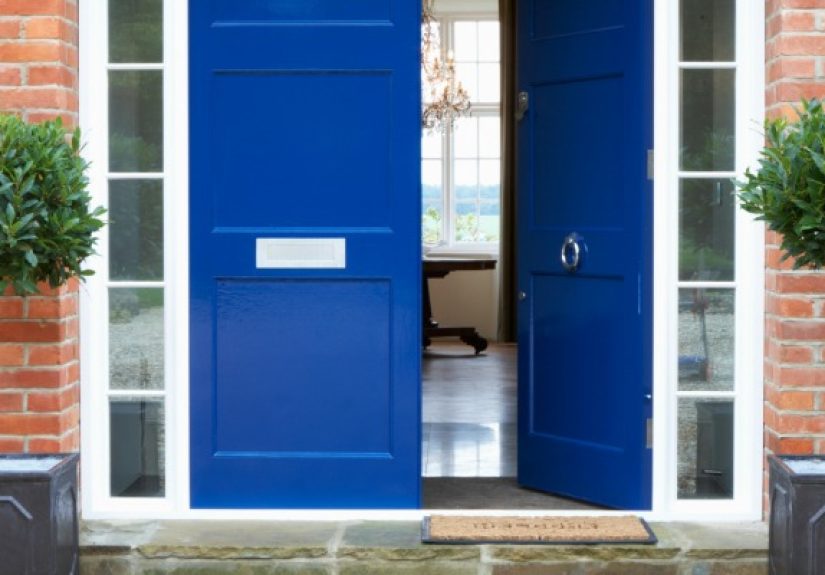
Want a safe upgrade? Classic navy, black, deep green, or a warm red can feel timeless. Want something bolder? Teal, sunshine yellow,
or a modern clay tone can make your entry unforgettable (in a good way). If your exterior is busy (brick, stone, heavy trim),
consider a color that complements rather than competes.
The “Small Details” That Make People Say “Wow”
The best door makeovers usually nail the supporting cast: hardware, lighting, numbers, and the little touches that say,
“Someone lives here who has their life together,” even if you absolutely do not.
Hardware: the jewelry of your front door
Swapping knobs and deadbolts can modernize an entry fast. Match finishes across the visible items (handle, lock, knocker, mailbox)
for a cohesive look. Matte black is popular for contrast, satin nickel is classic, and warm bronze can feel traditional.
House numbers: practical and surprisingly stylish
Bigger, clearer numbers help guests and emergency servicesand they add design structure. Try aligning numbers with a porch light or
mounting them on a contrasting plaque for extra legibility. Keep it clean, not cluttered.
Porch lighting: equal parts charm and safety
A well-lit entry looks welcoming and helps you actually see your keys. Consider brighter bulbs, a dusk-to-dawn option, or motion
sensing for convenience. If you replace the fixture, choose a scale that fits: tiny fixture on a large facade looks like it got lost.
Seal the Deal: Weatherstripping, Thresholds, and Comfort
If your door whistles in winter or leaks cool air in summer, that’s not your house “breathing.” That’s your money leaving.
Exterior doors can be a major source of air leakage when they’re old, uninsulated, or poorly sealedso tightening up the perimeter
can noticeably improve comfort.
Quick checks (no tools, just honesty)
- Light test: at night, with indoor lights on, look for light around the door edges from outside.
- Paper test: close the door on a sheet of paper. If it slides out easily, your seal may be weak.
- Feel test: on a windy day, run your hand along the frame for drafts.
Easy upgrades that pay off
- Replace weatherstripping along the jambs if it’s cracked, flattened, or missing.
- Add/replace a door sweep to block the gap at the bottom.
- Inspect the threshold: some thresholds are adjustable; others may need replacement if warped.
- Caulk exterior trim gaps where air and water can sneak in.
The goal is a gentle compression: weatherstripping should press against the door evenlytight enough to seal, not so tight you need
a shoulder-check to close it.
Make It Safer, Smarter, and Less “Kick-In-able”
Curb appeal is cute. Security is comforting. Luckily, you can improve both without turning your home into a fortress with a moat
(unless the moat fits your aesthetic).
Start with the basics: deadbolt + solid install
A deadbolt generally offers stronger security than a knob lock alone. But even a great lock can be undermined by weak installation.
One high-impact, low-cost upgrade: swap the short strike-plate screws for longer screws that anchor deeper into framing.
(Safety note: be mindful of wiring near switches and outletswhen in doubt, choose a more conservative screw length or consult a pro.)
Smart locks: convenience with boundaries
Smart locks can be great for busy households: codes for guests, scheduled access, and no more hiding keys under “that rock everybody
knows about.” When choosing one, prioritize reputable brands, solid build quality, and security features (like strong encryption and
reliable auto-lock settings). And if you want the best of both worlds, choose a model that still allows a physical key as backup.
Door alignment matters more than people think
If the latch doesn’t line up smoothly, people tend to leave doors not fully latched (“it’s fine!”) which… is how you accidentally
invite chaos. If your deadbolt sticks or rubs, realigning the strike plate or addressing door sag can restore smooth locking.
The Porch Is the Party Venue: Decor That Welcomes (Without Cluttering)
Your front door doesn’t exist in isolation. The best “welcome” moment includes what surrounds itwithout turning the porch into an
obstacle course.
Try the “frame the doorway” formula
- One statement piece: wreath, seasonal garland, or a bold door color.
- Two anchors: matching planters or lanterns create balance.
- One grounding element: a doormat or outdoor rug to visually “land” the entry.
Seasonal swaps that take five minutes
Wreaths, greenery, and planters are easy to rotate. Spring florals, summer greenery, fall branches, winter evergreensyour door gets
a fresh look without a full redo. If you’re in a harsh climate, pick hardy containers and decor that won’t disintegrate after one
dramatic weather tantrum.
If You’re Thinking Resale: The Front Door Has Receipts
If you care about return on investment, the front door is one of the rare upgrades that can be both practical and financially
meaningful. Industry reports have consistently highlighted exterior improvementslike entry door replacementas strong performers for
perceived value and resale appeal. Of course, actual payback varies by market, home condition, and neighborhood expectations, but the
pattern is clear: buyers notice the entry.
Translation for real life
Even if you’re not selling, a tighter seal, better lighting, smoother locks, and a more welcoming look improve daily living.
ROI isn’t always dollarssometimes it’s “I’m not freezing by the door” and “my lock works like it respects me.”
Host Your Own #ShutTheFrontDoorDIY Party
Want to turn this into a mini event? Here’s a simple way to do itsolo, with family, or with friends (in person or virtually).
Plan the party in three steps
- Pick one project (paint, weatherstrip, hardware, security upgrade, decor refresh).
- Choose a deadline (one day, one weekend, or “before the next holiday season sneaks up”).
- Share a before-and-after (photos, notes, or a quick checklist of what worked).
Party rules (very strict, extremely serious)
- Snacks are mandatory.
- Safety gear is non-negotiable (gloves, eye protection, ventilation when painting).
- If you tell a knock-knock joke, you must commit to the bit.
Troubleshooting: Common Door Drama and Quick Fixes
Problem: The door sticks
Seasonal humidity can cause swelling, or hinges can loosen over time. Check hinge screws, look for rubbing spots, and consider minor
adjustments before sanding anything down.
Problem: The deadbolt doesn’t catch
Misalignment is common. Sometimes tightening hinges fixes it; other times the strike plate needs slight repositioning or adjustment.
Don’t force itsmooth locking is the goal.
Problem: Paint peels or stays tacky
This often comes from skipping prep, painting in poor conditions, or applying thick coats. Proper cleaning, light sanding, and thin
coats in mild weather usually prevent heartbreak.
Experiences from a #ShutTheFrontDoorDIY Party (Real-World Scenarios + Lessons)
Below are common “door party” experiences DIYers often sharelittle case-study moments that feel incredibly specific while also being
wildly universal. If you’ve ever been personally attacked by painter’s tape, you’ll relate.
1) The “One-Coat Wonder” Myth (and the two-coat truth)
Someone picks a gorgeous colordeep navy, crisp black, or cheerful tealand plans to finish in one afternoon. The first coat goes on
and it looks… patchy. Panic. Mild betrayal. A moment of Googling while holding a roller. Then the second coat happens and suddenly
the door looks like it belongs in a magazine.
Lesson: Two thin coats are normal. Patchy first coats are not a moral failing; they’re chemistry.
2) The “Why Is It So Drafty?” Discovery
A homeowner starts the party with a simple goal: new doormat, maybe a wreath. Then they notice light creeping in along the jamb.
Weatherstripping is flattened like a pancake that’s seen too much. Replacing it takes less time than expected, and the house feels
noticeably more comfortableespecially near the entry.
Lesson: The least glamorous upgrade (seals!) can be the most satisfying. Comfort is a flex.
3) The Hardware Swap That Changes Everything
Another classic: the door paint is fine, but the handle is dated, scratched, or mismatched with everything else. Swapping in a new
handle setcoordinated finish, modern silhouettesuddenly makes the whole entry feel intentional. People are shocked by how “expensive”
the door looks afterward.
Lesson: Hardware is the door’s accessories. Even a basic outfit looks better with the right shoes.
4) The Security Upgrade That Brings Peace of Mind
A DIYer installs a better deadbolt or smart lock to eliminate the “did I lock the door?” spiral. They also reinforce the strike plate
with longer screws (carefully, with awareness of nearby wiring). The result isn’t flashy like a new color, but it’s deeply calming:
smoother locking, sturdier feel, and fewer worries.
Lesson: Security upgrades are quality-of-life upgrades. Confidence is curb appeal, too.
5) The “We Made It a Party” Weekend
Some households turn it into an actual event: one person cleans and masks, someone else handles planter refresh, another person
updates house numbers, and somebody is in charge of snacks (the most important role). The before photo looks tired. The after photo
looks crisp and welcoming. But the best part is the momentumonce the front door feels good, people suddenly notice other small wins
they want to tackle.
Lesson: DIY is easier when it’s social. Also, celebrate the progress, not just perfection.
The common thread in these experiences isn’t “perfect craftsmanship.” It’s attention: noticing what’s worn, choosing one
focused improvement, and following through. That’s the real #ShutTheFrontDoorDIY energysmall upgrades that make your home feel more
like yours.
Wrap-Up: Shut the Front Door (In the Best Way)
A front door makeover can be as simple as paint and a doormator as ambitious as a full replacement with upgraded security and
weatherproofing. Either way, your entry is worth the effort. It’s the daily handshake your home gives the world.
So pick a project, queue up your playlist, and let the #ShutTheFrontDoorDIY Party begin. Knock-knock. Who’s there?
Your best-looking entryway yet.