Table of Contents >> Show >> Hide
- Quick overview: What exactly are IRMAs?
- How do IRMAs form in diabetic retinopathy?
- Where do IRMAs fit in diabetic retinopathy staging?
- How do doctors detect IRMAs?
- IRMAs vs. neovascularization: What’s the difference?
- Do IRMAs cause symptoms?
- Treatment and management when IRMAs are present
- Living with IRMAs: what you can do
- Common questions about IRMAs
- Real-world experiences related to IRMAs
- Bottom line
If your eye doctor has ever pointed at a scan of your retina and said something like,
“I’m seeing some IRMAs,” you might have nodded politely while thinking,
I have absolutely no idea what that means.
Intraretinal microvascular abnormalities (IRMAs) sound like something straight out of a research lab,
but they’re really a very specific way of describing changes in the tiny blood vessels
at the back of the eye. These changes are especially important in people living with diabetes,
because IRMAs are closely linked to diabetic retinopathy, a major cause of vision loss.
In this guide, we’ll break down what IRMAs are, how they form, why they matter,
how doctors find them, and what you can do if they show up on your eye exam
all in clear, everyday language (with just enough medical detail to impress your ophthalmologist).
Quick overview: What exactly are IRMAs?
Let’s start with the simplest version:
intraretinal microvascular abnormalities are abnormal blood vessels inside the retina.
They usually appear in people with moderate to severe nonproliferative diabetic retinopathy (NPDR),
a middle stage of diabetic eye disease.
A few key points about IRMAs:
- They are small, twisty (tortuous) blood vessel segments inside the retina.
- They often form near areas where normal tiny vessels have closed off and blood flow is reduced.
- They can look like “shortcuts” or shunts trying to route blood around areas of poor circulation.
- They are a marker that diabetic retinopathy is more advanced and at higher risk of progressing.
- They are not the same as new abnormal vessels that grow on the retinal surface (neovascularization).
In other words, IRMAs are the retina’s attempt to cope with damage from diabetes
but they also signal that the disease has reached a level where vision may be at risk if it continues to progress.
How do IRMAs form in diabetic retinopathy?
To understand IRMAs, it helps to understand what diabetes does to the eye over time.
Step 1: High blood sugar damages tiny vessels
In diabetes, long-term elevated blood sugar can damage the delicate capillaries that supply the retina.
The walls of these vessels weaken, leak, or become blocked. Over time, some capillaries
simply close off, leaving small patches of the retina starved for oxygen a state called ischemia.
Step 2: The retina senses a low-oxygen crisis
The retina is incredibly energy-hungry tissue. When it’s not getting enough oxygen,
it sends out chemical distress signals (like VEGF vascular endothelial growth factor) to encourage
more blood flow. Think of it as the retina waving a tiny biochemical flag that says:
“Help, I need more oxygen over here!”
Step 3: Abnormal intraretinal vessels appear
In response, the microvascular network starts to change. Some existing vessels remodel and dilate.
New abnormal segments may form within the retina itself, often bridging areas of capillary loss.
These twisted, dilated, or unusually branching vascular segments are what we call
intraretinal microvascular abnormalities. They:
- Lie within the thickness of the retina (not on top of it).
- Often hug the edges of areas where normal capillaries have disappeared.
- Can be subtle in early stages and more obvious as disease worsens.
IRMAs are basically a sign that the retina is under stress and trying to re-route blood flow
to keep tissue alive in the face of chronic damage from diabetes.
Where do IRMAs fit in diabetic retinopathy staging?
Diabetic retinopathy is usually classified as:
- Mild NPDR – tiny bulges in capillaries (microaneurysms) with few other changes.
- Moderate NPDR – more hemorrhages and vascular changes, but still no new vessels on the retina.
- Severe NPDR – more widespread damage, including prominent IRMAs and venous changes.
- Proliferative diabetic retinopathy (PDR) – growth of new abnormal vessels on the retinal surface or optic nerve.
IRMAs are particularly important in identifying severe NPDR.
Many eye specialists use a set of criteria often summarized as the
“4–2–1 rule”:
- More than 20 hemorrhages in each of 4 quadrants of the retina.
- Venous beading in at least 2 quadrants.
- Prominent IRMAs in at least 1 quadrant.
If any one of those features is present, the eye is labeled as having severe NPDR.
That matters, because severe NPDR carries a much higher risk of progressing to proliferative disease,
where vision-threatening complications like bleeding into the eye or retinal detachment can occur.
In large studies, eyes with severe NPDR have been shown to have a substantially higher chance
of developing proliferative diabetic retinopathy within a few years compared with eyes
at earlier stages. In other words, once IRMAs show up prominently, your eye care team
pays much closer attention.
How do doctors detect IRMAs?
IRMAs are not something you can see by looking in a mirror they require specialized examination.
Here’s how your eye care provider might find them:
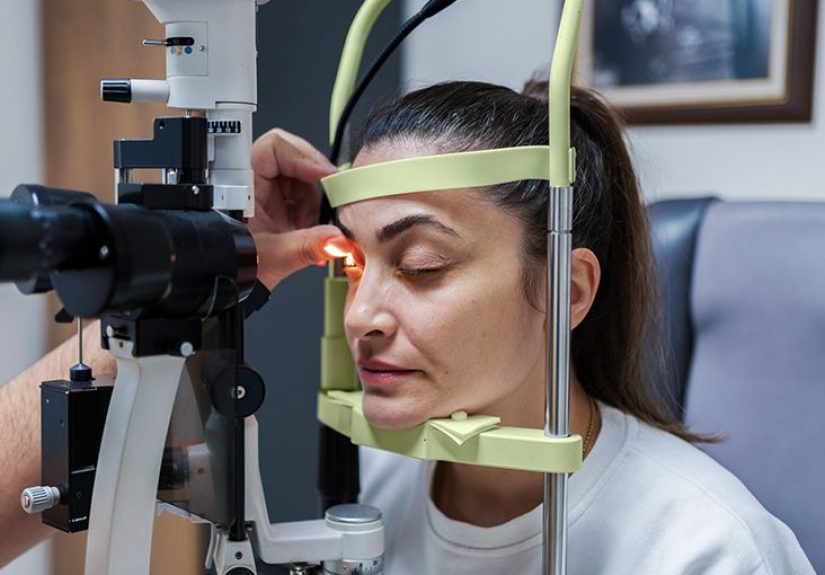
Dilated eye exam
During a dilated exam, drops are used to widen your pupils. Using special lenses and lights,
the ophthalmologist or optometrist carefully inspects your retina. IRMAs may appear
as irregular, darker-red, twisted vessels inside the retina, often near areas of capillary loss
or alongside hemorrhages and cotton wool spots.
Retinal photography
Color fundus photographs (wide-field retinal images) let your provider document IRMAs over time.
Comparing images from year to year helps them see whether:
- New IRMAs have appeared.
- Existing ones have become more extensive.
- Signs of neovascularization (a more severe finding) have developed.
Fluorescein angiography (FA)
In FA, a fluorescent dye is injected into a vein in your arm and travels to the eye.
Using a special camera, the doctor watches how the dye moves through retinal vessels.
This test can help distinguish IRMAs from new abnormal vessels that grow on the retinal surface:
- IRMAs are typically confined within the retina and may show irregular vessels without major leakage.
- Neovascularization tends to leak dye strongly and often extends above the retinal surface.
Optical coherence tomography angiography (OCTA)
OCTA is a newer, noninvasive imaging technique that uses light reflections to map blood flow in the retina
no injection required. It can show the depth and pattern of abnormal vessels.
On OCTA:
- IRMAs usually appear as abnormal flow within the retinal layers.
- Neovascularization is seen as flow that breaks through the internal limiting membrane (the top “ceiling” of the retina) and extends into the space above it.
This depth information helps specialists classify lesions more accurately and decide
how aggressively to treat or monitor them.
IRMAs vs. neovascularization: What’s the difference?
IRMAs and neovascularization often show up in the same conversations because both are linked
to advanced diabetic retinopathy. But they’re not identical, and the distinction matters.
Location and structure
- IRMAs stay inside the retina. They are dilated, twisted segments of intraretinal vessels.
- Neovascularization grows on top of the retina or optic nerve head and extends into the vitreous (the gel in the center of the eye).
Behavior on imaging
- On fluorescein angiography, neovascularization tends to leak dye intensely, while IRMAs may show minimal or less dramatic leakage.
- On OCTA, neovascular vessels show blood flow above the retinal surface, whereas IRMAs remain confined within retinal layers.
Clinical significance
- IRMAs are a strong warning sign: severe NPDR, higher risk for progression, but not yet full-blown proliferative disease.
- Neovascularization is the hallmark of proliferative diabetic retinopathy, which carries a much higher risk of bleeding, scarring, and vision loss.
In many ways, IRMAs can be thought of as a “border zone” they often show up before
neovascularization develops and may evolve or regress depending on how well the underlying disease
is controlled and treated.
Do IRMAs cause symptoms?
Here’s the tricky part: IRMAs themselves often don’t cause obvious symptoms you’d notice day-to-day.
Many people with even severe NPDR still see well enough to read, drive, and work.
However, IRMAs are strongly associated with:
- Worsening ischemia (poor blood flow).
- Higher risk of progression to proliferative diabetic retinopathy.
- Retinal changes that increase the chance of complications like macular edema or serious bleeding later on.
You might not feel IRMAs, but they are your retina’s way of quietly saying,
“We’re not okay we need help before this gets worse.”
Treatment and management when IRMAs are present
There isn’t a specific “IRMAs pill” or eye drop. Instead, IRMAs are managed as part of the overall
strategy for treating diabetic retinopathy and protecting vision.
1. Tight control of systemic risk factors
The foundation of treatment is optimizing your overall health:
- Blood sugar – Working with your diabetes care team to reach individualized targets for A1C.
- Blood pressure – Keeping blood pressure within the recommended range helps protect delicate eye vessels.
- Cholesterol – Managing lipids can reduce some retinal complications.
- Smoking – If you smoke, quitting is one of the best gifts you can give your eyes (and the rest of your body).
2. Close ophthalmic follow-up
When IRMAs are present, eye doctors usually recommend more frequent exams
often every few months rather than just once a year. This allows them to:
- Watch for new neovascularization.
- Monitor for diabetic macular edema (swelling near the center of vision).
- Decide if and when to start treatments such as laser therapy or injections.
3. Laser treatment or injections (when indicated)
IRMAs alone might not trigger treatment, but if the disease crosses into proliferative stages
or macular edema develops, your doctor may recommend:
- Panretinal photocoagulation (PRP) – Laser treatment that reduces oxygen demand in the peripheral retina, lowering the drive for abnormal vessel growth.
- Anti-VEGF injections – Medications injected into the eye that block VEGF, a key signal for abnormal vessel growth and leakage.
- Other focal or grid laser treatments – In some cases, used to help with localized leakage.
These treatments are tailored to the individual. The presence, location, and severity of IRMAs
help guide the overall risk assessment and follow-up plan.
Living with IRMAs: what you can do
If you’ve been told you have intraretinal microvascular abnormalities, it’s normal to feel nervous.
But remember: IRMAs are a warning sign and an opportunity not a guarantee of vision loss.
Helpful steps you can take include:
- Keep every eye appointment. Even if your vision “feels fine,” the retina can be changing silently.
- Know your numbers. Track A1C, blood pressure, and cholesterol and aim for the targets your healthcare team sets.
- Ask questions. Don’t hesitate to ask your doctor to show you your retinal images and explain what they’re seeing.
- Adopt eye-healthy habits. Eat a balanced diet, stay active as you’re able, and avoid smoking.
Most importantly, remember that many people with IRMAs maintain good vision for years
with proper monitoring and diabetes management.
Common questions about IRMAs
Are IRMAs reversible?
In some cases, IRMAs can become less prominent or change after treatments like laser or anti-VEGF therapy,
or when overall diabetic control improves. However, the underlying damage that led to their development
may not fully return to normal. The goal is to prevent further progression and protect vision.
Does every person with diabetic retinopathy develop IRMAs?
No. IRMAs are more typical of moderate to severe NPDR.
People with very mild changes may not have IRMAs at all. On the other end of the spectrum,
once neovascularization appears, the disease has moved into the proliferative stage.
Can IRMAs be seen without specialized equipment?
Not reliably. IRMAs are usually detected by an eye care professional using dilated examination
and imaging. They’re too small and deep in the eye to see from the outside.
Real-world experiences related to IRMAs
While IRMAs are described in textbook language as “tortuous intraretinal vascular segments,”
real life with diabetic retinopathy is much more human. The stories below are composite examples
based on typical clinical scenarios not descriptions of any one specific person but they reflect
what many people experience when IRMAs show up on their retinal scans.
A routine visit that wasn’t so routine
Imagine a 52-year-old person who’s had type 2 diabetes for about 12 years. They feel fine,
work full time, and see pretty well. Their primary care doctor reminds them (again)
to go for an annual eye exam, so they finally schedule one. After dilating the pupils
and taking photos, the ophthalmologist sits down and says:
“Your central vision is still good, but I’m seeing some changes including intraretinal
microvascular abnormalities. That tells me your diabetic retinopathy is in the severe
nonproliferative range.”
At first, the word “severe” lands like a punch. But then the doctor explains:
there’s no emergency today, no immediate vision-threatening bleed.
Instead, this is the moment to double down on prevention.
They talk about tightening blood sugar and blood pressure control,
scheduling eye visits more often, and watching carefully for any signs of progression.
The patient walks out with the same vision they walked in with but a very different sense
of what’s happening inside their eyes. IRMAs become a powerful motivator to take
diabetes management more seriously, not a sentence to inevitable blindness.
The retinal specialist’s perspective
From the specialist’s side, IRMAs are a kind of “red flag with nuance.”
When they look at a wide-field retinal image and see IRMAs hugging areas of capillary dropout,
they mentally place that patient into a higher-risk category. They might:
- Shorten follow-up intervals from yearly to every 3–4 months.
- Order OCTA or fluorescein angiography to better characterize suspicious areas.
- Have a frank conversation with the patient about near-term and long-term risks.
In some cases, IRMAs sit right at the edge between severe NPDR and early neovascularization.
The specialist uses imaging tools and clinical judgment to decide:
“Do we keep watching, or is it time to treat?” That decision can be the difference between
safely preventing complications and reacting after a serious bleed has already occurred.
The emotional side of a technical finding
For many people, the hardest part of hearing “you have IRMAs” isn’t the term itself
it’s the realization that eye damage from diabetes is no longer theoretical.
You might have spent years hearing, “Diabetes can affect your eyes someday,” and suddenly
a doctor is showing you exactly how it already has.
Common feelings include:
- Surprise – because vision may still feel normal.
- Anxiety – about future vision, driving, working, and independence.
- Motivation – oddly enough, many people leave more determined to manage their health.
It often helps to:
- Bring a family member to appointments so there’s another set of ears.
- Write down questions in advance, including “What stage is my retinopathy?” and “How often should I come back?”
- Ask your doctor to show you images of your own retina and point out the IRMAs and other findings.
Turning information into action
The good news is that IRMAs don’t show up overnight, and they don’t doom you to vision loss.
They’re a sign that it’s time for a more proactive phase of care.
Many people with severe NPDR and IRMAs, followed closely and treated when appropriate,
never experience catastrophic vision loss.
Instead of viewing IRMAs as “bad news,” it can be helpful to see them as
a detailed status update from your retina. They’re telling you and your care team:
“Now is the moment to act while there’s still a lot to protect.”
And that combination modern imaging, targeted treatments, and informed, engaged patients
is exactly how IRMAs go from an intimidating phrase on a report to a manageable part
of living well with diabetes.
Bottom line
Intraretinal microvascular abnormalities are abnormal blood vessels inside the retina that develop
in more advanced stages of diabetic retinopathy. They don’t usually cause immediate symptoms,
but they are an important warning sign that the retina is under stress and at higher risk
of developing more dangerous changes like neovascularization.
If your eye doctor has found IRMAs, it’s a reason to:
- Stay closely connected with your eye care team.
- Work with your medical providers to optimize blood sugar, blood pressure, and cholesterol.
- Take advantage of modern imaging and treatments that can protect your vision.
As always, this article is for education and general information only and is not a substitute
for personal medical advice. For recommendations tailored to your situation, talk directly
with your ophthalmologist, optometrist, or diabetes care team.