Table of Contents >> Show >> Hide
- HDL, LDL, and Triglycerides: A Quick Cheat Sheet
- What HDL Does in Your Body
- Why Your HDL Number Isn’t the Whole Story
- What Is a “Good” HDL Level?
- What Can Make HDL Low?
- How to Improve HDL (Without Making HDL Your Whole Personality)
- Why Doctors Often Focus More on LDL Than HDL
- When to Talk to a Clinician About HDL
- FAQs About HDL Cholesterol
- Real-World Experiences With HDL Results (and What They Teach)
- SEO Tags
If cholesterol had a PR team, HDL would be the one wearing a tiny superhero cape and handing out business cards that say “Good Cholesterol.” And honestly? HDL deserves
some creditjust not all the credit we used to give it.
HDL stands for high-density lipoprotein. It’s a particle in your blood that helps move cholesterol around. When people say “HDL cholesterol,” they’re
usually talking about HDL-C: the amount of cholesterol being carried inside HDL particles.
Here’s the key idea: cholesterol isn’t inherently evil. Your body uses it to build cell membranes, make hormones, and do other important jobs. The
problem happens when cholesterol gets transported and stored in ways that increase plaque buildup in arteries.
HDL, LDL, and Triglycerides: A Quick Cheat Sheet
Most routine blood work uses a lipid panel. You’ll usually see these numbers:
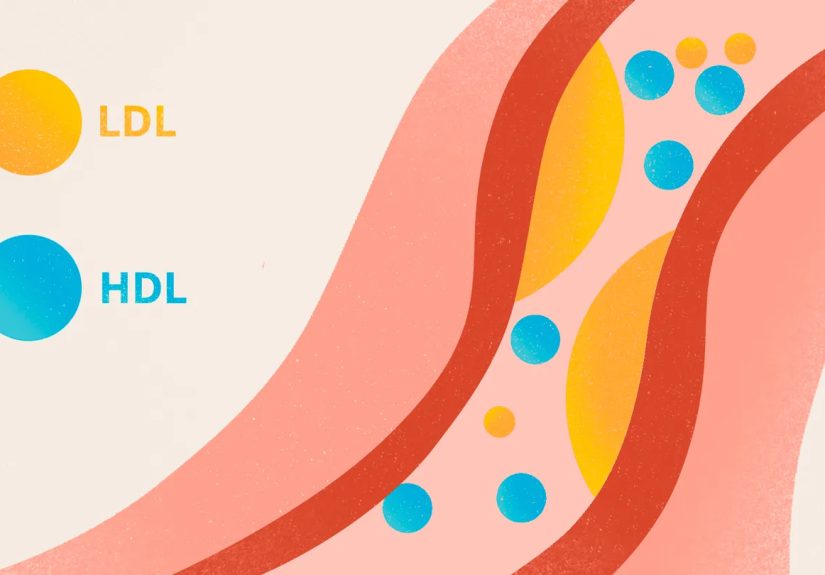
- LDL (“bad” cholesterol): tends to deliver cholesterol into artery walls and is strongly linked with atherosclerosis risk.
- HDL (“good” cholesterol): helps shuttle excess cholesterol away for processing and removal.
- Triglycerides: a different type of blood fat that often rises with excess calories, refined carbs, insulin resistance, and some genetic patterns.
- Non-HDL cholesterol: total cholesterol minus HDL; a simple way to capture “all the potentially troublesome particles” in one number.
HDL is called “good” because, in many studies, higher HDL-C is associated with lower cardiovascular risk. But association isn’t the same as a magic
shieldand modern research has added nuance to the story.
What HDL Does in Your Body
1) HDL helps remove cholesterol from the bloodstream
One of HDL’s most celebrated roles is participating in a process commonly described as reverse cholesterol transport. In plain English: HDL can help
pick up extra cholesterol from tissues (including artery walls) and carry it back to the liver, where it can be processed and eliminated.
2) HDL supports cholesterol “cleanup” in artery walls
Early steps of reverse cholesterol transport involve cholesterol effluxmoving cholesterol out of cholesterol-laden cells (like foam cells) and into HDL
particles. That’s one reason HDL has long been viewed as protective in atherosclerosis research.
3) HDL may have additional “helper” effects
HDL particles are complicated little bundles of proteins and lipids. Beyond transport, research suggests HDL may have anti-inflammatory and antioxidant properties and may
influence how blood vessels function. (Translation: HDL isn’t just a delivery truck; it might also help keep the roadway in better condition.)
Why Your HDL Number Isn’t the Whole Story
For years, the vibe was: “HDL high = you’re golden.” But scientists noticed a problem: when researchers tried to raise HDL with certain medications, the results
often didn’t reduce heart attacks and strokes the way people expected.
That led to a big shift in thinking:
HDL-C (the number) isn’t the same as HDL function (how well those particles work). Two people can have the same HDL-C level but very different HDL
particle quality, size, and performance.
Even more surprising, some studies have found that very high HDL-C isn’t always better for everyone. In other words, HDL can be “good,” but it’s also…
complicated. Like a friend who gives great advice but occasionally texts you “you up?” at 2 a.m.
What Is a “Good” HDL Level?
HDL levels are typically reported in mg/dL. Many organizations use these common cutoffs for adults:
- Low HDL (higher risk marker): often considered <40 mg/dL for men and <50 mg/dL for women.
- Higher HDL is generally considered favorable: levels at or above ~60 mg/dL have historically been viewed as more protective.
A helpful way to think about HDL: it’s one piece of your overall risk picture. A “great” HDL number doesn’t automatically cancel out high LDL,
uncontrolled blood pressure, smoking, diabetes, or a strong family history.
What Can Make HDL Low?
HDL is influenced by a mix of genetics and lifestyle. Common factors linked with lower HDL include:
- Smoking
- Low physical activity
- Higher body weight, especially around the abdomen
- Insulin resistance / type 2 diabetes
- High triglycerides (often travels with low HDL like a mismatched duo)
- Genetics (some people draw the short straw despite healthy habits)
How to Improve HDL (Without Making HDL Your Whole Personality)
Here’s the good news: the same habits that tend to improve HDL often improve your cardiovascular health overall. The goal isn’t “HDL at any cost.” The goal is
lower risk.
Move moreespecially aerobic activity
Regular exercise is one of the most consistent lifestyle strategies for improving HDL-C. You don’t need to train for a marathon, but a steady routine (walking, cycling,
swimming, dancing like nobody’s watching) can helpespecially when paired with other heart-healthy habits.
If you smoke, quitting helps HDL (and basically everything else)
Smoking is strongly associated with cardiovascular risk. Quitting can improve your lipid profile, including HDL, and dramatically benefits your arteries over time.
Weight management can raise HDL and lower triglycerides
If you’re carrying extra weight, even modest weight loss can improve triglycerides, HDL, blood pressure, and blood sugar. This isn’t about chasing a “perfect” weight.
It’s about nudging multiple risk factors in a better direction.
Build your plate around unsaturated fats and fiber
Diet patterns that emphasize vegetables, fruits, beans, nuts, seeds, fish, and olive oilwhile limiting ultra-processed foods and refined carbsoften support healthier
HDL and triglyceride levels. Bonus: these patterns also tend to improve LDL, inflammation markers, and overall metabolic health.
Be cautious about “HDL hacks”
Yes, moderate alcohol intake can raise HDL in some people. But alcohol also carries risks and isn’t recommended as a strategy to improve cholesterol. The same
goes for supplements marketed as “good cholesterol boosters”the label doesn’t guarantee meaningful cardiovascular benefit.
Why Doctors Often Focus More on LDL Than HDL
Modern cholesterol guidelines emphasize lowering LDL and overall atherosclerotic cardiovascular disease (ASCVD) risk. That’s because LDL reductionthrough lifestyle
changes and, when appropriate, medicationshas a strong track record of lowering cardiovascular events.
HDL still matters, but mainly as a risk marker and part of a bigger context. If HDL is low, clinicians often look for the usual suspects: smoking,
high triglycerides, insulin resistance, inactivity, or genetic patternsthen address the most impactful levers.
When to Talk to a Clinician About HDL
Consider a conversation if you have any of the following:
- A very low HDL value (especially alongside high LDL or high triglycerides)
- Diabetes, high blood pressure, kidney disease, or known cardiovascular disease
- A strong family history of early heart disease
- Confusing resultslike very high HDL with other risk factors
Your clinician may use a risk calculator, review your full lipid panel, consider additional markers (like non-HDL cholesterol), and discuss lifestyle and treatment
options tailored to your overall risk.
FAQs About HDL Cholesterol
Is HDL always “good”?
HDL is generally associated with lower cardiovascular risk, but very high HDL isn’t automatically protective for everyone. Researchers increasingly focus on HDL function
and overall risk profile rather than celebrating one number in isolation.
Can I have “normal” HDL and still be at risk?
Absolutely. If LDL is high, blood pressure is elevated, you smoke, you have diabetes, or you have significant family history, your risk can still be substantial even
with decent HDL.
Should I try to raise HDL with medication?
Treatment decisions depend on your overall risk. Many interventions that raise HDL do not automatically reduce heart events. Clinicians usually prioritize strategies
with proven outcome benefitsespecially LDL lowering when indicated.
Real-World Experiences With HDL Results (and What They Teach)
People tend to meet HDL cholesterol the same way they meet taxes: suddenly, on a piece of paper, with a number that feels like it’s judging them. One of the most common
experiences is opening a lipid panel and seeing HDL flagged as “low,” even when everything else looks “not terrible.” That moment often triggers a spiral of questions:
“Do I need medication? Did I mess up my diet? Is this genetic? Is my heart quietly plotting against me?”
A frequent pattern is that low HDL shows up alongside higher triglycerides and a slightly elevated fasting glucoseespecially in people who sit a lot for work, sleep
inconsistently, or live on the “grab something quick” meal plan. In these cases, the experience many people report is that HDL improves not from one heroic superfood,
but from boring, repeatable changes: walking after dinner, strength training twice a week, swapping sugary drinks for water, and eating more fiber and unsaturated fats.
The “aha” moment is realizing the HDL number often moves as a side effect of improving metabolic health.
Another common experience is confusion when someone has HDL that looks fantasticsometimes extremely highyet their clinician doesn’t throw a parade. That can feel
unfair (“Let me have this one win!”), but it often leads to a helpful lesson: clinicians care more about the whole risk picture. Someone can have high HDL and
still need to address LDL, blood pressure, smoking, or family history. People often describe this as switching from a “single scoreboard” mindset to a “full game film”
mindset.
There’s also the experience of seeing HDL budge slowlyor barely at alldespite doing everything “right.” That’s where genetics becomes more than a theory. Many people
learn that their baseline HDL may be largely inherited, and the most productive goal is not chasing a perfect HDL number but consistently improving the factors that
change outcomes: lowering LDL when needed, staying active, maintaining a healthy weight, and managing blood pressure and blood sugar.
Finally, a very real emotional experience: relief. When someone learns that low HDL doesn’t automatically mean “heart disease is inevitable,” and that small lifestyle
upgrades can shift multiple risk factors at once, the conversation becomes less about fear and more about strategy. HDL stops being a moral grade and becomes what it
really is: a useful clue in a bigger, solvable puzzle.