Table of Contents >> Show >> Hide
- What Is Pavlova?
- Pavlova vs. Meringue: What’s the Difference?
- Why People Love Pavlova
- Ingredients You Need to Make Pavlova
- How to Make Pavlova Step by Step
- Easy Pavlova Recipe Formula
- Best Fruits and Flavor Combinations for Pavlova
- Common Pavlova Mistakes and How to Avoid Them
- Can You Make Pavlova Ahead of Time?
- What Does Pavlova Taste Like?
- Final Thoughts: Why Pavlova Deserves a Spot in Your Dessert Rotation
- Extended Section: Real-World Experiences With Pavlova and What First-Time Bakers Usually Learn
Pavlova is the kind of dessert that looks like it should arrive with applause, a string quartet, and at least one person whispering, “Oh wow.” But here’s the plot twist: it’s much easier to make than it looks. This crisp-on-the-outside, soft-on-the-inside meringue dessert is topped with whipped cream and fresh fruit, which means it lands somewhere between elegant dinner-party finale and edible cloud with excellent PR.
If you have ever wondered what pavlova is, why people get so emotionally invested in it, or how to make one without turning your kitchen into a sugar-scented stress festival, you are in the right place. This guide breaks down the dessert, the ingredients, the method, and the most common mistakes so you can make a homemade pavlova with confidence.
What Is Pavlova?
Pavlova is a meringue-based dessert known for its delicate contrast of textures: a crisp shell, a marshmallow-like center, and a cool, creamy topping finished with fresh fruit. It is commonly associated with Australia and New Zealand, both of which have long claimed it as part of their culinary identity. The dessert is named after the Russian ballerina Anna Pavlova, and honestly, that tracks. It is light, dramatic, graceful, and just a tiny bit extra.
In practical terms, pavlova starts with whipped egg whites and sugar. Then a little cornstarch and an acid such as vinegar or lemon juice are added to help create that signature soft center. After a long, low bake and a slow cool, the shell gets topped with whipped cream and fruit just before serving.
The result is a dessert that tastes rich without feeling heavy. It is sweet, yes, but the whipped cream and tart fruit keep the balance in check. That is why a good pavlova recipe feels impressive but never overwhelming.
Pavlova vs. Meringue: What’s the Difference?
This is where people often get tripped up. A pavlova is made from meringue, but not every meringue is a pavlova. Standard baked meringues are usually crisp all the way through. Pavlova, on the other hand, is designed to have a dry exterior and a soft, chewy, marshmallowy middle.
The difference comes from technique and a few supporting ingredients. Cornstarch helps soften the interior texture. Acid, whether from vinegar, lemon juice, or cream of tartar, helps stabilize the whipped egg whites. The baking process matters too: pavlova is baked low and slow, then often left in the oven to cool gradually. That keeps it pale, crisp, and less likely to collapse like it just read the comments section.
Why People Love Pavlova
There are several reasons pavlova has become such a beloved meringue dessert. First, it is naturally gluten-free, which makes it a useful option for gatherings with mixed dietary needs. Second, it is beautiful without requiring professional pastry-chef energy. Third, it is flexible. You can top it with berries in summer, citrus in winter, kiwi and passion fruit for a classic twist, or stone fruit when peaches and plums are having their big seasonal moment.
It is also ideal for entertaining because the shell can be made ahead, while the whipped cream and fruit are added at the last minute. So yes, it is dramatic, but it is also practical. We love a dessert with range.
Ingredients You Need to Make Pavlova
For the meringue base
- Egg whites
- Granulated or superfine sugar
- Cornstarch
- Cream of tartar, vinegar, or lemon juice
- A pinch of salt
- Vanilla extract, optional
For the topping
- Heavy whipping cream
- Confectioners’ sugar, optional
- Vanilla extract
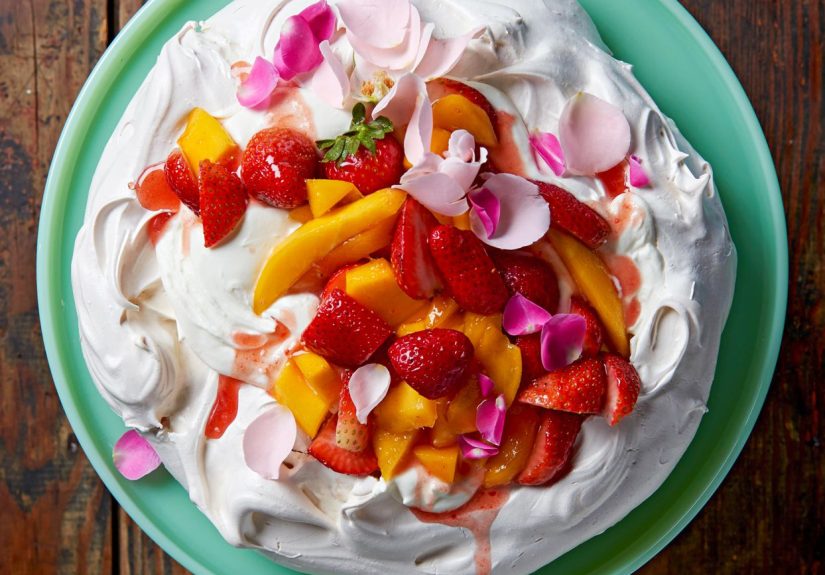
- Fresh fruit such as strawberries, blueberries, raspberries, kiwi, mango, passion fruit, or peaches
The ingredient list is refreshingly short, which is both good news and mildly rude. There is nowhere to hide. Because pavlova has so few ingredients, technique matters.
How to Make Pavlova Step by Step
1. Start with clean tools
Your bowl and whisk should be spotless and completely free of grease. Even a tiny bit of fat or egg yolk can interfere with the egg whites’ ability to whip properly. In pavlova world, clean equipment is not a suggestion. It is law.
2. Bring the egg whites to room temperature
Room-temperature egg whites whip more easily and create better volume. Separate the eggs while cold, then let the whites sit for about 30 minutes before using them.
3. Beat to soft peaks, then add sugar gradually
Whip the egg whites with your stabilizer and salt until soft peaks form. Then add the sugar slowly, a spoonful at a time or in very gradual additions. This part is important. Dumping it in all at once can leave you with grainy, unstable meringue instead of the glossy cloud you want.
Keep beating until the mixture is thick, shiny, and holds stiff peaks. Rub a little between your fingers. If it still feels gritty, keep mixing. Pavlova is many things, but sandy should not be one of them.
4. Fold in cornstarch and flavoring
Once the meringue is glossy and stable, gently fold in the cornstarch and a small amount of lemon juice, vinegar, or vanilla. These final additions help create the classic pavlova texture: crisp shell, soft center.
5. Shape it on parchment
Line a baking sheet with parchment paper and trace a circle as a guide if you want a neat round shape. Spoon the meringue into the circle and build the edges slightly higher than the center so it forms a shallow bowl. That little well will later hold whipped cream and fruit like the dessert version of excellent planning.
6. Bake low and slow
Bake the pavlova at a low temperature until the outside is dry and crisp. Depending on the recipe and oven, this usually takes about 1 to 1 1/2 hours. The shell should stay pale, not deeply browned. A little cracking is completely normal and part of the charm.
7. Cool it gradually
Turn off the oven and let the pavlova cool inside with the door closed or slightly ajar, depending on the method you follow. This slow cool helps prevent sudden collapse and reduces the risk of dramatic cracking. This is not the moment for impatience.
8. Top just before serving
Once fully cool, spoon whipped cream into the center and pile on the fruit. Assemble it shortly before serving so the shell stays crisp. If you top it too early, the moisture from the cream and fruit will start softening the meringue. Delicious, yes. Structurally ideal, no.
Easy Pavlova Recipe Formula
If you want a simple, reliable version, here is the general idea:
- 3 to 4 egg whites
- 1 cup sugar
- 1 tablespoon cornstarch
- 1 teaspoon lemon juice or vinegar
- 1 cup heavy cream
- 2 to 3 cups fresh fruit
Whip, shape, bake low, cool slowly, then top and serve. That is the core method behind many of the best how to make pavlova guides.
Best Fruits and Flavor Combinations for Pavlova
Classic pavlova toppings usually include berries, kiwi, and passion fruit because their tartness balances the sweetness of the shell. But you have options. Lots of them.
Great topping ideas
- Berry pavlova: Strawberries, raspberries, blueberries, and blackberries
- Tropical pavlova: Kiwi, mango, pineapple, and passion fruit
- Stone fruit pavlova: Peaches, nectarines, plums, and cherries
- Citrus pavlova: Orange segments, lemon curd, and whipped cream
- Holiday pavlova: Cranberries, pomegranate seeds, candied nuts, and spiced cream
You can also add textures like toasted nuts, chocolate shavings, or a drizzle of fruit sauce. Just do not overload it so much that the meringue gives up on life.
Common Pavlova Mistakes and How to Avoid Them
The meringue will not whip
This is usually caused by grease, yolk contamination, or egg whites that were not beaten long enough. Use a clean bowl and separate the eggs carefully.
The pavlova is weeping or sticky
Humidity is the enemy of crisp meringue. If the weather is damp, pavlova can absorb moisture from the air. Bake it thoroughly, cool it well, and store the plain shell in a dry place until serving.
The shell cracked
Minor cracks are normal. In fact, many beautiful pavlovas look a little rustic. Cover the center with whipped cream and fruit and carry on like nothing happened. That is not failure. That is plating.
The inside is too dry
You may have baked it too long or at too high a temperature. Pavlova should not be crunchy all the way through. It needs that soft, marshmallow center to count as the real thing.
It collapsed badly
This can happen if the meringue was under-whipped, the sugar was not fully dissolved, or the pavlova cooled too quickly. Gradual cooling makes a big difference.
Can You Make Pavlova Ahead of Time?
Yes, and that is one of the smartest things about it. The shell can be made a day ahead and kept unfilled in an airtight container. Some bakers even store fully baked, cooled meringues in the freezer to help preserve crispness. The whipped cream and fruit should be prepared separately and added just before serving for the best texture.
If you are planning a dinner party, this means the hardest part is done before guests arrive. Then you casually assemble a stunning dessert and act like this sort of thing just happens around you all the time.
What Does Pavlova Taste Like?
Pavlova tastes sweet, creamy, airy, and fresh all at once. The shell shatters delicately under your fork, the center feels soft and chewy, the whipped cream adds richness, and the fruit brings brightness and acidity. It is one of those desserts that feels lighter than cake but more exciting than plain fruit and cream.
In other words, it tastes like summer, celebration, and one excellent decision after another.
Final Thoughts: Why Pavlova Deserves a Spot in Your Dessert Rotation
So, what is pavlova, and how do you make it? It is a crisp, airy, fruit-topped meringue dessert with a soft center, and you make it by whipping egg whites and sugar into a glossy meringue, adding cornstarch and acid, baking it low and slow, cooling it gently, and topping it with whipped cream and fruit right before serving.
The beauty of pavlova is that it feels fancy without requiring bakery-level drama. It is adaptable, naturally stunning, and surprisingly forgiving once you understand the basics. Even if it cracks a little, that is part of the charm. In fact, a slightly rustic pavlova often looks more inviting than one that is too perfect. It says, “Yes, I am elegant, but I also know how to have fun.”
If you want a dessert that delivers texture, contrast, color, and just enough wow factor to make people think you have your life together, pavlova is a very good place to start.
Extended Section: Real-World Experiences With Pavlova and What First-Time Bakers Usually Learn
One of the most interesting things about pavlova is the emotional journey it tends to create. Not just “I baked a dessert,” but a full experience. First-time bakers often begin with intimidation because pavlova looks like the kind of thing that belongs behind bakery glass or on the cover of a holiday magazine. There is usually a moment early on, somewhere between separating eggs and staring suspiciously at a bowl of foamy whites, when people think, “This cannot possibly turn into something glamorous.” Then it does. Or at least it gets surprisingly close.
A common experience is discovering that pavlova teaches patience better than a motivational poster ever could. You cannot rush the sugar. You cannot rush the bake. You absolutely should not rush the cooling. Pavlova rewards calm, steady attention. It is the culinary equivalent of being told to stop refreshing your email and go outside. The process asks you to trust gradual change, and when it works, that trust feels earned.
Another shared experience is the shock of texture. People who have only eaten standard meringues expect a dry crunch. A good pavlova changes that expectation instantly. The first cut reveals a shell that crackles, then gives way to a soft center that feels almost creamy-chewy. That contrast is what makes the dessert memorable. It is not just sweet; it is architectural. It has edges and softness at the same time, which is probably why guests tend to pause after the first bite and then go back for a second one in a noticeably less polite portion size.
There is also the serving moment, which is its own little performance. Pavlova rarely slices into perfectly tidy wedges, and that turns out to be part of the appeal. The whipped cream slides a bit, the berries tumble, and the shell breaks in beautiful, irregular pieces. It looks abundant instead of stiff. That looseness makes the dessert feel celebratory rather than precious. Many home bakers end up loving pavlova because it gives them something visually dramatic without demanding perfect precision on the plate.
Then there is the weather lesson. Anyone who has made pavlova in humid conditions usually remembers it. Meringue and moisture are not best friends. A shell that seemed crisp can turn sticky faster than expected, which teaches bakers to assemble at the last minute and respect the forecast just a little more. Pavlova has a way of making even casual cooks suddenly say things like, “Today does not feel like a meringue day,” which is a sentence no one plans to say until it becomes very real.
Finally, pavlova tends to become the dessert people associate with occasions. Birthdays, Easter brunches, baby showers, summer dinners, Christmas tables, and “I need something impressive but I am not making a layer cake” nights all seem to invite it. Once someone pulls off a successful pavlova, they usually gain two things: confidence and requests. Suddenly friends want the berry one again. Family asks for the kiwi version. Someone suggests lemon curd. Someone else says chocolate. Before long, pavlova stops being a one-time project and becomes part of the rotation. That may be the best experience of all: realizing this showstopper is not out of reach after all.