Table of Contents >> Show >> Hide
- Before the list: the “golden rule” of Islamic condolences
- What Muslims usually say first when they hear someone died
- 11 prayers to say when someone dies in Islam
- 1) “Inna lillahi wa inna ilayhi raji’un”
- 2) “Allahumma ajirni fi musibati wa akhlif li khayran minha”
- 3) “Allahumma ighfir lahu (or laha) warhamhu (or warhamha)”
- 4) “Allahummaghfir lahu warhamhu wa ‘afihi wa‘fu ‘anhu…” (a well-known janazah dua)
- 5) “Allahumma la tahrimna ajrahu wa la taftinna ba‘dahu, waghfir lana walahu”
- 6) “Allahummaghfir lihayyina wa mayyitina…” (a community-focused janazah dua)
- 7) “Allahumma adkhilhu al-jannah”
- 8) “Allahummaghfir lahu dhambahu wa rfa‘ darajatahu”
- 9) “Allahumma wassi‘ qabrahu wa nawwir lahu fihi”
- 10) “Rabbana ghfir lana wa li-ikhwanina alladhina sabaquna bil-iman”
- 11) “Allahummaghfir li-walidayya warhamhuma” (when the deceased is a parent)
- What to say to the grieving family (and what not to say)
- Text messages and condolence notes (copy-and-paste ready)
- FAQ: common “am I allowed to say this?” questions
- Experiences and real-life moments (how this looks in daily life)
- Conclusion
Death makes even the most talkative person suddenly forget every word they’ve ever learned. You want to show love, respect, and supportwithout accidentally saying something that lands like a brick. In Islam, there’s a beautiful “language” for grief: short Qur’anic phrases, authentic supplications (duas), and mercy-filled prayers that comfort the heart and honor the deceased.
This guide walks you through 11 prayers Muslims commonly say when someone dies, what each one means, and when to use itwhether you’re offering condolences in person, sending a text, signing a card, or standing quietly at a janazah (Muslim funeral prayer). It’s written for a U.S. audience, using clear American English, with practical examples and gentle guidance.
Before the list: the “golden rule” of Islamic condolences
In Islamic etiquette, condolences are not a performance. You’re not expected to deliver a perfect speech. The goal is simple: remember God, ask mercy for the deceased, and ask patience for the living. If you can do those three things, you’re doing it right.
Also: keep it short. Grief is heavy; your words should be light enough to carry.
What Muslims usually say first when they hear someone died
When a Muslim hears news of a death, the most common first response is a Qur’anic phrase that puts loss into a spiritual frame: we belong to God, and we return to Him. It’s not meant to shut down sadnessit’s meant to steady it.
11 prayers to say when someone dies in Islam
Tip: Arabic can look intimidating, but you don’t need perfect pronunciation. Use the transliteration, speak gently, and mean it. Where you see (him/her), choose what fitsor keep it neutral if you’re unsure.
1) “Inna lillahi wa inna ilayhi raji’un”
Arabic: إِنَّا لِلَّٰهِ وَإِنَّا إِلَيْهِ رَاجِعُونَ
Transliteration: Inna lillahi wa inna ilayhi raji’un
Meaning: “Indeed, we belong to Allah, and to Him we will return.”
When to say it: Immediately upon hearing the news of a death (and also in any major hardship). This is the classic Islamic response, and it’s always appropriatein person, by phone, or in a text.
2) “Allahumma ajirni fi musibati wa akhlif li khayran minha”
Arabic: اللَّهُمَّ أْجُرْنِي فِي مُصِيبَتِي وَأَخْلِفْ لِي خَيْرًا مِنْهَا
Transliteration: Allahumma ajirni fi musibati wa akhlif li khayran minha
Meaning: “O Allah, reward me in my calamity and replace it with something better.”
When to say it: When you’re processing the loss yourself or supporting someone who is. It’s especially meaningful in the first days when grief feels like it has its own zip code.
3) “Allahumma ighfir lahu (or laha) warhamhu (or warhamha)”
Arabic: اللَّهُمَّ اغْفِرْ لَهُ وَارْحَمْهُ (للرجل) / اللَّهُمَّ اغْفِرْ لَهَا وَارْحَمْهَا (للمرأة)
Transliteration: Allahumma ighfir lahu warhamhu / Allahumma ighfir laha warhamha
Meaning: “O Allah, forgive him/her and have mercy on him/her.”
When to say it: Anytime you mention the deceasedafter hearing the news, when visiting the family, at the funeral, or later on the anniversary. Short, powerful, and universal.
4) “Allahummaghfir lahu warhamhu wa ‘afihi wa‘fu ‘anhu…” (a well-known janazah dua)
Transliteration (common wording): Allahummaghfir lahu warhamhu wa ‘afihi wa‘fu ‘anhu, wa akrim nuzulahu, wa wassi‘ mudkhalahu, waghsilhu bil-ma’i wath-thalji wal-barad, wa naqqihi minal-khataya kama yunaqqa ath-thawb al-abyad minad-danas…
Meaning (summary): “O Allah, forgive him/her, have mercy, grant well-being, pardon, honor their استقبال (welcome), expand their entrance, cleanse them from sins…”
When to say it: This is commonly recited during Salat al-Janazah (the funeral prayer) and also privately after death. If you can only remember one “long dua,” make it this oneit’s basically a mercy marathon.
5) “Allahumma la tahrimna ajrahu wa la taftinna ba‘dahu, waghfir lana walahu”
Arabic (common wording): اللَّهُمَّ لَا تَحْرِمْنَا أَجْرَهُ وَلَا تَفْتِنَّا بَعْدَهُ وَاغْفِرْ لَنَا وَلَهُ
Transliteration: Allahumma la tahrimna ajrahu wa la taftinna ba‘dahu, waghfir lana walahu
Meaning: “O Allah, do not deprive us of the reward (for patience), do not test us after him, and forgive us and him.”
When to say it: Often said around funeral time and after burial. It acknowledges the truth people rarely say out loud: grief can shake faith, relationships, and stabilityand we’re asking God to protect us through it.
6) “Allahummaghfir lihayyina wa mayyitina…” (a community-focused janazah dua)
Transliteration (common wording): Allahummaghfir lihayyina wa mayyitina, wa shahidina wa gha’ibina, wa saghirina wa kabirina, wa dhakarina wa unthana…
Meaning (summary): “O Allah, forgive our living and our dead… those present and absent… young and old… male and female…”
When to say it: Often recited during Salat al-Janazah. It’s a reminder that funerals are not only about one person who diedthey’re also about the living community returning to God.
7) “Allahumma adkhilhu al-jannah”
Arabic: اللَّهُمَّ أَدْخِلْهُ الْجَنَّةَ
Transliteration: Allahumma adkhilhu al-jannah
Meaning: “O Allah, admit him into Paradise.”
When to say it: In any condolence message or personal dua. It’s short enough for a text and sincere enough for a graveside prayer. If the deceased was beloved, people sometimes add: “Jannat al-Firdaws” (the highest level of Paradise).
8) “Allahummaghfir lahu dhambahu wa rfa‘ darajatahu”
Transliteration: Allahummaghfir lahu dhambahu wa rfa‘ darajatahu
Meaning: “O Allah, forgive his sin and raise his rank.”
When to say it: When you want a prayer that includes both forgiveness and honor. It’s especially comforting when the deceased was known for service, kindness, or strugglebecause you’re asking God to elevate them.
9) “Allahumma wassi‘ qabrahu wa nawwir lahu fihi”
Transliteration: Allahumma wassi‘ qabrahu wa nawwir lahu fihi
Meaning: “O Allah, expand his grave and fill it with light.”
When to say it: Often said after burial or when visiting the grave. It’s a gentle prayerless “formal speech,” more “please make this place peaceful.” If you’re looking for words at the graveside, this one is tender and fitting.
10) “Rabbana ghfir lana wa li-ikhwanina alladhina sabaquna bil-iman”
Arabic: رَبَّنَا اغْفِرْ لَنَا وَلِإِخْوَانِنَا الَّذِينَ سَبَقُونَا بِالْإِيمَانِ
Transliteration: Rabbana ghfir lana wa li-ikhwanina alladhina sabaquna bil-iman
Meaning: “Our Lord, forgive us and our brothers and sisters who came before us in faith.”
When to say it: When the deceased is part of your broader communityan elder at the masjid, a neighbor, a coworker, someone you didn’t know deeply but still want to honor. It’s a beautiful “we” prayer.
11) “Allahummaghfir li-walidayya warhamhuma” (when the deceased is a parent)
Transliteration: Allahummaghfir li-walidayya warhamhuma
Meaning: “O Allah, forgive my parents and have mercy on them.”
When to say it: If the person who passed is your mother or father, this is a steady daily duasimple enough to repeat often, deep enough to carry a lifetime of love. Many Muslims keep parent-focused duas as part of their regular prayers.
What to say to the grieving family (and what not to say)
Here’s the sweet spot: a brief Islamic phrase + a dua + practical support. You can say a lot in 10 seconds, and you can also accidentally say too much in 60.
Helpful things to say (simple scripts)
- “Inna lillahi wa inna ilayhi raji’un. May Allah have mercy on them.”
- “May Allah grant you sabr (patience) and ease.”
- “May Allah forgive them and grant them Jannah.”
- “I’m here for you. Do you need meals, rides, childcare, or help with errands?”
Things to avoid (not because you’re “bad,” but because they can sting)
- Don’t debate destiny. Even if you believe everything happens for a reason, grief is not a classroom.
- Don’t compare losses. “I know how you feel” is rarely true. “I’m so sorry” is almost always true.
- Don’t demand emotional performance. Some people cry, some go quiet, some get practical. All of it can be grief.
Text messages and condolence notes (copy-and-paste ready)
If you’re texting, keep it short and sincere. Here are a few options that sound human (not robotic) and still feel Islamic:
Short texts
- “Inna lillahi wa inna ilayhi raji’un. I’m so sorry. May Allah grant your family sabr.”
- “May Allah forgive them and grant them Jannat al-Firdaws. I’m here if you need anything.”
- “Keeping you in my duas. May Allah ease your heart.”
Condolence card message
“Inna lillahi wa inna ilayhi raji’un. Please accept my condolences. May Allah (SWT) forgive your loved one, shower them with mercy, and grant you sabr and comfort in the days ahead. If you need help with meals or errands, I’m available.”
FAQ: common “am I allowed to say this?” questions
Is it okay to say “Rest in peace” to a Muslim family?
Many Muslims prefer Islamic duas (asking for mercy, forgiveness, and Jannah) because they’re directly worshipful. If you’re unsure, use a dua-style line: “May Allah have mercy on them,” or “May God grant you patience.” Those are typically received warmly.
What if I’m not Muslimcan I still say Islamic phrases?
Yes, if you’re comfortable and respectful. You can say “Inna lillahi wa inna ilayhi raji’un” or simply: “I’m so sorry for your loss. May God grant your family patience.” Your sincerity matters more than perfect wording.
Do I have to speak Arabic?
No. God understands every language. Arabic phrases are common because they come from the Qur’an and prophetic tradition, but heartfelt English is still meaningfulespecially when you keep it faith-consistent and compassionate.
Experiences and real-life moments (how this looks in daily life)
In the U.S., Muslim communities are wonderfully diversedifferent cultures, different levels of religious practice, and different comfort levels with grief. But the “core” experience of Islamic condolences shows up in surprisingly similar ways.
One common moment happens on the phone: someone calls and says, “We lost him last night.” There’s a pausebecause your brain is trying to process the news while also trying not to sound like a confused robot. This is where “Inna lillahi wa inna ilayhi raji’un” shines. It gives you something faithful and steady to say while your heart catches up. People often describe it as a spiritual “exhale”not because it removes sadness, but because it frames sadness inside something bigger than the moment.
Another real-world scenario: a coworker’s parent passes away, and you want to send a message that respects Islam without sounding overly formal. Many Muslims say the most comforting texts are the simplest ones: “I’m so sorry. May Allah grant you sabr.” It’s short, it’s kind, and it doesn’t force a long conversation when someone is exhausted. In fact, in many Muslim families, the first few days can be packed with logisticsphone calls, burial planning, hosting visitors, paperworkso a message that’s both warm and brief can feel like a gift.
Then there’s the janazah itself. If you’ve never attended a Muslim funeral prayer, it can feel unfamiliar: it’s often quiet, quick, and focused. People line up shoulder-to-shoulder and make dua. You may not hear long speeches. The experience can be deeply humbling, because it treats death with dignity and urgencyless “spectacle,” more “return.” Many attendees say they leave with a sharpened perspective: life is short, relationships matter, and mercy is something you ask forboth for the deceased and for yourself.
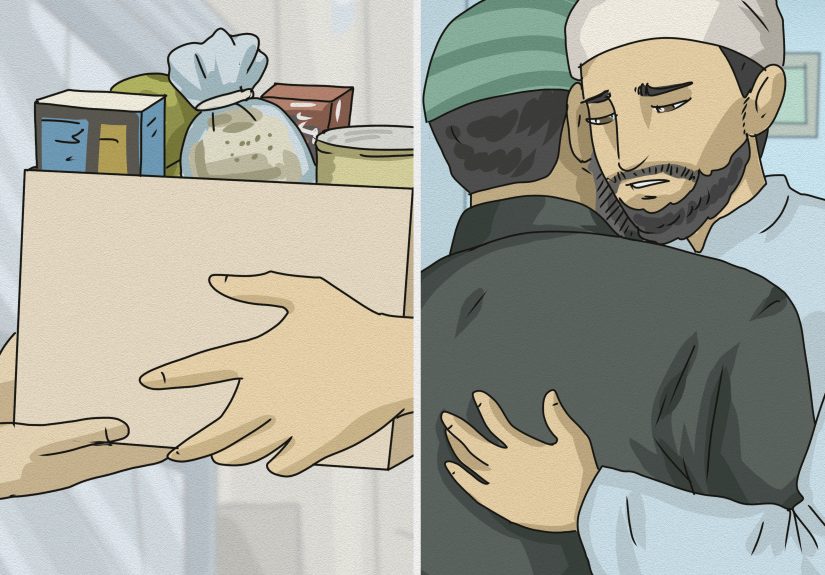
Visiting the grieving family can also be a learning moment. In some homes, you’ll see a steady stream of visitors offering condolences, bringing food, helping with cleaning, or taking care of kids so the immediate family can breathe. In Islam, support isn’t only emotional; it’s practical. And often, the most meaningful “thing to say” isn’t a sentence at allit’s “I can pick up groceries,” or “I’ll drive your aunt to the cemetery,” or “I’ll sit with you.” That kind of help becomes a living dua.
Finally, grief doesn’t end after the funeral. In the weeks after, many people describe how silence returnstexts slow down, visitors stop coming, and everyone else’s world keeps spinning. This is where ongoing duas matter. A short message a month later“Thinking of you. May Allah ease your heart”can feel unexpectedly healing. And if you truly don’t know what to say, you can always say the honest thing: “I don’t have the perfect words, but I care about you, and I’m making dua for you.” In a faith that values sincerity, that lands softly.
Conclusion
When someone dies in Islam, the best words are the ones that carry mercy: remembering Allah, praying forgiveness for the deceased, and praying patience for the living. Start with “Inna lillahi wa inna ilayhi raji’un,” add a simple dua, and (when possible) offer real help. You don’t need to be a scholar to be supportiveyou just need to be sincere.