Table of Contents >> Show >> Hide
- Why Mandates Alone Often Fall Short
- Science Starts With a Simple Truth: Risk Is Layered
- Five Ways Science Protects People Better Than a Bare Mandate
- What This Looks Like in Real Life
- The Bigger Lesson: Build Systems, Not Just Rules
- Experiences That Reveal the Difference Between Rules and Science
- Conclusion
There is a moment in every public-health debate when the room splits into two tired camps. One side says, “Just make a rule.” The other says, “Rules never work.” Meanwhile, the virus, the smoke, the polluted air, or the next invisible problem strolls past both arguments like it forgot to RSVP. That is where science earns its paycheck.
Mandates can be useful. They can set expectations fast, create a baseline, and push institutions to act when hesitation is expensive. But mandates are also blunt instruments. They do not fix a stale classroom with bad ventilation. They do not magically improve a flimsy mask. They do not tell a parent whether an at-home test is too early, or help a high-risk adult get treated quickly enough to avoid severe illness. And they definitely do not persuade the human species to become calm, consistent, and rational overnight. If that last one were possible, group projects would already be perfect.
When mandates fail to protect, science offers something better than slogans: measurement, adaptation, and layers of defense. Instead of asking whether one rule can save everyone in every setting, science asks smarter questions. How is the threat actually spreading? Which tools reduce risk the most? What works in a school, a workplace, a nursing home, or a crowded house with one bathroom and zero patience?
The lesson from the last several years is not that rules are useless. It is that protection works best when it is built on evidence. Better air, better masks, smarter testing, quicker treatment, stronger vaccines, clearer communication, and real-time surveillance can succeed where a headline-friendly mandate alone falls short. In other words, the future of protection is less “because we said so” and more “because the data say this works.”
Why Mandates Alone Often Fall Short
Mandates usually fail for the same reason one-size-fits-all socks fail: they technically fit a lot of people, but not well enough to solve the real problem. Public behavior is messy. Buildings are different. Communities face different risks. A crowded emergency department is not the same as a quiet office with operable windows, and a child with asthma is not the same as a healthy twenty-something who works from home and calls it “hybrid strategy.”
Rules also tend to arrive late, stay too long, or get applied too evenly. By the time a mandate is announced, transmission may already be high. By the time it is lifted, people may assume the danger is gone, even if risk remains for older adults, immunocompromised people, pregnant people, or infants. Compliance can fade. Messaging can become political. And once people stop trusting the messenger, even good advice starts sounding like background noise.
Science does not promise perfect control. What it does offer is precision. It helps us identify where risk is highest, which tools matter most, and how to combine them. That shift matters. A mandate tells people what to do. Science tells us what is most likely to work.
Science Starts With a Simple Truth: Risk Is Layered
Respiratory viruses do not spread by reading policy memos. They spread through contact, proximity, time, and air, especially indoors. That is why modern public-health guidance increasingly emphasizes layered protection instead of a single magic shield. Vaccination reduces the risk of severe illness. Staying home when sick reduces the chance of exposing others. Testing helps people make decisions sooner. Masks reduce the spread of infectious particles and can also protect the wearer. Ventilation and filtration dilute and remove virus-containing particles indoors. Early treatment helps people who are more likely to get seriously ill.
This is not a sign of uncertainty. It is a sign of maturity. Science has moved beyond the fantasy that one tool alone can carry the whole load. A layered approach accepts reality: people live in shared spaces, make imperfect decisions, and bring different vulnerabilities into the same room. Protection has to be flexible enough to match that reality.
Five Ways Science Protects People Better Than a Bare Mandate
1. Clean Indoor Air Turns Buildings Into Part of the Solution
One of the biggest lessons from modern infection control is that air matters more than many institutions were prepared to admit. If a virus spreads through the air indoors, then the room itself becomes part of the risk. That means the room can also become part of the fix.
Ventilation brings in outdoor air. Filtration removes particles from recirculated air. Portable HEPA cleaners can help when HVAC systems are weak, outdated, or simply overwhelmed. Guidance from EPA, NIOSH, and ASHRAE all points in the same direction: reducing airborne concentrations indoors reduces exposure risk. ASHRAE Standard 241 goes a step further by setting minimum requirements for controlling infectious aerosols in buildings. That is a major shift from vague “open a window if you can” thinking to performance-based standards that building operators can actually use.
Science also helps separate useful air cleaning from wishful gadgetry. Not every air-cleaning product is equally supported by evidence. Portable HEPA cleaners, high-quality HVAC filtration, and well-designed ultraviolet germicidal irradiation systems have practical value. A machine marketed like it was invented by a superhero in a startup hoodie is not the same thing as proven engineering control.
And here is the beautiful part: clean air protects people whether they agree with one another or not. It does not require every individual to make the right choice in the right moment. It works quietly, continuously, and without needing a speech.
2. Better Masks Beat Generic Mask Rules
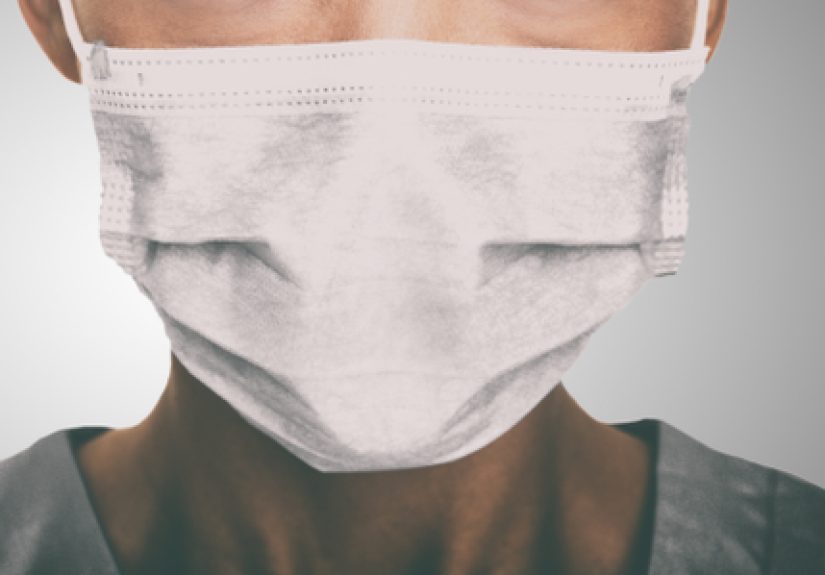
A mask mandate is only as good as the masks people actually wear. Science improved this conversation by focusing less on symbolism and more on performance. Fit matters. Filtration matters. Duration matters. A loose face covering worn under the nose is not a triumph of community health; it is a fabric mood board.
Current public-health guidance recognizes that more protective masks and respirators lower transmission risk more effectively than lower-performing options, especially in crowded indoor spaces. That matters because the practical question is not “mask or no mask?” It is “what kind of mask, in what setting, for how long, and for whom?” A high-risk person spending two hours in a packed clinic waiting room needs different protection than someone stepping into a quiet lobby for ninety seconds.
Science also explains why targeted masking often works better than broad, poorly followed rules. When people understand the risk, have access to better masks, and know when they matter most, protection improves. Good science turns masking from a tribal argument into a situational tool.
3. Testing Works Best When It Is Timely, Repeated, and Tied to Action
Testing is another area where science outperforms simplistic mandates. A rule can tell people to test. Science tells them when a result means something. FDA guidance on at-home antigen tests emphasizes repeat testing after a negative result because early infection can be missed. That single fact changes behavior. A negative test on day one is not a force field. It is one data point.
Better still, testing becomes more useful when it connects to the next decision. Should you visit a grandparent? Go to work? Seek treatment? Wear a respirator around others? Testing is not just about confirming infection. It is about reducing uncertainty when timing matters.
For people at higher risk of severe illness, time matters a lot. Early diagnosis can open the door to antiviral treatment, and public-health guidance consistently emphasizes that flu antivirals work best when started early. This is where science becomes deeply practical: not a lecture, but a sequence. Symptoms. Test. Confirm risk. Contact a clinician. Start treatment fast if indicated. That sequence can save hospitalizations. No mandate can do that on its own.
4. Vaccines and Preventive Immunization Reduce the Worst Outcomes
Mandates usually focus on behavior. Science also focuses on biology. Vaccines and preventive antibodies do not just reduce the chance of infection in some cases; their greatest strength is often reducing severe disease, hospitalization, and death. That distinction matters. A community can still experience infections while seeing fewer catastrophic outcomes if protection against severe illness remains strong.
This is especially important for older adults, infants, pregnant people, and people with underlying conditions. Influenza vaccination, RSV immunization strategies, and updated COVID vaccination guidance all reflect the same scientific principle: risk is not distributed evenly, so protection should not be either. The smartest strategies prioritize those most likely to be harmed.
Science also helps public health avoid the trap of overpromising. Vaccines are not magic helmets. They are one of the strongest layers in a system designed to keep bad outcomes lower than they otherwise would be. That honest framing builds more trust than pretending any single tool can make shared indoor life perfectly safe.
5. Surveillance Gives Communities a Head Start
The old model of public-health action often relied on visible crisis. Hospitals fill up, schools report absences, and only then do people react. Science has better tools now. Wastewater surveillance can detect increasing viral activity in communities even when many infected people never seek formal testing. That makes it an early warning system, not unlike a smoke alarm for population health.
This matters because good protection is often about timing. If a community sees viral activity rising, institutions can improve ventilation settings, health systems can prepare staffing, families can take extra precautions before visiting vulnerable relatives, and high-risk individuals can update their plans. Science helps people act before the emergency is obvious.
And unlike a mandate, surveillance does not depend on winning an argument first. It provides data. Data can still be ignored, of course, because humanity has hobbies. But it gives leaders and households a chance to make proportionate decisions based on actual conditions rather than rumor, fatigue, or wishful thinking.
What This Looks Like in Real Life
In schools, a science-based approach means fewer dramatic announcements and more routine protection: better HVAC maintenance, portable HEPA units where needed, clear stay-home-when-sick policies, and honest communication with families. In offices, it means treating indoor air the way we already treat drinking water: as a building responsibility, not a personal preference. In health care and long-term care settings, it means using higher-performance respiratory protection, ventilation controls, testing, and early treatment pathways where consequences are highest.
Even at home, science can help people make better calls. A person visiting an elderly parent can test before arrival, postpone if symptoms appear, improve airflow, run an air cleaner, and wear a high-quality mask if risk is elevated. None of these choices requires a government order. They require information, access, and the understanding that reducing risk is often more realistic than pretending risk does not exist.
That may be the most important point of all. Science is not only for agencies, hospitals, or engineers. It helps ordinary people make ordinary decisions with less guesswork and fewer regrets.
The Bigger Lesson: Build Systems, Not Just Rules
When mandates fail, the answer is not to shrug and declare protection impossible. It is to build systems that work even when behavior is inconsistent. Clean air systems protect everyone in the room. Better access to tests gives people usable information. Paid sick leave and flexible policies make it easier for people to stay home when contagious. Clear clinical pathways help high-risk patients get treated sooner. Honest communication improves trust because it respects uncertainty without surrendering to it.
That is the science-minded future: less theater, more infrastructure. Less obsession with symbolic compliance, more focus on measurable reduction in harm. The goal is not to create a zero-risk world. The goal is to make shared life safer, smarter, and fairer, especially for people who bear the greatest risk when institutions get lazy.
Mandates can still have a role. But they work best when they support evidence-based systems rather than substitute for them. Protection is strongest when it is built into the air, the workflow, the testing plan, the clinical response, and the communication strategy. In other words, science helps because science does not stop at telling people what they should do. It asks what actually works, then keeps improving the answer.
Experiences That Reveal the Difference Between Rules and Science
A middle school teacher once described the strangest part of the pandemic era this way: the signs on the wall looked stricter than the air in the room felt safe. The policy was clear. The lived experience was not. Students wore masks some days and forgot them on others. Windows were painted shut. The classroom had thirty people, one door, and the sort of ventilation system that seemed to be powered mostly by optimism. On paper, there was protection. In practice, everyone could tell the room needed more than a laminated rule.
What changed her mind about the future was not another mandate. It was when the school added portable air cleaners, checked airflow, and began treating indoor air as part of health, not just comfort. Suddenly the conversation moved from blame to design. Instead of asking which child was following the rule badly, the staff began asking whether the room itself was doing its job. That shift felt almost radical. It was less emotional, less performative, and much more useful.
A hospital worker shared a similar experience from the other side of the system. During surges, signage multiplied faster than clarity. Policies changed. Visitors were confused. Staff were exhausted. But the most reassuring moments came from concrete protections: access to better respirators, fit testing, clear triage protocols, rapid testing, and faster ways to identify who needed treatment early. The lesson was unforgettable. People can adapt to a lot of changing rules if the tools are real. What breaks morale is being told that a rule alone equals safety when everyone on the floor knows safety depends on supplies, engineering, staffing, and time.
Families learned the same thing in quieter ways. One adult caring for an older parent described how anxiety dropped once the household stopped thinking in all-or-nothing terms. They did not ask, “Are we completely safe?” They asked, “What lowers risk the most before Sunday dinner?” So they checked symptoms, used a same-day test, opened windows when weather allowed, ran a HEPA cleaner in the dining area, and postponed visits when someone was ill. No one needed a public order to do that. They needed understandable science and the freedom to use it.
Perhaps the most telling experiences came from workplaces trying to return to normal. Some offices relied on cheerful emails and crossed fingers. Others quietly invested in ventilation upgrades, encouraged sick employees to stay home, and communicated risk without drama. Guess which places earned more trust. People notice when an organization chooses substance over symbolism. They may not know the exact air-change rate, but they know when leadership is protecting them with reality instead of public-relations confetti.
These experiences all point to the same conclusion. When people say mandates failed, they are often reacting to a mismatch between policy language and material protection. Science closes that gap. It gives schools better air, hospitals better tools, families better timing, and workplaces better systems. It turns protection from a command into a design problem. And once you see that clearly, it is hard to go back to the old habit of pretending a rule on paper is the same thing as safety in real life.