Table of Contents >> Show >> Hide
- What Is a Word Ladder (aka Doublets)?
- A Quick History: From Lewis Carroll to Today’s Puzzle Pages
- How to Solve a Word Ladder: The Practical Method
- Step 1: Compare the two words like a detective, not a poet
- Step 2: Decide your goal: shortest ladder or “any ladder that works”
- Step 3: Work backward when you’re stuck (it feels like cheating, but it’s legal)
- Step 4: Use word families and patterns (your secret map)
- Step 5: Treat vowels like steering wheels
- Step 6: Use “bridge words” that are common and flexible
- Step 7: If a rung feels impossible, change a different letter than you planned
- Worked Examples (With Strategy, Not Just Answers)
- Common Word Ladder Mistakes (So You Don’t Step on the Same Rake)
- How Puzzle Makers Make Word Ladders Harder (or Kinder)
- Why Word Ladders Are a Favorite in Classrooms (and in Code)
- A 10-Minute Practice Plan to Get Better Fast
- FAQ
- Conclusion
- Extra: Experiences Related to Word Ladders (Why They Feel So Addictive)
Word ladders are the rare kind of puzzle that feels like a magic trick and a spelling test at the same time.
You start with one word, end with another, and in between you build a “ladder” of real wordschanging just
one letter per step. Simple rule. Sneaky difficulty. Maximum “wait… how is that even a word?” energy.
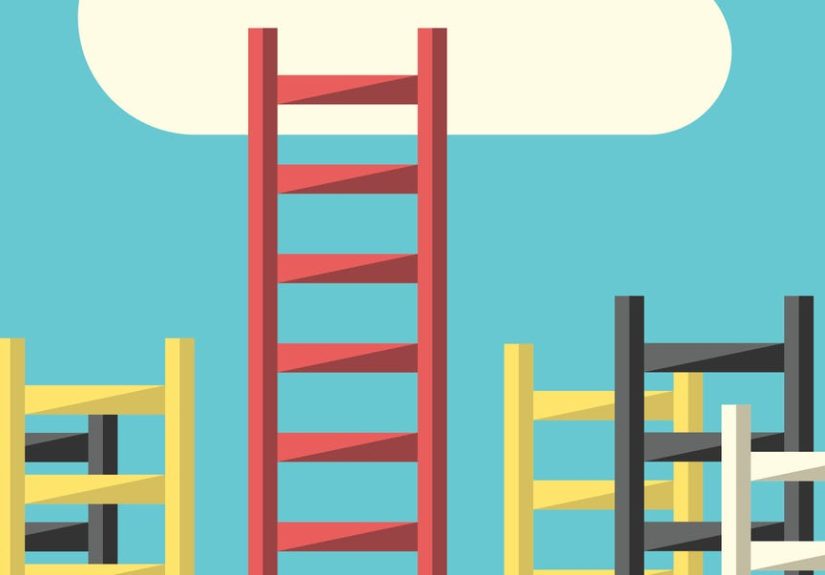
This guide breaks down what a word ladder (also called a Doublet) really is, why it’s such a brain-itchy classic,
and exactly how to solve them fasterwithout flinging your dictionary across the room. We’ll cover strategies,
common traps, specific worked examples, and even a little behind-the-scenes on how puzzle makers dial difficulty
up or down. Then, at the end, you’ll get a longer “experience” sectionbecause word ladders aren’t just puzzles;
they’re tiny emotional journeys with vowels as plot twists.
What Is a Word Ladder (aka Doublets)?
A word ladder puzzle gives you a start word and an end word of the same length.
Your job: create a chain of valid words that transforms the start into the end by changing exactly one letter at a time.
Each step is one “rung” on the ladder.
The classic rules (the “no funny business” version)
- Same word length from start to finish.
- Change only one letter per move (one position changes; the others stay put).
- Every step must be a real word (according to the puzzle’s dictionary).
- No rearranging lettersthis is not an anagram party.
That last point matters more than people expect. If you’re tempted to “shuffle” letters to make something work,
congratulationsyou have invented a different puzzle. Still fun. Still illegal in classic Doublets.
Why it’s called a “Doublet”
The original name Doublets treats the two given words as a pair (a doublet), with the in-between words acting like
“links” in a chain. In modern puzzle culture, “word ladder” is the name that stuckprobably because it sounds like
something you can climb instead of something you’d find in a Victorian sock drawer.
A Quick History: From Lewis Carroll to Today’s Puzzle Pages
Word ladders were popularized by Lewis Carroll (yes, the Alice in Wonderland Lewis Carroll),
who created the game as a form of wordplay entertainment and later published sets of these puzzles.
The format caught on because it’s elegant: one rule, infinite variety, and just enough structure to make you feel clever
even while you’re stuck on rung three.
Over time, word ladders slid into classrooms, puzzle books, newspaper features, and modern digital games.
They’re also beloved by computer scientists, because a word ladder is basically a friendly disguise for a graph problem:
words are nodes, one-letter changes are edges, and “find the shortest ladder” becomes “find the shortest path.”
(Don’t worrywe’ll keep the math polite.)
How to Solve a Word Ladder: The Practical Method
Here’s the truth: most people fail at word ladders for the same reason they fail at IKEA furniture.
They keep forcing pieces together without stepping back to look at the picture on the box.
Let’s put the picture on the box.
Step 1: Compare the two words like a detective, not a poet
Write the start word and end word one above the other. Circle the letters that already match in the same position.
Count how many positions differ. That number is your minimum number of changesbecause each rung changes
only one letter.
Example: COLD → WARM
Positions differ: C/W, O/A, L/R, D/M = 4 positions differ. So you need at least 4 changes (which typically means
at least 4 moves, often more).
Step 2: Decide your goal: shortest ladder or “any ladder that works”
Some puzzles want the shortest ladder (fewest rungs). Others just want a valid chain.
If the prompt says “solve” without “shortest,” don’t waste 20 minutes shaving off one rung like you’re optimizing a NASA launch.
Get a working ladder first, then optimize if you feel competitive.
Step 3: Work backward when you’re stuck (it feels like cheating, but it’s legal)
Many solvers only build forward from the start word. That’s like trying to leave a maze by walking in a straight line.
If you hit a dead end, switch directions:
- Build a few steps forward from the start word.
- Build a few steps backward from the end word.
- Try to meet in the middle with a “bridge” word.
This “two-front” approach is powerful because you’re no longer guessing one perfect chainyou’re creating two smaller,
more flexible problems. And smaller problems complain less.
Step 4: Use word families and patterns (your secret map)
Word ladders get easier when you recognize reusable “mini-ladders”:
- -AT family: CAT, HAT, MAT, RAT, SAT, FAT…
- -OLD family: COLD, GOLD, HOLD, TOLD…
- -AKE family: BAKE, CAKE, LAKE, MAKE, TAKE…
- -ORE family: MORE, SORE, TORE, BORE, CORE…
When you can’t see the next rung, aim for a word family that gives you options. A “branchy” rung is safer than a lonely rung.
Step 5: Treat vowels like steering wheels
Vowels (A, E, I, O, U, sometimes Y) are high-leverage because changing a vowel often creates multiple valid words quickly.
Consonant swaps can be powerful too, but vowel shifts are usually the fastest way to escape a cramped corner of the dictionary.
Step 6: Use “bridge words” that are common and flexible
Some words are famous ladder bridges because they connect to many neighbors (words one letter away).
For four-letter ladders, words like CORD, WORD, WARD, WARM can be
surprisingly helpful because they sit in dense neighborhoods of English.
Step 7: If a rung feels impossible, change a different letter than you planned
Beginners often try to “match the target immediately” by changing letters in the same order they differ. Sometimes that works.
Sometimes it traps you. It’s okay to temporarily move away from the target if it creates a usable bridge.
Word ladders are not always shortest-path obvious to humansand that’s the fun (and the mild suffering).
Worked Examples (With Strategy, Not Just Answers)
Example 1: COLD → WARM
A classic approach is to find a path through dense word neighborhoods:
- COLD → CORD (change L to R)
- CORD → CARD (change O to A)
- CARD → WARD (change C to W)
- WARD → WARM (change D to M)
Notice what happened: we didn’t try to jump straight from COLD to WALM (not a word), or COLD to WOLD (maybe a word in some lists,
but not always). We picked intermediate words that are common, stable, and likely accepted by most dictionaries.
Example 2: HEAD → TAIL (the celebrity ladder)
One famous solution looks like this:
- HEAD → HEAL
- HEAL → TEAL
- TEAL → TELL
- TELL → TALL
- TALL → TAIL
This example showcases a great ladder habit: avoid obscure rungs when a clean one exists.
“TEAL” and “TELL” are friendly. Your puzzle should not require you to know a 14th-century term for “a small swampy sadness.”
Example 3: CHAOS → ORDER (a longer ladder vibe)
Longer ladders often rely on building through familiar clusters (plural endings, common consonant frames).
A sample chain used in programming/word-list contexts looks like:
CHAOS → CHATS → COATS → COSTS → POSTS → POSES → ROSES → RISES → RISER → RIDER → EIDER → ELDER → OLDER → ORDER
Two lessons here:
- Plural forms and common endings (-S, -ER, -ED) create lots of legal stepping stones (depending on rules).
- Dictionary choice matters. Some ladders allow common inflections; others ban them. Always follow the puzzle’s rules.
Common Word Ladder Mistakes (So You Don’t Step on the Same Rake)
1) Using a “word” your puzzle’s dictionary doesn’t accept
One puzzle’s “valid word” is another puzzle’s “nice try.” Proper nouns, archaic spellings, and Scrabble-only oddities
can blow up an otherwise beautiful ladder. If you’re playing a newspaper puzzle, assume it wants standard dictionary words.
2) Forgetting that letter positions must stay put
In classic Doublets, you’re substituting a letter in the same positionnot rearranging.
If you find yourself thinking, “What if I just swap these two letters…,” gently stop. That’s a different game.
3) Over-optimizing too early
First, solve. Then, streamline. Many ladders have multiple valid solutions.
Getting a ladder quickly is better than chasing the perfect ladder and ending up with nothing but tears and a half-written “C_ _ D”.
4) Staying in a dead-end neighborhood
If you’ve created a rung that has very few one-letter neighbors, you’ve wandered into a cul-de-sac.
Back up. Choose a more common intermediate word. In ladder terms: pick rungs with more exits.
How Puzzle Makers Make Word Ladders Harder (or Kinder)
If you’ve ever wondered why some ladders feel like a warm-up and others feel like a personal attack, it’s usually because of
a few “difficulty knobs” puzzle creators can turn:
Difficulty knob #1: Word length
Four-letter ladders are approachable. Five-letter ladders can get spicy. Six-letter ladders can turn into a weekend project.
Longer words increase the search spaceand the chance you’ll need a clever bridge.
Difficulty knob #2: Rare letter patterns
Words with uncommon combinations (or fewer neighbors) can be “isolated” in the word network, making ladders longer or sometimes impossible
under a specific dictionary.
Difficulty knob #3: Rule variants
Some variants allow adding or removing letters, or occasional rearrangements. These can be fun, but they change the strategy.
Classic Doublets is strict; modern word ladder games sometimes loosen the tie for more play styles.
Why Word Ladders Are a Favorite in Classrooms (and in Code)
The learning side
Teachers like word ladders because they reinforce spelling patterns, phonics awareness, and vocabulary growth.
Students see how small letter changes shift meaning and soundwithout it feeling like a lecture.
The computer science side (no heavy math required)
For computers, a word ladder is a shortest-path problem: each valid word is a point, and you connect words that differ by one letter.
Then you can use a simple search method to find the shortest chain.
That’s why word ladders show up in programming courses and interview practice: it’s a clean problem with a clear “correct” outcome.
A 10-Minute Practice Plan to Get Better Fast
- Start with 4-letter ladders and aim for “any solution” before “shortest solution.”
- Do two ladders per day: one easy, one slightly annoying.
- Keep a mini list of bridge words you discover (CORD/WORD/WARD, etc.).
- Practice the reverse method: solve at least one ladder per week from end to start.
- Review your stuck points: if you got trapped, ask “What made that rung a dead end?”
FAQ
Are there always multiple solutions?
Often, yes. But depending on the dictionary and rule set, some start/end pairs have very few solutionsor none.
That’s part of the puzzle design.
Do plural words and verb tenses count?
It depends on the puzzle. Some accept common inflections; others ban them to keep the ladder “pure.”
Always follow the rules given with the puzzle (or the word list used).
What’s the best “universal” tip?
When stuck, work backward from the end word and try to meet in the middle. It’s the fastest way to stop guessing and start building.
Conclusion
A word ladder riddle looks simpletwo words, one rulebut it rewards smart strategy: compare the words, aim for flexible rungs,
use word families, steer with vowels, and don’t be afraid to build from both ends.
With a little practice, you’ll start seeing ladders everywhere: in common word patterns, in crossword themes, even in everyday typos
that accidentally form a rung. (Yes, “form” to “from” is technically a one-letter ladder step. Your keyboard has been playing all along.)
Extra: Experiences Related to Word Ladders (Why They Feel So Addictive)
The first time you try a word ladder, it often feels like a friendly puzzle you can do in a coffee line. Then it happens:
you hit a rung that should be easyshouldand your brain suddenly behaves like a cat refusing to come when called.
You stare at the word. You swap one letter. It’s not a word. You swap a different letter. Still not a word.
You start whispering letters under your breath like you’re casting a spell. Someone nearby hears “C… O… R… D…”
and decides you’re either doing genius work or summoning an elevator.
Most solvers describe the same emotional arc. It starts with confidence (“This is basically spelling!”),
shifts to bargaining (“If ‘wold’ counts, I’m done”), and ends with a tiny victory dance when a bridge word appears
out of nowhere. That “aha” moment is the special sauce. Word ladders create a very specific kind of satisfaction:
you didn’t just find an answeryou built a path. Each rung feels earned, like you’re laying down stepping stones
across a river made entirely of alphabet soup.
They also have a funny way of turning into social games. You can watch two people solve the same ladder with completely different personalities.
One person plays it safe with common words and tidy steps. The other person takes wild swings, throws in a weird-but-valid rung,
and somehow lands it like a gymnast. If you’ve ever done ladders with friends or family, you know the exact moment
the puzzle stops being quiet and becomes a dramatic reading: “Okay, if we go from COAT to COST… no, wait…
COAT to BOAT… to BOOT… to BOOK… oh my gosh, I can SEE it!”
Word ladders are basically tiny plot-driven stories, and the plot is: “Will we ever escape this letter pattern?”
Another common experience: you start noticing “rung potential” in everyday words. Road signs, menus, group chatssuddenly everything is a ladder.
Your brain begins to automatically test neighbors: “BREAD could become BROAD… and then… BR… okay, focus.”
It’s the same mental habit that makes people do quick math in their head for no reason, except this one comes with vowels and smugness.
And yes, you will occasionally ruin a perfectly normal conversation by saying, “Wait, did you know you can ladder from ‘COLD’ to ‘WARM’?”
The correct response from your friends is either admiration or a gentle change of subject.
The best part is how word ladders scale with you. Beginners feel proud linking CAT to DOG. Intermediate solvers chase cleaner, shorter ladders.
Advanced solvers get weirdly interested in “impossible” pairs or long ladders and start debating dictionary rules like sports fans arguing referees.
(If you ever find yourself saying, “That’s a valid word in Scrabble,” welcomeyou live here now.)
And because every puzzle is a fresh little maze, a word ladder never really goes stale. It’s always the same rule,
but the experience changes: sometimes it’s a smooth climb, sometimes it’s a ladder with one missing rung
and you’re doing mental parkour.
So if you’ve felt the mix of frustration and delightgood. That’s not a bug; it’s the charm.
Word ladders are designed to make you wobble a little, then feel brilliant when you regain balance.
And once you’ve solved a few, you’ll start to trust the process: compare letters, find bridges, work backward, meet in the middle.
The ladder doesn’t want you to fail. It just wants you to climb with better shoes.