Table of Contents >> Show >> Hide
- What Is Zu San Li (ST36), Exactly?
- Potential Benefits of Zu San Li Accupressure
- 1) Digestive comfort (bloating, “heavy stomach,” irregularity)
- 2) Nausea support (especially when stress is involved)
- 3) Energy and fatigue (“Why am I tired at 2 p.m. again?”)
- 4) Stress, tension, and mood support
- 5) Immune “support” (with a reality check)
- 6) Pain and body aches (as part of a broader plan)
- How to Find Zu San Li (ST36)
- How to Do Zu San Li Acupressure
- How It Works
- What the Research Actually Says (and What It Doesn’t)
- Safety Tips and When to Skip It
- Make It Work Better: Pair ST36 With Evidence-Based Habits
- FAQ
- Conclusion
- Experiences People Commonly Report with Zu San Li Acupressure (Extra Notes)
If your body had a “customer support” button, Zu San Li might be the one people keep pressing.
Not because it’s magic (sorry, Hogwarts), but because it’s one of the most-used points in Traditional Chinese Medicine
(TCM) for everyday stuff like digestion, energy, stress, and general “I would like to feel like a functional mammal today.”
In acupuncture charts, Zu San Li is called ST36 (Stomach 36). In folklore, it’s nicknamed the
“Leg Three Miles” pointbasically: “Press here and you’ll feel like you can keep going.” Whether that’s a hike,
a workday, or surviving family group chats is up to you.
What Is Zu San Li (ST36), Exactly?
Zu San Li is an acupoint on the lower leg along the Stomach meridian in TCM. In that system, it’s tied
to supporting the stomach and spleen functions (think: digestion, nourishment, energy productionmore on that soon).
In a modern, anatomy-based view, ST36 sits over the tibialis anterior muscle and near a busy neighborhood
of nerves and blood vessels. So when you apply pressure there, you’re not “turning on chi Wi-Fi”you’re mechanically
stimulating tissue and sensory nerves, which may influence pain signaling, muscle tone, and the stress response.
Potential Benefits of Zu San Li Accupressure
Let’s be honest: people online will claim ST36 can do everything except file your taxes. The reality is more reasonable:
the point is traditionally used for a wide range of symptoms, but the strength of evidence varies,
and research often involves acupuncture (needles) rather than acupressure (thumb pressure).
Still, many people find it useful as a low-risk self-care tool.
1) Digestive comfort (bloating, “heavy stomach,” irregularity)
In TCM, ST36 is a headline act for digestionoften used to support appetite, reduce stomach discomfort, and help the gut
“move along.” In research settings, stimulation of ST36 (especially via acupuncture or electroacupuncture) has been studied
for digestive symptoms like nausea and impaired gastric motility. For acupressure, the evidence is thinner, but it’s commonly
tried because it’s easy, accessible, and tends to feel grounding.
Real-life example: A lot of people press ST36 after a meal that was delicious but ill-advised
(hello, spicy noodles + iced coffee combo). The goal isn’t instant miraclesit’s gentle relief and nervous-system
downshifting that can make “too full” feel less dramatic.
2) Nausea support (especially when stress is involved)
The best-studied acupressure point for nausea is actually P6 (Neiguan) on the wrist, not ST36.
But ST36 is often included in protocols aimed at digestion and nausea in acupuncture research. Translation:
if nausea is your main issue, ST36 can be part of a routine, but it’s usually not the only star on the stage.
3) Energy and fatigue (“Why am I tired at 2 p.m. again?”)
The “Leg Three Miles” nickname points to ST36’s reputation for supporting stamina. Some people describe a subtle,
steadying effectless jittery “energy drink energy,” more “I can do my next task without bargaining with my soul.”
It’s not a replacement for sleep, iron levels, or food, but it can feel like a small reset.
4) Stress, tension, and mood support
Acupressure is often used for stress relief as a body-based calming technique. Pressing ST36 can be especially helpful
for people whose stress shows up as a “gut feeling” (tight stomach, appetite changes, tension). Even if the mechanism
is partly relaxation and focused breathing, that still counts as a winyour nervous system doesn’t care whether calm came
from neuroscience or a good playlist.
5) Immune “support” (with a reality check)
You’ll often hear ST36 described as an immune-boosting point. Some studies suggest acupuncture at ST36 may influence
inflammatory signaling and immune markers. But here’s the important part: that does not mean pressing
ST36 prevents infection or replaces vaccines, sleep, nutrition, or medical care. Think “supportive practice,” not “force field.”
6) Pain and body aches (as part of a broader plan)
Acupuncture has evidence for certain pain conditions, and many medical organizations discuss it as a complementary option.
Acupressure is less studied, but it’s commonly used like self-massage: you stimulate tissue, improve body awareness, and may
reduce perceived pain intensity through nervous-system modulation. If nothing else, it’s a way to do something kind for your body
that doesn’t involve arguing with it.
How to Find Zu San Li (ST36)
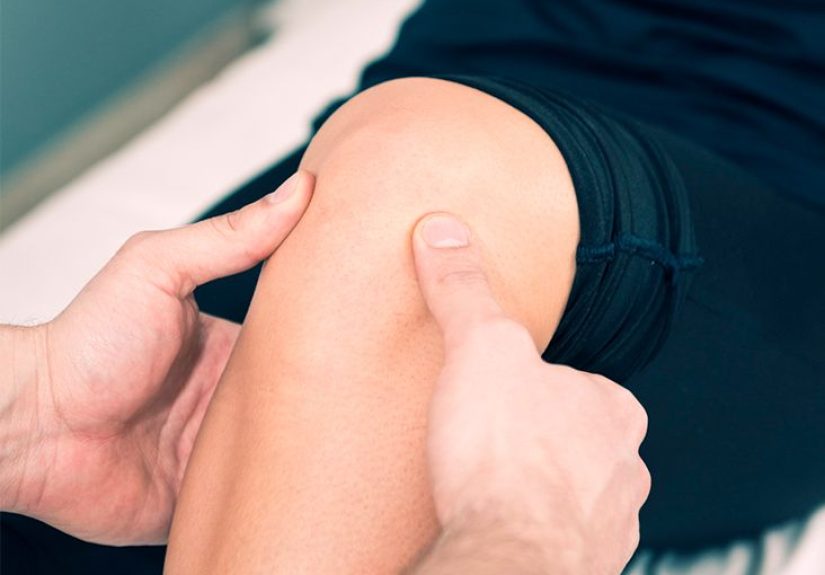
You don’t need to measure “cun” like an ancient scholar with a jade ruler. You can find ST36 using simple landmarks and
finger widths. Do this on both legsthe point is bilateral.
Step-by-step: the “three moves and a squish test” method
- Sit down and bend your knee comfortably (a little bend makes the landmarks easier).
- Find the bottom edge of your kneecap (patella). Start just below it.
-
Measure about four finger widths down from the lower edge of the kneecap (roughly 3 “cun” in acupuncture terms).
You’re heading toward the upper shin. -
Move one finger width to the outside (lateral side) from the sharp front edge of your shin bone (tibia).
You should land in a slightly softer, muscular area. -
The squish test: press in gently. The right spot often feels a bit tender, achy, or “deep-dull” compared with
surrounding areas. Tender doesn’t mean “injury”it’s just a common sensation at active points.
Quick landmark phrase: “Below the kneecap, off the shin bone, in the muscle.”
How to Do Zu San Li Acupressure
Think “firm and friendly,” not “trying to win a thumb-wrestling championship against your own leg.”
You want pressure that feels meaningful but not sharp.
Basic technique
- Use your thumb or knuckle to press into ST36.
- Hold steady pressure for 20–30 seconds, then release.
- Massage in small circles for 30–60 seconds.
- Repeat on the other leg.
Timing and frequency (practical, not precious)
- For digestion: 1–2 minutes per leg after meals or when you feel discomfort.
- For energy/stamina: 1–2 minutes per leg earlier in the day (some people prefer not to do it right before bed).
- For stress: pair it with slow breathinginhale 4 seconds, exhale 6 secondswhile pressing.
Mini routines you can actually stick to
The “Desk Lunch Recovery” routine (3 minutes):
- Press ST36 on the left leg: 30 seconds hold + 30 seconds circles.
- Press ST36 on the right leg: same.
- Finish with two slow breaths and a shoulder drop (yes, you’re probably tense).
The “Low Battery, No Charger” routine (4 minutes):
- Press both ST36 points one at a time, 60 seconds each.
- Rub your hands together, place palms on your abdomen, and breathe slowly for 30 seconds.
How It Works
The traditional TCM explanation
In TCM, ST36 supports the Stomach and Spleen systemsassociated with digestion, nutrient transformation, and building
“qi” and blood (the body’s usable energy and resources). Pressing ST36 is thought to help regulate the flow of qi along
the meridian and strengthen overall vitality.
The modern explanation (without the sci-fi soundtrack)
From a biomedical perspective, acupressure is a form of mechanotherapy: pressure stimulates skin receptors, connective tissue,
and muscle, sending signals through sensory nerves. That input can interact with pain pathways (think “gate control” mechanisms),
influence muscle tone, and affect the autonomic nervous system (your fight-or-flight vs. rest-and-digest settings).
For acupuncture specifically, researchers often discuss effects involving neurotransmitters and natural pain-relieving chemicals
(like endorphins) and changes in brain regions involved in pain and mood. Acupressure is less intense than needling, but it can still
provide sensory input plus relaxationtwo ingredients that matter a lot more than people give them credit for.
What the Research Actually Says (and What It Doesn’t)
Here’s the clean breakdown:
-
Acupuncture has evidence for certain kinds of pain and symptom relief in some conditions, and it’s used in integrative
care settings. That doesn’t mean it works for everything, but it’s not just vibes. - Acupressure has promising pockets of evidence (notably for nausea at P6), but overall it’s less studied than acupuncture.
-
ST36 specifically shows up frequently in acupuncture research related to digestion, nausea, and nervous-system effects.
Many of those studies use needles or electrical stimulation, so we should be cautious about assuming identical results from thumb pressure.
The most responsible way to use ST36 acupressure is as a complement: try it for symptom management, track how you feel,
and keep your medical care in the loop when symptoms are persistent, severe, or new.
Safety Tips and When to Skip It
Acupressure is generally low-risk, but “low-risk” is not the same as “do anything anywhere forever.”
- Avoid pressing on broken skin, rashes, inflamed areas, or over wounds.
- Use gentler pressure if you bruise easily or take blood thinners.
- Pregnancy: some points are traditionally avoided. If you’re pregnant and trying acupressure, check with a clinician or licensed practitioner.
- If you feel sharp pain, numbness, or tingling radiating down the leg, back offyour pressure is too strong or not on the right spot.
Also: acupressure is not a substitute for urgent care. If you have intense abdominal pain, vomiting that won’t stop,
blood in stool, fainting, chest pain, or severe new symptoms, treat that as a medical problem, not a pressure-point puzzle.
Make It Work Better: Pair ST36 With Evidence-Based Habits
The best “integrative” approach is the one that includes the boring basics (unfair, but true):
- For digestion: consistent meal timing, adequate fiber, hydration, and gentle movement.
- For energy: sleep, iron/B12 checks if fatigue is ongoing, and balanced meals (protein + carbs + fats).
- For stress: breathwork, walking, journaling, therapy, and “less doomscrolling” (I know, I know).
FAQ
How fast does Zu San Li acupressure work?
Some people feel calmer within minutes (especially if they breathe slowly while pressing). Digestive and energy effects
are often subtle and may take repeated practice to notice.
Can I do ST36 every day?
For most people, yesdaily gentle acupressure is reasonable. Treat it like stretching: helpful when consistent, annoying when you overdo it.
Is it normal if ST36 feels tender?
Mild tenderness is common. If it feels sharply painful or causes tingling/numbness, reduce pressure and double-check your location.
Conclusion
Zu San Li (ST36) is popular because it’s practical: it’s easy to find, easy to press, and it often feels goodespecially when your stress
is living rent-free in your stomach. The evidence is strongest for acupuncture in certain conditions, and the data on acupressure is more limited,
but ST36 remains a solid self-care option: low effort, low drama, and surprisingly calming when paired with slow breathing.
Try it like a curious scientist: test it for a week, note what changes (or doesn’t), and keep your expectations grounded.
If it helps, great. If it doesn’t, you didn’t lose anything but a couple minutesand you probably unclenched your jaw at least once.
Experiences People Commonly Report with Zu San Li Acupressure (Extra Notes)
Because ST36 is a “frequently used” point, a lot of the most interesting information is the lived experience: what people notice
when they actually press it consistently. These aren’t medical guaranteesjust patterns many people describe when they add ST36
to a routine.
The post-meal reset: One common scenario is the “I ate too fast and now I regret my choices” moment.
People often press ST36 while sitting on the couch, doing slow circles, and breathing deeper than they did at any point during lunch.
The effect is usually described as a gradual easingless tightness, less “brick in the stomach,” and a general shift from
agitated to settled. Sometimes the biggest benefit is simply pausing long enough for the body to switch from fight-or-flight to rest-and-digest.
The afternoon slump experiment: Some people test ST36 when the 2–4 p.m. energy dip hits. They’ll press one leg,
then the other, and pay attention to how their body feels afterward. A common report is not a caffeine-like surge, but a steadier
“I can start the next task” feelingespecially when paired with a quick walk or a glass of water. In other words, ST36 may feel more
like a nudge than a launch.
Stress that shows up in the gut: Many folks don’t feel stress as “worry” firstthey feel it as stomach fluttering,
tension, or appetite changes. In those cases, ST36 is often used as part of a calming sequence: press the point, breathe slowly,
relax the shoulders, unclench the jaw, and let the nervous system de-escalate. People often say the point is easier to work with
than “just meditate,” because it gives the hands something to do while the mind stops sprinting.
Runners, walkers, and the “Leg Three Miles” vibe: Active people sometimes use ST36 like a pre-activity ritual:
a minute of firm pressure on each side before a run, hike, or workout. The reported benefit is often more about feeling “warmed up”
and mentally ready than about a measurable performance boost. It can become a body cue: “We’re about to move, so we’re switching modes.”
Rituals are underratedespecially the ones that don’t cost money.
Consistency beats intensity: A frequent theme is that gentle daily practice (1–2 minutes per leg) feels better than
occasional heavy pressure. People describe it like stretching: when it becomes a routine, the body responds more predictably.
Some keep it paired with another habitafter brushing teeth, after lunch, or during a nightly wind-downbecause the easiest routine
is the one you don’t have to remember.
The “it didn’t change my life, but it helped” category: Plenty of people report a moderate, realistic benefit:
slightly less discomfort, slightly better calm, slightly easier digestion. That may not sound dramatic, but small improvements can
matter a lot when symptoms are frequent. The key is to treat ST36 as one tool in a toolbox, not the whole toolbox.