Table of Contents >> Show >> Hide
- Why Parsley Does So Well in Pots
- Tip 1: Choose a Pot That Gives Roots Room to Stretch
- Tip 2: Never Skip Drainage Holes
- Tip 3: Use Quality Potting Mix, Not Yard Soil
- Tip 4: Give Parsley the Light It Wants
- Tip 5: Start Seeds Patiently or Buy Healthy Seedlings
- Tip 6: Water Consistently, but Don’t Turn the Pot into a Swamp
- Tip 7: Feed Lightly Instead of Overdoing It
- Tip 8: Harvest the Right Way for Bigger, Better Growth
- Tip 9: Watch for Heat Stress, Flowering, and Seasonal Changes
- Tip 10: Bring It Indoors or Start a New Pot for Year-Round Use
- Best Varieties of Parsley for Pots
- Common Problems When Growing Parsley in Containers
- Conclusion
- Gardener Experiences: What Growing Parsley in Pots Teaches You Over Time
- Note
- SEO Tags
Parsley has a funny reputation. It’s the herb that gets tossed onto restaurant plates like a green afterthought, then goes home with you in a takeout box and quietly judges your life choices from the fridge. But give parsley a sunny pot, decent soil, and a little patience, and it turns into one of the most useful, generous plants you can grow.
Whether you love flat-leaf Italian parsley for cooking or curly parsley for its frilly good looks, growing parsley in pots is one of the easiest ways to keep fresh flavor within arm’s reach. Container growing also gives you more control over soil, watering, and harvesting, which is great news because parsley can be a bit slow and dramatic at the seed stage. Once it gets going, though, it settles in nicely and keeps producing for months.
This guide breaks down the 10 must-know tips for growing parsley in pots, from choosing the right container to harvesting like a pro. If you’ve ever stared at a packet of parsley seeds and wondered whether you were planting an herb or entering a trust exercise, you’re in the right place.
Why Parsley Does So Well in Pots
Parsley in pots is ideal for patios, balconies, windowsills, and small-space gardens because it stays manageable, looks attractive, and can be moved when the weather gets rude. Growing parsley in containers also helps you avoid soggy garden soil, keep the plant close to the kitchen, and monitor moisture more easily.
Another bonus: a potted parsley plant is easier to protect from extreme heat, pounding rain, or unexpected cold snaps. In other words, the pot gives you leverage. And in gardening, leverage is everything.
Tip 1: Choose a Pot That Gives Roots Room to Stretch
Parsley may look tidy above the soil, but below the surface it wants more space than many beginners expect. A cramped container can lead to weak growth, faster drying, and a plant that acts personally offended all summer.
What size pot is best?
For one parsley plant, aim for a container at least 8 to 10 inches wide and deep. If you want to grow several plants together, go larger. Deeper is better than shallow because parsley develops a taproot. That means the plant appreciates vertical room, not just width.
Terracotta, plastic, ceramic, and fabric grow bags can all work well. Terracotta looks classic and breathes nicely, but it dries out faster. Plastic holds moisture longer, which can be helpful in hot weather. Choose the material that suits your climate and how often you remember to water.
Tip 2: Never Skip Drainage Holes
If there’s one rule you should tape to the pot, it’s this: no drainage holes, no parsley. Parsley likes evenly moist soil, but it does not enjoy sitting in water. Wet feet lead to root rot, yellowing leaves, and a plant that gives up on your dreams.
Use a pot with drainage holes at the bottom, and place a saucer underneath if needed. Empty standing water from the saucer after watering so the roots are not forced to marinate. A decorative cachepot is fine, but the actual growing container still needs proper drainage.
Tip 3: Use Quality Potting Mix, Not Yard Soil
If you scoop dirt from the yard and stuff it into a container, parsley will not send a thank-you note. Garden soil is usually too dense for pots. It compacts easily, drains poorly, and can bring pests or diseases along for the ride.
The right soil for container parsley
Use a loose, well-draining potting mix enriched with organic matter. A quality mix helps roots breathe while still holding enough moisture for steady growth. You can improve it with compost if you want a richer blend, but keep it light and airy.
Parsley prefers fertile soil and appreciates a balanced growing medium. Think “fluffy but not flimsy.” This is not the place for concrete masquerading as dirt.
Tip 4: Give Parsley the Light It Wants
Most parsley plants grow best with at least 6 hours of sunlight a day. Full sun is ideal in mild climates, but parsley can also handle part shade, especially where summers are hot. In intense afternoon heat, a little shade can actually help keep leaves tender and reduce stress.
If you are growing parsley indoors, place the pot in your brightest window, ideally one with strong southern or western exposure. Rotate the pot every few days if the plant starts leaning toward the light like it is trying to eavesdrop on the outdoors.
Signs your parsley needs more light
- Long, floppy stems
- Pale or weak-looking leaves
- Slow growth that feels suspiciously lazy
Tip 5: Start Seeds Patiently or Buy Healthy Seedlings
Parsley is famous for slow germination. Not “make a sandwich while you wait” slow. More like “question your life choices, then suddenly see seedlings appear” slow.
If starting from seed, sow them shallowly and keep the soil consistently moist. Some gardeners soak parsley seeds overnight before planting to help speed up germination. It will not turn them into rocket fuel, but it can improve the process.
Seed vs. seedling
Seeds are budget-friendly and give you more variety choices, but they require patience. Seedlings give you a faster start and are great for beginners who want parsley now, not in some vague future emotional season.
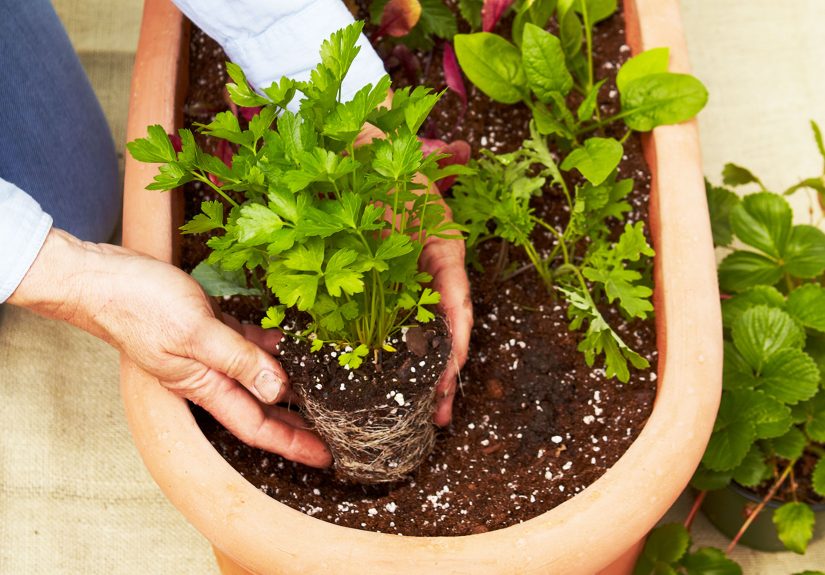
If transplanting nursery starts, handle roots gently and move them into a pot that allows room to grow. Water thoroughly after planting to help the roots settle in.
Tip 6: Water Consistently, but Don’t Turn the Pot into a Swamp
Parsley likes soil that stays evenly moist, especially in containers, which dry out faster than garden beds. The goal is steady moisture, not dramatic extremes between bone-dry and bog monster.
How often should you water parsley in pots?
That depends on pot size, weather, wind, and container material. In warm weather, you may need to check daily. Push a finger about an inch into the soil. If it feels dry at that depth, water thoroughly until moisture runs out of the drainage holes.
Small pots dry quickly. Terracotta dries quickly. Windy balconies dry quickly. July in a sunny corner? Very quickly. This is why parsley in pots rewards people who develop the simple habit of checking moisture often rather than watering on a rigid schedule.
Tip 7: Feed Lightly Instead of Overdoing It
Parsley likes fertile soil, but it is not a heavy feeder that needs constant pampering. Too much fertilizer can push soft growth and dilute flavor. You want productive leaves, not a leafy identity crisis.
If you started with a good potting mix, parsley may only need a light feeding during the season. A diluted balanced liquid fertilizer every few weeks, or a modest slow-release product used as directed, is usually enough. Less is often more with herbs.
When parsley starts looking pale despite good light and watering, a light feeding may help. When it looks healthy and happy, resist the urge to “help” it into trouble.
Tip 8: Harvest the Right Way for Bigger, Better Growth
This is where many gardeners accidentally sabotage their own parsley. If you snip only the top leaves, the plant turns awkward and unbalanced. The better move is to harvest the outer stems at the base, letting the center continue producing fresh growth.
How to harvest parsley in pots
- Wait until stems are reasonably full and leafy
- Cut outer stalks close to the base of the plant
- Leave the younger inner growth untouched
- Harvest regularly to encourage new leaves
Frequent, light harvesting keeps parsley productive and bushy. It is one of those rare life situations where polite trimming actually improves everyone’s attitude.
Tip 9: Watch for Heat Stress, Flowering, and Seasonal Changes
Parsley is usually grown as an annual by home gardeners, but botanically it is a biennial. In its second season, it tends to flower and set seed. Once that happens, leaf quality often drops. The flavor can become stronger, and the plant may direct its energy into flowering rather than making lush foliage.
Hot weather can also make parsley struggle, especially in small containers. Leaves may yellow, growth may slow, and the plant can become less tender.
How to keep parsley going longer
- Provide afternoon shade in very hot climates
- Keep watering consistent
- Harvest often
- Replace older plants when they become tired or start bolting
Think of mature parsley like a great sitcom that ran one season too long. Still respectable, but you know when it is time to start fresh.
Tip 10: Bring It Indoors or Start a New Pot for Year-Round Use
One of the smartest parsley growing tips is to plan ahead for the season change. In many areas, parsley can be grown indoors in a bright location, especially if you start with healthy plants and a pot with good drainage.
If outdoor parsley is thriving in early fall, you may be able to move a pot inside before freezing weather arrives. Indoors, give it as much light as possible and expect a slightly slower, leggier habit than outdoors. If the plant looks worn out, start a fresh pot from seed or buy new starts for winter growing.
This is especially helpful for cooks who go through parsley fast and feel personally betrayed when fresh bunches in the refrigerator collapse into green sadness after three days.
Best Varieties of Parsley for Pots
Both major parsley types do well in containers:
Flat-leaf parsley
Also called Italian parsley, this type has a stronger flavor and is usually the favorite for cooking. It is excellent in sauces, soups, marinades, salads, and grain dishes.
Curly parsley
Curly parsley is decorative, compact-looking, and often used as a garnish. It still has culinary value, especially when chopped into dressings, butter, potato dishes, and herb blends.
If you have room for two pots, grow both. One for flavor, one for flair. Every balcony deserves a little overachievement.
Common Problems When Growing Parsley in Containers
Yellow leaves
This can be caused by overwatering, poor drainage, nutrient issues, or simple plant age.
Weak, stretched growth
Usually a light problem. Move the pot to a sunnier spot.
Slow germination
Completely normal for parsley. Keep the soil moist and your expectations realistic.
Wilting despite wet soil
That may point to root stress from overwatering or compacted mix. Let the soil breathe and check drainage.
Chewed leaves
Parsley can attract swallowtail caterpillars in some gardens. Many gardeners are delighted by this because the plant becomes part herb patch, part butterfly nursery. Whether you share is a personal decision.
Conclusion
Growing parsley in pots is simple once you understand what the plant actually wants: a roomy container, drainage, fertile potting mix, steady moisture, decent sunlight, and regular harvesting. That is the whole game.
The biggest mistake people make is assuming parsley is a decorative extra instead of a real crop with real needs. Treat it like a serious herb, and it will reward you with months of fresh growth, better meals, and a container garden that looks surprisingly polished. Not bad for a plant most people used to ignore on the side of a diner plate.
Gardener Experiences: What Growing Parsley in Pots Teaches You Over Time
One of the most interesting things about growing parsley in pots is that the experience changes you a little. That may sound overly poetic for an herb, but container gardening has a sneaky way of teaching patience, observation, and the fine art of not overreacting every time a leaf looks weird.
Many beginners start parsley because it feels safe. It is familiar, useful, and not nearly as intimidating as tomatoes with their dramatic diseases and endless opinions. But parsley quickly teaches its first lesson: slow does not mean failing. Seeds can take their time. Sometimes the pot sits there looking empty long enough for you to wonder whether you planted parsley or hope. Then one morning, tiny green shoots appear, and suddenly the whole project feels like magic mixed with vindication.
Another common experience is learning that containers create a closer relationship with your plants. When parsley grows in the ground, you may forget about it for a day or two. In a pot, especially one on a patio or near the kitchen door, the plant becomes part of your daily routine. You notice whether the soil looks dry, whether the leaves seem perkier after rain, or whether the afternoon sun is a little too intense in midsummer. It is gardening on a more personal scale.
Container parsley also teaches restraint. New gardeners often want to fertilize more, water more, trim more, and generally manage the plant into a state of confusion. Over time, experience shows that parsley does best with consistency rather than fussiness. The most successful growers usually settle into a calm rhythm: check the soil, water when needed, harvest often, and stop trying to reinvent horticulture before lunch.
There is also a practical joy to it. Fresh parsley in a pot means you can step outside and clip what you need for pasta sauce, chimichurri, salad dressing, soup, roasted vegetables, eggs, or garlic butter. That convenience changes how often people actually use herbs in cooking. A bunch from the store can be wasteful if half of it turns limp in the refrigerator. A potted plant, on the other hand, becomes a living ingredient shelf.
Experienced gardeners often mention that parsley is one of the plants that builds confidence. It is forgiving enough for beginners, but still responsive enough to reward good care. When you move it to better light and it perks up, you learn something. When you start harvesting from the outside stems and the center fills in beautifully, you learn something else. Small successes stack up fast.
Even the frustrations become useful. When a pot dries out too quickly in July, you learn about container material and placement. When one plant bolts sooner than expected, you start paying attention to heat and plant age. When indoor parsley gets leggy in winter, you finally understand just how much light herbs really want. None of these are failures. They are the kind of hands-on lessons that make future gardening easier.
And then there is the aesthetic part. Parsley in pots simply looks good. Curly parsley adds texture, flat-leaf parsley looks lush and practical, and both can soften the edges of a balcony, stoop, deck, or windowsill. It makes a space feel used, cared for, and a little more alive. For many people, that visual reward matters as much as the harvest.
In the end, growing parsley in containers is not just about producing garnish or filling a recipe requirement. It is about building a reliable, useful, low-drama gardening habit. And honestly, in a world full of apps, alerts, and chaos, a pot of parsley asking only for sunlight, water, and the occasional haircut feels refreshingly reasonable.
Note
This article is formatted for web publishing, written in standard American English, and cleaned of unnecessary citation artifacts or placeholder reference tags.