Table of Contents >> Show >> Hide
- Why Mudroom-Less Homes Get Messy So Fast
- 1. Build a Wall-Mounted Drop Zone
- 2. Use a Narrow Bench With Hidden Storage
- 3. Add a Slim Shoe Cabinet
- 4. Turn a Closet Into a Mini Mudroom
- 5. Use Over-the-Door and Behind-the-Door Storage
- 6. Create a Console Table Command Center
- 7. Set Up Baskets, Bins, and Personal Cubbies
- How to Choose the Right Mudroom Alternative
- Small Entryway Design Tips That Make Storage Look Better
- Common Mistakes to Avoid
- Experience-Based Notes: What Actually Works in Real Mudroom-Less Homes
- Conclusion
Not having a mudroom can feel like being asked to run a restaurant without a kitchen. Where do the shoes go? Why is there a backpack in the hallway? Who left a wet umbrella leaning against the wall like it pays rent? The good news is that a full mudroom is not required to have an organized, welcoming entryway. With the right storage solutions, even a tiny front door area, hallway, apartment corner, stair landing, or garage entrance can become a hardworking drop zone.
The secret is not buying every basket in America and hoping for the best. A smart mudroom alternative works because it gives every daily item a clear place to land. Shoes need containment. Coats need hooks. Keys need a tray. Bags need a home that is not “the floor, but with confidence.” Whether you live in a small apartment, a narrow townhouse, a busy family home, or a rental where drilling holes feels like a legal thriller, these seven storage solutions for the mudroom-less will help you create order without adding square footage.
Why Mudroom-Less Homes Get Messy So Fast
A mudroom is really a transition zone. It catches the everyday clutter that follows people inside: shoes, jackets, mail, dog leashes, sports gear, reusable bags, school items, winter accessories, and the mysterious single glove that appears every November. Without a dedicated room, those items usually drift into the entryway, kitchen counter, dining chair, or living room.
The fix is to create a “mini mudroom” using furniture, vertical storage, baskets, and routines. You do not need a built-in bench or custom cabinetry, although those are lovely if your budget is feeling dramatic. What you need is a system that matches how your household actually behaves. If your family drops shoes the second they walk in, a closed cabinet three rooms away will fail. If mail piles up because nobody wants to sort it immediately, you need a visible paper tray and a weekly clean-out plan. Practical beats perfect every time.
1. Build a Wall-Mounted Drop Zone
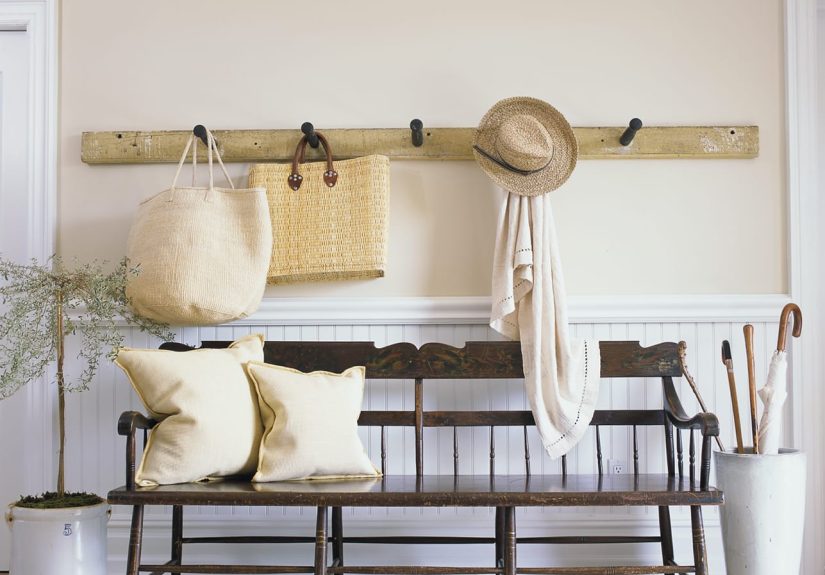
When you do not have floor space, look up. Wall-mounted storage is one of the easiest ways to create a mudroom function in a small entryway. Hooks, peg rails, floating shelves, wall baskets, and narrow ledges can turn an empty wall into a daily command center.
What to Include
Start with a row of sturdy hooks for coats, bags, hats, umbrellas, and dog leashes. If you have children, install a few hooks lower on the wall so they can hang their own items. This tiny adjustment can reduce the number of jackets tossed over chairs. It may not create a miracle, but it gives the miracle a fighting chance.
Add a floating shelf or slim ledge above or beside the hooks for keys, sunglasses, wallets, and small essentials. A small bowl or tray keeps these items from spreading like confetti. For renters, removable adhesive hooks can work for lightweight items, while freestanding coat racks can provide similar function without permanent installation.
Best For
This solution is ideal for apartments, narrow hallways, back-door entrances, and homes where the entryway is basically one wall and a prayer. Choose hooks with a clean design so the area feels intentional, not like a hardware aisle wandered indoors.
2. Use a Narrow Bench With Hidden Storage
A bench is the unofficial mascot of mudroom design. It gives people a place to sit while putting on shoes, and it can hide clutter underneath or inside. For homes without a mudroom, a narrow storage bench can make a front entry feel organized, even if the space is small.
How to Make It Work
Look for a bench with built-in cubbies, drawers, a lift-top seat, or open space underneath for baskets. Store everyday shoes, slippers, pet supplies, hats, gloves, or reusable shopping bags there. If you prefer a cleaner look, choose lidded baskets or fabric bins that slide under the bench. If your household is more “grab and go,” open baskets are easier to use.
The key is to limit what lives in the bench. A small entry bench should not become a retirement community for old sneakers, broken umbrellas, and scarves nobody has worn since 2018. Keep only the items used during the current season and move the rest to closets, bedrooms, or storage bins.
Best For
A narrow storage bench is great for families, pet owners, and anyone who needs a shoe-changing spot. It also helps guests understand where to place their belongings without you giving a formal house tour titled “Please Do Not Put Your Bag on My Dining Table.”
3. Add a Slim Shoe Cabinet
Shoes are usually the biggest problem in mudroom-less homes. They multiply near the door, form small mountain ranges, and somehow make even a clean house look chaotic. A slim shoe cabinet is one of the best entryway storage ideas because it keeps footwear upright, contained, and out of sight.
Why Slim Cabinets Work
Unlike bulky shoe racks, many slim cabinets are shallow enough for hallways and small apartments. Some tilt open, which allows shoes to be stored vertically without taking up much floor space. The top of the cabinet can also serve as a mini console table for keys, mail, a lamp, or a decorative tray.
Choose a cabinet based on your real shoe habits. If your household removes shoes at the door, assign each person one or two daily pairs. Everything else should live in bedroom closets or seasonal storage. A no-mudroom entryway works best when it holds the “daily rotation,” not the entire footwear biography of every person in the home.
Best For
This solution is perfect for small entryways, apartment foyers, and open-plan living areas where visible shoe clutter ruins the mood. A closed shoe cabinet instantly makes the space look calmer, even if inside the cabinet there is a flip-flop situation best described as “modern abstract.”
4. Turn a Closet Into a Mini Mudroom
If you have a coat closet near the entrance, congratulations: you may already have a mudroom wearing a disguise. A basic closet can become a high-functioning drop zone with shelves, hooks, bins, and a few labels.
Simple Closet Upgrades
Remove items that do not belong near the door, such as off-season coats, old boxes, random tools, or that one tote bag full of tote bags. Then create zones. Use hooks on the inside walls or door for bags and scarves. Add a shoe rack or boot tray at the bottom. Use labeled baskets on the upper shelf for gloves, hats, pet items, sports gear, or outdoor accessories.
If your closet has one high clothing rod and a lot of wasted vertical space, consider adding a second rod, stackable shelves, or a hanging organizer. The goal is to make everything easy to grab. If people must dig through a dark closet like they are searching for treasure, they will abandon the system and return to dropping things on the nearest chair.
Best For
This is one of the most effective storage solutions for homes with a front hall closet, especially when the entryway itself is too small for furniture. It also works well for families who prefer closed storage and want the visual clutter hidden behind a door.
5. Use Over-the-Door and Behind-the-Door Storage
Doors are underrated storage real estate. In mudroom-less homes, the back of a closet door, laundry room door, garage entry door, or even a bedroom door can hold items that would otherwise pile up near the entrance.
Smart Behind-the-Door Ideas
Use an over-the-door organizer with clear pockets for gloves, hats, sunglasses, sunscreen, dog bags, small umbrellas, hair ties, masks, or other grab-and-go items. Clear pockets are especially useful because people can see what is inside. A mystery pocket system is just clutter with curtains.
You can also install hooks, slim wire baskets, or a mounted rack behind the door. Keep weight limits in mind, especially with hollow-core doors. For lightweight accessories, this approach is affordable, renter-friendly, and surprisingly powerful.
Best For
Behind-the-door storage is excellent for apartments, rental homes, kids’ accessories, pet supplies, and seasonal items. It is also a clever way to create storage without changing the look of your entryway.
6. Create a Console Table Command Center
A console table can do more than look pretty under a mirror. In a home without a mudroom, it can become the central landing zone for daily essentials. The trick is to combine style with structure so the table does not become a museum of unopened mail and forgotten receipts.
What Goes on the Console
Place a tray or bowl on top for keys, wallets, sunglasses, and small electronics. Add a mail sorter or letter tray for incoming paper. Use baskets underneath for shoes, pet gear, hats, or reusable bags. If the console has drawers, assign each drawer a clear purpose. One drawer for keys and chargers. One for dog-walking supplies. One for school forms. Not one drawer called “miscellaneous,” because that is how chaos gets a forwarding address.
A mirror above the console makes the entryway feel brighter and gives you a last-minute check before leaving. A lamp can improve function in dim hallways. Keep decor minimal so the table remains useful instead of becoming a decorative obstacle course.
Best For
This idea works beautifully in narrow entryways, living rooms that open directly from the front door, and homes where the first surface inside becomes the default drop spot. Give that habit a proper home, and the whole house feels more organized.
7. Set Up Baskets, Bins, and Personal Cubbies
When several people share one entrance, individual storage is a game changer. Baskets, bins, and cubbies help prevent the classic family question: “Whose stuff is this?” The answer is usually “everyone’s,” which is not helpful.
How to Organize by Person or Category
Give each household member a basket, bin, cubby, or labeled shelf. Use it for shoes, hats, gloves, school items, sports gear, or accessories. If you have pets, give them a small bin too. Leashes, treats, towels, and waste bags are much easier to find when they are not mingling with winter gloves and grocery bags.
For small spaces, choose vertical cubbies or stackable bins. For a more polished look, use matching baskets. For kids, labels with names or pictures can make the system easier to follow. The more obvious the system, the more likely people are to use it without needing a dramatic speech from the household’s unofficial organizing manager.
Best For
Personal cubbies are ideal for busy families, shared apartments, and homes with school gear or sports equipment. They also make cleanup faster because each person has a clear destination for their items.
How to Choose the Right Mudroom Alternative
The best no-mudroom storage solution depends on your space, habits, and clutter type. Before buying anything, watch what happens at your entrance for a few days. Where do people naturally drop items? Which items show up every day? What causes the biggest mess?
If shoes are the problem, start with a shoe cabinet, bench, or basket. If coats and bags are the issue, hooks are your first move. If mail and keys clutter every surface, build a command center. If everyone’s belongings blend together, use labeled bins or cubbies. Good organization is not about forcing your home to behave like a magazine photo. It is about creating storage that fits real life, including rushed mornings, rainy afternoons, school pickups, grocery runs, and the occasional “Where are my keys?” performance.
Small Entryway Design Tips That Make Storage Look Better
Storage should be useful, but it should also look like it belongs. A few design choices can make a mudroom-less entryway feel calm and intentional.
Keep the Color Palette Simple
Choose baskets, hooks, and furniture in colors that coordinate with the rest of your home. Matching bins can make open storage look cleaner. Natural materials like wood, wicker, rattan, canvas, and metal add texture without making the space feel crowded.
Use Vertical Space
Small entryways often fail because everything sits on the floor. Move storage upward with hooks, shelves, wall baskets, and peg rails. This keeps walking paths clear and makes the space feel larger.
Edit Seasonally
A mudroom alternative should not hold every coat, shoe, and accessory all year. In summer, store heavy boots and winter hats elsewhere. In winter, move beach bags and sandals out of the entry. Seasonal editing keeps the system lean and prevents overflow.
Make It Easy to Reset
The best entryway storage systems are easy to tidy in five minutes. If baskets are overflowing, hooks are packed, or the bench will not close, the system needs editing. A weekly reset can prevent clutter from becoming a permanent resident.
Common Mistakes to Avoid
The first mistake is buying storage before decluttering. Storage does not solve clutter if you are simply giving clutter a nicer apartment. Remove broken, duplicate, out-of-season, and rarely used items before choosing bins or furniture.
The second mistake is using storage that requires too many steps. If people come home with full hands, they are unlikely to open a cabinet, slide out a bin, remove a lid, and neatly place shoes inside. Open hooks, trays, and baskets often work better for daily items.
The third mistake is forgetting traffic flow. A bench or console that blocks the door will become annoying fast. Measure carefully and choose slim pieces for narrow spaces. In a mudroom-less home, every inch has a job interview, and bulky furniture does not always get hired.
Experience-Based Notes: What Actually Works in Real Mudroom-Less Homes
In real life, the most successful mudroom-less storage systems are rarely the fanciest ones. They are the ones people can use while carrying groceries, backpacks, coffee, mail, and the emotional weight of Monday. The experience of organizing small entryways usually proves one thing quickly: convenience wins.
For example, a family with children may start with a beautiful closed cabinet because it looks clean. But if the kids come home and toss shoes beside it instead of inside it, the cabinet is not really storage; it is decorative disappointment. In that case, a low open basket for each child often works better. It may not look as sleek as custom cabinetry, but it matches the behavior. The shoes are contained, the floor is safer, and nobody has to give a lecture before dinner.
Pet owners often discover that dog supplies need their own mini station. A hook for the leash, a small basket for waste bags, a towel for muddy paws, and a tray for treats can prevent frantic searching before walks. This is especially useful near a back door or garage entrance. When pet items are scattered, the entryway becomes cluttered fast. When they live together, the routine gets smoother.
Apartment dwellers usually benefit from vertical storage more than bulky furniture. A slim shoe cabinet, a few hooks, and a floating shelf can do more than a large bench that eats up precious walking space. In rentals, removable hooks, freestanding coat racks, and over-the-door organizers are practical because they add function without making the landlord clutch a clipboard.
One of the best lessons from small-space organizing is to create limits. A basket is not just a container; it is a boundary. If the shoe basket is full, some shoes must move elsewhere. If the mail tray is full, it is time to sort papers. If the hook rail looks like a coat explosion, off-season outerwear needs to leave the entry. Limits make decisions easier because the storage itself tells you when the system needs attention.
Another helpful experience is adding a five-minute weekly reset. Choose one day to clear old mail, return extra shoes to closets, empty bags, straighten baskets, and remove anything that does not belong. This small habit prevents the entry from turning into a clutter swamp. It is much easier to spend five minutes resetting than an entire Saturday wondering how six reusable bags, three umbrellas, and a soccer cleat formed a household committee by the door.
Finally, remember that your mudroom alternative should support your life, not shame it. If your home is busy, choose forgiving storage like baskets and hooks. If you love a polished look, choose closed cabinets and matching bins. If your space is tiny, use walls and doors. The goal is not to pretend you have a grand mudroom with built-in lockers and a magazine-ready bench cushion. The goal is to make coming home easier, leaving faster, and finding your keys less like a daily treasure hunt.
Conclusion
You do not need a dedicated mudroom to have an organized home entrance. By combining smart entryway storage ideas such as wall hooks, narrow benches, slim shoe cabinets, closet upgrades, behind-the-door organizers, console command centers, and labeled baskets, you can create a practical drop zone almost anywhere. The best storage solutions for the mudroom-less are simple, visible, easy to maintain, and tailored to your household’s real habits.
Start small. Choose the clutter category that causes the most daily frustration, solve that first, and build from there. A few hooks, one bench, a shoe cabinet, or a set of baskets can completely change how your entryway feels. Your home may not have a mudroom, but with the right setup, it can still have the calm, organized entrance you deserve. And yes, the umbrella finally gets a place to live.