Table of Contents >> Show >> Hide
- How We Chose the Best Hearing Aids
- OTC vs. Prescription: Choose the Right Lane First
- The 8 Best Hearing Aids Right Now
- 1. Phonak Audéo Infinio Ultra Sphere Best Overall for Noisy Places
- 2. Oticon Intent Best for Natural, Everyday Listening
- 3. Starkey Edge AI Best for Smart Features and Long Battery Life
- 4. Signia Pure Charge&Go IX Best for Connectivity
- 5. Sony CRE-E10 Best OTC Hearing Aid for First-Time Users Who Want an Earbud Feel
- 6. Sennheiser All-Day Clear Best OTC Option for Simple Daily Use
- 7. Lexie B2 Plus Best Value OTC Hearing Aid
- 8. Elehear Beyond Pro Best Budget-Friendly OTC Pick
- What Matters More Than Brand Name
- When You Should See a Professional Instead of Buying OTC
- How to Get More From Your Hearing Aids
- Real-World Experiences With Hearing Aids
- Final Verdict
If you have started saying “What?” so often that your family now answers before you finish the word, welcome. You may be in the market for hearing aids. The good news is that today’s best hearing aids are far better than the squealy, whistly gadgets many people still imagine. The modern version is smarter, smaller, easier to recharge, better at handling restaurant chaos, and much more connected to your phone, TV, and daily life.
The tricky part is that there is no single best hearing aid for every person. Some models are excellent for noisy restaurants. Some are ideal for first-time users who want a simple self-fitting setup at home. Others shine if you need strong Bluetooth, longer battery life, or more help from an audiologist. That is why the smartest way to shop is not just to look for the “best hearing aids” in general, but the best hearing aids for your hearing loss, lifestyle, and patience level with apps.
This guide breaks down eight standout options right now, with a mix of prescription and over-the-counter picks. Think of it as a practical shortlist, not a beauty pageant for tiny speakers.
How We Chose the Best Hearing Aids
To build this list, I focused on the factors that actually matter in real life: speech clarity, performance in background noise, comfort, rechargeability, Bluetooth streaming, app quality, ease of setup, and overall value. I also considered whether a device makes sense for a first-time hearing aid wearer or is better suited to someone working closely with an audiologist.
Just as important, I weighed the type of hearing loss each category fits. That matters because a hearing aid can be technically impressive and still be completely wrong for your ears. In hearing care, fit beats hype every single time.
OTC vs. Prescription: Choose the Right Lane First
Before getting attached to a brand, decide whether you are shopping for an OTC hearing aid or a prescription hearing aid. OTC hearing aids are designed for adults with perceived mild to moderate hearing loss. They are appealing because they are easier to buy, often less expensive, and usually come with app-based self-fitting tools.
Prescription hearing aids, on the other hand, are the better route if your hearing loss is more significant, more complex, or connected to other symptoms. They also make more sense if you want custom tuning, in-person fitting, earmold options, and ongoing clinical support. In other words, OTC is the DIY lane. Prescription is the guided tour with a professional riding shotgun.
The 8 Best Hearing Aids Right Now
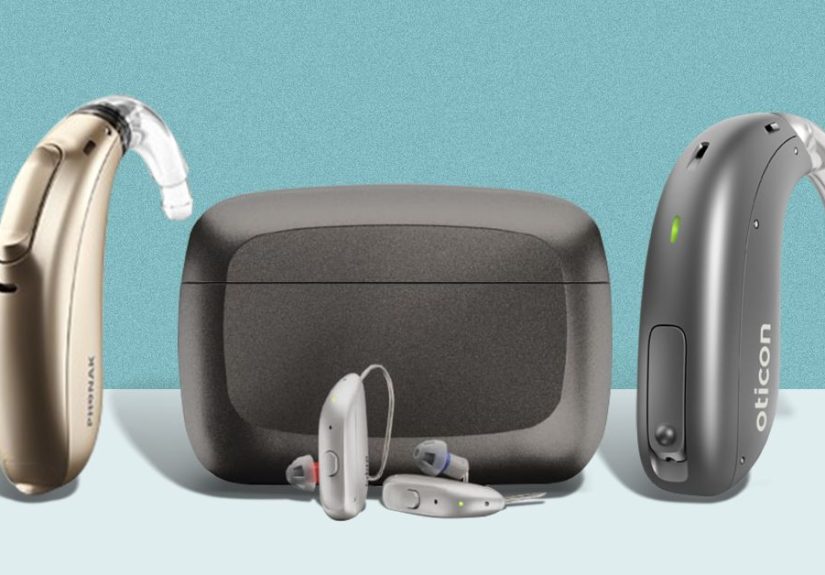
1. Phonak Audéo Infinio Ultra Sphere Best Overall for Noisy Places
If your biggest complaint is, “I can hear that people are talking, but I cannot make out the words in a busy room,” this is the hearing aid that deserves your attention. Phonak’s Audéo Infinio Ultra Sphere is the strongest all-around pick for speech understanding in noise.
Its biggest selling point is advanced processing built to pull speech out of chaos. In plain English, that means it is designed for the exact moments most people hate: packed restaurants, family gatherings, loud offices, and any place where six people speak at once and somebody drops a fork for dramatic effect.
It is also a strong choice for people who care about universal connectivity and rechargeable convenience. The downside is that premium performance usually comes with premium pricing, and this model is not the most discreet option on the market. Still, if speech clarity is your priority, this one is the standout.
2. Oticon Intent Best for Natural, Everyday Listening
Oticon Intent is a top-tier prescription hearing aid for people who want hearing support that feels adaptive rather than aggressive. It is especially attractive for users who move through different environments all day and want the device to adjust without constant fiddling.
One reason it stands out is its user-intent sensing approach. That sounds futuristic, and frankly it is a little futuristic, but the practical result is simple: the hearing aid tries to respond to what you are doing and how you are listening. For many wearers, that can translate into a more natural soundscape and less mental fatigue.
Oticon Intent is a smart option for people who value all-day conversation, streaming, and refined sound processing over bargain pricing. It is not cheap, but it is a polished, premium device that makes sense for users who want a sophisticated daily driver.
3. Starkey Edge AI Best for Smart Features and Long Battery Life
Starkey Edge AI is the multitool of the bunch. Yes, it is a hearing aid, but it also leans hard into app-connected lifestyle features. If you like the idea of your hearing aid doing more than simply amplifying sound, this model is one of the most compelling options available.
It offers strong sound performance, long battery life, and a feature set that appeals to tech-forward users. Starkey has also built a reputation around wellness-style extras, including app tools that go beyond basic volume control. That makes Edge AI especially attractive for users who want one platform for hearing, connectivity, and daily convenience.
This is not the best choice for someone who wants the simplest possible experience. But if you enjoy smart features and want a premium prescription hearing aid with strong stamina, Edge AI earns its place.
4. Signia Pure Charge&Go IX Best for Connectivity
Some hearing aids are designed to help you hear better. This one also clearly wants to be friends with your phone. Signia Pure Charge&Go IX is a great pick for users who care about Bluetooth performance, app control, and solid battery life in a modern receiver-in-canal design.
It is especially appealing for people who stream calls, use multiple devices, or want strong connectivity without carrying around something that feels bulky. It also lands in the sweet spot between premium performance and everyday practicality.
If your life involves switching between conversations, phone calls, streaming audio, and the occasional video call that somehow could have been an email, Signia’s connectivity strengths make it a very easy model to like.
5. Sony CRE-E10 Best OTC Hearing Aid for First-Time Users Who Want an Earbud Feel
For people who are hearing-aid curious but not quite ready to shout it from the rooftops, the Sony CRE-E10 is one of the most approachable OTC options. Its earbud-inspired look can feel less intimidating than a traditional hearing aid, and that matters more than many buyers admit.
The CRE-E10 is built for adults with perceived mild to moderate hearing loss and is designed around easy self-fitting through an app. It also offers rechargeable battery performance and a setup process that feels less like a medical appointment and more like configuring a consumer tech device.
This is a strong pick for first-time users who want a familiar design, straightforward setup, and a bridge between personal audio gear and hearing support. If you want a device that does not scream “medical equipment,” Sony makes a compelling case.
6. Sennheiser All-Day Clear Best OTC Option for Simple Daily Use
Sennheiser All-Day Clear lives in an appealing middle ground: approachable but not flimsy, modern but not overcomplicated. It is built for adults with perceived mild to moderate hearing loss who want a self-fitting OTC hearing aid with app support and a more streamlined experience.
The biggest appeal here is usability. This is the kind of hearing aid that makes sense for someone who wants to improve conversations, watch TV without turning the volume into a neighborhood event, and start hearing better without a giant learning curve.
It is not the flashiest performer in the OTC category, but it is a sensible one. For users who value clarity, comfort, and manageable setup, All-Day Clear is a very respectable choice.
7. Lexie B2 Plus Best Value OTC Hearing Aid
Lexie B2 Plus continues to be one of the most attractive value plays in hearing care. It is especially appealing for shoppers who want better-than-entry-level performance without immediately leaping into premium prescription pricing.
What makes this device stand out is the balance. You get self-fitting convenience, rechargeable hardware, app control, and a user experience that feels more supported than many low-cost options. That makes it a good match for cautious shoppers who want solid performance and a bit more confidence during setup.
Value does not mean “cheap and hopefully fine.” In the best cases, value means you get enough performance that you stop thinking about what you did not buy. Lexie B2 Plus fits that definition very well.
8. Elehear Beyond Pro Best Budget-Friendly OTC Pick
If your budget is real, strict, and not interested in inspirational speeches, Elehear Beyond Pro is one of the most interesting affordable hearing aids on the market. It offers a self-fitting OTC approach, app-based customization, and feature depth that can exceed expectations at its price point.
This is the hearing aid for people who want modern essentials without paying flagship money. It makes particular sense for adults with perceived mild to moderate hearing loss who want to try hearing aids before committing to a far more expensive prescription path.
No budget hearing aid is perfect, and affordable models still have limitations in fit flexibility, noise handling, and long-term clinical support. Even so, Elehear Beyond Pro stands out as a genuinely useful option for cost-conscious buyers.
What Matters More Than Brand Name
Brand matters, but not as much as these five things:
First, your degree of hearing loss. A mild hearing loss and a severe hearing loss are not shopping for the same device, no matter how slick the ad looks.
Second, background-noise performance. Many people do not struggle most in quiet rooms. They struggle in restaurants, cars, family dinners, and meetings. That is where premium processing often earns its money.
Third, comfort. A hearing aid can sound amazing, but if it annoys your ears or clashes with your glasses, it will end up living in a drawer.
Fourth, app and phone compatibility. If you will use streaming, remote controls, or self-fitting tools, your phone matters. Always check compatibility before buying.
Fifth, support. Some people are perfectly happy adjusting their devices at home. Others need follow-up help. Know yourself. Be honest. Your future self will appreciate it.
When You Should See a Professional Instead of Buying OTC
OTC hearing aids are helpful for many adults, but they are not a cure-all. If your hearing loss came on suddenly, affects one ear much more than the other, or comes with pain, drainage, dizziness, or a feeling that your ear has declared war on you overnight, get evaluated before buying anything.
The same goes for people who think they may have moderate-to-severe hearing loss, longstanding tinnitus with other troubling symptoms, or trouble understanding speech even in quieter settings. In those cases, professional testing is often worth every penny because it tells you what problem you are actually trying to solve.
How to Get More From Your Hearing Aids
The best hearing aid in the world still needs a little cooperation. Wear it consistently. Give your brain time to adapt. Keep the microphones and domes clean. Learn the app instead of pretending you will “figure it out later.” And if a setting feels wrong, adjust it or ask for help instead of assuming all hearing aids are disappointing.
Also, protect the hearing you still have. Hearing aids are helpers, not permission slips to ignore loud noise. Concerts, power tools, and long headphone sessions can still damage hearing further. Your hearing aids are not tiny superheroes in capes.
Real-World Experiences With Hearing Aids
Here is what many people do not realize until they actually start wearing hearing aids: the first big surprise is not always better hearing. Sometimes it is hearing too much. Suddenly, your turn signal sounds enthusiastic. Your refrigerator has opinions. Your shoes make a sound on the floor that seems frankly unnecessary. For first-time users, that “wow, the world is noisy” phase is incredibly common.
Week one is usually a mix of relief and comedy. Many users love hearing birds again, understanding a grandchild more clearly, or catching dialogue on TV without subtitles doing all the heavy lifting. At the same time, they may feel a little overwhelmed in restaurants or tired by the end of the day. That does not mean the hearing aids are wrong. It often means the brain is relearning how to sort sound after missing pieces of it for a long time.
By the second or third week, the experience usually becomes more practical. People start noticing which features actually matter to them. Some discover they care most about phone streaming. Others realize what they really needed was better hearing at church, during meetings, or in the car. A lot of wearers also learn that comfort and fit matter just as much as sound quality. A brilliant hearing aid that pinches, slips, or tangles with glasses can become very annoying very quickly.
Another common experience is emotional, not technical. Better hearing often changes social energy. People may feel less left out at dinner, less nervous about misunderstanding coworkers, and less exhausted from trying to piece together half-heard conversations. Spouses and family members often notice the difference too, sometimes immediately. The TV volume comes down. Repeating every sentence three times becomes less routine. Domestic peace may not break out overnight, but it gets a better chance.
There can also be frustration. Apps are not always perfect. Bluetooth pairing can act like it was designed by a mischievous goblin. Batteries need charging. Domes need cleaning. And sometimes a hearing aid that sounded great in the clinic needs fine-tuning in real life. That is normal. Hearing aids are not magic beans. They are tools, and the best results usually come after some adjustment.
Over time, the most successful users tend to share one habit: they wear their hearing aids regularly instead of only during “important” events. Daily use helps the brain adapt faster, helps settings feel more natural, and makes the devices part of life instead of a special-occasion accessory. The result is not just louder sound. It is smoother communication, more confidence, and less effort spent trying to decode the world. That is the real win.
Final Verdict
If you want the best overall hearing aid for difficult listening environments, Phonak Audéo Infinio Ultra Sphere is the strongest premium pick. If you want refined everyday performance, Oticon Intent is excellent. If smart features and battery life are a priority, Starkey Edge AI makes a lot of sense. For connectivity lovers, Signia Pure Charge&Go IX is hard to ignore.
On the OTC side, Sony CRE-E10 is especially friendly for first-time users, Sennheiser All-Day Clear is a simple all-around option, Lexie B2 Plus is a strong value choice, and Elehear Beyond Pro is the affordable hearing aid that punches above its class.
In the end, the best hearing aid is the one you will actually wear, can actually manage, and that actually matches your hearing needs. Glamorous? No. True? Absolutely.