Table of Contents >> Show >> Hide
- Why Découpage Pumpkins Work So Well for Country Living Style
- What Découpage Actually Means
- What You Need
- How to Make Country Living Inspired Découpage Pumpkins
- Best Design Ideas for Country Living Inspired Découpage Pumpkins
- Real Pumpkins vs. Faux Pumpkins
- Common Mistakes to Avoid
- How to Style Découpage Pumpkins in Your Home
- Why This Craft Has Such Lasting Appeal
- 500 More Words on the Real Experience of Making Country Living Inspired Découpage Pumpkins
- Conclusion
There are two kinds of fall decorators in this world: the ones who carve one heroic jack-o’-lantern and call it a day, and the ones who see a pumpkin and think, “Yes, but what if this gourd had wallpaper energy?” This article is for the second group.
Country living style has always had a special talent for making homes feel collected, warm, and a little bit storybook. It is never too fussy, never too cold, and never afraid of a small floral print. That is exactly why découpage pumpkins fit the look so well. They bring together vintage charm, handmade personality, and a practical no-carve approach that looks beautiful from early fall all the way through Thanksgiving.
If you love cozy porches, layered tabletops, heirloom-inspired details, and decorations that look as though they wandered in from an old farmhouse magazine spread with excellent taste, Country Living inspired découpage pumpkins are one of the easiest ways to get there. Better yet, they are forgiving. Even if your craft skills usually hover somewhere between “enthusiastic beginner” and “hot glue optimist,” you can make something genuinely pretty.
Why Découpage Pumpkins Work So Well for Country Living Style
The beauty of this project is that it turns an ordinary pumpkin into a decorative object with texture, pattern, and personality. Country-inspired decorating often blends natural materials with soft colors, botanicals, vintage prints, and handmade details. Découpage does all of that in one project without demanding professional-level skill.
Instead of carving, you cover the surface of a pumpkin with paper elements such as floral napkins, seed packet illustrations, old book pages, gingham scraps, botanical prints, sheet music, toile-inspired patterns, or pressed-look leaf motifs. Once sealed, the result feels thoughtful and layered rather than loud or temporary. In other words, your pumpkin starts acting less like a Halloween prop and more like a tiny seasonal design statement.
That is the magic. A carved pumpkin says, “I bought candy.” A découpage pumpkin says, “I own a basket of antique wooden clothespins for no practical reason, and yes, the porch blanket is coordinated.”
What Découpage Actually Means
If the word sounds fancy, the process is wonderfully simple. Découpage is the art of decorating a surface by attaching cut paper pieces with a glue-like medium and sealing them in place. On pumpkins, that usually means brushing on a thin layer of decoupage medium, placing the paper on the surface, smoothing it gently, and finishing with another coat on top.
The technique works on real pumpkins, faux pumpkins, wood pumpkins, and even paper mâché forms. For a true country-living look, faux pumpkins are especially useful because you can reuse them year after year. Real pumpkins can look gorgeous too, but they are naturally temporary. If you want a display that survives the entire season without developing suspicious soft spots, faux is your friend.
What You Need
- One or more pumpkins, real or faux
- Découpage medium such as Mod Podge or a similar craft sealer
- Soft brush or foam brush
- Paper napkins, tissue paper, wrapping paper, craft paper, wallpaper scraps, or printed cutouts
- Small scissors for detailed shapes
- Plastic wrap or parchment for smoothing delicate paper
- Optional acrylic paint for a base coat
- Optional ribbon, twine, velvet trim, dried stems, or wooden tags for finishing touches
The paper you choose matters. If you want that relaxed farmhouse-meets-editorial look, go for muted florals, faded botanicals, antique labels, soft plaid, ticking stripe, pressed leaves, or classic vintage illustrations. Bright neon skull paper has its place in the world. That place is just not “country living inspired.”
How to Make Country Living Inspired Découpage Pumpkins
1. Start with the right pumpkin
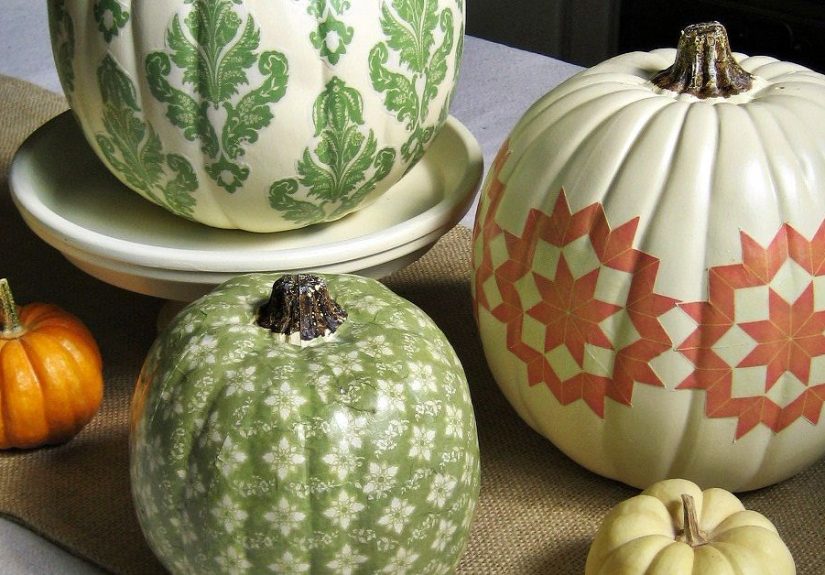
White pumpkins, muted orange pumpkins, pale green heirloom-style shapes, and soft gray faux pumpkins all work especially well. These tones give your paper design room to shine without fighting for attention. A bright orange pumpkin can still work, but the overall look will feel more Halloween-forward than country-chic.
2. Prep the surface
Wipe the pumpkin clean and let it dry completely. If you are using a faux pumpkin with a slick finish, a light matte base coat can help your paper adhere more easily and make the finished project look softer. Cream, linen, dusty sage, pale blue, and soft greige are excellent base colors for this style.
3. Pick a paper story, not just a paper pattern
This is where the best results happen. Instead of grabbing random scraps, choose a visual theme. For example, you might build around vintage roses, autumn leaves, French seed packets, faded quilts, or neutral botanicals. When your materials share a mood, the finished pumpkin looks curated instead of accidental.
4. Cut or tear your pieces
Scissors give you a neat, polished edge. Tearing gives a softer, more organic look that blends into the pumpkin surface. For floral napkins, cutting around petals and leaves creates a more custom finish. For book pages or wallpaper, torn edges can make the collage feel more relaxed and antique.
5. Apply a thin coat of decoupage medium
Thin is the keyword here. Too much glue is one of the fastest ways to get wrinkles, bubbles, and a pumpkin that looks like it survived a weather event. Brush a light coat onto a small section of the pumpkin rather than covering the whole thing at once.
6. Place the paper gently
Lay your paper piece onto the tacky surface and smooth it carefully from the center outward. Thin napkins tear easily, so this is not the moment for aggressive confidence. A piece of plastic wrap over the top can help you smooth the paper without shredding it with your fingers.
7. Seal the top
Once the paper is in place, brush a light top coat over it. Let it dry before adding nearby pieces. Slow layering works better than rushing. If you try to cover the entire pumpkin in one wild burst of optimism, the pumpkin will humble you.
8. Finish the stem and details
The stem is the jewelry of the pumpkin. Wrap it with velvet ribbon, jute twine, torn muslin, or a strip of faded fabric. Add a tag, a sprig of dried wheat, or a scrap of lace for extra farmhouse charm. Small details make the project look intentional and finished.
Best Design Ideas for Country Living Inspired Découpage Pumpkins
Botanical Garden Pumpkins
Use fern prints, wildflower illustrations, and soft green leaves over cream or white pumpkins. These are ideal for mantels, entry tables, and dining room centerpieces.
Vintage Floral Pumpkins
Choose cabbage roses, tiny ditsy florals, or faded English garden prints. This style works beautifully with brass candlesticks, old books, and weathered wood trays.
Farmhouse Patchwork Pumpkins
Mix gingham, stripe, calico, and neutral florals in small sections like a cozy quilt. These pumpkins feel playful but still polished, especially in kitchens and breakfast nooks.
Leaf and Harvest Pumpkins
Use leaf motifs, seed packet art, or autumn-toned paper in rust, ochre, olive, and burgundy. This look transitions easily from Halloween to Thanksgiving.
Book Page or Sheet Music Pumpkins
For a more subtle, vintage feel, decoupage book text or sheet music over neutral pumpkins and add one or two botanical elements on top. These feel timeless and slightly academic in the most charming way.
Real Pumpkins vs. Faux Pumpkins
Both work, but they serve different goals. Real pumpkins offer natural texture and authentic seasonal beauty. They are perfect for short-term displays, parties, dinner tables, and front porch arrangements where a little impermanence is part of the charm.
Faux pumpkins, on the other hand, are the long-game choice. They are easier to store, reuse, and style year after year. If you are making a more elaborate design with layered napkins, wallpaper pieces, or fabric accents, faux pumpkins usually give you more freedom and more decorating mileage.
The practical answer is simple: if you want a one-season centerpiece, use real pumpkins. If you want a signature autumn piece that comes back every year like a favorite sweater, choose faux.
Common Mistakes to Avoid
Using too much medium
Heavy coats do not make the project stronger. They usually make it messier. Thin coats dry better and look cleaner.
Skipping paper prep
Napkins often have multiple plies. Separate them before applying. If you skip that step, your paper may look bulky or resist smoothing properly.
Choosing patterns that fight each other
The country look is collected, not chaotic. Stick to a palette and mood. A pumpkin should feel layered, not like a craft store exploded in self-defense.
Forgetting the display context
Your pumpkin does not live alone. Think about where it will sit. A floral pumpkin for a rustic kitchen might need different colors than one destined for a moody front porch.
How to Style Découpage Pumpkins in Your Home
On the front porch
Cluster several pumpkins in different sizes near lanterns, crocks, or baskets. Mix solid pumpkins with one or two detailed découpage pieces so the arrangement feels balanced rather than busy.
On the dining table
Use smaller pumpkins as part of a centerpiece with taper candles, eucalyptus, dried hydrangeas, or foraged branches. They add instant texture and look especially lovely against linen runners.
On a mantel
Layer pumpkins with framed art, old books, and a garland of leaves or dried stems. If your pumpkins feature soft botanical designs, the mantel will feel seasonal without looking overly themed.
In the kitchen
Set a few mini pumpkins on open shelves, a windowsill, or a cake stand. Gingham, floral, or seed-packet styles feel right at home in a warm, country-inspired kitchen.
Why This Craft Has Such Lasting Appeal
Découpage pumpkins are popular for good reason. They are easy to personalize, safer than carving, and surprisingly versatile. They can lean romantic, rustic, playful, vintage, or elegant depending on the paper and palette you choose. That flexibility is what makes them so easy to adapt to country living style.
More importantly, they feel human. They are not factory-perfect, and that is part of the appeal. A tiny wrinkle in the paper, a visible brushstroke, a hand-tied bow at the stem, a slightly off-center leaf cutout, all of that adds character. These are the kinds of details that make a home feel lived in and loved rather than staged within an inch of its life.
500 More Words on the Real Experience of Making Country Living Inspired Découpage Pumpkins
The experience of making Country Living inspired découpage pumpkins is honestly half the reason people fall in love with them. Yes, the finished result is beautiful. Yes, they look excellent in photos. But the process itself has a cozy, unhurried quality that feels very different from more stressful seasonal projects. You do not need power tools. You do not need perfect drawing skills. You mostly need a table, a pumpkin, some pretty paper, and a willingness to pretend your dining room is a charming little craft studio for the afternoon.
One of the best parts is choosing the materials. That stage feels a bit like treasure hunting. You start noticing old wrapping paper in the back of a drawer, floral napkins from a forgotten party pack, scraps of wallpaper, bits of ribbon, pages from damaged books, or even patterned tissue paper from a gift bag that was apparently too pretty to throw away. Suddenly, everything looks like potential pumpkin fashion. A normal person sees paper. A fall decorator sees “future heirloom gourd.”
There is also something deeply satisfying about the transformation. A plain faux pumpkin can look generic and store-bought. After a little découpage, it becomes personal. It starts to reflect your taste, your home, and the mood you want for the season. Maybe you go for muted roses and soft velvet ribbon because you want the pumpkin to feel romantic and gentle. Maybe you choose seed packets and botanical labels because you want something that looks like it belongs in a farmhouse pantry. Maybe you use patchwork prints because you want it to feel handmade and nostalgic. Whatever you choose, the finished project says something about your style in a way that carving rarely does.
There is a rhythm to the process that makes it unexpectedly relaxing. Brush on a little medium. Lay down a leaf. Smooth the edge. Step back. Add another piece. It is repetitive in the nicest possible way, like folding warm laundry if folding warm laundry were actually fun. Even the small imperfections become part of the charm. A wrinkle here or there often makes the pumpkin feel more vintage and less mass-produced. In a country-style home, that is usually a plus.
And then there is the decorating payoff. Once the pumpkin is dry, you start moving it around the house like it is a celebrity making appearances. First the entry table. Then the mantel. Then maybe the kitchen shelf next to the crock of wooden spoons because somehow that looks adorable too. Découpage pumpkins have a funny way of making nearby decor look more intentional. One pretty patterned pumpkin can pull a whole fall vignette together.
For families, this craft can also become a seasonal tradition. Adults can handle the delicate paper work while kids choose patterns, ribbons, or stems. Friends can make them together during a fall gathering. You can even create a set over time, adding one new style each year so your autumn decor slowly builds its own history. That is probably the most country-living part of all: the project does not just decorate the home, it creates a small memory inside it.
In the end, that is why these pumpkins endure. They are lovely to look at, but they are also pleasant to make, easy to personalize, and tied to the comforting rituals of the season. They ask for creativity, not perfection. And frankly, a decoration that looks charming, lasts longer than a carved pumpkin, and lets you justify keeping pretty paper scraps forever is doing excellent work.
Conclusion
Country Living inspired découpage pumpkins are one of the easiest ways to make fall decor feel warm, custom, and genuinely stylish. They combine the cozy personality of handmade decorating with the elegance of vintage-inspired patterns, natural colors, and layered textures. Whether you choose florals, botanicals, gingham, or old book pages, the result feels softer and more timeless than many standard Halloween decorations.
Most of all, these pumpkins prove that seasonal decor does not need to be complicated to be memorable. A little paper, a little glue, and a little patience can turn an ordinary pumpkin into something that looks thoughtful, collected, and beautifully at home in a country-inspired space. Which is a very nice return on investment for an afternoon spent happily covered in craft supplies.