Table of Contents >> Show >> Hide
- The Short Answer: Wash It Daily
- Why Most People Get This Wrong
- How to Wash a Water Bottle the Right Way
- When You Need More Than Soap and Water
- Does Bottle Material Matter?
- The Biggest Water Bottle Cleaning Mistakes
- Signs Your Water Bottle Is Overdue for a Wash
- What About So-Called Self-Cleaning Bottles?
- Practical Cleaning Routine for Real Life
- Conclusion
- Real-Life Experiences: Why This Topic Hits Home
If your reusable water bottle has basically become your emotional support sidekick, you are not alone. It goes to work, rides in the car, survives gym sessions, and probably spends more time with you than some relatives. But here is the awkward truth: a lot of people clean their water bottles far less often than they should. And yes, that includes the folks who proudly say, “It only has water in it.”
That logic sounds reasonable until you remember one tiny detail: your bottle is not sipping itself. Your mouth, hands, backpack, desk, cup holder, and kitchen counter are all part of the story. Add a straw lid, a rubber gasket, or a flip top, and congratulations, you now own a tiny moisture-friendly apartment complex for grime.
So how often should you wash your water bottle? For most people, the best answer is every day, or at least after each day of use. If you put anything besides plain water in it, you should wash it immediately after use. That is the short answer. The longer answer is where most people finally realize they have been treating their bottle like it is magically self-cleaning. Spoiler: it is not.
The Short Answer: Wash It Daily
If you use a reusable water bottle every day, you should wash it every day. Not once a week. Not “when it starts smelling weird.” Not “whenever I remember and Mercury is in retrograde.” Daily.
Here is a practical schedule that works for most households:
- Every day: Wash the bottle, lid, straw, and any removable parts with warm water and dish soap.
- After drinks other than water: Wash it right away, especially after coffee, tea, protein shakes, juice, smoothies, or electrolyte drinks.
- Once a week: Do a more thorough deep clean, especially if your bottle has a narrow neck, hidden gasket, or straw.
- Any time it has been in a hot car, gym bag, or sick house: Clean it as soon as possible.
That daily routine may sound excessive at first, but it is really no different from washing a cup, fork, or lunch container after you use it. Your water bottle is food-contact gear. It just happens to be cuter and more expensive.
Why Most People Get This Wrong
They Assume Water Means Clean
Plain water does not leave behind the same sticky residue as orange juice or a vanilla protein shake that smells like broken promises. But the bottle still collects bacteria from your mouth, fingers, and the surfaces it touches. Every time you sip, backwash a little, touch the cap after the gym, or refill the bottle without washing it, you add more material for microbes to hang around.
In other words, the inside of your bottle is not staying pristine just because the liquid is clear. That is not how hygiene works. If it were, kitchen sinks would sparkle forever and dish soap companies would be in shambles.
The Dirtiest Parts Are Often the Ones People Ignore
The bottle body gets all the attention, but the real mess often hides in the lid, straw, spout, and rubber gasket. Those areas trap moisture and are harder to rinse thoroughly. They also collect saliva, residue, and the kind of mystery buildup that makes you squint and ask, “Was that there yesterday?”
If your bottle has a flip-up mouthpiece, twist cap, bite valve, or removable silicone ring, you should assume those pieces need just as much cleaning as the bottle itself. Sometimes more.
They Wait for a Smell
A funky odor is a late warning sign, not the first sign. By the time your bottle smells musty, sour, stale, or like the ghost of lemon water from three Tuesdays ago, it is overdue for a wash. A clean bottle should not have a mystery scent. It should smell like nothing at all.
How to Wash a Water Bottle the Right Way
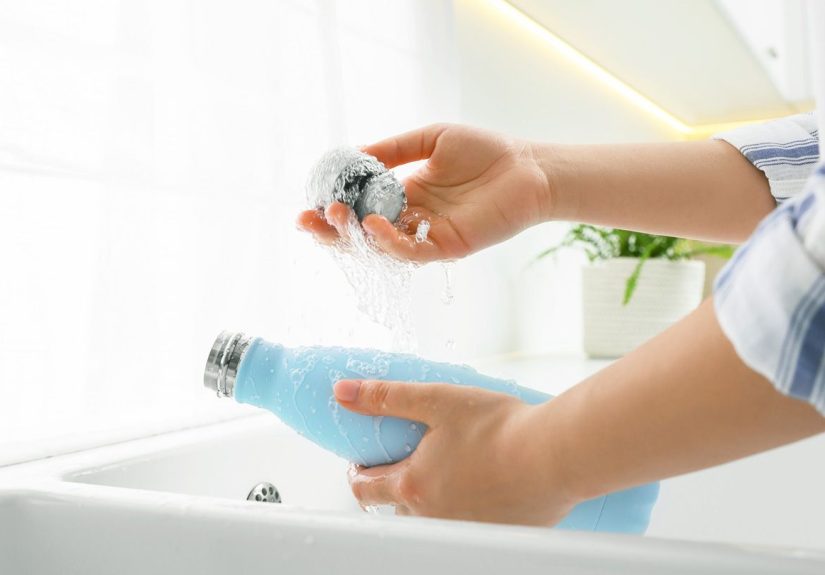
The best method is wonderfully boring: warm water, dish soap, and friction. That last part matters. Soap helps loosen oils and grime, but scrubbing is what removes buildup from the interior surface and those hard-to-reach corners.
Step-by-Step Daily Cleaning
- Take the bottle apart completely. Remove the lid, straw, gasket, and any detachable mouthpiece.
- Wash each piece with warm water and dish soap.
- Use a bottle brush for the main chamber and a small brush or straw brush for tight spaces.
- Pay special attention to threads, seals, and the underside of the cap.
- Rinse thoroughly so no soap remains.
- Let all parts air dry completely before reassembling.
That last step is easy to skip, but it matters. Reassembling a damp bottle can trap moisture in the exact places that love staying wet. Moisture plus darkness plus leftover residue is a terrible recipe and a fantastic science experiment.
Can You Just Use the Dishwasher?
Sometimes, yes. But only if the bottle and all its parts are dishwasher-safe according to the manufacturer. Many modern bottles can go in the dishwasher, at least on the top rack, but not all of them should. Insulated bottles, printed finishes, special seals, and some lids may have specific care rules.
If your bottle is dishwasher-safe, that can make daily cleaning much easier. Even then, it is smart to occasionally take apart the lid and inspect the little crevices. Dishwashers are helpful, not magical. They cannot always rescue a neglected straw cap that has been quietly building a tiny civilization.
When You Need More Than Soap and Water
A basic wash is enough for everyday maintenance, but sometimes your bottle needs a deeper clean. Think of it as the spa day your bottle never asked for but absolutely deserves.
Deep Clean Weekly
Once a week, or sooner if your bottle gets heavy use, give it a more thorough scrub. This is especially important if you:
- Use your bottle at the gym
- Leave it in warm places
- Drink anything other than water
- Use a lid with a straw or multiple parts
- Refill it all day without washing it
For many bottles, a longer soak with a bottle-safe cleaner or a manufacturer-approved cleaning method can help remove odors and residue. Some brands recommend vinegar, baking soda, cleaning tablets, or a diluted bleach method, while others explicitly say not to use bleach. The safest move is simple: check the care instructions for your specific bottle.
Wash It Immediately After These Drinks
If your bottle held any of the following, do not let it sit around “for later”:
- Coffee or tea
- Protein shakes
- Smoothies
- Juice
- Milk or plant-based milk
- Electrolyte mixes
- Flavored water with sugar or fruit pieces
These drinks leave more residue than plain water and can turn a bottle gross much faster. Protein shakes are especially famous for becoming the kind of smell that makes you question your life choices at 7:15 a.m.
Does Bottle Material Matter?
Yes, but not in the way people often think. No bottle gets a free pass on cleaning, but some materials and designs are easier to keep clean than others.
Stainless Steel
Stainless steel bottles are popular for good reason. They are durable, do not hold flavor as easily as some plastics, and are often easier to keep fresh-smelling. They are still not self-cleaning, though. If anything, insulated steel bottles can trick people into neglecting them because they look clean on the outside for ages.
Plastic
Plastic bottles are lightweight and convenient, but they can hang on to odors and scratches more easily. Once the inside is visibly scratched or permanently funky, it may be time to replace the bottle. Tiny scratches can make thorough cleaning harder.
Glass
Glass is easy to clean and does not tend to absorb odors, but it can be heavier and more breakable. If you mainly use your bottle at a desk, glass can be a nice low-drama option.
Complex Lids and Straws
The more moving parts, the more cleaning work. Straw lids, bite valves, locking spouts, and silicone seals are convenient for drinking on the go, but they demand more attention. If you know you are not the kind of person who will clean five bottle pieces every night, choose a simpler design. That is not laziness. That is knowing your workflow.
The Biggest Water Bottle Cleaning Mistakes
- Only rinsing with water: A rinse is better than nothing, but it is not the same as washing.
- Ignoring the lid: The lid is often the dirtiest part.
- Reassembling while damp: Trapped moisture encourages odor and buildup.
- Using the wrong cleaner: Harsh chemicals can damage some bottles and seals.
- Letting drinks sit overnight: Especially bad with sweet, milky, or protein-based drinks.
- Not replacing worn parts: Damaged straws, cracked lids, and tired gaskets are harder to clean properly.
- Assuming one cleaning method fits all bottles: Always follow manufacturer care directions.
Signs Your Water Bottle Is Overdue for a Wash
Some signs are obvious. Others are sneaky. Here is when your bottle is waving a white flag:
- It smells musty, sour, or stale
- The water tastes “off” for no clear reason
- You see spots, film, or residue
- The lid feels slimy
- You forgot the last time you washed it
- You are asking the internet whether you need to wash it
That last one is not scientific, but emotionally it is extremely accurate.
What About So-Called Self-Cleaning Bottles?
Some bottles now advertise UV cleaning features or antimicrobial technology. Those features may help reduce odors or microbes under certain conditions, but they do not cancel out the need for routine washing. You still need to remove physical grime, residue, and buildup from the bottle and its lid parts.
Think of it this way: even if a gadget helps with sanitation, it cannot scrub peanut butter smoothie paste from a straw gasket. And frankly, that sentence should be enough to convince anybody.
Practical Cleaning Routine for Real Life
If you want a routine that is actually easy to follow, try this:
At Night
Empty the bottle, take it apart, wash it with warm soapy water, rinse, and leave the pieces on a drying rack.
In the Morning
Reassemble the bottle once everything is dry and refill it with fresh water.
Once a Week
Inspect the gasket, straw, threads, and any hidden corners. Give them a slower, more detailed clean. If parts are stained, cracked, or permanently smelly, replace them if possible.
This whole process usually takes just a few minutes. That is less time than most people spend deciding what to watch while pretending not to scroll.
Conclusion
So, how often should you wash your water bottle? For most people, every day is the right answer, with immediate washing after anything other than plain water and a deeper clean about once a week. That routine keeps your bottle fresher, helps reduce buildup, and makes every sip taste like water instead of regret.
The biggest mistake people make is thinking a reusable bottle stays clean because the drink inside is clean. But your bottle interacts with your mouth, your hands, and the messy real world all day long. A quick rinse is not enough. A daily wash is a much better habit.
And if this article has caused you to glance suspiciously at the bottle sitting next to you right now, well, you already know what to do.
Real-Life Experiences: Why This Topic Hits Home
One reason this topic keeps coming up is because almost everybody has a reusable bottle story. Maybe it is the bottle that went everywhere during a workweek and somehow never made it to the sink. Maybe it is the gym bottle that lived in the car cup holder like it was paying rent. Maybe it is the giant insulated bottle that made hydration goals feel heroic, right up until the day the straw started smelling like a science fair project.
A lot of people do not ignore cleaning because they are careless. They ignore it because reusable bottles blend into daily life. They become background objects. You fill them, carry them, refill them, and repeat. The bottle starts to feel more like a permanent hydration appliance than a dish. That mental trick is where the problem begins. Cups get washed. Plates get washed. But a bottle? Somehow the brain files it under “still in use.”
Parents know this especially well. Kids’ bottles come home from school half full, tossed sideways in a backpack, with a straw lid that has survived lunch, recess, and whatever mysterious field trip snack was involved. By the time that bottle lands on the kitchen counter, it is less “refreshment device” and more “urgent household decision.” Anybody who has ever opened a forgotten kids’ bottle on a Friday night knows the emotional complexity involved.
Office workers have their own version of this drama. The bottle sits on a desk all day, gets refilled at the break-room sink, then comes home and goes right back out the next morning. Since it only ever held water, it feels harmless. But after a few days, the water starts tasting flat or strangely metallic, even though the bottle looks fine. That is often the moment people realize clean-looking and clean are not the same thing.
Gym users learn even faster. A bottle handled during workouts gets touched with sweaty hands, dropped into cup holders, tossed into bags, and sealed up while still damp. Add a straw lid or flip top, and suddenly the grimiest part is the one you cannot easily see. Many people discover the truth the hard way when they finally disassemble the lid and find buildup hiding in a rubber ring they forgot existed. It is a humbling experience. Character building, even.
Travel adds another layer. On road trips or flights, people often refill bottles again and again because it is convenient and cost-effective. That part is great. The problem is that travel routines make proper drying and washing harder. A bottle can go several days with only quick rinses, especially when hotel sinks are small and everybody is in a hurry. That is why experienced travelers often prefer bottles with simpler lids. Less drama. Fewer hidden parts. Fewer chances to wonder whether that little black speck is a shadow or a warning.
The common thread in all of these experiences is simple: people usually mean well, but convenience slowly wins. The best long-term fix is not guilt. It is a realistic routine. Pick a bottle you will actually clean. Wash it at the same time each day. Let it dry fully. Check the lid pieces once a week. Build the habit before the smell builds itself.
That is really the lesson behind the whole topic. Cleaning a water bottle is not about being obsessive. It is about treating an everyday object like the food-contact item it is. Once people make that shift, the habit gets easier, the bottle stays fresher, and the water tastes the way it should: clean, cold, and wonderfully free of weird surprises.