Table of Contents >> Show >> Hide
- What Makes a “High Tank” Toilet Different?
- Quick Product Snapshot
- Style Wins: Why People Buy the Pegasus Victoria High Tank Toilet
- Performance Reality Check: 1.6 GPF in Today’s Toilet World
- Installation: The Part Where Everyone Becomes Best Friends With a Level
- Comfort and Everyday Use: What Living With It Feels Like
- Maintenance: Keeping the Victorian Charm From Turning Into Victorian Drama
- Buying Checklist: Make Sure This Toilet Fits Your Bathroom (and Your Life)
- Pros and Cons (Because Every Dream Toilet Has Fine Print)
- Is It Still Available? A Note on Shopping Reality
- FAQ
- Conclusion: A Toilet With Personality (and a Tape Measure Requirement)
- Real-World Experiences: What Homeowners and Installers Often Notice (Extra 500+ Words)
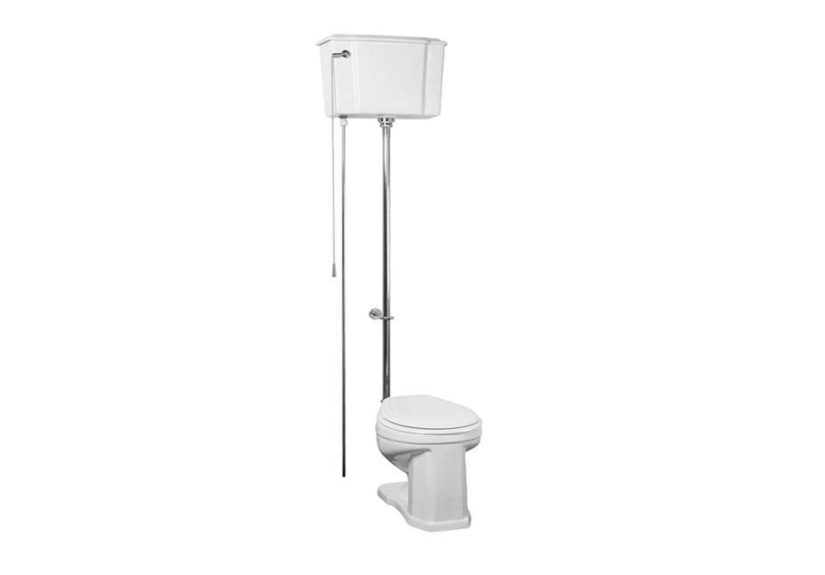
Some toilets whisper, “I’m here to do a job.” The Pegasus Victoria high tank toilet shows up like it has a pocket watch, a dramatic backstory, and possibly an invitation to a candlelit ball. It’s a high-level tank (sometimes called a “high tank” or “high cistern”) toilet that borrows a Victorian-era silhouettetank on the wall, bowl on the floor, and a whole lot of vintage attitudewhile still working like a modern, everyday fixture.
This guide breaks down what the Pegasus Victoria 2-piece 1.6 GPF round high tank water closet toilet actually is, why people buy it (hint: vibes), what it’s like to install (hint: wall drilling), and how to decide if it’s the right fit for your bathroom and your patience level. We’ll keep it practical, specific, and refreshingly honestbecause nothing ruins “old-house charm” faster than discovering your “simple install” needs a reinforced wall and a second pair of hands.
What Makes a “High Tank” Toilet Different?
Most toilets are a tidy stack: tank sits directly on the bowl, everything hugs the wall, and no one asks questions. A high tank toilet flips the script. The bowl stays put on the floor, but the tank mounts higher up on the wall and connects to the bowl with a flush pipe. Instead of a modern lever that barely moves, many high-tank styles use a pull chain or a classic handle mechanismmore “heritage hotel” than “suburban builder basic.”
The aesthetic payoff is real: taller visual lines, polished metal trim, and a silhouette that can make even a small powder room feel intentional. The trade-off is also real: you’re installing a tank on the wall, not just swapping a toilet on the floor. That means planning, measuring, and respecting your studs like they pay the mortgage.
Quick Product Snapshot
The Pegasus Victoria high tank toilet is typically described as a 2-piece design (tank and bowl packaged separately), a round-front bowl to save space, and a 1.6 gallons-per-flush (GPF) washdown-style flush. It’s also commonly noted for vitreous china construction, a glazed trapway, and an adjustable tank height (often referenced as roughly 60 to 72 inches from the bowl connection up to the bottom of the tank, depending on installation).
Key Specifications at a Glance
| Spec | What to Know |
|---|---|
| Flush rate | 1.6 GPF (single flush) |
| Bowl shape | Round front (space-saving compared with elongated) |
| Material | Vitreous china (smooth, glossy, easy to wipe down) |
| Trapway | Glazed trapway (smoother waste path helps reduce sticking/clogs) |
| Dimensions (approx.) | Width ~19 1/8″, depth ~28″ |
| Bowl height | ~15″ (standard-height range; not “comfort height”) |
| Rough-in | Commonly listed as 12″ rough-in (measure yours to confirm) |
| Tank height placement | Adjustable; commonly referenced ~60″–72″ to bottom of tank |
| Seat included? | No (plan to buy a compatible round seat separately) |
| Trim/finish options | Often offered in multiple trim finishes (chrome, brass, nickel, etc.) depending on kit |
Style Wins: Why People Buy the Pegasus Victoria High Tank Toilet
1) Instant “Historic Home” EnergyWithout Finding a Salvage Unicorn
If your bathroom is leaning traditional (subway tile, pedestal sink, picture rail, beadboard, hex floors), a high tank toilet looks like it belongs. It’s one of those fixtures that can make a space feel curated instead of accidentallike you meant to choose that unlacquered brass sconce and you definitely know what “wainscoting height” you prefer.
2) Round Bowl = Small Bathroom Friendly
Round-front bowls typically project less into the room than elongated bowls. In a narrow powder room, that extra couple of inches can be the difference between “fine” and “why do my knees have to negotiate with the door?”
3) High Tank Silhouette Makes a Statement
Let’s be honest: most toilets are background characters. A high tank toilet is a supporting actor that sometimes steals the scene. If your goal is to create a bathroom people remember (for good reasons), the vertical tank and exposed flush pipe do the heavy lifting visually.
Performance Reality Check: 1.6 GPF in Today’s Toilet World
A 1.6 GPF toilet is considered “standard efficiency” under long-standing U.S. national rules. Many modern toilets go lowerespecially WaterSense-labeled modelsoften targeting 1.28 GPF while still meeting performance testing. The Pegasus Victoria’s 1.6 GPF spec isn’t “wasteful,” but it also isn’t the most water-thrifty option on the shelf.
So is 1.6 GPF a dealbreaker?
- Not necessarily if you’re prioritizing period style, a specific silhouette, or a matching vintage bath suite.
- Possibly if you live in a region with strict efficiency requirements, rebates tied to WaterSense, or you’re trying to squeeze every drop of savings out of a remodel.
- Definitely “check first” if your local code or building requirements mandate 1.28 GPF (or lower) for new installs.
Bottom line: a 1.6 GPF high tank toilet can be perfectly reasonablejust understand you’re choosing a design-forward product that may not align with every efficiency incentive program.
Installation: The Part Where Everyone Becomes Best Friends With a Level
Installing a high tank toilet is not the same as dropping in a typical two-piece toilet. You’re doing two installations: (1) the bowl on the floor, and (2) the tank on the wallplus connecting flush and supply piping between them. If you’re comfortable with careful measuring and secure mounting, it’s doable. If the phrase “toggle bolt” makes you sweat, this is a great time to call a plumber (or at least a friend who owns more than one drill bit).
What typically comes in the box (and what doesn’t)
High tank toilet kits often include a bowl, tank, and a trim kit (flush pipe, supply pipe, wall bracket, elbow assembly, nuts/washers, and a handle/chain assembly). However, key items are often not includedcommonly the toilet seat, wax ring, flange/closet bolts, and sometimes specialty mounting hardware for your specific wall type.
Wall mounting is the big difference
The tank must be anchored securely. Many high tank instructions emphasize fastening into studs or using appropriate blocking behind the finished wall. Translation: drywall alone is not a structural plan. If you’re installing in an older home with plaster, tile, or surprise materials from three different decades, take extra care to locate solid framing and use correct anchors.
A practical, simplified installation roadmap
- Measure your rough-in and clearance: Confirm the toilet flange position (commonly 12″ rough-in) and ensure you have enough vertical space for the tank height and lid access.
- Set the bowl: Install closet bolts, seat the bowl on a new wax ring, level it, and tighten carefully (over-tightening can crack china).
- Plan tank height: Decide the tank mounting height within the adjustable range so the flush pipe length works and the look feels balanced.
- Anchor the tank: Mark bracket locations, drill appropriately, and mount into studs/blocking (or use correct heavy-duty anchors if approved for your wall).
- Connect flush pipe and elbow: Fit the flush pipe between tank and bowl, using the provided washers/nuts. Tighten evenly to avoid leaks.
- Connect the water supply: Install/attach the supply line and shutoff connection, then fill and test.
- Leak-check like you mean it: Test multiple flushes, inspect every joint, and only then celebrate.
- Install the seat: Choose a compatible round seat (many buyers opt for soft-close, because nobody needs a toilet seat slam soundtrack).
Pro tip: high tank toilets look “simple” because the tank isn’t sitting on the bowlbut the precision shifts to wall placement and pipe alignment. Slow is smooth, smooth is leak-free.
Comfort and Everyday Use: What Living With It Feels Like
Round bowl comfort
Round bowls are the compact choice. Plenty of people use them happilyespecially in small bathroomsbut if your household strongly prefers elongated bowls, this is worth considering before you commit to the vintage look.
Standard height, not comfort height
Many high tank models in this style family sit around standard bowl height (often listed near 15″). If you’re used to taller “chair height”/comfort height toilets, this will feel lower. For some households (or older users), comfort height is a must. For others, standard height is perfectly fineand more historically accurate.
The flush experience
A washdown-style flush tends to be straightforward and forceful in how it moves water through the bowl. The “high tank” part also changes the feel: you’re activating a classic mechanism (handle or chain) and the flush has that unmistakable old-school “whoosh” presencemore theatrical than a modern whisper-flush.
Maintenance: Keeping the Victorian Charm From Turning Into Victorian Drama
Cleaning vitreous china
Vitreous china is durable and cleans up well with non-abrasive cleaners. The goal is to keep the glossy finish glossyskip harsh scouring powders unless you enjoy dull spots and regrets.
Chrome/metal trim upkeep
Trim looks best when it’s wiped dry occasionally, especially in humid bathrooms. If your water is hard, a gentle wipe-down prevents mineral buildup that can make “polished chrome” start looking like “mysteriously cloudy chrome.”
Parts and repairs: plan ahead
One practical consideration with older/private-label product lines is parts availability years later. If you’re buying this model new-old-stock or from a secondary retailer, it’s smart to identify which internal components it uses (fill valve, flapper, handle/chain) and confirm you can source replacements. The good news: many toilet internals are standardized. The tricky part: specialty trim and high-tank-specific fittings can be less universal.
Buying Checklist: Make Sure This Toilet Fits Your Bathroom (and Your Life)
- Measure your rough-in: Don’t guess. Measure from wall to the center of the flange bolts.
- Confirm vertical clearance: Tank height plus lid access plus any molding/railings on the wall.
- Check wall structure: You need solid anchoring (studs or blocking), especially behind tile.
- Decide on trim finish: Chrome, brass, nickelmatch your faucets and hardware on purpose.
- Plan the seat: Round seat, likely purchased separately. Consider soft-close for daily sanity.
- Know your local efficiency expectations: 1.6 GPF is standard, but some areas and rebates prefer 1.28 GPF WaterSense-style models.
- Expect a “two-person moment”: Mounting the tank and aligning pipes is easier with help.
Pros and Cons (Because Every Dream Toilet Has Fine Print)
Pros
- Showpiece design: High tank silhouette delivers instant vintage character.
- Space-saving bowl: Round front can help in tight bathrooms.
- Durable materials: Vitreous china is built for long-term use.
- Adjustable tank height: Lets you fine-tune both the look and the fit.
Cons
- More complex install: Wall mounting, pipe alignment, and careful measuring required.
- Not WaterSense-level efficiency: 1.6 GPF may not qualify for certain rebates or stricter local rules.
- Seat not included: Add it to your budget and shopping list.
- Potential parts complexity: Specialty high-tank trim can be less plug-and-play than standard toilets.
Is It Still Available? A Note on Shopping Reality
Depending on when and where you’re shopping, “Pegasus” as a brand name may not show a big current lineup of toilets at major big-box retailers, and some listings for the Victoria high tank style appear as discontinued at certain showrooms. What that means for you: you may find the Pegasus Victoria through remaining inventory, specialty plumbing suppliers, or alternative branding of essentially the same “Victoria high tank” configuration.
If you’re buying from secondary channels, prioritize complete kits (bowl + tank + trim), confirm the finish, and make sure you’re not inheriting a “mystery parts” situation. A missing wall bracket is not a fun scavenger hunt.
FAQ
Is a high tank toilet harder to install than a standard toilet?
Generally, yesbecause the tank must be mounted securely to the wall and aligned with the bowl using flush piping. It’s not impossible for an experienced DIYer, but it’s less forgiving than a standard floor-mounted tank-and-bowl setup.
Does the higher tank mean a stronger flush?
It can change the “feel” of the flush, but flush performance depends on the entire system design (trapway, valve sizing, bowl geometry, and how the tank releases water). Don’t buy it assuming physics alone will do the jobbuy it because you want the design and the specified performance.
Will it fit in a small bathroom?
The round bowl helps with floor space, but you also need wall height and a place to mount the tank properly. Small can work but measure carefully and account for anything on the wall (windows, shelves, trim, rails).
Is 1.6 GPF “efficient”?
It meets the long-standing U.S. standard maximum. WaterSense-labeled toilets are typically 1.28 GPF or less, so those save more water. If maximum efficiency is your top priority, look at WaterSense options. If design is your priority, 1.6 GPF can still be a reasonable choice.
Conclusion: A Toilet With Personality (and a Tape Measure Requirement)
The Pegasus Victoria 2-piece 1.6 GPF round high tank water closet toilet is for people who want their bathroom to feel intentional, a little nostalgic, and unapologetically styled. It’s not the cheapest path to “functional plumbing,” and it’s not the simplest DIY swap, but it can be the kind of statement fixture that makes a powder room feel like a boutique hotelminus the tiny soaps.
If you love the Victorian look, can accommodate the wall-mounted tank, and you’re okay with standard-height comfort and a 1.6 GPF flush, this toilet can be a surprisingly practical way to get vintage drama with modern-day usability. Just remember: the real centerpiece isn’t the tankit’s your measuring tape.
Real-World Experiences: What Homeowners and Installers Often Notice (Extra 500+ Words)
People who choose a high tank toilet like the Pegasus Victoria usually do it for one reason first: the look. And then, very quickly, they discover the second reason they’re keeping it: it changes how the whole bathroom feels. In a lot of remodel stories, the toilet becomes the unexpected “anchor” that ties everything togetherespecially in a powder room where the sink and mirror are doing most of the talking. Once the high tank goes up, suddenly the beadboard looks more authentic, the vintage-style faucet looks less “theme-y,” and even plain white tile feels elevated. It’s a classic case of one bold choice making all the other choices look smarter.
Installation experiences tend to split into two camps. Camp A says: “It was finejust follow the directions, measure twice, and have a helper.” Camp B says: “I learned new words.” The difference is usually wall conditions. If the bathroom wall is open studs (like in a full gut remodel), adding blocking and securing the bracket is straightforward. If the wall is already finishedtile, plaster, or a mystery layer cakemounting the tank becomes the main event. Homeowners who plan ahead often open a small access area, add proper blocking, and patch neatly. Homeowners who don’t plan ahead often end up trying to find studs through tile while holding a level and bargaining with the universe.
Another common experience: people underestimate how much they’ll care about tank height. On paper, an adjustable range sounds like a minor detail. In real life, it’s a design decision. Mount it higher and you get maximum “heritage” drama, but you also need to think about cleaning, reaching the lid, and how the flush pipe lines up visually with the bowl. Mount it slightly lower and it can feel more integratedespecially in homes with lower ceilingswhile still reading as a high tank toilet. Many homeowners do a “mock layout” with painter’s tape on the wall first, then step back and decide what looks balanced with the mirror, window trim, or wall art. Yes, you can tape out a toilet. No, you shouldn’t feel weird about it.
Day-to-day use tends to be pleasantly normalafter the first week of guests saying, “Wait, how do I flush this?” If the toilet uses a chain or a classic handle, the learning curve is mostly comedic. People also comment on how “solid” vitreous china feels compared to some ultra-budget modern toilets. Cleaning is usually easy, especially if you keep up with quick wipe-downs. The most frequent maintenance notes involve the trim: polished finishes look great but show water spots, so a microfiber cloth becomes the unsung hero of the bathroom.
Finally, there’s the “I wish I knew” listbecause every renovation has one. Buyers often say they wish they’d purchased the seat at the same time, confirmed which finish options were available for the trim kit, and checked whether the kit included every last fitting before scheduling installation. A high tank toilet is less forgiving of missing pieces than a standard toilet because the connecting hardware is part of the design. The happiest owners treat it like buying a coordinated set: bowl, tank, trim, and seat planned together. When that happens, the result is worth ityour bathroom gets a distinctive, timeless focal point that feels intentional every single day, even when you’re just brushing your teeth and trying to wake up.