Table of Contents >> Show >> Hide
- Why the Internet Cannot Stop Staring at These Tiny Paintings
- Who Is Brooke Rothshank?
- How Motherhood Helped Shape the One-Inch Format
- What Makes These One-Inch Replicas So Good?
- The Hidden Theme: Gratitude in Miniature
- Why the 96-Painting Collection Feels So Satisfying
- Brooke Rothshank and the Tradition of Miniature Art
- Why Her Everyday Things Do Not Feel Everyday Anymore
- The Experience of Looking at Brooke Rothshank’s Tiny Paintings
- Final Thoughts
Some art demands a giant white wall, dramatic lighting, and the kind of silence that makes you afraid to sneeze. Brooke Rothshank’s art does the exact opposite. It invites you to come closer, squint a little, smile a lot, and suddenly care very deeply about an everyday object that is smaller than a sticky note and somehow more emotionally powerful than half the internet.
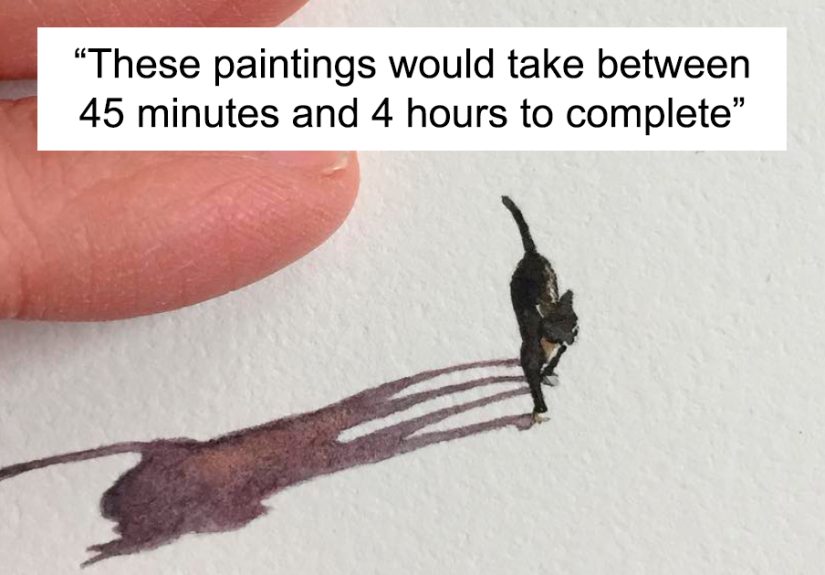
That is the strange magic behind the 96 tiny paintings associated with Brooke Rothshank’s wildly admired miniature practice. These one-inch works are not flashy in a loud, confetti-cannon kind of way. They are flashy in the “wait, that’s a painting?” kind of way. A simple household item, a familiar piece of packaging, a small keepsake, a humble object from daily life, and boom: it becomes a pocket-size masterpiece. Rothshank turns ordinary things into visual keepsakes, proving that art does not need to shout to be unforgettable.
For readers who love miniature paintings, everyday objects art, tiny watercolor art, or simply the thrill of seeing something common made extraordinary, Rothshank’s work hits the sweet spot. It is deeply skillful without being stiff, intimate without being sentimental mush, and detailed without feeling cold. In other words, it is the rare kind of art that feels both technically impressive and warmly human.
Why the Internet Cannot Stop Staring at These Tiny Paintings
There is something delightfully unfair about miniature art. You look at it and think, “Well, that’s cute.” Then your brain catches up and realizes the artist painted that tiny thing by hand with absurd control, patience, and focus. Suddenly “cute” turns into “I respect this with my whole soul.” Rothshank’s one-inch paintings create exactly that reaction.
The 96-painting roundup that brought renewed attention to her work is a perfect example of why tiny art travels so well online. The scale creates instant curiosity. The subject matter feels familiar. The craftsmanship makes people pause mid-scroll. And unlike over-produced visual trends that vanish by next Tuesday, Rothshank’s paintings stick because they are rooted in lived experience. These are not random small paintings made just to be small. They are tiny records of attention.
That last point matters. In a digital world built to make us look faster and feel less, Rothshank’s work asks us to slow down and notice more. Even on a phone screen, her paintings carry a sense of tenderness. You can feel the care packed into each inch. Honestly, it is the artistic equivalent of someone saying, “Please calm down and look at this lemon properly.”
Who Is Brooke Rothshank?
Brooke Rothshank is an Indiana-based artist, illustrator, and miniature painter whose work centers largely on watercolor, though her broader practice also includes oil, acrylic, and egg tempera. She has worked as a studio artist for years, exhibited nationally, illustrated children’s books, and taught miniature painting through respected craft and artists’ programs. That professional depth matters because her work may look charming and effortless, but it is built on serious training and long-term discipline.
She is not an artist who stumbled into a viral moment and called it a career. She is a practiced maker with a strong background in painting, a deep connection to miniature traditions, and an eye for how scale changes the emotional tone of an image. Her art has been shown in respected venues, and she has taught others how to work small without losing impact. That combination of craft, consistency, and clarity is part of what makes her paintings feel so solid.
It also helps explain why her miniatures never feel gimmicky. Lots of people can make something tiny. Far fewer can make something tiny that still feels fully composed, emotionally resonant, and visually complete. Rothshank can.
How Motherhood Helped Shape the One-Inch Format
One of the most compelling parts of Rothshank’s story is that the one-inch format was not just a quirky aesthetic decision. It grew from real life. As her family life became fuller and her studio time became harder to protect, she adapted. Instead of waiting around for giant uninterrupted blocks of perfect creative time, she shifted toward a daily miniature practice.
That move was practical, but it was also artistically freeing. Working within a one-inch border meant she could start and finish pieces in a tighter window. Instead of getting stuck in perfectionism, she created a structure that rewarded consistency. A painting could take under an hour or several hours depending on complexity, but the rhythm of daily work changed the emotional pressure. If one piece did not land, another day was coming. That is a healthy lesson for artists and non-artists alike: sometimes the cure for overthinking is making the canvas smaller.
The result was a body of work shaped by family life, domestic moments, and the little visual details that often get ignored. Her subjects were not chosen from some lofty Olympus of Important Art Objects. They were drawn from the materials of actual living. That is a huge reason the paintings feel approachable. They are intimate because they come from a real, busy, imperfect life.
What Makes These One-Inch Replicas So Good?
1. Scale Changes the Way You Look
Big art can overwhelm you. Tiny art recruits you. It asks for participation. You lean in. You focus. You get quiet. Rothshank’s paintings are small enough that viewing them becomes a physical act of attention. The body has to slow down to meet the image, and that changes the emotional experience.
2. Everyday Objects Become Emotional Landmarks
Rothshank does not rely on grand spectacle. She paints the kinds of things most people overlook: familiar objects, household details, ordinary visual companions from daily life. In her hands, those items stop being background noise and start reading like memory. A tiny object becomes a marker of a season, a relationship, a family routine, or a private joke. That is not just realism. That is emotional editing.
3. The Restraint Is Part of the Brilliance
Miniature painting is not simply regular painting shrunk down. It demands ruthless editing. There is no room for lazy composition, muddy edges, or decorative clutter. At one inch, every mark matters. Rothshank’s success comes from knowing what to include, what to simplify, and where detail will have the greatest impact. That kind of visual discipline is the opposite of accidental.
4. The Work Feels Personal Without Becoming Precious
Some art about everyday life can become overly soft and sentimental. Rothshank avoids that trap. Her paintings are affectionate, yes, but they also have clarity and structure. They honor ordinary things without turning them into sugary clichés. The tone is thoughtful, not syrupy. That balance is harder to pull off than it looks.
The Hidden Theme: Gratitude in Miniature
If you spend time with Brooke Rothshank’s work, one word keeps quietly showing up: gratitude. Not the loud, motivational-poster version of gratitude. The real kind. The kind that notices what is already here.
This thread became especially clear in her project Tiny Gratitudes, which grew from a weekly series of miniature works paired with reflections. The project focused on ordinary days and ordinary objects, but its emotional engine was anything but ordinary. It suggested that paying attention can be its own form of thankfulness. That idea gives her paintings extra weight. They are beautiful to look at, but they are also practice tools for noticing life more carefully.
That helps explain why these tiny paintings feel larger than their dimensions. They are not merely replicas of stuff. They are records of attention. They treat daily life as worthy of art. In a culture that constantly tells us to chase bigger, faster, louder, and shinier, that approach feels refreshingly rebellious. Tiny, in this case, is not lesser. Tiny is intentional.
Why the 96-Painting Collection Feels So Satisfying
The number matters less than the cumulative effect. Seeing one Brooke Rothshank painting is delightful. Seeing dozens together is revelatory. Patterns emerge. You start to understand her visual philosophy. You see how repetition becomes rhythm, how common objects become a kind of diary, and how scale can transform not just the look of a subject but its emotional register.
A larger collection also highlights something easy to miss: consistency. Rothshank’s work is not impressive because she happened to nail one tiny painting. It is impressive because she built a repeatable language out of miniature observation. Across many works, you can feel the steadiness of her hand and the steadiness of her thinking. That is what turns a charming image into a recognizable artistic voice.
And yes, let us admit one more thing: there is also plain old joy here. Tiny paintings activate the same part of the brain that loves dollhouses, mini desserts, and impeccably organized stationery. Humans are suckers for small things done well. Rothshank just happens to elevate that instinct into fine art.
Brooke Rothshank and the Tradition of Miniature Art
Rothshank’s work feels contemporary, but it also connects to a much older miniature-art tradition. Working at 1/12 scale places her in conversation with the world of dollhouse miniatures and precision small-scale craftsmanship. That heritage matters because it shows her work is not a novelty act. It belongs to a disciplined lineage of artists who understand how intimacy, illusion, and scale work together.
What makes her stand out within that tradition is the modern emotional content. Rather than focusing only on historical scenes or decorative replicas, she uses miniature scale to explore personal memory, daily ritual, family life, gratitude, and the poetry of common objects. She bridges technical miniature practice with contemporary storytelling. That is a fancy way of saying she can paint something tiny and still make it feel emotionally big.
Why Her Everyday Things Do Not Feel Everyday Anymore
The best art changes how you look at the world after you walk away from it. Rothshank’s paintings do exactly that. Once you have seen a one-inch painting of an everyday object rendered with loving precision, it becomes harder to dismiss the actual object as meaningless. The cereal box, the fruit, the toy, the cup, the leaf, the household detail, the tucked-away keepsake: all of it starts to look like potential subject matter.
That shift is subtle, but powerful. Her work suggests that beauty is not hiding in some distant, exclusive place. It is already on the counter, near the window, in the junk drawer, on the pantry shelf, or beside the sink. You just have to notice it. And perhaps notice it before you throw it away, lose it, or forget it existed.
That is why these tiny paintings resonate so strongly with collectors, readers, and casual viewers. They remind us that attention itself has value. They make ordinary life feel legible, intimate, and worth preserving. In the hands of a lesser artist, that idea might feel overly sweet. In Rothshank’s hands, it feels true.
The Experience of Looking at Brooke Rothshank’s Tiny Paintings
To understand why Brooke Rothshank’s tiny paintings land so well, it helps to think about the viewing experience itself. Looking at one-inch art is not passive. You do not breeze past it the way you breeze past a billboard, a social media ad, or a giant wall print in a waiting room. Tiny paintings interrupt your usual habits. They ask your body to cooperate. You lean forward. Your eyes narrow. Your breathing slows. Without making a dramatic speech about mindfulness, the art sneaks you into a more attentive state.
That shift feels surprisingly intimate. A tiny painting creates a private conversation between viewer and object. Even when you are looking at the work on a screen, part of your imagination starts filling in scale. You wonder how the brush behaved, how steady the artist’s hand had to be, how many times she paused before placing one small shadow or edge. The painting becomes impressive not only because of what you see, but because of the concentration you can sense behind it. It feels handmade in the deepest sense of the word.
There is also a memory effect. Because the subjects come from ordinary life, viewers often recognize something adjacent to their own experience. A simple painted object can trigger an entire atmosphere: childhood kitchens, grandparents’ houses, school lunches, quiet mornings, rainy afternoons, the smell of cardboard, the comfort of familiar clutter. Rothshank’s paintings may be tiny, but they tend to unlock oversized emotional associations. That is one reason they stay with people. They are not asking you to admire only skill. They are inviting you to remember.
In person, I imagine the effect is even stronger because scale becomes undeniable. A digital image can tell you a painting is small; your actual eyes and body understand it differently. Standing before a one-inch painting means confronting the gap between size and feeling. You expect something so small to be decorative, maybe even throwaway. Instead, it holds your attention for far longer than seems reasonable. That tension is part of the pleasure. The work quietly disproves the idea that importance must arrive in a large package.
There is a communal side to the experience too. Tiny art makes people gather closely. It changes the social choreography around the work. Instead of standing back in solemn silence, viewers point, smile, laugh softly, and call others over. “Look at this” becomes the dominant mood. In that sense, Rothshank’s paintings are not just intimate; they are generous. They create small moments of shared delight.
Most of all, these paintings leave behind a different way of seeing. After spending time with them, everyday objects seem less invisible. You start noticing shape, color, texture, wear, sentiment, and context. The world looks less disposable. That may be the most meaningful experience Rothshank offers: not just admiration for tiny paintings, but a renewed appetite for attention itself.
Final Thoughts
Brooke Rothshank’s one-inch replicas of everyday things succeed because they do more than showcase control. They transform the ordinary into something worth lingering over. The 96-painting collection that drew wide attention is compelling not because it is tiny for tiny’s sake, but because it reveals how much feeling, memory, and craft can be packed into a single square inch.
In a world obsessed with scale, speed, and spectacle, Rothshank’s miniature paintings are a persuasive argument for slowness, care, and close looking. They remind us that ordinary life is not artistically second-rate. It is the main event. And sometimes the smartest way to make people see that is to paint it very, very small.