Table of Contents >> Show >> Hide
- 1) Harrison Ford vs. the Millennium Falcon Door (Yes, the Door Won)
- 2) Tom Cruise’s Rooftop Jump That Turned Into an Ankle Fracture (Commitment: 10/10, Bones: 0/10)
- 3) Jennifer Lawrence’s Ear Injury: The “I Went Deaf in One Ear” Surprise Nobody Puts in the Trailer
- 4) Leonardo DiCaprio’s Dinner-Table Hand Injury in Django Unchained (When a Prop Becomes a Problem)
- Why These Celebrity Injuries Matter (Beyond the “Whoa” Factor)
- How Film Sets (and Normal People) Reduce Injury Risk
- Real-World Experiences: The Part Nobody Sees After the Injury (About )
- Conclusion: Hollywood Can’t Outrun Reality
Hollywood can fake a dinosaur stampede, a superhero landing, and a spaceship exploding in slow motion. What it can’t fake? Physics. And sometimes, the real world barges onto set like an unpaid extraright into a door, a rooftop, a water jet, or a dinner-table prop.
This isn’t a “laugh at pain” situation (we’re not monsters). It’s a “wow, I genuinely did not know the human body could get betrayed like that” situation. These four celebrity injuries are real, unusually specific, and proof that the line between “movie magic” and “medical bill” is thinner than a craft-services napkin.
Main keyword: celebrity injuries. Related (LSI) keywords: on-set accidents, actor injuries, movie stunts gone wrong, stunt safety, film set mishaps, recovery and rehab, perforated eardrum, broken ankle, laceration stitches.
1) Harrison Ford vs. the Millennium Falcon Door (Yes, the Door Won)
When people say “Star Wars is intense,” they usually mean lightsabers and dramatic family revelations. In Harrison Ford’s case, it also meant a heavy, hydraulically operated door on the Millennium Falcon set that caused a serious leg injury during production.
What happened (in plain English)
On a film set, big mechanical pieces are often designed to look tough, move smoothly, and stop on cue. The problem is: when something that’s basically a moving wall meets a human leg, the “special effect” becomes “specialist appointment.” Ford was injured when a large door mechanism moved and pinned/struck him, resulting in a broken leg and a major pause in production.
Why this injury feels “impossible”
Most of us don’t interact with industrial-strength hydraulic doors in everyday life. Your kitchen cabinet door may have tried to humble you, surebut it doesn’t usually arrive with the force and weight equivalent of serious machinery. A set piece can be built like real equipment, because it is real equipmentjust painted to look like sci-fi.
The takeaway for the rest of us
- “It’s just a prop” is not a medical classification. If it moves, it can hurt you.
- Industrial mechanisms require industrial-level safety planningwhether you’re filming a blockbuster or moving equipment in a warehouse.
- If something heavy pins, crushes, or twists a limb, treat it as an emergency. “Walking it off” is not a Jedi power.
2) Tom Cruise’s Rooftop Jump That Turned Into an Ankle Fracture (Commitment: 10/10, Bones: 0/10)
Tom Cruise is famous for doing his own stunts. Which is admirable. It’s also the kind of dedication that makes your friends say, “He did what?” while your orthopedic surgeon quietly buys a new boat.
What happened
During production on Mission: Impossible – Fallout, Cruise attempted a rooftop-to-rooftop jumpone of those moments where a movie makes you feel brave just for watching from the couch. He collided awkwardly and suffered a broken ankle, which delayed filming.
Why this injury is sneakier than it sounds
A broken ankle isn’t rare, but the way it happens in stunt work is what makes it wild. Jumps look clean on camera, yet the body is doing a complex calculation mid-air: speed, distance, landing angle, traction, momentum, and whether gravity woke up cranky that day.
Even a slightly off angle can put massive force into the ankle joint. Bones aren’t designed to “absorb surprise physics.” They prefer plans, warm-ups, and supportive footwearnot a cinematic sprint after a rooftop collision.
What recovery tends to look like
Ankle fractures can involve weeks of immobilization and a long ramp back to normal activity. Even after the bone heals, strength, balance, and confidence can lag behindbecause your brain remembers betrayal.
The takeaway
- Landing mechanics matter. When people say “bend your knees,” they’re not being poeticthey’re distributing force.
- If you injure an ankle with a hard twist, pop, or immediate swelling, get it checked. Ankles are complicated, and “minor” can be misleading.
- Rehab isn’t optional if you want to reduce re-injury risk. It’s the difference between “healed” and “back to doing life.”
3) Jennifer Lawrence’s Ear Injury: The “I Went Deaf in One Ear” Surprise Nobody Puts in the Trailer
Action movies are full of dramatic sound designexplosions, whistles, thunderous booms. Ironically, one of the strangest on-set injuries involves the part of your body responsible for hearing all of that.
What happened
While filming The Hunger Games: Catching Fire, Jennifer Lawrence described dealing with ear issues from water work and then having her eardrum puncturedresulting in temporary hearing loss in one ear for months.
Why this injury is genuinely “wait… how?”
Most people associate ear injuries with loud concerts or airplane pressure. But on sets, you can have a perfect storm of problems:
- Water exposure (repeated takes, long hours, and wet conditions)
- Ear infections that irritate and weaken tissues
- Sudden pressure or force from effects equipment (like high-pressure jets or blasts used for action scenes)
A perforated (ruptured) eardrum can cause pain, ringing, and hearing changes, and it can increase the chance of middle-ear infections. The good news: many ruptured eardrums heal on their own, but they still deserve real medical attentionespecially if symptoms persist.
The takeaway
- Keep ears dry when you’re dealing with infections or healing issues. Water is not always your friend.
- Don’t ignore ongoing muffled hearing, drainage, or sharp ear painthose are not “normal life background noise.”
- If you’re doing water sports, swimming, or any activity with repeated water exposure, ear protection and drying strategies can help prevent problems.
4) Leonardo DiCaprio’s Dinner-Table Hand Injury in Django Unchained (When a Prop Becomes a Problem)
Some injuries happen during huge stunts. Others happen during a scene where the most dangerous-looking object is… a fancy drink glass on a table. Which is exactly why this one is so sneaky.
What happened
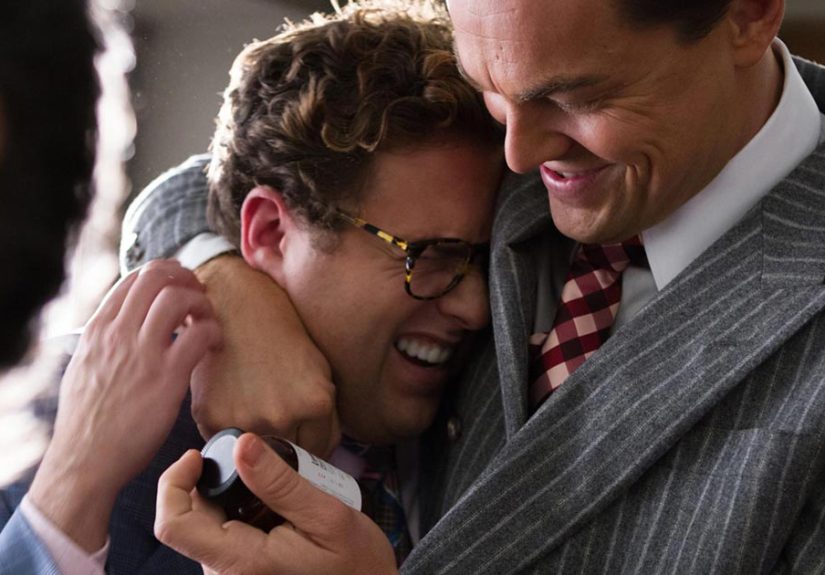
During a tense dinner scene in Django Unchained, Leonardo DiCaprio reportedly smashed his hand down and cut it on a glass, then continued through the moment before getting treated (including stitches). It’s one of those behind-the-scenes facts that makes you look at “simple” scenes differentlybecause the danger wasn’t a moving car. It was a tabletop and a fragile object placed in the wrong spot at the wrong time.
Why this injury is more “insane” than it sounds
Hands are packed with tendons and nerves, and even a small cut can be a big dealespecially when you’re working long days and touching everything (props, costumes, makeup, door handles, microphones, people’s hands). A laceration is not just “oops, paper cut energy.” It can be:
- painful and disruptive,
- prone to infection if not cleaned and protected,
- complicated if it involves deeper tissue.
The takeaway
- Glass + pressure + repetition = risk. Even a “normal” object can become dangerous when slammed, dropped, or squeezed.
- For cuts that won’t stop bleeding, gape open, or come from broken glass/dirty objects, seek medical care.
- Watch for infection signs as wounds heal (increasing redness, warmth, swelling, worsening pain, pus/drainage, fever).
Why These Celebrity Injuries Matter (Beyond the “Whoa” Factor)
It’s easy to treat celebrity injuries like trivia. But they’re also reminders of how injuries happen in real life: not only from dramatic moments, but from unexpected combinations of force, repetition, fatigue, and environment.
Three patterns that show up again and again
- Big machinery doesn’t care who you are. Doors, rigs, lifts, vehiclesif it moves, it can harm.
- Stunts compress risk into seconds. A single misstep can overload a joint or bone instantly.
- Small objects can cause big injuries. Glass, water pressure, slippery floors, even “safe” propscontext turns ordinary into hazardous.
How Film Sets (and Normal People) Reduce Injury Risk
Major productions use safety planning, stunt coordination, rehearsals, and emergency protocols. Even so, risk never becomes zeroespecially when schedules are tight and scenes are repeated many times. At home or at work, the same basic principles still apply:
Safety moves that actually work in the real world
- Respect moving equipment: keep distance, communicate, and never assume it “won’t move yet.”
- Protect joints with training: strength + balance reduce the odds of ankle/knee injuries when you land awkwardly.
- Don’t gamble with infections: clean wounds, cover them, and get help if symptoms worsen.
- Take ear symptoms seriously: persistent pain, drainage, or hearing changes deserve evaluation.
Real-World Experiences: The Part Nobody Sees After the Injury (About )
When we hear “celebrity injury,” we imagine dramatic headlines and then a quick comeback montage. But in real lifefamous or notthe most intense part often starts after the cameras stop rolling: the long, boring, frustrating middle where your body relearns how to do basic stuff you never appreciated before.
People recovering from leg or ankle fractures often describe a weird emotional whiplash. One day you’re walking normally, the next you’re negotiating stairs like they’re a boss fight. You learn fast that “just getting to the kitchen” is a project. You also discover how many daily actions involve ankles: stepping off curbs, carrying groceries, standing in line, even turning too quickly in socks on a slippery floor. It’s common for confidence to lag behind healingyour brain remembers the moment things went wrong, so it becomes cautious even when the bone is technically mended.
Rehab can feel surprisingly personal. Physical therapy isn’t just exercise; it’s rebuilding trust. People talk about celebrating tiny wins: putting full weight on the foot again, walking without thinking about it, regaining balance, or finally sleeping comfortably. The “insane” part is how slow it can be. Healing isn’t always a straight linesome days feel better, then swelling or soreness returns, and you have to keep your cool and keep going.
Ear injuries have their own special brand of annoyance. If you’ve ever had muffled hearing, ringing, or ear pressure, you know how distracting it is. People often describe feeling off-balance or “not quite in sync” with the room, because hearing helps your brain orient itself. Add in infections or a punctured eardrum, and everyday sounds can become either dull or weirdly sharp. Social situations can get tiring because you’re working harder to understand speech, especially in noisy places. The emotional piece is real: it’s frustrating when others can’t “see” the problem, because it’s not a cast on your armyet it affects how you move through the world.
With cuts and stitches, people often underestimate the inconvenience. Keeping a wound clean, dry, and protected becomes a routine. You become hyper-aware of surfaces, handshakes, cooking, and anything that might bump the injury. If the cut is on your hand, you suddenly realize how much your life is basically “hands doing stuff nonstop.” Recovery can feel like a constant series of small choices: protect it, don’t pick at it, don’t rush it, and watch for signs that it’s not healing normally.
So yescelebrity injuries can be shocking. But the most relatable part is what comes after: the patience, the rehab, the adaptation, and the quiet determination to get back to “normal.” The real comeback story usually isn’t glamorous. It’s just consistent.
Conclusion: Hollywood Can’t Outrun Reality
These four stories are wild because they don’t match our mental script of how injuries happen. A spaceship door breaks a leg. A rooftop jump breaks an ankle. Water work and pressure puncture an eardrum. A dinner-table moment leads to stitches. The details are strange, but the lesson is simple: injuries love surprise, repetition, and a tiny bit of bad luck.
If you take anything from these “insane celebrity injuries,” let it be this: respect the environment you’re in, don’t dismiss symptoms that linger, and give recovery the time it actually needs. Your future self will thank youpreferably with two functioning ankles, two functional ears, and a hand that isn’t wrapped like a movie prop.