Table of Contents >> Show >> Hide
- Quick Picks: Which Lucky Orange Alternative Fits You?
- What Lucky Orange Does Well (and Why You Might Switch)
- How to Choose a Lucky Orange Alternative (Without Overthinking It)
- 1) Hotjar (Best All-Around for Behavior + Feedback)
- 2) Microsoft Clarity (Best Free Alternative)
- 3) Crazy Egg (Best for Straightforward CRO + A/B Testing)
- 4) FullStory (Best for Deeper Digital Experience Analytics)
- Migration Game Plan: Switching Tools Without Losing Your Mind
- FAQ: Lucky Orange Alternatives
- Experiences From the Field (500-ish Words of “Yep, That Happened”)
Lucky Orange is like that friend who always shows up with snacks, a playlist, and a strong opinion about where the couch should go. It’s helpful. It’s opinionated. And sometimes you still want to see other people. (Software people. Calm down.)
If you’re here, you probably like the idea of heatmaps, session recordings (session replay), and conversion insightsbut you want a different mix of features, a cleaner workflow, a free option, or tooling that better fits your team’s size and maturity.
Below are four standout Lucky Orange alternatives that can help you understand user behavior, diagnose friction, and improve conversionswithout turning your analytics stack into a science fair volcano.
Quick Picks: Which Lucky Orange Alternative Fits You?
- Best all-around (behavior + feedback): Hotjar
- Best free option (seriously): Microsoft Clarity
- Best for simple CRO + A/B testing: Crazy Egg
- Best for deeper digital experience analytics: FullStory
What Lucky Orange Does Well (and Why You Might Switch)
Lucky Orange is popular because it packs a lot into one place: behavior visuals (heatmaps), visitor playback (recordings), funnel views, and form-related insightsoften with a relatively approachable setup for small to mid-sized teams. If you’re running an e-commerce site, a lead-gen funnel, or a marketing-heavy website, it can quickly show you where people click, where they scroll, and where they bail.
So why look for alternatives? Common reasons include:
- You want more qualitative research tooling (surveys, on-page feedback, and tying it cleanly to replays).
- You want a truly free plan for recordings + heatmaps at scale.
- You need experimentation baked in (A/B testing and quick iteration loops).
- You’re moving upmarket and want deeper product analytics workflows and collaboration features.
How to Choose a Lucky Orange Alternative (Without Overthinking It)
Before you migrate, decide what “better” means for your team. Use this checklist like a bouncer for your short list:
1) Behavior Analytics Basics
- Heatmaps: click maps, scroll maps, and (ideally) segmentation.
- Session replay: reliable recordings, good search/filters, and useful event markers.
- Funnels: where users drop off (especially across key journeys).
2) Research & Feedback
- Surveys / feedback widgets: “What stopped you today?” is still undefeated.
- Ways to connect feedback to behavior: seeing the replay next to the complaint is chef’s kiss.
3) Team Reality
- Marketing team vs product team needs: different goals, different tool sweet spots.
- Privacy controls: masking inputs, excluding sensitive pages, and reasonable governance.
- Integrations: especially if your source of truth lives in GA, a data warehouse, or a product suite.
1) Hotjar (Best All-Around for Behavior + Feedback)
Hotjar is one of the best-known names in user behavior analytics because it’s designed to answer a simple question: “What are real humans doing on my website, and why are they doing that?”
Why it’s a great Lucky Orange alternative
- Strong heatmaps + recordings combo: you can quickly spot attention patterns and then validate them in replays.
- Built-in feedback and surveys: perfect when you need qualitative “why” to pair with quantitative “what.”
- Funnels for drop-off analysis: helpful for signups, checkout paths, and form-heavy journeys.
Best for
Marketing and UX teams who want a clean workflow that blends visitor recordings, heatmaps, and user feedbackwithout needing a dedicated analytics engineer to translate everything into feelings.
Watch-outs
- If your organization is highly product-analytics heavy (events, cohorts, complex funnels across apps), you may eventually want something more enterprise-oriented.
- Make sure you define sampling and filtering rules early, or you’ll end up with 5,000 recordings of people rage-clicking your logo. (Funny. Not helpful. Mostly.)
Example: Fixing a leaky pricing page
If users scroll halfway down your pricing page and bounce, start with a scroll heatmap to locate the “drop zone.” Then filter session replays for that page and watch for patterns: confusing copy, sticky elements blocking content, or a CTA that looks clickable but isn’t. Add a short on-page survey like “What’s missing from this page?” and you’ll usually get a direct explanation within days.
2) Microsoft Clarity (Best Free Alternative)
Microsoft Clarity is the rare analytics tool that can say “free” with a straight face. It focuses on the two big behavior essentials: session recordings and heatmaps, plus automated insights to help you spot friction patterns faster.
Why it’s a great Lucky Orange alternative
- Free heatmaps and session replay: a strong option when budget is tight or you’re testing the category.
- Low-friction setup: lightweight onboarding helps teams start learning quickly.
- Integrations mindset: works well as part of a broader analytics stack rather than trying to replace everything.
Best for
Small businesses, startups, and lean teams who want website behavior analytics without committing to another monthly bill. Also great for agencies that need a quick way to show clients real usability issues (nothing motivates like seeing users struggle in HD).
Watch-outs
- If you rely heavily on built-in feedback/surveys as part of your workflow, you may need a separate tool for qualitative research.
- “Free” doesn’t mean “set and forget.” You still need governance: exclude sensitive pages, mask form fields, and define viewing permissions.
Example: Diagnosing mobile frustration
Mobile conversion issues often look like “everything is fine” in traditional analyticsuntil you watch replays. Use Clarity to filter recordings by device type, then scan for UI blockers: sticky banners, tap targets too close together, or a checkout flow that turns into a thumb gymnastics routine.
3) Crazy Egg (Best for Straightforward CRO + A/B Testing)
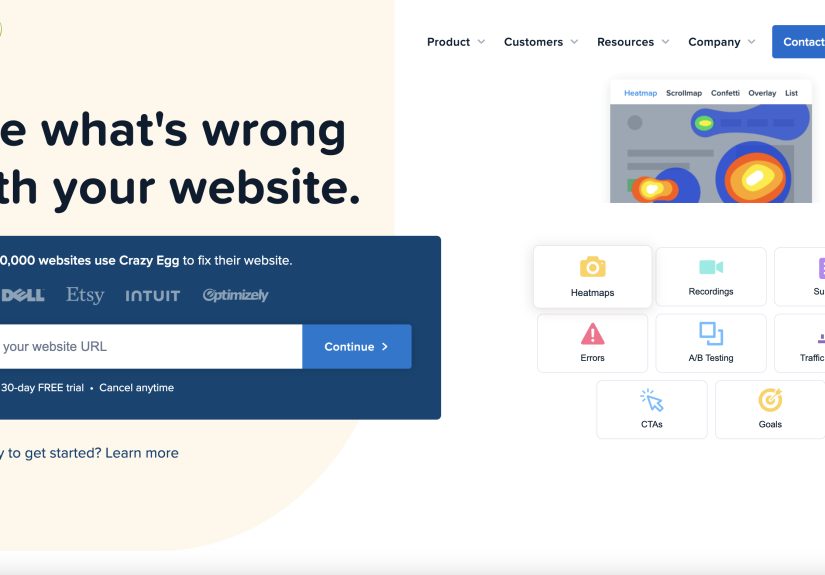
Crazy Egg has been around the heatmap block and tends to win fans who want practical optimization features without a steep learning curve. It shines when you want heatmaps, recordings, and a clear path into A/B testing.
Why it’s a great Lucky Orange alternative
- Heatmaps + recordings: quick insight into where attention goes and what users do next.
- A/B testing focus: helpful if your team wants to move from “observing” to “shipping improvements.”
- CRO-friendly toolkit: built for iteration and conversion uplift workflows.
Best for
Conversion-focused teams (especially e-commerce and landing-page heavy businesses) that want to move from insight to experiment quickly. If you’re the type of person who sees a weird click cluster and immediately says, “Cool, let’s test a fix,” you’ll feel at home.
Watch-outs
- If your top priority is deep, always-on qualitative research (rich surveys, feedback pipelines), you might pair Crazy Egg with a dedicated feedback tool.
- Experimentation is only as good as your discipline: define hypotheses, success metrics, and stopping rulesotherwise it’s just vibes.
Example: Cleaning up a cluttered homepage
Use a click heatmap to find distractions (like users clicking non-clickable elements, or ignoring your primary CTA). Watch a handful of recordings to understand intent. Then A/B test a tighter layout: fewer competing buttons, clearer hierarchy, and a single strong CTA. Bonus points if you also reduce page load frictionbecause nobody converts on a page that loads like it’s on dial-up.
4) FullStory (Best for Deeper Digital Experience Analytics)
FullStory is for teams who don’t just want to know that something is brokenthey want to pinpoint why it’s broken, where it’s broken, and how it connects to business outcomes. It’s a strong alternative when your needs extend beyond marketing pages into product flows, logged-in experiences, and cross-team debugging.
Why it’s a great Lucky Orange alternative
- High-power session replay: built to investigate friction, errors, and behavioral patterns with serious filtering.
- Heatmaps and page interaction views: useful for prioritizing optimization opportunities.
- Collaboration + debugging workflows: helpful when product, engineering, and UX need to work from the same evidence.
Best for
Product-led companies, SaaS teams, and organizations where “conversion” includes onboarding, feature adoption, retention, and in-app workflowsnot just “did they click the big green button.”
Watch-outs
- FullStory can be more than some small teams need. If your website is mostly marketing pages and a simple checkout, you might prefer a lighter-weight tool.
- Treat it like a product: define key questions, set up governance, and train the teamotherwise it becomes an expensive “we should use this more” subscription.
Example: Finding the invisible bug that kills signups
Traditional analytics might show a signup drop-off at “Step 2,” but not why. With deeper replay + investigation workflows, you can often isolate the culprit: a hidden validation error, a third-party script conflict, or a UI element that blocks submission on specific browsers. This is where FullStory earns its keepespecially when engineering needs proof, not poetry.
Migration Game Plan: Switching Tools Without Losing Your Mind
- Define your top 5 questions (e.g., “Why does checkout drop on mobile?” “Where do lead forms fail?”). Your tool should answer these faster than your current setup.
- Tag your key pages and funnels before you install anything: pricing, signup, checkout, lead form, top landing pages.
- Start with a 2-week overlap if possible. Keep Lucky Orange running while your new tool collects baseline data.
- Set privacy rules on day one: mask fields, exclude sensitive URLs, and define who can access replays.
- Build a repeatable routine: weekly heatmap scan, 10 replays per key funnel step, and one small experiment shipped every sprint.
FAQ: Lucky Orange Alternatives
What is the closest alternative to Lucky Orange?
If you want a similar “CRO toolkit” feel with broad behavior insights, Hotjar is often the closest match. If you primarily want recordings and heatmaps with minimal cost, Microsoft Clarity is the strongest free alternative.
Which Lucky Orange alternative is best for small businesses?
For small businesses, it usually comes down to budget and workflow. Microsoft Clarity is a great place to start for free. Hotjar is a strong next step if you want a polished experience and built-in feedback workflows.
Which tool is best for A/B testing?
If you want A/B testing tightly aligned with heatmaps and recordings, Crazy Egg is a practical option for CRO-focused teams. (Just remember: testing without a hypothesis is like baking without measuringsometimes you get cookies, sometimes you get a science experiment.)
Which tool is best for product teams and debugging?
FullStory is often a better fit when you need deeper investigation workflows across complex journeys and cross-functional teams.
Experiences From the Field (500-ish Words of “Yep, That Happened”)
Here are a few common, very real-feeling scenarios teams run into when they switch away from Lucky Orange (or when they finally admit they’ve been staring at Google Analytics charts like they’re going to blink and reveal the answer).
1) The “Our CTA is Fine” Delusion
A team launches a shiny new landing page. The CTA button is big, bold, and has a verb that sounds like it belongs on a motivational poster. Conversions still drop. Everyone debates copy. Someone suggests a new shade of blue. Then behavior analytics enters the chat: the click heatmap shows people hammering the headline (because it looks like a link) and ignoring the CTA entirely. Session replays confirm itusers scroll, hover, hesitate, then bounce. The fix isn’t poetic. It’s practical: make the headline clearly non-clickable (or actually link it), move the CTA higher, reduce visual competition, and test.
2) The Mobile “Rage Tap” Mystery
On desktop, everything works. On mobile, users behave like they’re trying to tap through a force field. Recordings reveal the issue: a sticky promo bar overlaps the “Continue” button on smaller screens. Users tap three times, scroll a bit, tap again, and thenpoofexit. It’s not a messaging issue. It’s a layout issue. Teams who adopt a tool like Clarity often have this moment of clarity (sorry) where they realize: “Oh. Our funnel didn’t fail. Our CSS did.”
3) The Form That Quietly Ruins Your Week
Lead form conversion drops, but only on certain traffic sources. The marketing team suspects “low quality leads.” The sales team blames the marketing team. The marketing team blames Mercury being in retrograde. Replays show what’s really happening: a dropdown won’t open on iOS, or a validation message appears below the fold so users never see why the submission fails. This is where a CRO-first toolset feels like a superpower: you don’t have to guessyou can watch the failure happen and fix it.
4) The “We Need More Than Marketing Analytics” Graduation
As companies grow, the questions change. It’s not just “Why did they bounce?” It becomes “Why didn’t they finish onboarding?” “Why didn’t they adopt Feature X?” “Why do support tickets spike after release?” Tools like FullStory often show up when teams need a shared source of truth across product, UX, engineering, and support. Someone drops a replay link in Slack, and suddenly the conversation goes from “I think” to “Here’s what happened.” It’s a surprisingly peaceful upgrade.
The biggest lesson across all these stories: the “best” Lucky Orange alternative is the one your team will use consistently. A tool that answers questions weekly beats a tool with 200 features that you open quarterly to feel guilty.