Table of Contents >> Show >> Hide
- Quick Jump
- Best Time to Transplant Peonies
- Before You Dig: Prep That Saves Blooms
- Step-by-Step: How to Transplant Peonies
- Should You Divide Peonies While You’re At It?
- Planting Depth: The #1 Bloom-Killer
- Aftercare: Watering, Mulch, and Patience
- Troubleshooting: No Blooms, Flops, and Other Grievances
- FAQ
- Experience Notes: From Real Gardens (AKA: What People Actually Mess Up)
- Wrap-Up
Peonies are the divas of the perennial world. They live forever, bloom like they’re trying to win a trophy, and thenif you move them wrongwill punish you with years of leafy silence. The good news? Transplanting peonies isn’t hard. It’s just… picky. Like folding a fitted sheet: totally doable, but it helps to know the trick.
This guide walks you through when to move peonies, how to dig and replant them without drama, how deep is “just right” (spoiler: not deep), and how to set expectations so you don’t stand in your yard next spring yelling, “WHERE ARE MY FLOWERS?” at an innocent plant.
Best Time to Transplant Peonies
If you remember only one thing, make it this: fall is peony-moving season. Aim for late summer to early fallafter the heat breaks, as the plant starts winding down, and ideally about 4–6 weeks before the ground freezes in your area.
Why fall works best
- Less stress: Cooler temps mean less water loss and less transplant shock.
- Root growth is still active: Peonies can settle in before winter.
- Clear timing: Once foliage starts dying back, the plant is ready to relocate.
Can you transplant peonies in spring?
You can, especially very earlybefore vigorous new growth. But spring moves are more likely to set blooms back (and peonies already move at their own leisurely pace). If fall is an option, fall wins.
A simple timing cheat sheet (U.S. climates)
- Upper Midwest / North: often late August–September
- Mid-Atlantic / Interior: often September–October
- South (where “fall” is a vibe): often October–November
Instead of chasing calendar dates, chase this rule: move peonies 4–6 weeks before hard freeze.
Before You Dig: Prep That Saves Blooms
Most peony transplant “fails” aren’t failures. They’re just plants sulking because the new spot is wrongor because the eyes got buried like pirate treasure.
Pick the right new location
- Sun: Full sun is bestthink at least 6 hours. In hot southern zones, morning sun with light afternoon shade can help blooms last longer.
- Soil: Well-drained soil is non-negotiable. Peonies hate wet feet more than cats hate baths.
- Airflow: Space plants so leaves dry quickly (helps reduce fungal issues).
- Long-term thinking: Peonies prefer staying put for decades. Choose a “forever home,” not a temporary rental.
Gather tools (and spare yourself chaos)
- Spade or digging fork
- Hand pruners (or loppers for thick stems)
- Sharp knife (for dividing)
- Gloves
- Marker + label (future-you will thank you)
- Compost (optional, for improving structurenot for turning the hole into a buffet)
Water the plant the day before
Moist soil is easier to dig and kinder to roots. You want “crumbly brownie,” not “dry concrete” and definitely not “mud wrestling.”
Step-by-Step: How to Transplant Peonies
Step 1: Cut foliage back
In fall, cut stems down to a few inches above the soil line. This makes digging easier and reduces disease carryover.
Step 2: Dig widepeony roots run farther than you think
Start your trench 8–12 inches away from the crown and dig down. Go wider rather than deeper at first. You’re trying to lift the root system with minimal damage.
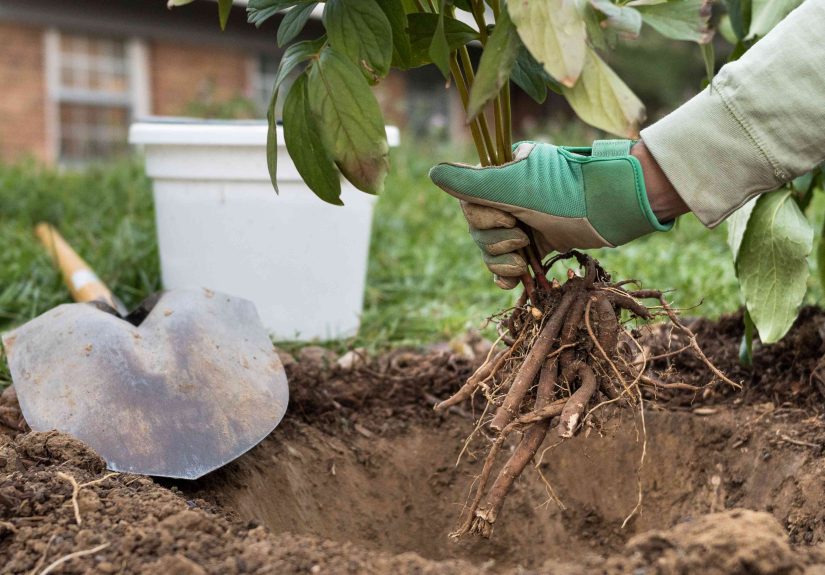
Step 3: Lift the clump gently
Use a digging fork to loosen and lift. If roots snap, don’t panicpeonies are tough. Just avoid turning the root ball into confetti.
Step 4: Shake off soil (or rinse to find the “eyes”)
Those little pinkish buds on the crown are the peony eyesnext year’s stems and flowers. Seeing them clearly helps you replant at the correct depth and makes dividing easier.
Step 5: Prepare the new hole
Dig a hole wide enough to spread roots without bending them like paperclips. Loosen surrounding soil so roots can expand. Mix in a modest amount of compost if your soil is poor, but don’t overdo rich amendmentstoo much nitrogen can mean lush leaves and fewer flowers.
Step 6: Replant immediately
Don’t leave roots baking in sun and wind. If you need a break, keep the clump shaded and lightly covered (a damp towel works) while you prep the hole.
Should You Divide Peonies While You’re At It?
Dividing is optional, but it’s a great move if your peony is old, crowded, blooming less, or you want more plants. Think of it as decluttering… for roots.
When dividing makes sense
- The clump is large and flowering has declined
- You’re moving it anyway (convenient timing)
- You want multiple plants or to share divisions
How to divide peonies (the practical version)
- Find the eyes: Look for firm, pink/white buds on the crown.
- Slice cleanly: Use a sharp, sanitized knife.
- Size matters: Aim for divisions with 3–5 eyes and a solid chunk of root.
- Trim damage: Remove broken or rotted bits.
Yes, you can plant a tiny division with fewer eyes, but it typically takes longer to bloom well. If you want flowers sooner, don’t make “mini peonies.”
Planting Depth: The #1 Bloom-Killer
If peonies had a customer service hotline, the #1 complaint would be: “My peony has leaves but no flowers.” The #1 cause is almost always: it’s planted too deep.
The Goldilocks rule for herbaceous peonies
- Target depth: Place eyes about 1–2 inches below the soil surface.
- Colder zones: Lean closer to 2 inches.
- Warmer zones: Lean closer to 1 inch.
- Never: Bury eyes deeper than about 2 inches if you want reliable blooms.
What about tree peonies and Itoh peonies?
Itoh (intersectional) peonies are usually treated more like herbaceous peonies for siting and general care, but they have woody crowns. Follow nursery guidance if available.
Tree peonies are different: most sold are grafted, and growers often recommend planting the graft union several inches below soil (commonly around 4–6 inches) to encourage the tree peony to form its own roots and reduce suckering from the nurse root. If you’re transplanting a tree peony, avoid dividing it like an herbaceous type.
Aftercare: Watering, Mulch, and Patience
Watering (fall + first spring)
- Right after planting: Water deeply to settle soil around roots.
- Fall until freeze: Keep soil lightly moistoften a deep watering about once a week if rain doesn’t cooperate.
- Spring and early summer: Water during dry spells, especially while establishing.
Mulch (use it like seasoning, not frosting)
A light mulch layer helps even out soil moisture and temperature. But don’t pile mulch directly on top of the crown like you’re insulating a sleeping hamster. In spring, pull mulch back so the crown isn’t smothered.
Fertilizer
Skip heavy feeding right after transplanting. Let roots re-establish first. In future years, a balanced fertilizer or compost top-dressing after bloom time is often enoughespecially if your soil already has decent organic matter.
How long until it blooms again?
Peonies follow a famously slow-but-steady pattern that gardeners summarize as: “sleep, creep, leap.” Translation:
- Year 1: The plant may focus on roots and give few or no blooms.
- Year 2: More growth, maybe a couple flowers.
- Year 3: The “okay fine, here’s the show” year.
Troubleshooting: No Blooms, Flops, and Other Grievances
No blooms after transplant
- Check depth: Eyes too deep = leafy plant, no flowers.
- Check sun: Too much shade reduces blooming.
- Check patience: Sometimes it’s just year one or two.
Stems flopping over
- Some varieties are naturally floppy when blooms get heavy (relatable).
- Use a peony ring/support early in spring before stems stretch.
- Avoid too much nitrogen, which can encourage weak growth.
Powdery mildew or botrytis concerns
- Give plants space and airflow.
- Water at the base, not over leaves.
- Clean up dead foliage in fall (don’t compost diseased material).
“I moved it and now I regret everything”
Normal feeling. You didn’t ruin your peonyyou just reset its internal calendar. Keep it properly planted, watered, and in good sun. It will forgive you… slowly.
FAQ
Can I transplant peonies in summer?
Try not to. Summer heat increases stress and water demand. If you must (construction, emergency), dig as large a root ball as possible, provide shade cloth for a couple weeks, and water consistently. Expect blooms to be delayed.
How far apart should peonies be spaced?
Common recommendations are about 3–4 feet apart so plants have room, airflow, and fewer fungal headaches.
Should I cut flowers the first year after transplant?
If it produces a couple blooms, enjoy thembut don’t take a massive harvest. The plant needs energy to rebuild roots. If you’re aiming for long-term performance, moderation wins.
Do peonies like compost in the planting hole?
They like improved soil structure, but they don’t need an all-you-can-eat buffet. A modest mix-in is fine; avoid turning the hole into a rich pocket that stays wetter than surrounding soil.
Experience Notes: From Real Gardens (AKA: What People Actually Mess Up)
Let’s talk about the real-world stuff that rarely makes it into neat “Step 1, Step 2” guidesbecause gardens are messy, weather has opinions, and peonies are basically long-lived housecats that live outdoors.
1) The “I planted it like a tomato” mistake. A surprisingly common transplant story goes like this: someone digs a heroic hole, adds compost, tucks the peony in, and thenbecause deep planting feels secureburies the crown “to be safe.” The plant responds with gorgeous foliage and exactly zero flowers, year after year, like it’s running a leafy pyramid scheme. When gardeners finally dig it up and set the eyes higher (usually around that 1–2 inch sweet spot), blooms often return after the plant re-establishes. If you’re reading this with a guilty face: you’re not alone.
2) The “new spot is technically sunny” misunderstanding. Another classic: “It gets sun!” Yes… from 4:30 to 6:00 p.m., filtered through a maple tree, behind the garage, during the months you don’t need it. Peonies are generous plants, but bloom power correlates strongly with real sun hours. Gardeners who relocate peonies from “bright shade” to honest full sun often see stronger stems and better floweringafter the inevitable recovery period.
3) The division size debatetiny vs. generous. People love making lots of baby plants. I get it. Free peonies feel like winning the lottery. But small divisions with one or two eyes can take a long time to become showy. Gardeners who choose divisions with 3–5 eyes tend to report better satisfaction because the plant has enough stored energy and root mass to rebound faster. In other words: fewer divisions now, more flowers sooner.
4) Soil settling is sneakier than you think. Even when gardeners set eyes at the correct depth, loose soil can settle after watering and rainsinking the crown just enough to reduce blooming. A practical habit is to water in, check level again, and adjust before calling it “done.” A peony planted perfectly today can become “too deep” by next month if the soil collapses into air pockets.
5) The patience problem (we all have it). The most honest peony transplant experience is emotional: you do everything right… and the next spring is underwhelming. That doesn’t mean failure. Many gardeners describe year one as “a whole lot of leaves and one flower that looked like it was doing me a favor.” Then year two improves. Then year three is the blockbuster season where you forget you ever doubted the plant. If you want instant gratification, buy petunias. If you want a plant that outlives your mortgage, peonies are your people.
Wrap-Up
Transplanting peonies is mostly about timing (fall is best), gentle digging (save those roots), and perfect planting depth (shallow eyes for blooms). Nail those three, and your peony will settle in, rebuild, and eventually reward you with the kind of spring flowers that make neighbors slow down while driving past your house. That’s the dream. And yes, it’s achievable.