Table of Contents >> Show >> Hide
- Who Is Eduardo Lozano, and Why Is Everyone Looking Twice?
- What Makes Lozano’s Patch Tattoos Feel So Convincing?
- What the 80 Recent Works Reveal About His Artistic Range
- Why Eduardo Lozano Matters in Modern Tattoo Culture
- If You Love This Style, Here’s What to Learn From It Before Getting Tattooed
- The Experience of Looking at 80 Recent Works
- Conclusion
Some tattoo artists make beautiful tattoos. Some make technically excellent tattoos. And then there are the rare few who make you squint at a forearm like it has personally lied to you. Eduardo Lozano belongs in that last category. His work does not simply sit on the skin; it appears to hover, curl, stitch, and almost lift off the body like a patch you could peel away if you were rude enough to try.
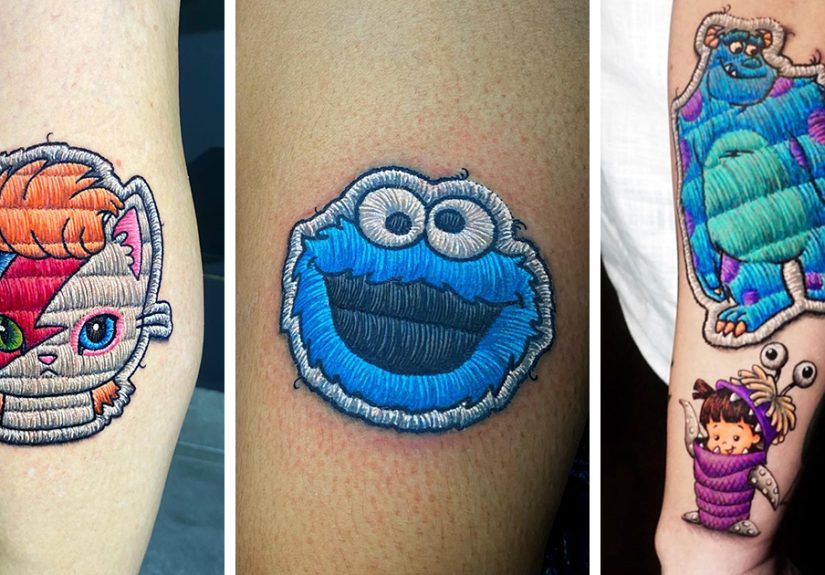
That is the magic behind Lozano’s now-famous patch tattoo approach. Looking across his 80 recent works, what stands out is not just the novelty of the illusion, but the discipline behind it. These tattoos are playful, yes. Nostalgic, absolutely. But they are also incredibly controlled pieces of body art built on realism, careful shadowing, smart color placement, and a deep understanding of texture. In other words, this is not a gimmick wearing a cute cartoon face. This is serious tattoo craft dressed up like your childhood just got ironed onto your arm.
For readers interested in modern tattoo art, 3D tattooing, embroidery tattoo design, and the future of realism-based body art, Lozano’s portfolio offers a fascinating case study. His work shows how a specialized style can feel instantly recognizable while still leaving room for variation, personality, and technical growth. And yes, it also proves that a tattoo can look like fabric without becoming a craft-store disaster. That alone deserves respect.
Who Is Eduardo Lozano, and Why Is Everyone Looking Twice?
Eduardo Lozano, also widely known as Duda Lozano, has built a reputation around tattoos that imitate embroidered patches with startling realism. His style turns familiar images into tactile illusions: cartoon faces, pop culture icons, playful mascots, and graphic emblems that seem stitched rather than inked. The result feels fresh because it borrows the visual language of thread, fabric, and patchwork but translates it into permanent body art.
That matters in a tattoo world where originality is hard-earned. Tattooing is filled with incredible artists, but standing out requires more than being good with a machine. It requires a visual idea strong enough to be remembered after a single glance. Lozano found one. His tattoos are instantly recognizable because they create a small moment of visual confusion before the brain catches up. Is that sewn on? Is that real thread? Is my screen glitching? That split second of uncertainty is part of the appeal.
More importantly, his work is memorable without feeling soulless. A lot of highly shareable tattoo content online gets attention for being shocking, oversized, or painfully trend-driven. Lozano’s patch tattoos go viral because they are clever, but they stick because they are joyful. There is a difference. One gets a scroll-stop. The other gets a saved post, a screenshot, and probably a conversation that begins with, “Okay, I usually don’t want tattoos, but…”
What Makes Lozano’s Patch Tattoos Feel So Convincing?
1. He Understands Texture Better Than Most People Understand Their Wi-Fi Settings
The first secret is texture. Lozano’s tattoos mimic the directional look of thread by packing color into tiny, controlled lines that resemble stitches. These marks do not feel random or decorative. They create the optical rhythm of embroidery, the same way real stitched patches catch light differently across their surface. That consistency is what sells the illusion. If the lines were sloppy, the whole effect would collapse. Instead, the tattoos feel structured, layered, and tactile.
He also understands that embroidery is not just about lines. It is about density, sheen, and the way thread builds an image differently from ink or paint. Lozano recreates that fabric logic on skin. The “threads” seem to run in deliberate directions. Borders feel reinforced. Interior color looks stacked rather than merely filled. It is a clever illusion, but it is also a studied one.
2. His Use of Light and Shadow Does the Heavy Lifting
If the thread-like marks create texture, the shadows create the dimension. Lozano places subtle shading beneath the edges of his “patches,” making them appear slightly raised from the skin. It is an old artistic trick with a very modern payoff. Without that shadow, the design would still be attractive. With it, the tattoo starts to behave like an object.
This is where the work moves from cute to genuinely impressive. A lesser artist could imitate stitches. Lozano makes the tattoo occupy space. He persuades the eye that the patch has thickness, edge, and presence. That illusion is why his pieces feel like a new dimension in tattooing rather than just a new style trend. The tattoos do not merely depict patches; they perform patchness. Yes, that is not a textbook word. It is, however, the correct vibe.
3. The Frayed Edges Are a Stroke of Genius
Another signature detail is the frayed thread effect. Loose ends, tiny breaks, and slightly imperfect borders make the tattoos feel authentic. This is a brilliant move because perfect illusions often become less believable when they are too perfect. Real patches are physical objects. They wear, pull, curl, and soften. By introducing those small “broken thread” moments, Lozano gives the tattoo just enough imperfection to make it feel real.
It is also a smart emotional detail. Clean geometry impresses the brain; little flaws charm the heart. The frayed edges make the work feel handmade, tactile, and affectionate. That matters when many of his subjects come from cartoons, comics, and beloved nostalgic imagery.
What the 80 Recent Works Reveal About His Artistic Range
Looking across 80 recent works, a pattern emerges: Lozano is not using one trick over and over. He is using one visual language to say many different things. That distinction is important. Repetition is easy. Variation within a signature style is hard.
One major strength in these pieces is his command of pop culture imagery. Lozano frequently works with familiar characters and symbols, but he does not treat them like throwaway fandom souvenirs. Instead, he upgrades them. Cartoon faces become sculptural. Bright mascot-style images gain weight, stitching, and believable volume. A simple character that might look flat in another artist’s hands suddenly feels collectible, almost like a physical badge rescued from a favorite jacket and permanently preserved on skin.
His color choices also deserve attention. Patch tattoos live or die by saturation and contrast. Lozano tends to use bold, clean colors that mimic the visual confidence of embroidered patches, but he balances them with darker borders and enough tonal change to keep the design readable. This is not random rainbow chaos. It is color with a job description.
Another thing the 80-piece selection makes clear is how well he handles nostalgia. Many tattoo artists work with nostalgic imagery, but nostalgia can turn corny very quickly. Lozano avoids that trap by taking the image seriously. He does not mock the source material or overcomplicate it. He respects its emotional role in the wearer’s life, then elevates it through technique. The result feels affectionate rather than ironic, polished rather than overdesigned.
His tattoos also work because they are readable from both far away and up close. From a distance, you get the patch illusion. Up close, you discover the craftsmanship: the stitch logic, the highlights, the borders, the careful transitions. That double reward is a big reason his work performs so well online and likely even better in person. Social media loves instant impact, but truly excellent tattoos also survive close inspection. Lozano’s do both.
Why Eduardo Lozano Matters in Modern Tattoo Culture
Lozano’s success says something important about where tattoo culture is headed. Contemporary tattoo audiences are highly visual, highly online, and increasingly style-aware. People are no longer just choosing subject matter; they are choosing visual language. They want tattoos that feel specific, artist-led, and impossible to mistake for generic flash. Lozano delivers exactly that.
His work also reflects a broader shift toward tattoos that play with surface illusion. As realism, fine line, graphic design influence, and hyper-specific niche aesthetics continue to evolve, artists like Lozano show that body art can still surprise people. That should not be underestimated. Tattoo culture has been around long enough that genuine surprise is precious.
At the same time, his rise reinforces a timeless truth: style only lasts when it is backed by substance. Patch tattoos are visually fun, but the reason Lozano stands above copycats is that he understands anatomy, placement, saturation, and illusion as a system. You can imitate the look. It is much harder to recreate the conviction.
If You Love This Style, Here’s What to Learn From It Before Getting Tattooed
Choose the Artist, Then the Design
One of the clearest lessons from Lozano’s portfolio is that specialized tattoos demand specialized hands. A patch tattoo is not something you casually hand to an artist who mostly does bold traditional work and say, “You’ll figure it out.” Maybe they will. Maybe you will also end up with something that looks less like embroidered magic and more like a confused potholder. Study portfolios carefully. If the artist does not already show convincing texture, depth, and controlled color work, keep looking.
Placement Matters More Than People Think
Patch tattoos work best when the body gives them room to “sit” naturally. Lozano’s pieces often succeed because they are placed where the illusion can breathe. A patch effect needs enough visual space for borders, shadows, and shape definition. Cramping that concept into awkward placement can flatten the entire design. Great illusion tattoos are not only about technical skill; they are also about respecting the body as part of the composition.
Aftercare Is Not Glamorous, but It Is Part of the Art
Highly detailed tattoos depend on healing well. Clean aftercare, gentle washing, moisturizing, and protecting the tattoo from too much sun are not exciting topics, but they matter. Fine detail and color clarity can lose their punch if the healing process is ignored. In other words, spending hours choosing the perfect illusion tattoo and then treating it like a sticker is not a serious life strategy.
The Experience of Looking at 80 Recent Works
There is also something strangely addictive about moving through a large group of Eduardo Lozano’s recent tattoos. At first, the reaction is technical. You notice the thread effect. You admire the shadows. You do the normal “How on earth did he do that?” routine that great tattooing tends to provoke. But after a while, the experience shifts. You stop looking only at technique and start noticing feeling.
That is where Lozano’s portfolio becomes more than a clever gallery of illusions. The works begin to feel like tiny emotional objects. A patch is never just a patch. In everyday life, patches live on jackets, uniforms, backpacks, hats, and old favorite clothes. They are associated with identity, memory, fandom, belonging, and wear. Lozano taps into all of that baggage in the best possible way. By recreating the patch look on skin, he makes each tattoo feel less like an image and more like a keepsake.
That experience becomes even stronger when the subject matter is familiar. Across these 80 recent works, the viewer is repeatedly invited into moments of recognition. A beloved cartoon character. A playful emblem. A design language that feels rooted in childhood, pop culture, or personal obsession. Lozano understands that recognition is powerful, but he never lets it do all the work. The nostalgia gets you in the door; the craftsmanship makes you stay.
There is also a fun psychological tension in his tattoos. Patches are removable. Tattoos are not. That contradiction gives the work extra charm. Lozano is essentially taking a temporary visual format and transforming it into permanence. A thing normally sewn onto fabric becomes embedded in skin. That switch creates an odd emotional charge. The tattoos feel casual and collectible, but also intimate and lasting. They are playful on the surface and serious underneath, which is honestly a pretty good description of a lot of great tattooing.
Another memorable part of the experience is how approachable the work feels. Some high-level tattoo art can be technically incredible while remaining emotionally cold. Lozano’s pieces do not have that problem. They are polished, but they are not sterile. They invite delight. They make people smile. They create conversations between strangers online because the reaction is immediate and universal: “Wait, that’s a tattoo?” In a visual culture overloaded with content, that kind of response is incredibly hard to earn honestly.
And perhaps that is the biggest takeaway from these 80 recent works: Eduardo Lozano has found a way to merge technical mastery with accessibility. He gives viewers something visually surprising without asking them to pretend they understand an obscure artistic theory first. The tattoos are smart, but they are also fun. They are disciplined, but they still carry warmth. They feel new without acting desperate to be trendy. That balance is rare.
Spend enough time with this body of work, and you start to realize Lozano is not just making patch tattoos. He is building miniature objects of memory, humor, and identity on living skin. He is turning nostalgia into dimension, line into fabric, and tattooing into a tiny optical event. That is why his work sticks in the mind long after the first glance. And that is why these 80 recent works feel less like a random collection and more like proof of an artist who truly found his lane and then widened the road.
Conclusion
Eduardo Lozano’s work stands out because it does more than look different. It thinks differently. His patch tattoos combine realism, texture, color discipline, shadow work, and emotional intelligence in a way that feels instantly modern. Looking at his 80 recent works, you see an artist who understands both the internet-era demand for visual impact and the timeless tattoo requirement of making something permanent feel personal.
That is why this style matters. It is not only impressive because it mimics embroidery. It is impressive because it expands what tattooing can communicate. Lozano shows that skin can become fabric, memory can become form, and a familiar character can become a dimensional object with weight, humor, and presence. In a medium where originality is hard to fake and harder to sustain, he has managed both.
So yes, Eduardo Lozano creates a new dimension in tattooing. And after seeing these 80 recent works, the bigger question may be this: how many people are now staring at their own arms and wondering whether their next tattoo should look like it belongs on a vintage denim jacket? Quite a few, probably. For once, the algorithm would be right.