Table of Contents >> Show >> Hide
- The headline lesson: the market rewards clarity, not chaos
- Sales still matters. Founder-led sales matters even more.
- The org chart is not decoration. It is strategy.
- Product-led growth is maturing into product-led expansion
- Retention is not a support metric. It is the whole business.
- AI is changing SaaS, but not in the lazy way people talk about it
- What this week’s SaaStr roundup is really saying
- Experience Notes: What this kind of SaaS advice feels like in the real world
- Conclusion
- SEO Tags
If SaaS content had a group chat this week, it would be loud, caffeinated, slightly dramatic, and absolutely obsessed with one question: what actually works now? Not in 2019. Not in some dreamy “growth at all costs” fever dream. Right now, in the era of sharper buyers, stricter budgets, AI-everything, and founders who would very much like their runway to stop evaporating.
That is what makes this week’s top SaaStr posts and videos so useful. They are not random motivational confetti. Together, they form a practical operating manual. From Bessemer’s market frameworks to Craft Ventures’ org design and enterprise readiness lessons, from Y Combinator’s brutally clear startup advice to SaaStr’s breakdowns on valuation, founder-led sales, and scaling, the message is surprisingly consistent: durable SaaS growth still wins, but the playbook is more disciplined, more product-aware, and more customer-obsessed than ever.
So instead of treating these posts and videos like separate tabs you swear you’ll read later, let’s do the helpful thing and stitch them into one clean narrative. Here are the biggest ideas behind the best SaaStr content of the week, why they matter, and what founders, operators, and revenue leaders should steal immediately.
The headline lesson: the market rewards clarity, not chaos
One of the standout SaaStr posts this week asks the most founder-ish question possible: What’s your SaaS startup worth? It is the kind of question that can turn calm adults into spreadsheet goblins. But the underlying lesson is bigger than valuation multiples. It is a reminder that value is not magic. It is usually a function of growth quality, retention, efficiency, market confidence, and whether your company looks like a real business instead of an expensive hobby with a Slack workspace.
That theme flows directly into Bessemer’s long-running cloud and AI research. The modern cloud and AI market is still producing huge winners, but the bar is high. The strongest companies are not winning because they slapped “AI” into a homepage hero banner and called it innovation. They are winning because they can show measurable performance, strong revenue momentum, clear product categories, and a believable path to durable expansion.
In plain English: the market is still generous, but it is no longer gullible.
This is why a weekly roundup that includes valuation talk, Cloud 100 thinking, and AI benchmarks is so timely. It tells founders to stop treating growth, efficiency, and positioning like separate departments. They are all part of the same story. If your startup is hard to understand, hard to buy, hard to expand, and hard to measure, your valuation eventually starts looking less like a premium and more like a polite suggestion.
Sales still matters. Founder-led sales matters even more.
SaaStr’s popular piece on 7 tips to close 7,000 customers from Gorgias’ VP of Sales is a nice reality check for anyone who still thinks growth comes from “vibes plus a free trial.” Gorgias’ example reinforces an old truth that keeps surviving every cycle: great SaaS companies build repeatable systems, not random bursts of momentum.
That connects beautifully with First Round’s founder-led sales thinking. The journey from zero to the first few million in annual recurring revenue is rarely elegant. It is awkward, founder-heavy, and full of conversations where the product is half-polished and the pitch is held together by conviction and coffee. But that messy phase is not a weakness. It is where companies learn the commercial truths that later become real sales process.
Y Combinator has hammered this same point for years from a slightly different angle. Its advice on getting first customers, pricing B2B products, and pitching with brutal clarity all comes back to one principle: stop hiding behind abstraction. Talk to users. Learn the pain. Explain your product in simple language. Charge in a way customers understand. Ask for the deal.
That sounds basic because it is basic. Also, because it works.
There is a reason Michael Seibel’s pitch frameworks continue to show up in top SaaStr sessions. Founders consistently overcomplicate stories that should be simple. The best startup pitches do not drown investors or customers in jargon soup. They answer a few essential questions clearly: What do you do? Why now? Why you? What traction do you have? What makes this insight non-obvious? What happens next?
Funny how “being easy to understand” remains a competitive advantage in tech. Revolutionary, really.
The org chart is not decoration. It is strategy.
One of the most valuable videos in the weekly roundup is The SaaS Org Chart by Series with David Sacks of Craft Ventures. Operators love tactics, but structure is strategy in disguise. The wrong org chart can make a healthy company look broken. The right one can turn momentum into compounding execution.
What makes this advice so useful is that it reminds leaders to hire for the stage they are actually in, not the fantasy version they narrate on LinkedIn. Pre-product-market-fit companies do not need a miniature public company structure. They need speed, feedback loops, and people who can wear multiple hats without filing an emotional support ticket. As the company grows, specialization starts making sense. But too much structure too early creates drag, confusion, and the corporate version of buying a tuxedo for a toddler.
Craft’s broader thinking on bottom-up SaaS adds another layer. Adoption often starts with individual users, teams, or small business units before spreading inside the organization. That means product experience, onboarding, collaboration, and user advocacy are not “nice to have” features. They are distribution. When users become internal champions, the product starts selling itself up the org chart.
At the same time, Craft’s more recent investment thesis around enterprise readiness makes another modern truth impossible to ignore: self-serve and PLG can open the door, but serious enterprise deals often stall on missing requirements like SSO, directory sync, permissions, compliance, and admin controls. In other words, the product may be loved, but procurement still wants its grown-up paperwork.
The smart SaaS teams now build for both motions. They make the product easy to adopt from the bottom up and easy to approve from the top down.
Product-led growth is maturing into product-led expansion
Another standout SaaStr session this week focuses on life beyond classic product-led growth. That framing matters. PLG used to be discussed like a cheat code, as if shipping a freemium tier and a shiny onboarding flow would cause revenue to descend from the heavens. Operators know better now.
Product-led growth is not the finish line. It is the opening move.
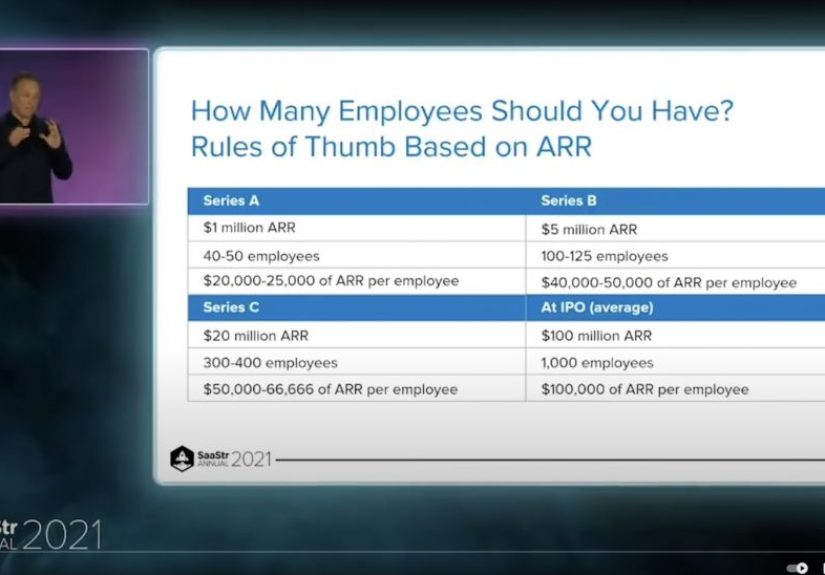
OpenView’s benchmarks have helped sharpen this conversation. Efficient PLG, stronger expansion, better operations, and improved ARR per FTE now matter more than vanity adoption. The companies seeing the best outcomes are not merely giving people access to the product. They are designing clear upgrade paths, monetizing new capabilities, and making expansion feel natural instead of forced.
That is where Stripe’s pricing frameworks become especially relevant. Good pricing is not just about selecting between per-user, tiered, usage-based, or freemium models. It is about aligning price with customer value, segment differences, and product behavior. Great SaaS pricing makes it obvious why someone should upgrade, when they should upgrade, and what extra value they get when they do.
Messy pricing is one of the easiest ways to sabotage otherwise strong growth. If your product says “easy,” your pricing page cannot scream “consult your lawyer.”
Retention is not a support metric. It is the whole business.
SaaStr’s piece on Expensify at $140 million in ARR and the broader sales and scaling content in this weekly mix point toward the same unglamorous but essential truth: sustainable SaaS companies are built on retention.
HubSpot’s customer retention guidance puts it bluntly. Keeping customers is dramatically cheaper than acquiring new ones, and even small improvements in retention can have an outsized impact on revenue. This is not just customer success team propaganda. It is economic reality.
That is why the strongest modern SaaS operating advice no longer treats success, support, onboarding, and product education as back-office functions. They are front-line growth levers. Clear expectations, fast time to value, self-service support, smart communication cadences, and feedback loops are not soft skills. They are churn prevention systems.
Salesforce’s recent customer success and AI CX thinking adds a modern twist: AI can improve customer support, prediction, personalization, and KPI visibility, but only if it reduces friction and increases trust. Automation is useful. Trust is the business. If your AI lowers response times but raises customer anxiety, congratulations, you invented a faster way to annoy people.
The best SaaS teams now design post-sale experiences with the same intensity they once reserved for acquisition funnels. That shift is not trendy. It is necessary. In crowded markets, customers do not stick around because your demo had excellent transitions. They stay because they achieve outcomes.
AI is changing SaaS, but not in the lazy way people talk about it
A lot of SaaS writing about AI falls into one of two buckets: breathless hype or suspicious grumbling. The better content this week avoids both. Bessemer, a16z, OpenView, Salesforce, and High Alpha all point to a more grounded reality.
AI is reshaping software economics, buyer behavior, customer expectations, and product categories. But the winners are not simply “AI companies.” They are companies that monetize AI well, compress undifferentiated work, improve productivity, and create more value for customers than the old software model allowed.
OpenView’s benchmarks make this especially clear: merely positioning yourself as AI does not drive growth. Monetizing AI does. High Alpha adds that companies with AI deeply embedded in the product are outperforming peers. a16z argues that AI is also changing the rhythm of enterprise sales, with more buyers actively shopping, self-educating, and narrowing vendors faster than in classic SaaS buying cycles.
That means the old playbook needs upgrades. Product storytelling must be sharper. Proof points must show up earlier. Security, enterprise readiness, and onboarding matter sooner. Customer success must be proactive, not reactive. And companies need to decide whether AI is an add-on, a workflow accelerator, a platform shift, or the actual core of the product.
AWS Startups content on SaaS companies like Dremio reinforces another overlooked point: architecture and delivery model still matter. Better infrastructure, cleaner data access, and faster time to value are not side quests. They are often the difference between a compelling product and a beautiful demo that dies in procurement.
What this week’s SaaStr roundup is really saying
When you zoom out, the top SaaStr posts and videos of the week are less a list of trending content and more a map of how modern SaaS is being built.
First, the market still pays for growth, but only when the growth is believable. Second, founder-led sales remains one of the fastest ways to learn what the market actually wants. Third, org design matters because scale punishes sloppy structure. Fourth, PLG works best when it leads to smart expansion and enterprise credibility. Fifth, retention is the engine that makes the rest of the math work. And finally, AI is not a replacement for good SaaS fundamentals. It is a stress test for them.
If that sounds less glamorous than the old “blitzscale first, apologize later” era, good. Mature operating advice should feel a little less like a fireworks show and a little more like a flight manual. Boring in the right places is what keeps companies alive.
So yes, this week’s best SaaStr content includes Bessemer, Craft Ventures, Y Combinator, and more. But the bigger story is that all of them, in different voices, are saying nearly the same thing: build something people understand, price it intelligently, sell it with discipline, support it relentlessly, and use AI to create real leverage instead of theatrical noise.
That is not just good SaaS advice for the week. It is probably the playbook for the next few years.
Experience Notes: What this kind of SaaS advice feels like in the real world
After spending time with this week’s SaaStr posts and videos, the most relatable part is how familiar the operator experience feels. Every founder starts out thinking the main challenge is building the product. Then the company grows a little, and suddenly the real challenge is translating. You are translating your product into a pitch investors understand, into a demo prospects understand, into onboarding customers understand, into dashboards your team understands, and into a strategy your board can follow without a decoder ring.
That is why content from SaaStr, Bessemer, Craft Ventures, and Y Combinator tends to resonate so deeply. It reflects the actual emotional rhythm of building a SaaS company. One day you are celebrating a new logo. The next day you are wondering why three trials stalled, one enterprise deal now requires SSO, your churn is hiding in a segment you ignored, and your pricing page looks like it was assembled during a power outage.
The founder-led sales lessons feel especially real because early selling is rarely polished. It is usually a mix of discovery calls, awkward demos, last-minute feature explanations, and frantic note-taking after prospects say something painfully useful like, “This looks interesting, but I still don’t get why we need it.” Those moments sting, but they are gold. They force clarity. And clarity is usually the thing that unlocks the next stage of growth.
The same is true of org design. In the early days, chaos can masquerade as hustle. Everyone does everything, decisions happen quickly, and it all feels heroic. Then you reach a certain point where the same chaos becomes expensive. Handoffs break. Ownership gets fuzzy. Meetings multiply like rabbits. Suddenly the boring-looking topic of org charts becomes wildly exciting because it is actually about reducing friction and giving good people a real shot at execution.
Then there is the customer side of the experience, which is where many SaaS companies grow up. Teams often learn the hard way that winning a customer and keeping a customer are completely different sports. Acquisition can flatter you. Retention tells the truth. If onboarding is clunky, support is slow, pricing is confusing, or the product takes too long to deliver value, the market eventually sends a brutally honest invoice.
What makes the modern SaaS moment different is that AI has raised both the ceiling and the pressure. Teams can move faster, automate more, and deliver smarter experiences. But customers are also less patient. Buyers expect speed, confidence, and outcomes. They research on their own, compare products faster, and notice weak positioning immediately. That means the operator experience today is part opportunity, part endurance sport, and part continuous simplification exercise.
In that sense, the best SaaStr content of the week does something valuable. It reminds operators that they are not crazy, and they are not alone. The problems are real, but they are also shared. And once you can name the pattern, you can usually build the playbook.
Conclusion
The best SaaStr posts and videos of the week are worth your attention because they do more than inform. They align. They show how valuation, sales, hiring, pricing, retention, and AI now fit together in one modern SaaS operating model. Bessemer sharpens the market lens. Craft Ventures sharpens the organizational lens. Y Combinator sharpens the clarity lens. SaaStr brings it all together into practical lessons operators can actually use.
And that may be the real value of this week’s roundup. It is not just a stack of good content. It is a reminder that winning in SaaS rarely comes from one magic trick. It comes from getting the fundamentals right, then getting them right again at the next stage, with a little more discipline, a little more customer empathy, and far fewer illusions.