Table of Contents >> Show >> Hide
- What Is a Supernova, Really?
- The Case of SN 2018ivc: A Supernova That Brightened Again
- Meet iPTF14hls: The Star That Would Not Stay Dead
- Did the Supernova Really Resurrect Itself?
- Why Circumstellar Material Is the Key Clue
- What These Strange Supernovae Teach Us
- Could More Resurrected Supernovae Be Waiting?
- Experiences Related to “A Supernova Resurrected Itself”
- Conclusion
Space has a flair for drama. Just when astronomers think they have written a tidy obituary for a dying star, the universe sometimes kicks open the coffin lid and says, “Actually, one more scene.” That is the strange charm behind the phrase “a supernova resurrected itself”a headline that sounds like science fiction but is rooted in real astrophysics.
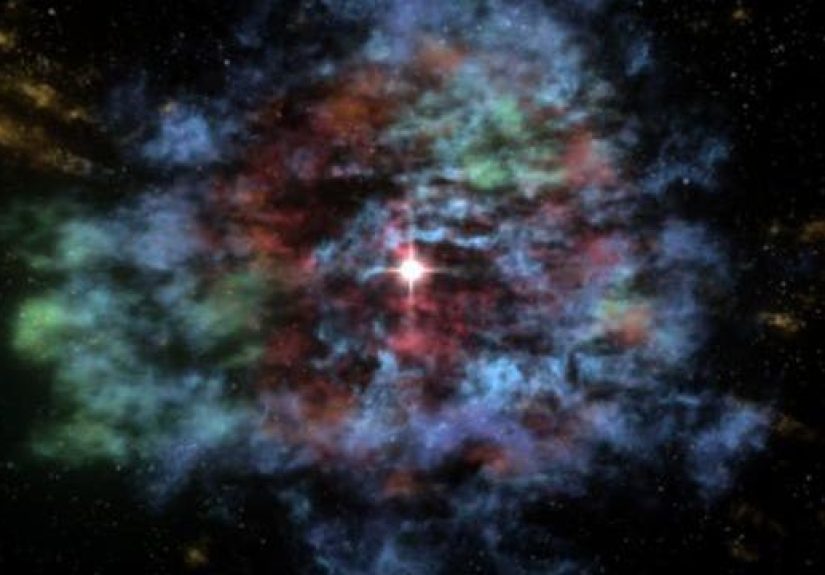
The star in question is not a ghost, a zombie, or a cosmic prankster, even if it behaves like all three. It is part of a growing class of unusual stellar explosions that fade, brighten again, and force scientists to rethink how massive stars die. Two especially fascinating examples help explain the mystery: SN 2018ivc, a supernova that rebrightened after its original explosion, and iPTF14hls, the famous “star that would not die.”
These objects matter because supernovae are not just celestial fireworks. They forge elements, sculpt galaxies, seed space with heavy atoms, and leave behind neutron stars or black holes. In other words, every supernova is both an ending and a beginning. But when one appears to come back to life, astronomers start checking the rulebookand then quietly wondering whether the rulebook was written in pencil.
What Is a Supernova, Really?
A supernova is the colossal explosion of a star. In a core-collapse supernova, a massive star burns through the nuclear fuel that once supported it against gravity. For millions of years, the star exists in a delicate tug-of-war: gravity squeezes inward while heat and pressure from fusion push outward. When the fuel runs low, pressure drops, gravity wins, and the core collapses in a violent instant.
The outer layers then blast into space at incredible speed. The remaining core may become a neutron star, a black hole, or another exotic remnant depending on the mass and structure of the original star. Type II supernovae show hydrogen in their spectra, while stripped-envelope supernovaeTypes Ib and Ichave lost much or all of their hydrogen before exploding.
Normally, a supernova brightens, reaches peak luminosity, and then fades over weeks or months. Astronomers measure this glow as a light curve, which is basically a cosmic heartbeat chart. Most supernovae behave predictably enough that scientists can classify them and compare them to existing models. Then objects like SN 2018ivc and iPTF14hls arrive, toss glitter on the models, and leave everyone squinting at the data.
The Case of SN 2018ivc: A Supernova That Brightened Again
SN 2018ivc was discovered in 2018 in the galaxy Messier 77, also known as NGC 1068, a nearby spiral galaxy roughly 10 million parsecs away in cosmic terms. At first, it looked like an unusual but manageable Type II supernova. It rose quickly, evolved rapidly, and showed signs that the exploding material was interacting with gas around the star.
After its initial glow declined, astronomers kept watching. That decision turned out to be very smart. About a year after the explosion, SN 2018ivc began to brighten again at millimeter wavelengths. This was not the same as simply seeing leftover visible light. The rebrightening was detected through radio and millimeter observations, especially with the Atacama Large Millimeter/submillimeter Array, known as ALMA.
The best explanation is that the supernova debris slammed into a dense shell of material surrounding the star. Imagine a race car speeding through fog and then suddenly hitting a wall of smoke, dust, and cosmic leftovers. The collision energizes particles and produces new emission. The star itself did not literally return to life; rather, its explosion encountered old material that the star had shed before death, causing the fading event to glow again.
Why the Rebrightening Was So Important
The rebrightening of SN 2018ivc gave researchers a rare look at the star’s final centuries before explosion. The surrounding gas, called circumstellar material or CSM, acts like a fossil record. By studying where that material sits and how dense it is, astronomers can estimate when the star lost mass.
In SN 2018ivc, the evidence suggests that the star experienced extreme mass loss roughly 1,500 years before the supernova. That is yesterday on stellar timescales. A leading explanation involves binary interaction: the doomed star likely had a companion whose gravity stripped away part of its envelope. Some of that gas escaped into space and formed the shell that the later supernova blast would strike.
This matters because many massive stars are born in binary systems. Their lives are not solitary candlelit dinners; they are messy gravitational relationships. One star can steal, strip, disturb, or reshape the other. SN 2018ivc may represent a missing link between hydrogen-rich supernovae and hydrogen-poor stripped-envelope explosions.
Meet iPTF14hls: The Star That Would Not Stay Dead
If SN 2018ivc is the supernova that seemed to wake up after fading, iPTF14hls is the full cosmic horror sequel. Discovered in 2014 by the Palomar Transient Factory, it initially looked like a normal Type II-P supernova. Astronomers expected it to brighten, fade over about 100 days, and become another entry in the catalog.
Instead, it stayed bright for years. Even stranger, its brightness rose and fell multiple times. Normal supernovae do not usually behave like a faulty porch light, but iPTF14hls brightened and dimmed at least five times. Then researchers checked archival photographic plates and found evidence of a possible explosion in the same location in 1954. That meant the same star system may have erupted decades earlier and then exploded again.
Scientists considered several explanations, including pulsational pair-instability, a theory involving extremely massive stars that become unstable and eject material in repeated pulses before a final collapse. In that scenario, the star gets so hot that high-energy photons create matter-antimatter pairs, reducing internal pressure and triggering violent contractions and eruptions. It is as if the star coughs up parts of itself before finally collapsing.
But iPTF14hls refused to fit neatly into that theory. Its energy output, temperature behavior, hydrogen signatures, and long duration created problems for existing models. The object became a scientific reminder that stars are not required to respect human categories. Stars do not read textbooks. They are stars. They explode first and let peer review catch up later.
Did the Supernova Really Resurrect Itself?
The phrase “resurrected supernova” is catchy, but it needs careful handling. A dead star is not magically restarting fusion like a laptop after an update. In most cases, the “resurrection” refers to a new burst of brightness after the original explosion faded.
For SN 2018ivc, the likely cause was collision between fast-moving supernova ejecta and older surrounding gas. For iPTF14hls, the puzzle may involve repeated eruptions from an extremely massive star, unusual energy sources, or complex interaction with circumstellar material. The star may not have survived in the ordinary sense, but its explosion history was not simple.
This distinction is important for readers and science communicators. The universe is strange enough without exaggeration. The real story is better than a cartoon zombie star: astronomers are watching the final architecture of massive stars reveal itself through delayed light, radio waves, X-rays, and spectral fingerprints.
Why Circumstellar Material Is the Key Clue
Circumstellar material is gas and dust surrounding a star before it explodes. It can come from stellar winds, unstable eruptions, or a companion star stripping away the outer layers. When supernova ejecta collide with this material, the impact converts kinetic energy into light and radio emission.
That is why late-time observations are so valuable. A supernova’s first flash tells astronomers about the explosion itself. Its later behavior tells them about the star’s environment. If the light curve shows bumps, plateaus, or rebrightening, it may be tracing shells of material lost years, centuries, or millennia before death.
SN 2018ivc is especially useful because its millimeter rebrightening allowed scientists to map the circumstellar environment more cleanly. Millimeter emission can reveal synchrotron radiation, produced when fast electrons spiral through magnetic fields. That emission helps reconstruct the density and structure of material around the dead star.
What These Strange Supernovae Teach Us
1. Massive Stars Often Die Messy Deaths
The old picture of a massive star quietly burning fuel and then exploding once is too simple. Many stars lose large amounts of mass before death. Some shed envelopes. Some erupt. Some have companions that peel them like onions with gravitational consequences.
2. Binary Stars May Shape Many Explosions
Binary interaction may be central to understanding why some supernovae retain hydrogen while others lose it. If one star pulls material from another, the final explosion can look dramatically different from a solitary star’s death.
3. Long-Term Monitoring Matters
SN 2018ivc would have been less mysterious if astronomers had stopped watching after the first fade. The rebrightening appeared later, proving that patience is not just a virtue in astronomyit is a detection strategy.
4. “Weird” Objects Improve the Rules
Anomalies are not annoyances. They are invitations. Objects like SN 2018ivc and iPTF14hls challenge models of stellar evolution, mass loss, supernova shock interaction, and compact remnant formation.
Could More Resurrected Supernovae Be Waiting?
Almost certainly. Modern sky surveys are improving at finding transient events: things that appear, fade, move, or change. Observatories can now detect supernovae early, monitor them across wavelengths, and compare new events with archival data. As radio, X-ray, optical, infrared, and millimeter instruments work together, more delayed rebrightenings may emerge.
Future discoveries may show that resurrected supernovae are not rare exceptions but undercounted members of a broader family. Some may result from binary stripping. Others may involve shells from late-stage stellar eruptions. Still others may point to physics that remains poorly understood.
In plain English: the universe may have a whole shelf of “wait, that star did what?” stories waiting for astronomers to open.
Experiences Related to “A Supernova Resurrected Itself”
Learning about a resurrected supernova is a strangely personal experience for anyone who enjoys astronomy. At first, the story feels like a headline built for clicks. A supernova came back to life? Sure, and Mercury is opening a smoothie bar. But once the science unfolds, the phrase becomes less gimmick and more gateway. It introduces readers to the messy, living process of discovery.
One relatable experience is the feeling of watching a mystery deepen instead of resolve. Many science stories follow a neat pattern: researchers observe a thing, explain the thing, and everyone goes home feeling clever. Resurrected supernovae do not cooperate. SN 2018ivc faded, then brightened again in wavelengths invisible to human eyes. iPTF14hls looked ordinary, then refused to fade properly. These events remind us that nature is not a worksheet with answers printed upside down at the bottom.
Another experience is the thrill of delayed understanding. A supernova’s light may reach Earth millions of years after the actual explosion, and even after detection, the story can take years to interpret. Astronomers return to old images, compare modern observations, and look for patterns across time. In the case of iPTF14hls, archival evidence from 1954 transformed the event from unusual to astonishing. It is like finding an old photograph of someone at a party decades before they were supposed to exist.
There is also a humbling emotional side. A resurrected supernova makes human schedules seem adorable. We worry about deadlines, traffic, inboxes, and whether the leftovers in the fridge have developed political opinions. Meanwhile, a massive star may spend its final thousand years shedding layers into space before exploding into material it prepared long before. Cosmic cause and effect moves on scales that stretch the imagination.
For science writers, this topic is a gift. It has everything: drama, mystery, real data, elegant physics, and just enough spooky language to make readers lean forward. The trick is to keep the fun without misleading the audience. The supernova did not literally rise from the dead. Its light returned because hidden structures around the star were revealed by collision, energy, and time. That truth is more beautiful than the exaggeration.
For students, the lesson is even better: science is not a museum of finished answers. It is a conversation with reality. Sometimes reality whispers. Sometimes it explodes. And sometimes, after everyone thinks the explosion is over, it brightens again and says, “Keep watching.”
Conclusion
A supernova resurrected itself is not just a catchy phrase; it is a window into how massive stars live, lose mass, interact with companions, and die in unexpectedly complicated ways. SN 2018ivc showed astronomers that a fading supernova can brighten again when its debris collides with dense circumstellar material. iPTF14hls showed that some stellar explosions can defy the normal timeline so dramatically that scientists must revisit their assumptions.
These events are not cosmic magic tricks. They are evidence that the final lives of massive stars are more turbulent, more social, and more mysterious than simple models once suggested. Binary companions, ancient shells of gas, shock waves, radio emission, and long-term monitoring all help decode the story.
In the end, resurrected supernovae teach us a wonderfully inconvenient truth: the universe is under no obligation to be predictable. Sometimes the most important discoveries begin with an object that refuses to fade on schedule.