Table of Contents >> Show >> Hide
- What reportedly happened, and why the reaction was so fierce
- Why tattooing a Sphynx cat is especially troubling
- The medical problem: sedation is not a free pass
- Decorative tattoos are not the same as veterinary identification tattoos
- Why so many people saw this as animal cruelty, not “art”
- The internet outrage made sense
- The bigger lesson: pets are companions, not canvases
- Related experiences: why stories like this hit people so hard
- Conclusion
Every so often, the internet stumbles across a story so wildly unnecessary that millions of people, across all political views and attention spans, join hands and say the same thing: absolutely not. This was one of those stories. Reports about a Russian body artist who allegedly gave his hairless Sphynx cat four tattoos triggered exactly the kind of backlash you would expect when a human decides his pet should double as a sketchbook.
The outrage was fast, loud, and surprisingly unified. Animal lovers were upset. Tattoo fans were upset. People who know nothing about cats but know a bad idea when they see one were also upset. In a rare moment of online harmony, the response was essentially this: a cat is not a leather jacket.
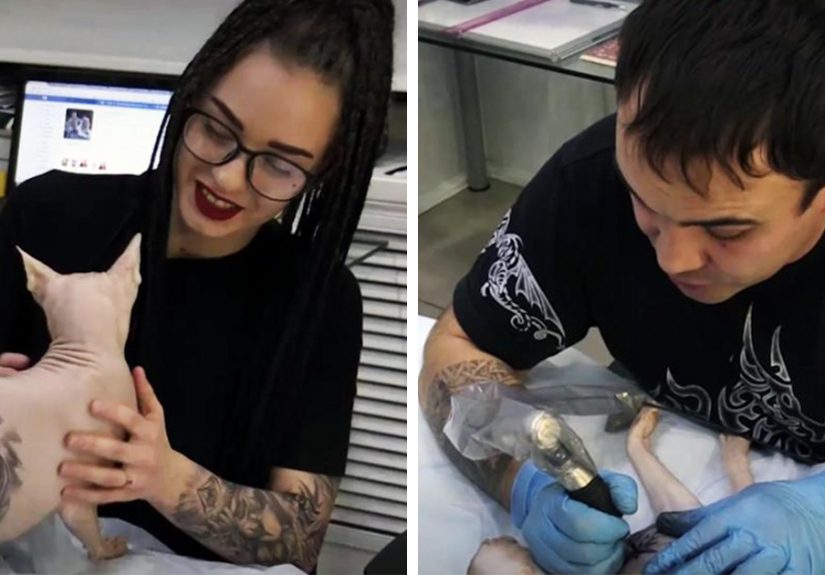
According to widely circulated reports, the artist tattooed his Sphynx cat, named Demon, with several “gangster”-style images on the animal’s chest and sides. He reportedly said the cat had been given pain relief or anesthesia and recovered quickly afterward. That explanation did not exactly calm the crowd. If anything, it made the situation worse. Once people heard that a pet had allegedly been sedated for an elective cosmetic stunt, the story shifted from “gross” to “why on earth would anyone do this?”
What reportedly happened, and why the reaction was so fierce
The basic facts repeated across coverage were fairly consistent: a Russian tattoo enthusiast, a hairless cat, four tattoos, and a wave of public criticism. The images themselves were described as prison-style or criminal-themed designs, including cards, a cigarette, a woman’s face, and a tower. In other words, this was not a veterinary procedure, a medical necessity, or a quirky misunderstanding. It was body art imposed on an animal for aesthetic shock value.
That distinction matters. People are used to debates over piercings, tattoos, cosmetic surgery, and personal expression when adults choose those things for themselves. Consent is the whole engine of that conversation. Strip away consent, and the vibe changes immediately. No one asks a Sphynx cat whether it wants a chest piece. No cat has ever looked thoughtfully into the middle distance and decided it was finally time to commit to a full theme.
That is why the backlash was not just emotional; it was ethical. Critics did not merely find the tattoos ugly or weird. They saw them as a textbook example of turning an animal into an accessory. The cat’s body was treated like a surface, not a living being with nerves, stress responses, and no ability to agree to any of it.
Why tattooing a Sphynx cat is especially troubling
Sphynx cats are often misunderstood because they look a little otherworldly. People see the lack of fur and assume the skin is somehow tougher, simpler, or more “available” than it would be on a fluffy cat. That is backward. Hairless cats require more skin care, not less. Their skin produces oils that are not absorbed by fur, which is why owners often have to wipe them down, bathe them carefully, and monitor irritation. They are also more vulnerable to temperature extremes and sun exposure.
In plain English: hairless does not mean hassle-free. It means the skin is front and center all the time. That makes any unnecessary skin trauma a much bigger deal. A Sphynx is not a blank canvas. It is more like a very sensitive, high-maintenance suede sofa that also has feelings and can run under the bed when annoyed.
That is one reason the story hit such a nerve with veterinarians, breeders, and experienced Sphynx owners. People familiar with the breed know these cats often need gentle shampoos, routine skin maintenance, warmth, and close attention to irritation. Even ordinary care has to be done thoughtfully. So the idea of repeatedly puncturing that skin for decorative purposes felt less like edgy self-expression and more like a giant red flag wearing sunglasses indoors.
The medical problem: sedation is not a free pass
Defenders of shocking pet stories often reach for the same line: the animal was sedated, so it did not feel much, so what is the problem? The problem is that sedation and anesthesia are medical tools, not magic erasers for bad judgment. In cats, anesthesia is a serious event that requires planning, monitoring, and recovery care. Even in clinical settings, experts stress that feline patients carry meaningful risk and must be managed carefully before, during, and after procedures.
That is what makes the reported details so troubling. If a cat is anesthetized for a medically necessary surgery, the benefit may justify the risk. If a cat is anesthetized because its owner wants prison-style tattoos on a hairless torso, the math gets ugly fast. There is no health upside for the animal. No disease is treated. No pain is relieved. No welfare problem is solved. The risk exists entirely to serve a human’s aesthetic impulse.
And that is before you consider healing. Tattooing creates a wound, even when performed skillfully on a consenting human. On an animal with delicate, exposed skin, aftercare becomes even more complicated. Cats groom themselves, rub against surfaces, react to discomfort, and cannot follow instructions like “please stop scratching that area for ten days.” Humans barely follow tattoo aftercare instructions, and they can read.
Decorative tattoos are not the same as veterinary identification tattoos
One of the smartest ways to cut through the noise here is to separate two very different things that both use the word “tattoo.” In veterinary medicine, simple tattoos may be used for identification, such as marking that an animal has been spayed or neutered. These marks are functional, minimal, and tied to medical or shelter-management needs. They are not decorative flourishes. They are not status symbols. They are not there because someone thought a cat would look cooler with a little criminal-chic energy.
That difference is not a technicality. It is the difference between a practical medical marker and elective body modification for entertainment. Once you blur that line, the conversation gets silly in a hurry. Yes, a veterinary tattoo exists. No, that does not mean your pet should be getting custom artwork like it just booked an appointment at a trendy downtown studio.
Why so many people saw this as animal cruelty, not “art”
Animal welfare conversations have changed dramatically over the last decade. More people now understand pets as sentient companions, not property in the old-fashioned sense of “my animal, my rules.” The law still varies by jurisdiction, but the moral culture has shifted. Americans, in particular, are increasingly suspicious of any behavior that causes pain, fear, or risk to an animal for vanity, social media attention, or shock value.
That is why this story resonated far beyond cat owners. It pushed on a broader cultural nerve: the point where personal branding becomes cruelty. There is a limit to the “it’s my lifestyle” defense, and many readers felt the artist blew past it at high speed. The tattoos were not funny, meaningful to the cat, or harmlessly eccentric. They were widely seen as an example of a person using an animal’s body to amplify his own image.
Even tattoo enthusiasts who normally defend body art were uncomfortable. Modern tattoo culture, at its best, is rooted in agency, identity, memory, and ownership of one’s own body. This case flips that idea inside out. There is no agency. No shared ritual. No personal story from the animal. Just a human making a permanent visual choice for a creature that cannot object except by being a cat, which usually means glaring and leaving.
The internet outrage made sense
Sometimes internet anger is performative. This did not feel like one of those times. The public reaction made sense because the ethical problem was not subtle. A pet was reportedly subjected to a nonessential, painful, and risky cosmetic act. The fact that the pet was a Sphynx made the images more visible, but visibility was not the core issue. If anything, the hairlessness made the discomfort easier for everyone else to imagine.
There is also a reason these stories keep reappearing in headlines. Similar outrage has followed other reports of tattooed hairless cats, including an earlier Russian case and, years later, a tattooed Sphynx rescued in Mexico. Each story lands the same way because the public instinct is fairly consistent: animals do not exist to participate in human shock art.
The bigger lesson: pets are companions, not canvases
The story of Demon the tattooed cat stuck with people because it raised a very simple question with a very simple answer. Just because you can do something to an animal does not mean you should. That idea sounds obvious, but apparently it still needs repeating in the age of viral content and attention-chasing stunts.
A good rule for pet ownership is this: if the main benefit of an action goes to your ego, your aesthetic, your online engagement, or your desire to shock strangers, while the animal gets pain, risk, or stress, you are probably already in the wrong lane. Pets are not props. They are not branding opportunities. And they definitely do not need an image consultant.
In the end, the public was not “overreacting” to a quirky story. People were reacting to a pretty straightforward failure of judgment. The reason they were not okay with it is the same reason the story still circulates years later: most people understand, instinctively and correctly, that love for an animal should look like care, comfort, safety, and respect. Not four tattoos and a press cycle.
Related experiences: why stories like this hit people so hard
If you talk to people who actually live with Sphynx cats, one theme comes up again and again: these animals require patience, routine, and a surprising amount of tenderness. Owners learn quickly that hairless cats are not novelty items. Their skin gets oily. Their ears need attention. Their bodies get cold. A missed bath or the wrong cleanser can lead to irritation, and too much bathing can cause dryness. So when people see a Sphynx tattoo story, they are not reacting only to the image. They are reacting to the mismatch between what the breed needs and what the human chose to do.
Veterinary professionals tend to view similar stories through a different lens, but they usually land in the same place. They know anesthesia is not casual. They know skin trauma is not theoretical. They know aftercare on a cat is not simple, especially when the skin is already delicate and fully exposed. To them, the phrase “the cat recovered quickly” does not magically settle the matter. A patient surviving a questionable choice does not transform that choice into a responsible one.
Rescue workers and animal advocates also recognize a pattern here. Strange animal stories often begin with a human wanting attention more than accountability. Sometimes it is dye, sometimes it is costume culture taken too far, sometimes it is cosmetic surgery, and sometimes it is body modification. The specifics change, but the logic is familiar: the animal becomes a stage for the owner’s identity. That is why these stories draw such fierce reactions. People are not only upset by one act; they are pushing back against a broader habit of treating pets like extensions of personal branding.
Even tattoo artists have commented on cases like this with visible discomfort. In human tattoo culture, the most respected artists usually talk about trust, consent, preparation, aftercare, and long-term meaning. Those values do not translate to forcing art onto an animal. In fact, they highlight the ethical gap. A tattoo is meaningful in part because a person chooses it. Remove the choice, and what remains is not self-expression. It is control.
Then there is the ordinary pet-owner reaction, which may be the most telling of all. People imagine their own cat shivering on a metal table, confused, restrained, or recovering from something it never needed. That mental picture cuts through internet irony very quickly. You do not need to be an expert in animal law, feline dermatology, or tattoo culture to understand why that feels wrong. You just need a basic sense of empathy.
That may be the real reason stories like this stay alive online. They trigger something more durable than outrage: they remind people what responsible care is supposed to look like. A beloved animal is fed, warmed, protected, cleaned gently, taken to the vet when necessary, and left blissfully free of its owner’s performance art phase. For most readers, that is the whole case in one sentence. And honestly, it is a strong sentence.
Conclusion
The controversy over the tattooed Sphynx cat was not about prudishness, panic, or internet pile-ons. It was about a line most people believe should be obvious: an animal’s body is not there for decorative experimentation. When a story like this explodes, it is because the public can tell the difference between care and vanity. This case landed on the wrong side of that divide, and people responded exactly the way you would expect when empathy beats spectacle.