Table of Contents >> Show >> Hide
- Why Fake Wasp Nests Get So Much Attention
- Do Fake Wasp Nests Actually Work?
- Know Your Enemy Before You Hang Anything
- Why the Decoy Idea Makes Sense in Theory
- When a Fake Wasp Nest Is Worth Trying
- When a Fake Wasp Nest Will Probably Disappoint You
- How to Use a Fake Wasp Nest Smarter
- Other Wasp Prevention Methods That Usually Matter More
- Should You Remove Every Wasp Nest?
- The Bottom Line
- Extra: Real-Life Experiences and Practical Takeaways
There are two kinds of people in summer: the ones sipping lemonade in peace, and the ones performing a full-body interpretive dance because something striped just buzzed past the patio. If you fall into the second group, you have probably seen fake wasp nests marketed as the simple, chemical-free answer to your outdoor drama. Hang one up, the theory goes, and territorial wasps will take one look, mutter “neighborhood’s full,” and move along.
It is a clever idea. It is also not the universal miracle some product listings make it sound like. Still, that does not mean fake wasp nests are useless. In the right setting, at the right time, and against the right kind of wasp, a decoy nest can be a smart preventive tool. The key word is preventive. Think of it less like an invisible shield and more like a “no vacancy” sign that may discourage certain stinging insects before they settle in.
If you want the honest version, here it is: fake wasp nests can be worth trying, especially if paper wasps keep choosing your porch eaves like they are booking the same summer rental every year. But they work best when paired with common-sense wasp prevention, accurate insect identification, and realistic expectations. Because not every wasp cares about your decoy, and some of the most annoying offenders do not even nest in places that a hanging fake nest is meant to mimic.
Why Fake Wasp Nests Get So Much Attention
The idea behind a fake wasp nest sounds almost too neat. Social wasps defend nesting territory, so a realistic decoy might signal that another colony already claimed the area. Homeowners love the concept because it is tidy, non-toxic, easy to hang, and much less dramatic than spraying aerosols while whispering, “Please don’t sting me.”
That appeal is real, especially for families with kids, pets, outdoor dining spaces, vegetable gardens, fruit trees, pergolas, sheds, and front porches that seem to attract wasps the moment the weather turns warm. A fake nest also fits nicely into the growing interest in non-chemical pest control. No odors. No residue. No need to turn your backyard barbecue into a hazmat event.
And yet, the truth is more complicated. Wasps are not one-size-fits-all pests. “Wasp” is an umbrella term covering insects with very different nesting habits, behavior, and tolerance for neighbors. A decoy that may discourage one species can be ignored completely by another. That is why homeowners sometimes swear by fake nests while their neighbor says, “Mine became a decorative accessory for the real wasps.”
Do Fake Wasp Nests Actually Work?
The best answer is: sometimes, but not reliably enough to treat them as your only line of defense. A fake wasp nest is most plausible as an early-season deterrent for species that build exposed paper nests in visible places. That usually means paper wasps are the main target, with some homeowners also hoping to discourage aerial nest builders like bald-faced hornets.
Where fake nests fall apart is when people expect them to solve every stinging insect problem. Yellowjackets often nest underground, inside wall voids, or in hidden cavities. A hanging decoy may look impressive to you, but it does not mean much to an insect scouting a rodent burrow under the shrubs or a gap behind your siding. In other words, if your summer enemy rises from the lawn like a tiny angry jet squadron, your fake nest may be about as persuasive as a throw pillow.
There is another important limit: decoys are not a removal tool. If a colony is already established, hanging a fake nest nearby will not convince it to pack up and relocate. Once a nest is active, workers are focused on feeding larvae, defending the colony, and expanding the nest. At that point, the “another nest is here” signal has arrived very, very late to the meeting.
So yes, fake wasp nests can help in some cases. No, they are not magic. The homeowners who get the best results usually use them early, target likely paper wasp nesting spots, and combine them with better sanitation and routine inspections.
Know Your Enemy Before You Hang Anything
Paper Wasps
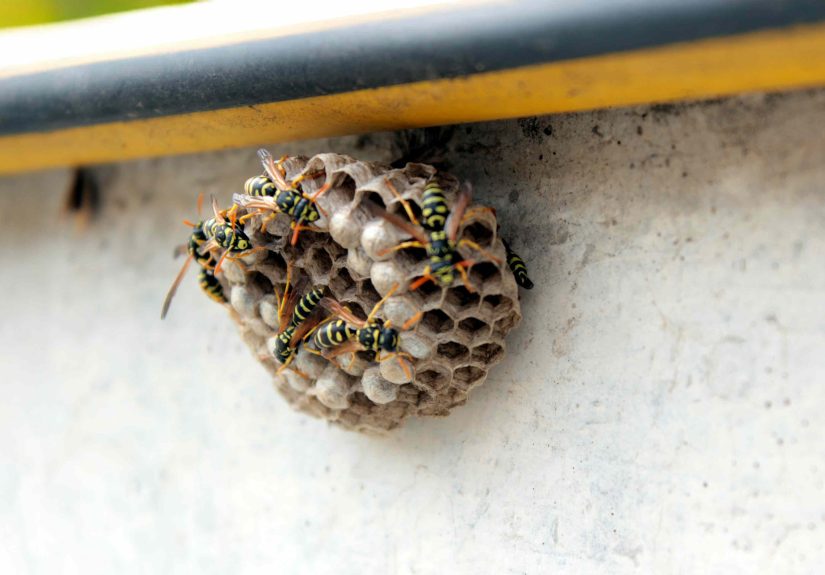
Paper wasps are the classic porch troublemakers. They build open, umbrella-like paper nests under eaves, railings, light fixtures, deck roofs, shutters, and other protected horizontal surfaces. They are generally less aggressive than yellowjackets, but they will defend a nest if disturbed. If you have ever accidentally stood under one while reaching for a broom, you already know this lesson comes with sound effects.
These are the insects most likely to make a fake wasp nest seem useful. Their nests are visible, their queens begin scouting in spring, and they often return to the same types of sheltered structures year after year. If decoys are going to influence behavior at all, this is where the strategy makes the most sense.
Yellowjackets
Yellowjackets are the summer villains of picnics, trash cans, sugary drinks, and panic-filled lawn mowing. Many species build enclosed nests underground, while others use wall voids or other hidden spaces. They are more likely than paper wasps to scavenge human food, and they tend to become especially obnoxious in late summer and early fall when colonies are large and natural food is scarcer.
This is the group fake nests often fail to manage. A hanging decoy might look like a rival paper structure, but a yellowjacket queen searching for a cavity underground or inside a wall is playing a different real estate game.
Bald-Faced Hornets and Other Aerial Nesters
Bald-faced hornets build large, enclosed paper nests in trees, shrubs, or on structures. They are impressive, highly defensive, and absolutely not something you want to antagonize for sport. Some decoy nests are shaped more like hornet nests than paper wasp nests, which is one reason people assume they will work broadly. The problem is that broad assumptions are where backyard pest control begins to drift into folklore.
A decoy might discourage a scout in a very specific situation, but there is no strong reason to assume every aerial nester will interpret it the way marketers hope. That is why fake nests are best treated as a low-risk experiment, not a guaranteed outcome.
Why the Decoy Idea Makes Sense in Theory
The theory is not ridiculous. Wasps do defend nest sites. Colonies are not eager to share space with close competitors. Social wasps also rely heavily on visual cues and location when nesting. So the idea that a queen scouting a porch beam might avoid a spot that appears occupied is at least biologically plausible.
But biology rarely rewards oversimplification. A fake nest only helps if three things line up. First, the species must care about the kind of nest you are imitating. Second, the decoy has to be in place before nesting starts. Third, the wasp has to decide your fake is convincing enough to skip the site. That is a lot of “ifs” for one paper lantern with ambition.
Still, because decoys are inexpensive and non-chemical, they can be part of a reasonable prevention plan. They just should not be the whole plan.
When a Fake Wasp Nest Is Worth Trying
A fake wasp nest makes the most sense when you are dealing with repeated early-season paper wasp activity around visible, sheltered structures. Good candidates include porches, pergolas, covered patios, sheds, barns, playhouses, garage overhangs, and deck roofs where queens start scouting in spring.
It is also worth trying if you prefer non-chemical prevention and your issue is minor or recurring rather than severe. Hanging a decoy before queens settle can be a low-effort first step. If it works, great. If it does not, you have lost very little besides a few dollars and perhaps a bit of pride.
Decoys are especially useful for people who want to reduce the chance of nest building in high-traffic areas without automatically wiping out every wasp in the yard. That is a more balanced approach, since many wasps are beneficial predators that help control caterpillars, beetles, flies, and other garden pests.
When a Fake Wasp Nest Will Probably Disappoint You
A fake nest is unlikely to solve the problem when:
- You already have an active nest.
- Your main problem is yellowjackets nesting underground or in walls.
- Food attractants are everywhere, from open trash to fallen fruit to sweet drinks on the patio table.
- Your home has gaps, cracks, and voids that invite queens to start nests in hidden spaces.
- You expect one decoy to protect a large property without any other prevention steps.
Put simply, if your yard is screaming “free snacks and premium housing,” a fake nest alone is not going to save the day.
How to Use a Fake Wasp Nest Smarter
If you want to give the decoy strategy a fair shot, timing matters more than almost anything else. Put the fake nest up in early spring, before queens establish new nests. Once workers appear and the colony gets rolling, the window for easy prevention has mostly closed.
Place the decoy near the sheltered areas where wasps typically try to build, such as under eaves, patio covers, porch ceilings, garage openings, and similar protected spots. Keep expectations focused on those locations rather than your entire yard. The goal is not to make your property a wasp-free moon colony. The goal is to discourage nesting in the places where people spend time.
Also, inspect those areas regularly. If you spot a tiny starter nest with just a founding queen early in the season, prevention is much easier than waiting until the nest grows and the workers arrive. Small problems are polite. Large wasp colonies are not.
Other Wasp Prevention Methods That Usually Matter More
If you want fewer wasps around your house, the heavy lifting usually comes from habitat and food management. That means:
- Keeping trash cans sealed and clean.
- Covering drinks and food during outdoor meals.
- Picking up fallen fruit and harvesting ripe fruit promptly.
- Keeping pet food from sitting outside.
- Sealing cracks, holes, and crevices in siding, eaves, foundations, and wall openings.
- Checking shutters, light fixtures, hollow furniture, and overhangs for early nest activity.
These steps are not glamorous, but they address the real reasons wasps keep coming back. If a fake nest is the “please move along” sign, sanitation and exclusion are the actual locks on the door.
Should You Remove Every Wasp Nest?
Not necessarily. This is where homeowners can save themselves effort and save the yard some helpful predators too. Many paper wasps are beneficial in gardens because they hunt caterpillars and other plant-eating insects. Wasps also feed on nectar and can contribute to pollination. If a nest is small, tucked away, and not near a doorway, patio chair, children’s play area, or walkway, leaving it alone may be the smartest move.
The decision changes when the nest is in a high-traffic area, near someone with a sting allergy, or inside a structure. Large aerial nests, wall void nests, and aggressive yellowjacket sites are better handled with extreme caution or by a licensed professional. There is no award for “Most Determined DIY Battle With A Hornet Colony.”
The Bottom Line
Fake wasp nests might be your best defense only if your real problem is early-season nesting by paper wasps in obvious places around the home. In that narrow lane, they are affordable, low-risk, and worth a try. But the broad internet claim that one decoy can keep all stinging insects away is more wishful thinking than dependable pest control.
The smartest strategy is layered: identify the species, hang a decoy early if paper wasps are your recurring issue, reduce food attractants, seal entry points, and monitor likely nesting sites before colonies expand. That approach is far more effective than hoping one paper prop will convince every wasp in the neighborhood to respect your boundaries.
So yes, fake wasp nests can earn a spot in your toolbox. Just do not expect them to do the whole job while the trash can stays sticky, the peaches rot under the tree, and a yellowjacket colony is plotting under the mulch. Even the best decoy has limits. Summer, as always, remains humbling.
Extra: Real-Life Experiences and Practical Takeaways
In real life, people tend to have very different experiences with fake wasp nests, and those differences usually come down to timing, species, and what else is happening around the property. A homeowner with a covered porch may hang a decoy in early spring and notice that paper wasps stop choosing the same porch beam they used last year. That person becomes a true believer and tells everyone at the neighborhood cookout. Fair enough. In that case, the decoy may have helped because queens were still scouting, the nesting spots were visible, and the householder caught the problem before a colony was established.
Then there is the opposite experience. Someone hangs a fake nest in June, right after finding wasps around the deck. A week later, there is still wasp traffic, and by July they discover the real issue is yellowjackets entering a gap near the foundation or nesting in the ground near the patio. The decoy did not “fail” so much as it was asked to solve the wrong problem. That is one of the most common frustrations: the product promised a universal fix, but the insect did not read the marketing.
Gardeners often have the most balanced view. Many of them notice that paper wasps are annoying near doors, sheds, or potting benches, yet still appreciate that these wasps hunt caterpillars and other plant pests. For them, a fake nest can feel like a compromise. It may redirect nesting away from the seating area without turning the whole backyard into a no-insect zone. That is usually the sweet spot for this strategy: lowering conflict, not declaring war on every wasp in the zip code.
Another common experience involves people who pair a decoy with actual prevention. They hang the fake nest early, keep trash lids shut, cover sweet drinks, seal openings around eaves and siding, and knock down tiny starter nests before workers emerge. Those homeowners often report better results, not because the decoy is secretly magical, but because the decoy is part of a larger plan. In pest control, boring teamwork almost always beats one flashy gadget.
Parents with kids’ play areas also tend to like fake nests for one simple reason: they are easy and low drama. A decoy over a swing set or near a playhouse feels safer and calmer than spraying chemicals around places where children spend time. That said, the best practical takeaway is still to inspect these areas often. A quick weekly check under roofs, rails, and corners can prevent a tiny nest from becoming a full-on buzzing landlord dispute.
The most useful lesson from all these experiences is this: fake wasp nests work best when you treat them as a preventive nudge, not a guaranteed cure. They can help in the right conditions. They can do nothing in the wrong ones. And they are far more likely to earn their keep when you know which wasp you are dealing with and remove the things attracting it in the first place. That is not as exciting as a miracle hack, but it is the kind of advice that saves more patios, picnics, and peaceful afternoons.