Table of Contents >> Show >> Hide
- What Makes The Mill Different?
- The Story Behind The Mill
- The Design: Why "Bright and Messy" Works
- The Toast That Became a San Francisco Legend
- Bread First, Always
- Coffee That Refuses To Be a Sidekick
- The Mill and the San Francisco Conversation
- How To Experience The Mill Like a Smart Visitor
- Extended Experience: What a Morning at The Mill Feels Like
- Conclusion
San Francisco has never been shy about turning humble food into high theater. Soup gets a backstory. Coffee gets tasting notes. Toast gets debated like zoning law. And right in the middle of that wonderfully overcaffeinated civic personality sits The Mill, a San Francisco cafe and bakery that somehow manages to feel both iconic and neighborhood-specific at the same time.
Located on Divisadero, The Mill is one of those places people describe in a dozen different ways depending on what they love most. Some call it a coffee shop. Some call it a bakery. Some call it the home of the city’s most talked-about toast. Design lovers talk about its bright interior and warm woods. Bread obsessives talk about whole grains, natural fermentation, and a crust that snaps with authority. Everyone else just says some version of, “Yes, yes, I know it’s expensive, but have you actually tasted it?”
That is the magic of The Mill. It is stylish without feeling sterile, serious about craft without becoming joyless, and famous enough to attract pilgrims while still working like a real neighborhood cafe. In a city that often gets caricatured for its artisanal habits, The Mill feels like proof that the best local institutions are never just about trends. They are about consistency, personality, and a clear point of view. At The Mill, that point of view starts with flour, coffee, light, and an unapologetic belief that simple food can be extraordinary when every detail gets its due.
What Makes The Mill Different?
The easiest answer is that The Mill is really two businesses under one roof: Josey Baker Bread runs the bakery side, while Four Barrel Coffee runs the cafe operation. That partnership gives the place its defining rhythm. Bread and coffee are not separate departments awkwardly sharing rent. They are the whole identity. You smell the bakery, see the baristas, and understand the concept before anyone explains it.
That arrangement matters because The Mill is not trying to be everything for everyone. It does not win people over with a sprawling menu that reads like a small novel. Instead, it leans hard into its strengths: house-baked bread, carefully prepared coffee, beautiful toast, pastries, loaves to take home, and a room that makes hanging out feel like part of the meal. In other words, it succeeds by having taste, not just by selling it.
There is also a practical reason The Mill stands out in the crowded San Francisco cafe scene: it makes the process visible. The bakery is not hidden away like a backstage mystery. The production areas have long been part of the visual experience, reinforcing the point that the craft is the attraction. You are not just buying a slice of toast. You are buying into a food philosophy where grain, fermentation, milling, and technique actually matter.
The Story Behind The Mill
A bakery rooted in real bread culture
Part of The Mill’s staying power comes from the story behind Josey Baker Bread itself. Josey Baker started baking out of his Mission apartment in 2010, and the company has grown from that modest beginning into a larger bread operation known for whole-grain loaves, naturally leavened baking, and a strong sense of personality. That origin gives the place credibility that no branding agency could fake. The bread was not invented for Instagram. It came from actual obsession, repetition, and flour on the counter.
The Mill’s own name points directly to that craft. The mill is not just decorative branding; it refers to the equipment used to grind whole-grain flour on site. That detail changes how people think about the place. Many cafes sell baked goods from elsewhere. The Mill makes breadmaking central to the identity of the room, which is a big reason it has remained so memorable in San Francisco food culture.
A neighborhood idea, not just a business idea
Before The Mill opened, the team behind it reportedly went into the neighborhood, talked to people, and listened. Residents wanted a cafe, yes, but they also wanted a bakery. That sounds small until you realize how many modern food businesses launch from abstract branding decks rather than real neighborhood conversations. The Mill feels anchored because, from the beginning, it was shaped by the idea of becoming part of Divisadero’s daily life.
That local energy showed up fast. The cafe drew lines early on and became a hub for residents, visitors, laptop users, families, friends, and anyone chasing excellent coffee and thick slices of toast. Plenty of places get buzz. Fewer turn that buzz into a long-term identity that still feels recognizably local.
The Design: Why "Bright and Messy" Works
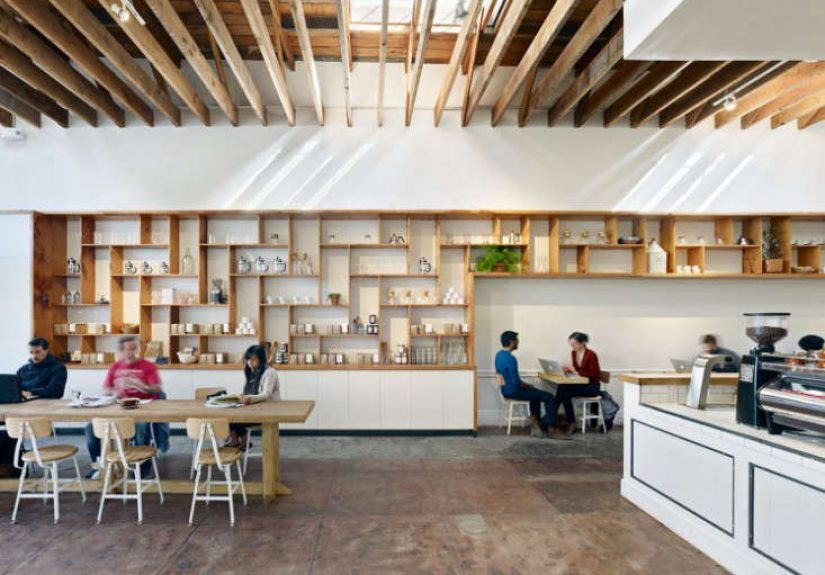
If The Mill were only famous for toast, it would probably have faded into food-trend trivia by now. What keeps it relevant is that the space has its own emotional logic. The design has been described as inspired by that first bright, warm, slightly messy San Francisco kitchen you might have loved in an old Victorian apartment. That reference is surprisingly perfect. The Mill does not feel like a slick showroom pretending to be homey. It feels like someone took the soul of a beloved kitchen and gave it better bread and better lighting.
The interior balances airy white walls with a layered mix of wood, including white oak, Douglas fir, and ash. Skylights and ceiling beams help pull natural light through the long space, while reclaimed wood shelving adds warmth and texture. The result is clean but not cold, polished but not precious. It is the kind of room where design-minded people notice the details, while everyone else simply thinks, “This place feels good.”
That matters more than it sounds. In a city full of cafes designed either for speed or for aesthetics, The Mill feels designed for inhabiting. You can imagine a quick coffee stop there, but you can also imagine reading, chatting, people-watching, or debating whether buying a loaf for later counts as self-control. It absolutely does.
The Toast That Became a San Francisco Legend
Yes, we have to talk about the toast. The Mill became nationally famous when its now-notorious $4 toast entered the public imagination as a symbol of modern San Francisco. Some people treated it like evidence of culinary enlightenment. Others treated it like a sign the city had fully wandered off into artisanal absurdity. In classic San Francisco fashion, both camps were a little dramatic.
The truth is simpler: The Mill helped prove that toast could be a real dish when the bread is exceptional and the toppings are handled with intention. That seems obvious now, in a world where every cafe has some kind of elevated toast moment, but The Mill was early enough and distinct enough to help define the category. Thick slices, serious bread, sharp seasoning, seasonal creativity, and a willingness to let texture do the talking turned something basic into something destination-worthy.
And the menu has never been only about nostalgia or irony. The combinations are what keep the idea alive. Avocado mash gets treated with restraint rather than chaos. Cream cheese and pesto lands with bold, peppery punch. Sweet options like cinnamon sugar and butter appeal to the part of your brain that still wants breakfast to feel like a reward. Seasonal specials keep things moving so the menu can evolve without losing its core identity.
That is why the toast conversation refuses to die. It was never just about price. It was about value, craft, and whether simple food deserves to be taken seriously. The Mill answered that question with a confident, buttered yes.
Bread First, Always
The real star of The Mill is not a topping. It is the bread. This is where the cafe separates itself from trend-chasing imitators. Great toast without great bread is just warm disappointment. The Mill’s bread carries a whole-grain character that gives it nuttiness, chew, and actual personality. It is built to hold up under toppings, but it is just as compelling on its own.
Josey Baker Bread has earned praise beyond the cafe itself, and for good reason. The operation bakes hundreds of loaves a day, mills flour daily, and continues to anchor the business in techniques that respect grain rather than flatten it into bland uniformity. In a market flooded with “artisan” labels, The Mill still feels artisanal in the literal sense: made by people with skill, judgment, and a stubborn commitment to quality.
That commitment also explains why customers often leave with more than breakfast. The Mill is the kind of place where someone comes in for coffee, orders toast, then spots a handsome loaf on the shelf and suddenly decides they are the kind of person who makes excellent sandwiches at home. Sometimes that transformation lasts until Tuesday. Sometimes it lasts until the loaf is gone. Either way, The Mill wins.
Coffee That Refuses To Be a Sidekick
In lesser bakeries, coffee exists mainly to escort the pastry. At The Mill, the coffee has equal billing. Four Barrel Coffee brings serious specialty-coffee credibility to the partnership, and that balance is a big part of why the cafe works so well. The coffee program does not feel tacked on to flatter the bread, and the bread does not feel like an upscale snack rack for caffeine. Each side sharpens the other.
That pairing matters especially in San Francisco, where coffee culture is competitive, opinionated, and occasionally treated like a contact sport. The Mill survives in that environment because it respects the ritual. You can go simple with drip coffee and be rewarded. You can order a latte and get something carefully made rather than phoned in. And because the room is so open and visually connected, the act of making coffee becomes part of the energy of the place.
The result is a cafe experience that feels complete. You are not choosing between a serious bakery and a serious coffee shop. You are getting both in a single, highly coherent setting, which is a lot rarer than it should be.
The Mill and the San Francisco Conversation
No honest article about The Mill should pretend it exists outside the broader conversation about San Francisco. The cafe’s famous toast became shorthand in debates about affordability, food culture, and the changing identity of the city. For a while, a single slice of toast carried more symbolic baggage than most city council meetings.
But what makes The Mill interesting is that the story never stayed that simple. Over time, it became clear that reducing the place to a punchline missed the point. It is easy to mock a price tag; it is harder to dismiss a business that actually makes things well, builds community, and becomes part of neighborhood life. The Mill ended up representing both the anxieties and the aspirations of modern San Francisco: expensive, yes; self-aware, usually; but also deeply invested in craft, place, and good daily rituals.
That tension is probably one reason the cafe still has cultural staying power. It is not just a place to eat. It is part of the city’s self-image, for better and for funnier.
How To Experience The Mill Like a Smart Visitor
If you are heading to The Mill for the first time, do not overcomplicate it. Start with a signature toast and a coffee. Let the bread lead. The classic move is to choose something that highlights contrast: creamy and peppery, sweet and salty, or rich and herbal. Then take a moment to notice the room, because the design is part of the experience, not background wallpaper.
If you are more bread-minded than cafe-minded, buy a loaf to take home. The Mill’s appeal extends beyond the toast menu, and its bakery identity is a big part of what separates it from generic brunch culture. If timing lines or crowds matters to you, approach it like any beloved San Francisco food spot: go with patience, reasonable expectations, and the understanding that hype tends to form around places that deliver something memorable.
And if you are hoping for one of the cafe’s side traditions, it is worth remembering that Monday Night Pizza, once a notable community draw, is currently on hiatus according to the official site. That little detail says a lot about The Mill, too. It has always been more than one thing at once: bakery, coffee bar, neighborhood ritual, bread laboratory, and social magnet.
Extended Experience: What a Morning at The Mill Feels Like
Walk into The Mill on a cool San Francisco morning and the first impression is not loud. It is bright. The light lands softly across the white walls and wood surfaces, and the room feels awake before it feels busy. Then the other details start arriving one by one: the scent of fresh bread, the hiss of espresso, the shuffle of customers deciding whether they are being practical or whether today is obviously a toast day.
The counter experience has its own rhythm. Some people know exactly what they want and order like veterans. Others stare at the menu with the expression of someone realizing toast has become emotionally complicated. Do you go savory? Sweet? Something familiar? Something seasonal? The smart answer is usually to choose the thing that sounds a little more exciting than your normal breakfast. The Mill is not the place for timid food decisions.
Then you wait, which turns out to be part of the pleasure. Unlike chain coffee shops designed to move you through like luggage, The Mill gives you things to look at. There are loaves on display, pastries tempting your self-discipline, baristas at work, and fellow customers performing the universal San Francisco ritual of pretending they are very chill about waiting for beautiful carbs. Nobody is fooling anyone, and that is part of the charm.
When the food arrives, the scale of the toast is always slightly funny in the best way. It is not dainty. It is not an afterthought. It lands like a proper plate, with real heft and texture. The crust has presence, the crumb has character, and the toppings feel like they were chosen by someone who understands that contrast is a form of happiness. You take the first bite and immediately understand why The Mill became a thing. Not a fad. A thing. A place with a capital P in the personal map people keep of San Francisco food.
The coffee works similarly. It does not beg for attention because it does not need to. It is competent, balanced, and deeply woven into the identity of the room. A latte looks elegant without trying too hard. A drip coffee feels like an adult decision. On a foggy day, either one makes the room seem warmer, which is no small accomplishment in San Francisco.
And then there is the social atmosphere. The Mill is one of those cafes where people seem to arrive with different agendas and somehow all fit together. You have solo visitors with books, pairs of friends catching up, parents negotiating breakfast diplomacy, regulars swinging by for bread, and out-of-towners quietly performing reconnaissance on what “real San Francisco” is supposed to feel like. The answer, at least here, is a little design, a little chaos, a lot of grain, and excellent coffee.
By the time you leave, the experience lingers in a very specific way. It is not just that the food was good. It is that The Mill makes everyday rituals feel composed without feeling staged. You remember the light. You remember the toast. You remember that odd moment of civic affection when a city’s obsession with bread suddenly seems not ridiculous at all. And if you walk out carrying a loaf, well, congratulations: The Mill has done to you exactly what it has done to generations of visitors before.
Conclusion
The Mill remains one of the best examples of what a San Francisco cafe can be when concept and execution actually match. It is visually memorable, deeply rooted in bread craft, powered by strong coffee, and smart enough to turn simple food into something worth talking about. More importantly, it still feels alive as a place, not preserved as a food-trend relic.
For locals, The Mill is a dependable ritual with personality. For visitors, it is a crash course in the city’s strengths and contradictions: creativity, craftsmanship, neighborhood identity, and a tendency to turn breakfast into philosophy. For anyone who loves bakeries, coffee culture, or thoughtfully designed spaces, The Mill is not just a stop on Divisadero. It is a slice of San Francisco itself, toasted just right.