Table of Contents >> Show >> Hide
- Why an Under Stairs Playhouse Works So Well
- What Cedar Shake Shingles Add to the Design
- How to Plan the Layout Before You Build
- Design Features That Make It Feel Like a Real Tiny House
- Best Materials for an Under Stairs Playhouse With Cedar Shake Shingles
- Kid-Safe Design Rules You Should Not Skip
- Style Ideas That Make the Space Feel Special
- Storage and Function: The Difference Between Cute and Useful
- Common Mistakes to Avoid
- Experience and Real-Life Lessons From an Under Stairs Playhouse With Cedar Shake Shingles
- Conclusion
There are two kinds of space under a staircase: the kind that collects mystery socks and half-used batteries, and the kind that becomes the most charming little room in the house. An under stairs playhouse with cedar shake shingles belongs firmly in the second category. It is whimsical, practical, and just dramatic enough to make guests stop mid-sentence and say, “Wait, is that a tiny house under your stairs?” Yes. Yes, it is.
This idea works because it blends smart small-space design with storybook charm. The footprint is already there. The triangular shape feels playful by default. And cedar shake shingles add cottage character that makes the finished project look less like “we had an awkward gap” and more like “we commissioned a tiny architect with excellent taste.”
If you want to create a built-in kids’ nook that feels custom, cozy, and worthy of approximately 4,000 family photos, this guide walks through the design approach, best materials, safety must-haves, and styling tricks that make an under-stairs playhouse work in real life.
Why an Under Stairs Playhouse Works So Well
The area beneath a staircase is one of the most overlooked opportunities in a home. It is often shallow on one end, taller on the other, and oddly shaped enough to scare off lazy design. But for a child-sized playhouse, that quirky geometry is actually a gift. Kids do not need full-height ceilings, and a slightly tucked-away space naturally feels magical. Adults call it “underutilized square footage.” Children call it “my secret house.”
An under stairs playhouse can function as a reading nook, pretend kitchen, dollhouse headquarters, mini market, LEGO station, or quiet retreat for coloring and daydreaming. It can also evolve over time. What begins as a playhouse for preschoolers can later become a homework cave, book nook, or display alcove for older kids. That flexibility makes the project easier to justify, especially if you are trying to explain the budget to another adult in the household who is pretending not to love the idea.
What Cedar Shake Shingles Add to the Design
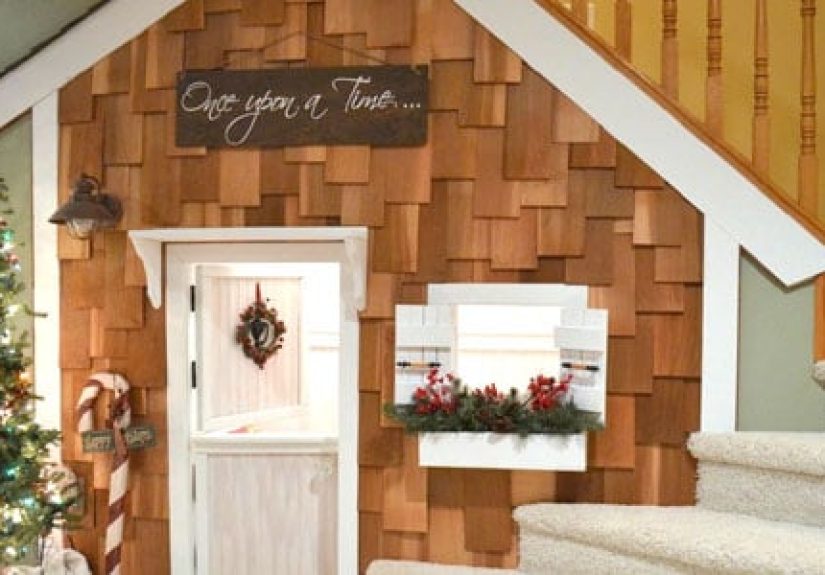
The words “cedar shake shingles” do a lot of heavy lifting here. They instantly create texture, warmth, and that classic cottage look people usually associate with Cape Cod homes, garden sheds, and dreamy backyard playhouses. Even a simple under-stair opening can feel like a miniature house once the façade is wrapped in cedar-style detail.
That said, the smartest indoor version of this project treats cedar shakes as a decorative finish, not a full-on roofing system. In an interior playhouse, cedar shingles usually work best on the front face, around the little roofline, or as accent cladding that gives the illusion of a tiny exterior. You want the charm of cedar, not a miniature construction site in your hallway.
Real cedar brings authentic texture and beautiful grain variation. It also ages gracefully and works with painted, stained, or natural finishes. If you want a softer coastal look, paint the shingles a muted blue-gray or creamy white. If you prefer a more rustic cottage vibe, use a clear or lightly tinted finish that lets the wood grain show through. For families who want the look with less upkeep, faux cedar panels or thin decorative shingles can mimic the style while being easier to wipe clean.
How to Plan the Layout Before You Build
A great under stairs playhouse starts with measurements, not vibes. Vibes are helpful, but they do not tell you where the door hits the trim.
1. Measure the tallest and shortest points
Map the full opening beneath the stairs. Note the ceiling slope, depth, width, and any obstacles like vents, outlets, baseboards, plumbing, or access panels. The tallest section is often the best place for the entry door, while the shorter end can hold storage cubbies, bench seating, or built-in shelves.
2. Decide what the playhouse needs to do
Is this mainly for imaginative play, reading, toy storage, or a mix of all three? A pretend kitchen needs wall space and shallow shelves. A reading nook needs a bench, cushion, and lighting. A general playhouse needs more open floor area. Designing around the main use prevents the space from becoming adorable but awkward.
3. Keep circulation in mind
The playhouse should feel integrated into the home, not like an obstacle course. Make sure nearby walkways remain clear, doors still swing properly, and the staircase itself is not visually or physically crowded.
4. Check the practical stuff early
Before enclosing the space, confirm what is behind the walls and what local code may require. Some under-stair areas need specific fire protection details when enclosed. This is not the glamorous part of the project, but it is the part that keeps the charming part from becoming a redo.
Design Features That Make It Feel Like a Real Tiny House
The most successful under stairs playhouses lean into the illusion. You are not just adding a door to a triangular hole in the wall. You are creating a tiny architectural moment.
Add a small roofline
A shallow decorative gable, pitched trim detail, or faux roof edge instantly says “playhouse.” This is where cedar shake shingles shine. Even a narrow strip of cedar-clad trim above the door can transform the entire look.
Use a real-looking front door
A Dutch door, half door, beadboard door, or miniature arched opening creates tons of character. Paint it in a cheerful color like soft navy, sage green, butter yellow, or classic red for a cottage feel.
Include windows
Small acrylic windows, cutout openings, or faux shutters make the playhouse feel airy and intentional. They also help with visibility, which parents tend to appreciate for obvious reasons.
Layer the wall treatment
Shiplap, beadboard, painted paneling, or tongue-and-groove walls pair beautifully with cedar shake accents. The result feels more finished and more house-like than plain drywall.
Make storage part of the design
Open cubbies, picture-book ledges, toy baskets, and built-in bench storage keep the space from becoming a glitter-based disaster zone. The best playhouse design is cute enough for photos and practical enough for Tuesday.
Best Materials for an Under Stairs Playhouse With Cedar Shake Shingles
Because this project lives indoors, material choice matters just as much as style. You want finishes that look beautiful, clean up well, and do not turn the hallway into a high-maintenance museum exhibit.
Cedar shakes or decorative shingles
Use them as accent cladding on the façade, around the roof edge, or on the outer wall of the playhouse. Keep them smooth-sanded, well-sealed, and securely fastened. If you are cutting or sanding real cedar, do that work outside or in a well-controlled workspace before installation.
Plywood or MDF for structure
Cabinet-grade plywood is a strong, durable choice for walls, shelving, and built-ins. MDF can work for trim and decorative details if the area stays dry, but plywood generally wins for longevity.
Water-based paint or low-VOC finish
Indoor kid spaces benefit from water-based, low-odor products. Choose low-VOC or zero-VOC paint where possible, especially for the interior walls, trim, and play surfaces. Let everything cure fully before the space goes into service as a kingdom, bakery, spaceship, or veterinarian clinic.
Soft flooring
Washable rugs, padded mats, or a bench cushion make the space cozier and quieter. If you want the look of a tiny porch or cottage floor, choose durable luxury vinyl planks or a wipeable painted plywood floor topped with a washable rug.
Acrylic instead of glass
If you add windows or decorative inserts, acrylic is typically the better choice for a playhouse. It gives the look of glass without the same breakage concerns.
Kid-Safe Design Rules You Should Not Skip
Yes, the cedar shakes are cute. No, cute does not outrank safety.
Start with the basics: smooth edges, secure trim, stable shelves, and no hardware that can snag, pinch, or loosen over time. If you include storage, avoid heavy-lid toy chests unless the lid has child-safe hardware. Open baskets, cubbies, and soft bins are usually a better option.
Any tall shelves or cabinetry near the playhouse should be anchored properly. Lighting should stay cool to the touch, cords should be hidden or hardwired by a qualified professional, and the design should never interfere with the structural function of the stairs. If the space is enclosed, think about airflow too. A louvered door, open transom detail, or discreet vent can help keep the nook from feeling stuffy.
Finally, remember that an under-stair playhouse is part of the house, not an isolated prop. Keep nearby smoke and carbon monoxide protection up to date, preserve safe circulation routes, and do not block access to anything important behind the walls. A tiny house should still follow big-house common sense.
Style Ideas That Make the Space Feel Special
Once the bones are right, the fun begins. The styling is what takes the project from “nice built-in” to “are we sure adults are not secretly jealous?”
Cottage style
Pair cedar shake shingles with white trim, a navy or sage door, brass hardware, floral wallpaper, and a tiny wreath. Add a small porch light-style sconce for major storybook energy.
Coastal style
Use weathered blue-gray shingles, crisp white beadboard, striped cushions, and natural rope baskets. This look feels fresh, bright, and classic.
Farmhouse style
Try warm wood tones, matte black hardware, simple hooks, and a small window box detail. It feels cozy without becoming overly themed.
Modern playful style
Keep the cedar as the warm textural accent, then simplify everything else with white walls, clean lines, slim shelves, and a pop-color door. This approach works especially well in contemporary homes.
Storage and Function: The Difference Between Cute and Useful
The under stairs playhouse that looks best after six months is usually the one with a plan for clutter. Add shallow bookshelves for front-facing picture books. Build a bench with pull-out bins below. Use labeled baskets for dolls, blocks, costumes, and art supplies. Install hooks for dress-up clothes or tiny bags. A fold-down ledge can serve as a craft table without eating floor space.
Lighting deserves special attention too. Because under-stair areas can be dim, layered light helps the playhouse feel welcoming. Warm LED puck lights, a small wall sconce, or a battery-powered picture light can brighten the space without creating heat or visual harshness. The goal is cozy, not interrogation room.
Common Mistakes to Avoid
The biggest mistake is treating the whole thing like a decorative photo backdrop instead of a room people will use. Real families need wipeable surfaces, durable trim, easy access for cleanup, and enough visibility to keep tabs on small children.
Another mistake is overbuilding the cedar shake detail. A little texture goes a long way indoors. Covering every surface in rough shingles can make the space feel busy, dusty, and harder to maintain. Use cedar strategically, then let paint, paneling, and textiles balance it out.
And then there is the classic DIY trap: forgetting the future. Kids grow. Tastes change. Toys multiply like rabbits with excellent marketing. Build in enough flexibility so the playhouse can mature from pretend bakery to reading cave without a full demolition crew.
Experience and Real-Life Lessons From an Under Stairs Playhouse With Cedar Shake Shingles
What surprises most homeowners after building an under stairs playhouse is not how cute it looks on day one. It is how often the space gets used once it becomes part of everyday life. A well-designed playhouse under the stairs tends to become a little emotional landmark in the home. Kids duck into it with a flashlight and a stack of books. They line up stuffed animals like dinner guests. They run “stores” with wooden vegetables and a calculator that has definitely seen some things. On rainy afternoons, it becomes a fort. On quiet mornings, it becomes a reading cave. During holidays, it somehow turns into a gingerbread bakery, a North Pole post office, or a bunny-house depending on the season and the craft-supply situation.
The cedar shake shingle detail plays a bigger role than people expect. It gives the playhouse identity. Instead of feeling like storage that happened to get decorated, it feels like a destination. That texture on the façade, combined with trim and a tiny roofline, creates the visual cue that tells a child, “This is a house.” And children take that assignment very seriously. They invent routines around it. They “open” and “close” the door. They decorate the shelves. They create stories tied to the space. In other words, the design does not just make the hallway prettier; it supports imaginative play in a way a random toy corner rarely does.
There are also practical lessons homeowners tend to learn quickly. First, storage matters more than you think. If the playhouse has no easy place for books, costumes, and toys, the surrounding area turns into a tiny suburban sprawl of blocks and doll shoes. Second, lighting matters almost as much. Even the prettiest under-stair nook can feel cave-like if it is too dim. Warm, gentle light makes the space inviting and keeps it from becoming a black hole where puzzle pieces go to disappear.
Another lesson is that durability always wins. The best finishes are the ones you can wipe. The best cushions are the ones with removable covers. The best trim is securely attached and not so fussy that one toy vacuum cleaner can destroy your trim package in under eight minutes. Families who are happiest with this project usually choose materials that can handle real use rather than showroom admiration.
And perhaps the sweetest part is how the playhouse changes as kids grow. At first, it may be full of plush animals and toy tea sets. A few years later, it becomes a book nook with beanbags and chapter books. Later still, it might become a homework hideout, a display alcove, or simply a beloved memory built right into the architecture of the house. That kind of longevity is rare in children’s design. So while an under stairs playhouse with cedar shake shingles may begin as a charming DIY or custom built-in, it often ends up becoming something more: a small space with a long family story attached to it.
Conclusion
An under stairs playhouse with cedar shake shingles is one of those rare home projects that delivers charm and function at the same time. It turns an awkward corner into a destination, gives children a space that feels personal and imaginative, and adds real design value to the surrounding room. The secret is balancing whimsy with practicality: use cedar shake details for texture and character, choose durable kid-friendly materials, build in storage, think through airflow and safety, and design the space so it can grow with your family.
Do that well, and you will not just create a cute little nook. You will create the smallest house in your home and, very possibly, the one with the most personality.