Table of Contents >> Show >> Hide
- What Is Flatfile?
- Why SaaStr Picked Flatfile as an AI App of the Week
- The Real Problem: Data Migration Is Never “Just a CSV Import”
- How Flatfile’s AI-Powered Data Migration Works
- Why Flatfile Matters for SaaS Companies
- Flatfile’s Security and AI Governance Angle
- Where Flatfile Fits in the Modern Data Stack
- Specific Example: Customer Onboarding for a B2B SaaS Platform
- Pros and Watchouts
- Experience Notes: What Working With AI-Powered Data Migration Feels Like in the Real World
- Conclusion: Flatfile Turns Data Migration Into a Product Experience
- SEO Metadata
Every B2B company eventually meets the same villain: the customer spreadsheet. It arrives wearing an innocent file name like final_customer_data_v7_REAL_FINAL.csv, but inside? Mystery columns, date formats from three continents, duplicated contacts, missing IDs, surprise emojis, and a few cells that look like someone sneezed on the keyboard. This is where Flatfile AI-powered data migration earns its spot as a SaaStr AI App of the Week.
Flatfile is not trying to make spreadsheets glamorous. That may be a job for Hollywood, and even Hollywood has limits. Instead, Flatfile focuses on something far more valuable: helping SaaS companies, implementation teams, system integrators, and enterprise operators move messy customer data into clean, usable, validated formats without turning every onboarding project into a spreadsheet rescue mission.
In a world where artificial intelligence often gets pitched as a magical robot intern with excellent vibes and questionable accuracy, Flatfile stands out because its AI is aimed at a very specific, very painful workflow: data preparation, mapping, transformation, validation, collaboration, and migration. That focus matters. Data migration is not just “upload a file and hope.” It is one of the most important steps between signing a customer and actually delivering value.
What Is Flatfile?
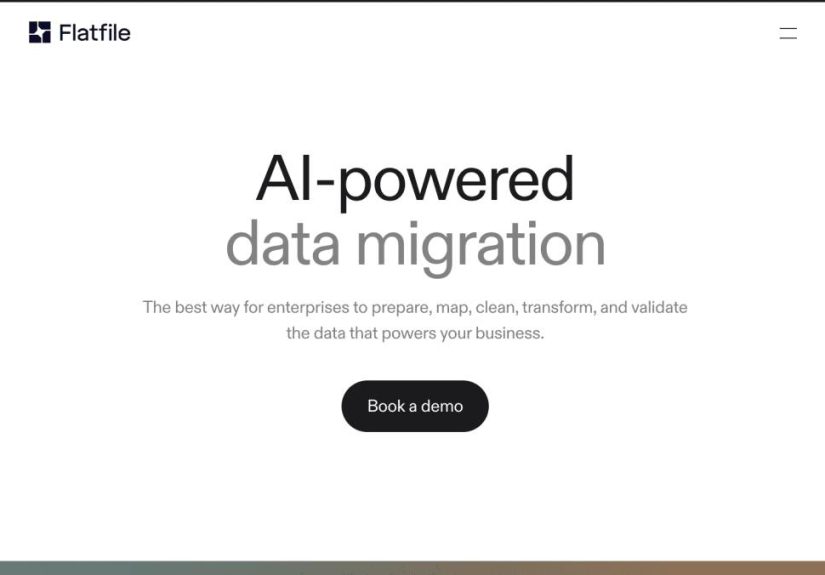
Flatfile is an AI-assisted data exchange and migration platform founded in 2018 by David Boskovic and Eric Crane. The company helps teams extract, prepare, map, transform, and validate unpredictable customer data before it lands in a production system. In plain English: it turns “your data is not in the right shape” into “your data is ready to use.”
SaaStr’s feature on Flatfile describes the classic B2B onboarding headache perfectly: a customer closes a deal, sends over their data, and suddenly the implementation team discovers that nothing matches the destination schema. Phone numbers are formatted differently. Required fields are missing. Dates are inconsistent. Special characters appear like tiny gremlins. The customer thought onboarding had begun; the vendor realizes the real work has just started.
Flatfile’s platform is designed to make that work faster and more repeatable. It supports file-based data collection from uploads, APIs, webhooks, databases, cloud storage, and file storage integrations. Once data enters Flatfile, teams can use a workbook-style interface, AI-assisted mapping, validation rules, transformations, and approval workflows to get the data into the right structure.
Why SaaStr Picked Flatfile as an AI App of the Week
SaaStr’s AI App of the Week series highlights AI tools that solve real business problems for B2B and cloud companies. Flatfile fits that theme because data onboarding is one of those operational problems that quietly drains revenue, slows launches, and frustrates customers before they have even experienced the product.
Think of it this way: a SaaS company may have a brilliant product, a polished demo, and a sales team that can make procurement feel almost fun. But if the first customer experience after contract signature is “please fix your CSV and try again,” momentum disappears fast. Data migration is the bridge between “customer signed” and “customer activated.” If that bridge is shaky, everyone feels it.
Flatfile has raised significant funding, including a $35 million Series A and a $50 million Series B led by Tiger Global, bringing its total funding close to $100 million. SaaStr also reported that Flatfile had reached $10.9 million in revenue in 2024, up from $6.7 million in 2023. Numbers like that suggest the market is not treating data import as a small utility feature. It is treating it as a serious business infrastructure problem.
The Real Problem: Data Migration Is Never “Just a CSV Import”
One of the biggest mistakes companies make is underestimating data migration. At first glance, it sounds simple: take data from System A and move it into System B. Easy, right? That is like saying a restaurant only needs to “put food on plates.” Technically true, spiritually hilarious.
Real-world migration involves schema mapping, business rules, required fields, duplicate detection, field normalization, relationship dependencies, permissions, formatting, validation, and post-migration quality checks. Microsoft’s migration guidance emphasizes planning, implementation, and validation. IBM’s data quality resources highlight the importance of cleaning, deduplication, standardization, and validation before data can be trusted for decision-making. AWS migration guidance similarly stresses planning, proof of concept work, performance considerations, and validation.
That is why AI-powered data migration software is becoming more relevant. Teams do not merely need a prettier upload button. They need a workflow that understands messy source files, helps map fields accurately, highlights problems, suggests fixes, and gives human reviewers control before data enters the destination system.
How Flatfile’s AI-Powered Data Migration Works
1. Extracting Data From Messy Sources
Flatfile can collect data from many sources, including file uploads, APIs, webhooks, databases, cloud storage, and integrations. Its Smart Extractor is designed to detect structure in variable or unstructured files, parse the content, and create a workbook for further preparation. This matters because customer data rarely arrives in a neat little box with a bow on top. It usually arrives more like a garage sale in spreadsheet form.
2. Mapping Source Fields to the Target Schema
Mapping is where many migration projects go to cry softly in the corner. A source file might contain “Company,” while the target system expects “Account Name.” Another file may use “Mobile,” “Cell,” or “Phone Number” for related but not identical fields. Flatfile’s AI mapping engine is built to align incoming fields to the destination schema by understanding more than column names. It considers the meaning of the data and applies learned mapping patterns.
For implementation teams, this is a major productivity gain. Instead of manually building mappings from scratch every time, teams can start with AI-assisted suggestions, review them, and adjust as needed. The goal is not to remove humans from the process. The goal is to remove the repetitive parts that make humans consider moving to a cabin with no Wi-Fi.
3. Transforming Data at Scale
Flatfile’s AI Transform feature lets users describe changes in plain language and apply edits across a dataset. For example, a team might need to split full names into first and last names, standardize state abbreviations, convert date formats, remove extra spaces, or reformat phone numbers. Instead of writing custom scripts for every edge case, users can prompt transformations and review the outcome.
In 2025, Flatfile announced an expanded Transform experience with agentic AI capabilities. The feature can analyze records, suggest transformations, allow inline prompts, and save approved transforms for future imports. This is important because migration work is rarely a one-time event. SaaS companies onboard many customers, and system integrators often repeat similar patterns across projects. Saved decisions can turn painful one-off cleanup into repeatable operational knowledge.
4. Validating Data Before It Causes Trouble
Validation is the part of migration that saves teams from future chaos. Flatfile can apply validation rules to flag missing fields, incorrect formats, unexpected values, and other data issues. Errors are highlighted so users can resolve them before go-live. This aligns with broader data management best practices: data should be checked before it drives reporting, automation, customer workflows, billing, or AI systems.
Bad data is not just annoying. It can create failed imports, broken customer records, duplicate accounts, inaccurate analytics, and support tickets with subject lines that begin with “URGENT.” A good validation process is like a bouncer for your database: polite when possible, firm when necessary, and absolutely unwilling to let chaos sneak into production wearing sunglasses.
5. Collaborating With Internal and External Teams
Flatfile also addresses a deeply practical migration problem: collaboration. In many companies, data preparation happens through a messy chain of emails, spreadsheets, screenshots, Slack threads, and “can you resend the latest version?” messages. Flatfile Projects gives implementation and services teams a shared space to collect, edit, validate, review, and approve data with the right stakeholders.
This is especially useful when the people who understand the data are not the same people who manage the technical migration. A customer success manager may understand the customer’s business context. A data engineer may understand the schema. A client admin may know which records are outdated. Flatfile gives these groups a more controlled way to work together instead of turning onboarding into spreadsheet ping-pong.
Why Flatfile Matters for SaaS Companies
For SaaS businesses, the first customer experience after the sale can determine the tone of the relationship. Smooth onboarding builds trust. Slow onboarding creates doubt. If customer data migration drags on for weeks, the buyer may start wondering if the product is as modern as the demo promised.
Flatfile helps SaaS teams reduce friction in three important areas: implementation speed, customer experience, and operational scalability. Faster migration means customers can reach value sooner. Better validation means fewer launch-day surprises. Repeatable workflows mean teams can onboard more customers without hiring a small army of spreadsheet therapists.
The strongest use cases include customer onboarding, CRM migration, HR and HCM data migration, marketplace seller onboarding, financial data imports, field services data migration, and enterprise system implementation projects. Any business that asks customers to bring data from an old tool into a new platform should care about this category.
Flatfile’s Security and AI Governance Angle
Data migration platforms handle sensitive information, so security cannot be treated as a decorative badge on a landing page. Flatfile states that it is SOC 2 Type II and ISO 27001 certified, supports GDPR and CCPA compliance needs, offers region-specific hosting options, and is HIPAA ready for protected health information workflows. It also says data is encrypted in transit and at rest, with role-based access controls and multi-factor authentication available.
The AI governance point is equally important. Flatfile says its AI operates within its own infrastructure and does not send customer-uploaded data to third-party AI vendors. It also says customer data is not used to train external models. For enterprise buyers, that distinction matters. AI is exciting, but nobody wants their customer database wandering off to become someone else’s training material. That is not innovation; that is a compliance migraine wearing sneakers.
Where Flatfile Fits in the Modern Data Stack
Flatfile is not a data warehouse, not a business intelligence dashboard, and not a traditional ETL tool in the narrow sense. It sits closer to the messy front door of the data lifecycle: the point where external, unpredictable, customer-owned data first enters your world.
This position is valuable because many modern systems assume clean data already exists. Data warehouses, analytics platforms, CRM systems, HR systems, and AI tools perform better when inputs are structured and reliable. Flatfile helps prepare that input layer. In other words, it is not trying to be the fancy restaurant. It is trying to make sure the ingredients are washed, labeled, measured, and not secretly expired.
Specific Example: Customer Onboarding for a B2B SaaS Platform
Imagine a project management SaaS company onboarding a large construction firm. The customer wants to import years of project data, vendor records, user lists, equipment information, and task histories. The old system uses different field names, outdated categories, inconsistent date formats, and duplicate vendor entries. Without a structured migration workflow, the implementation team may spend days cleaning files, emailing questions, writing one-off scripts, and rechecking errors.
With Flatfile, the team can collect the files, map source fields to the new schema, use AI Transform to standardize formats, apply validation rules, invite customer stakeholders to review questionable records, and approve the cleaned dataset before migration. The difference is not just speed. It is confidence. Everyone can see what changed, why it changed, and what still needs attention.
Pros and Watchouts
What Flatfile Gets Right
Flatfile is strong because it focuses on a painful, repeatable, high-value workflow. Its AI features are practical rather than theatrical. Mapping, cleaning, transforming, validating, and approving data are exactly the kinds of tasks where AI assistance can reduce manual work while still keeping humans in control.
The platform also appears well aligned with enterprise buying requirements: security certifications, access controls, collaboration, API-first extensibility, and configurable workflows. This makes it useful for companies that need more than a simple CSV uploader embedded in a product.
Where Teams Still Need Discipline
No AI data migration software can magically fix unclear business rules. If your team does not know which fields matter, which records should be excluded, how relationships should be preserved, or what “clean” means, even the best tool will need guidance. Flatfile can accelerate migration, but teams still need ownership, planning, governance, and review.
Another consideration is fit. Smaller companies with occasional simple imports may not need an enterprise-grade data migration platform. But for SaaS companies, implementation teams, and system integrators repeatedly handling complex customer data, Flatfile can be the difference between scalable onboarding and a spreadsheet swamp.
Experience Notes: What Working With AI-Powered Data Migration Feels Like in the Real World
The most memorable thing about data migration is how quickly optimism evaporates. At the kickoff meeting, everyone says, “The data should be pretty straightforward.” This sentence should come with dramatic thunder. Within a few hours, someone usually discovers that “customer ID” means three different things, a required field has been optional since 2017, and half the records were exported from a legacy tool that apparently believed commas were a lifestyle choice.
In real implementation work, the hardest part is not moving data. Moving data is easy. Moving the right data, into the right fields, with the right format, while preserving business meaning and not breaking downstream workflowsthat is where the dragon lives. This is why platforms like Flatfile feel useful. They do not pretend migration is clean. They assume the data will be messy and build the workflow around that reality.
A strong migration experience usually has a rhythm. First, teams profile the source data and identify obvious issues. Next, they define the target schema and mapping rules. Then they transform the data, validate it, review exceptions, test the import, and repeat until the dataset is trustworthy enough for production. In older workflows, every cycle creates more files, more confusion, and more opportunities for someone to accidentally use the wrong spreadsheet. With an AI-assisted platform, the process becomes more centralized and less dependent on tribal knowledge.
The human-in-the-loop part matters more than people think. Fully automatic migration sounds cool until the AI confidently “fixes” something that should not have been changed. The best experience is not blind automation. It is guided acceleration: the system suggests, the user previews, the expert approves, and the workflow remembers useful decisions for next time. That is where features like AI suggestions, saved transforms, validation rules, and rollback history can reduce risk while still saving time.
Another real-world lesson: customer collaboration is not a nice extra. It is essential. The vendor may know the target schema, but the customer knows what the data actually means. A column labeled “Status” could mean account status, payment status, employee status, project status, or “Steve made this column in 2019 and nobody has questioned it since.” A shared review workflow gives customers a chance to clarify business meaning before data enters the new system.
The best outcome of AI-powered data migration is not simply fewer hours spent cleaning files. It is a better first impression. When onboarding feels organized, customers trust the vendor faster. When data lands cleanly, teams launch sooner. When fewer engineers are pulled into emergency cleanup, product velocity improves. And when business users can participate without writing scripts, the migration stops feeling like a mysterious back-office ritual and starts feeling like a manageable project.
Flatfile’s biggest promise is that data migration can become less of a bottleneck and more of a competitive advantage. For companies that live or die by onboarding speed, that is a big deal. Because in SaaS, the sale may begin with a signed contract, but the relationship really begins when the customer sees their own data working inside the product.
Conclusion: Flatfile Turns Data Migration Into a Product Experience
Flatfile deserves attention because it treats data onboarding as a core customer experience, not a hidden technical chore. Its AI-powered data migration platform helps teams collect, map, clean, transform, validate, and approve data in a workflow designed for real business complexity. That makes it especially relevant for B2B SaaS companies, implementation teams, and system integrators that repeatedly handle customer data migrations.
The larger lesson is simple: messy data is not going away. Companies are adopting more software, moving between platforms, modernizing legacy systems, and feeding more data into AI-driven workflows. The winners will not be the teams that pretend every CSV is clean. The winners will be the teams that build reliable systems for handling messy data gracefully. Flatfile is one of the more compelling examples of that shift.
So yes, Flatfile may sound like “just a data migration tool” at first. But for any company that has watched a major customer onboarding stall because of broken imports, inconsistent schemas, and spreadsheet chaos, it looks a lot more like revenue acceleration with validation rules. Not glamorous, maybe. But extremely usefuland in B2B SaaS, useful wins.
SEO Metadata
Note: This article is written for web publishing and is based on publicly available information about SaaStr, Flatfile, AI-powered data migration, data cleaning, validation, security, and modern SaaS onboarding workflows.