Table of Contents >> Show >> Hide
- The Viral Seat-Swap Debate Was Never Really About Manners Alone
- Why So Many People Defend Her Refusal To Swap Seats
- Why Parents Ask To Switch Seats In The First Place
- The Real Problem Is Airline Family Seating, Not One Woman Saying No
- Safety Changes The Conversation More Than People Admit
- What Good Airplane Seat Etiquette Actually Looks Like
- The Gendered Layer In This Story Matters Too
- The Smarter Takeaway From This Whole Mess
- Additional Experiences Related To The Topic
- Conclusion
- SEO Tags
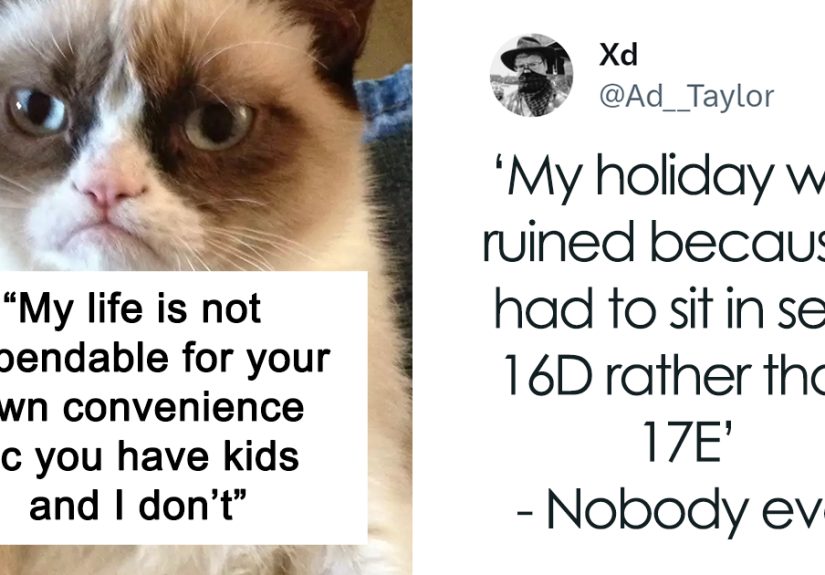
Air travel has a special talent for turning normal adults into exhausted philosophers with backpacks. One delayed departure, one crying toddler, one mysteriously sticky tray table, and suddenly everyone is debating morality at 32,000 feet. That is exactly why the now-viral argument behind “My Life Is Not Expendable For Your Own Convenience”: Woman’s Unwilling To Swap Seats With Moms hit such a nerve online. It was never just about one seat. It was about boundaries, entitlement, safety, courtesy, and the very modern belief that a stranger should absorb your inconvenience with a smile and maybe half a pretzel.
The controversy centers on a woman who refused the idea that she should automatically surrender her booked seat just because a parent wanted to sit with a child. To some people, that sounded cold. To others, it sounded refreshingly honest. And that split is what makes this story stick. The internet loves a good travel drama, but this one keeps resurfacing because it taps into a bigger truth: the problem is rarely one individual passenger. More often, it is a messy system that turns seat assignments into a social hostage negotiation.
So let’s talk about why this debate exploded, why so many solo travelers sympathize with the woman, why parents are frustrated too, and why the real villain may be the airline seat map itself, that tiny checkerboard of chaos that can apparently ruin family harmony before wheels-up.
The Viral Seat-Swap Debate Was Never Really About Manners Alone
At first glance, the argument seems simple. A mom wants to sit with her child. Another passenger says no. Internet explodes. Coffee is spilled. Comment sections become gladiator arenas. But the emotional force behind the quote “my life is not expendable for your own convenience” comes from the fact that many passengers do not view seat switching as a cute little favor. They view it as pressure.
And pressure changes everything.
There is a huge difference between a polite request and a social expectation disguised as kindness. If someone asks once, accepts the answer, and moves on, that is a request. If someone asks while already occupying your seat, or offers you a worse seat, or turns the cabin into a courtroom where your refusal becomes evidence of moral failure, that is no longer courtesy. That is coercion wearing a cardigan.
This is why the woman’s stance resonated with so many travelers. She was pushing back against the idea that being alone automatically makes you the most movable piece on the board. Solo flyers are often treated like they have no good reason for choosing a specific seat, as if their comfort matters less because nobody else in row 17 knows their name.
Why So Many People Defend Her Refusal To Swap Seats
A booked seat is not a random preference
People choose seats for all kinds of reasons that are not visible to strangers. One traveler needs the aisle because of knee pain. Another wants the window because flying triggers anxiety and looking outside helps. Someone else avoids the back because of motion sickness, or avoids a middle seat because they already paid extra not to become the human filling in an airplane sandwich.
That is the part many online debates miss. A seat is not just geography. It can be comfort, routine, physical need, emotional regulation, or a paid upgrade. When someone says no to switching, they are not necessarily saying, “I hate families.” They may simply be saying, “I chose this seat for a reason, and I should not have to publish my medical chart or emotional autobiography to justify keeping it.”
Boundaries are not the same thing as selfishness
There is a weird cultural reflex, especially around women, to treat firm boundaries like a personality defect. Say no too softly and you get steamrolled. Say no clearly and suddenly you are the villain of Gate B12. The woman in this story became a symbol because she rejected that script. She did not volunteer to become the backup plan for somebody else’s travel arrangement.
That does not make her cruel. It makes her a passenger with a ticket and a spine.
In fact, many of the most-discussed real-life seat-swap stories follow the same pattern: the requested switch is not equal. It is often window for middle, extra-legroom for standard economy, or carefully chosen seating traded for a downgrade with a guilt trip on top. That is less “Can you help me?” and more “Can you lose so I can win?” Unsurprisingly, passengers are not lining up for that deal.
Why Parents Ask To Switch Seats In The First Place
Now for the important part: parents are not always being entitled. Sometimes they are responding to a genuinely broken system.
U.S. airline seating policies have long been inconsistent when it comes to keeping children next to an accompanying adult. Some carriers have made public commitments to help families sit together at no extra charge, but policies still vary, availability changes, and families can still end up separated because of fare class, aircraft changes, late booking, or a seat map that looks full until it suddenly is not. In other words, parents are not imagining the problem. It is real, and it is frustrating.
That reality matters. If you are traveling with a young child, being separated is not just annoying. It can create stress for the parent, distress for the child, and awkward pressure on nearby passengers who never asked to become honorary aunties and uncles for two hours and twenty minutes. Nobody bought that ticket package.
So yes, parents often ask because they feel cornered. They may have booked late, been hit with seat-selection fees, gotten moved after an equipment change, or trusted an airline that said it would “try” to seat the family together. That does not automatically make the request unreasonable. It does, however, mean the burden should fall on the airline first, not on a stranger who happened to scan their boarding pass faster.
The Real Problem Is Airline Family Seating, Not One Woman Saying No
This is the big takeaway most viral posts miss: the conflict exists because airlines have spent years monetizing seat certainty. Families want to sit together. Solo travelers want the seat they chose. Airlines want to sell that certainty one row at a time.
That arrangement practically manufactures inflight tension.
When seat selection becomes a paid feature, families may try to save money and hope the gate agent can fix it. Other times they pay and still get separated. Meanwhile, passengers who did pay for a preferred seat understandably do not want to surrender it for free. Then everyone glares at each other while the airline quietly collects the revenue and exits stage left like a magician who just made customer goodwill disappear.
That is why so many travel experts argue that airlines, not fellow passengers, should solve the issue before boarding. If a child is too young to sit alone comfortably, the carrier should have a clear, reliable process for seating that child next to an adult. Otherwise the system encourages public bargaining, resentment, and the kind of social-media posts that make half the internet cheer and the other half type in all caps.
Safety Changes The Conversation More Than People Admit
Not every seat is functionally the same
The phrase “my life is not expendable” sounds dramatic until you remember that seat placement can matter for safety, access, and evacuation rules. For example, children cannot occupy exit-row seats under federal rules, and adults seated there must be capable of assisting in an emergency. That alone shows the government does not treat every seat as interchangeable.
Even outside the exit row, air travel is not a giant living room in the sky. Passengers are expected to remain seated and buckled during turbulence and other critical phases of flight. So when someone chooses a specific seat for physical comfort, ease of movement, anxiety management, or proximity to a restroom, it is not always a luxury preference. Sometimes it is part of how they travel safely and sanely.
Invisible needs are still real needs
This is where the seat-swap discourse gets especially unfair. The person refusing may have a condition, history, or reason that is none of the cabin’s business. They should not have to announce, “Actually, I panic when I feel trapped,” or “My knee swells if I cannot stretch,” just to avoid being labeled heartless by three rows of amateur ethicists and one bored guy with a phone.
Compassion matters. But compassion cuts both ways. Parents deserve empathy. So do the strangers around them.
What Good Airplane Seat Etiquette Actually Looks Like
If this story proves anything, it is that seat switching is not inherently rude. Bad seat switching is rude. Good etiquette is surprisingly simple:
1. Ask, don’t assume
No one should be sitting in someone else’s assigned seat while pitching the trade like a used-car salesman with a stroller.
2. Offer an equal or better seat
If you want someone’s aisle, offer an aisle or something better. If you want extra-legroom, be prepared to compensate with extra-legroom. Nobody should be expected to downgrade because you arrived with optimism and a diaper bag.
3. Accept no the first time
This is the rule too many travelers skip. A refusal is not an invitation to negotiate, shame, sigh loudly, or make a speech about kindness to your child at theatrical volume.
4. Ask the crew for help
Flight attendants and gate agents are in a far better position to see what is available and propose solutions. They can sometimes rearrange seats without turning one passenger into the designated sacrifice.
5. Plan early whenever possible
Yes, life happens. Flights change. Budgets are tight. But when families know sitting together is essential, arranging it before boarding is always safer than hoping the cabin turns into a cooperative board game.
The Gendered Layer In This Story Matters Too
There is also an uncomfortable social dynamic at play here. Women are often expected to be accommodating by default. Helpful. Flexible. Maternal-adjacent, even when they are not mothers and did not volunteer for the role. So when a woman says, “No, I am keeping the seat I booked,” people sometimes react not just to the refusal, but to the violation of that expectation.
That is part of why this headline landed so hard. The woman was not merely declining a swap. She was rejecting the idea that her comfort, safety, or chosen arrangement should automatically rank below someone else’s family logistics. For many readers, especially women who are tired of being drafted into unpaid emotional labor, that felt less like selfishness and more like a boundary long overdue.
The Smarter Takeaway From This Whole Mess
The best reading of this story is not “parents are entitled” or “solo travelers are selfish.” That is too lazy, too binary, and too online. The smarter takeaway is this: families need better protection from airline seating chaos, and individual passengers should not be forced to solve structural problems with personal sacrifice.
Kindness is wonderful. Voluntary kindness is even better. But forced kindness is just inconvenience with better branding.
So if a passenger chooses to swap and help a parent sit with a child, great. That can be generous and decent. If a passenger chooses not to, that should also be allowed without a public morality play. Both things can be true at once: the parent may be in a tough spot, and the other traveler may still be fully justified in keeping the seat they selected.
That is what makes this viral debate so enduring. It is not really about whether one woman was mean. It is about who gets treated as movable, who gets expected to absorb discomfort, and why the air-travel system keeps turning basic seating into a test of character.
Additional Experiences Related To The Topic
One reason this debate keeps returning is that so many travelers have lived some version of it. A woman books a window seat because flying makes her anxious and staring at the horizon keeps her calm. A parent boards with a child who wants that same window seat. The request comes with a smile, but the alternative is a middle seat three rows back. When she says no, the mood in the row drops like cabin pressure in an action movie. To outside observers, it looks like a tiny conflict. To the person being asked, it feels like being told her reason does not count because it is not visible enough.
In another commonly discussed scenario, a passenger pays for extra legroom because they are tall, recovering from an injury, or simply trying to survive a cross-country flight without folding like a lawn chair. Then a parent asks them to switch to standard economy so they can sit beside a child. The passenger refuses, and the online reaction splits instantly. Half the crowd says, “How hard is it to be nice?” The other half says, “Why is the person who paid more expected to eat the loss?” That tension is the heart of the whole seat-swapping fight.
There are also stories where passengers are volunteered without consent. Someone else offers their seat to a family, but what they really mean is your seat. That kind of casual entitlement infuriates people because it assumes the solo traveler is the easiest person to inconvenience. It is a small act, but it carries a big message: your plans are flexible because I have decided they are.
Parents, meanwhile, often describe their own version of inflight stress. They may have booked early and still gotten separated after a schedule change. They may have tried to avoid seat fees, hoping airline staff would help at the gate. They may be traveling alone with multiple children and already feel like they are shepherding squirrels through airport security. In that situation, asking another passenger for help can feel less like entitlement and more like desperation. That perspective deserves empathy too.
What ties all of these experiences together is not that one side is always right. It is that everybody is reacting to a pressure cooker. The cabin becomes the place where unresolved airline policy turns into personal conflict. One person is protecting their comfort. Another is trying to keep a family together. A third is silently praying nobody notices they are in the aisle seat they specifically paid for after a week from hell.
And that is exactly why the quote in this headline stuck. It gave sharp language to a feeling many passengers recognize but rarely say out loud: I am not rude for not volunteering to be the easiest person to displace. Once that feeling is spoken plainly, people either recoil from it or nod so hard they nearly lose their neck pillow.
Conclusion
“My Life Is Not Expendable For Your Own Convenience” works as a headline because it is blunt, memorable, and a little spicy. But underneath the viral phrasing is a serious truth. Refusing to swap seats with moms does not automatically make a woman selfish, just as asking for help does not automatically make a parent entitled. The real issue is a travel system that keeps forcing ordinary passengers to negotiate problems it should have solved before boarding ever began.
Until airlines make family seating more consistent and transparent, these disputes will keep happening. Some people will switch. Some people will not. The healthiest standard is simple: ask politely, offer fairly, accept the answer, and stop treating strangers as backup infrastructure for your trip.
In other words, kindness is admirable, but consent still matters at cruising altitude.