Table of Contents >> Show >> Hide
- Quick Navigation
- Before You Roast: Plan Like a Pro
- Flavor Foundations: Dry-Brine, Wet-Brine, or “Just Don’t Overcook It”
- Set Up Your Roasting Station
- Choose Your Roasting Method
- Timing, Temperature, and the Thermometer That Saves Friendships
- The Mid-Roast Playbook
- Resting and Carving Without Regret
- Gravy That Doesn’t Taste Like Stress
- Turkey Troubleshooting (Common Emergencies and Fixes)
- Real-World Thanksgiving Experiences (500+ Words)
- Final Checks for the Perfect Thanksgiving Turkey
Roasting a Thanksgiving turkey is basically a holiday group project: one person swears by basting, another thinks foil is “cheating,”
and somebody’s cousin insists the bird is done when “the juices run clear” (spoiler: your cousin is not a thermometer).
The good news? A perfect roast turkey isn’t mysteriousit’s just a mix of planning, smart seasoning, and temperature control.
This guide walks you through choosing a bird, thawing safely, seasoning like a pro, picking the best roasting method for your vibe,
and landing that holy trinity: juicy meat, crispy skin, and 165°F doneness without panic-sweating into the gravy.
Quick Navigation
- Before You Roast: Plan Like a Pro
- Flavor Foundations: Dry-Brine, Wet-Brine, or No-Brine
- Set Up Your Roasting Station
- Choose Your Roasting Method
- Timing, Temperature, and Thermometers
- The Mid-Roast Playbook
- Resting and Carving Without Regret
- Gravy That Doesn’t Taste Like Stress
- Turkey Troubleshooting
- Real-World Thanksgiving Experiences (500+ Words)
- Final Checks
Before You Roast: Plan Like a Pro
How much turkey per person?
If you want everyone comfortably full (with a decent chance of leftovers), a classic rule is about 1 pound of raw turkey per person.
If your family treats leftovers like a competitive sportturkey sandwiches, turkey soup, turkey “I’m still eating turkey on Monday”
bump it up to 1.25 to 1.5 pounds per person.
Hosting a big crowd? Two smaller birds often cook more evenly than one giant turkey that takes forever and tests your patience, oven space,
and emotional stability.
Thawing: the step people forget until it’s “uh-oh” o’clock
Frozen turkey is convenient, but thawing takes time. In the refrigerator, plan on roughly 24 hours for every 4–5 pounds.
That means a 16-pound turkey can take about three to four days to thaw. If Thanksgiving is Thursday and you’re buying frozen on Monday…
congratulations, you’ve just invented “Turkey Time Travel.” It doesn’t work.
Safe thaw options:
- Refrigerator thaw: easiest and safest. Keep the bird in a tray to catch drips.
-
Cold-water thaw: submerge (still wrapped) in cold water, change the water every 30 minutes.
Budget about 30 minutes per pound. Cook immediately after thawing. - Microwave thaw: possible, but tricky for big birds. Follow your microwave instructions and cook immediately.
Do not wash the turkey (your sink is not a sanitizer)
Rinsing raw poultry can splash bacteria around your kitchen. The turkey gets safe by cookingnot by a pre-roast bath.
So wash your hands, sanitize surfaces, and let your oven do the germ-zapping.
Flavor Foundations: Dry-Brine, Wet-Brine, or “Just Don’t Overcook It”
Dry-brining (the MVP of juicy + crispy)
Dry-brining is simple: salt the turkey and let time do the heavy lifting. The salt seasons deeper, helps the meat hold onto moisture,
and dries out the skin so it roasts up crisp. You also avoid the “five gallons of turkey spa water” problem.
Basic dry-brine approach:
- Pat the turkey dry with paper towels.
-
Salt all over (and lightly under the skin over the breast if you can). Add pepper and optional herbs (sage, thyme, rosemary),
plus a little brown sugar if you like a subtle caramelized note. -
Refrigerate uncovered on a rack over a sheet pan for 12–72 hours. If you brine longer than a day,
you can loosely cover, but leave it uncovered for the final stretch to dry the skin.
Salt note: Salt brands vary in density. If you use kosher salt, follow a trusted ratio and don’t freestyle like it’s a glitter cannon.
When in doubt, go lighteryou can always finish with flaky salt after carving.
Wet-brining (effective, but fussy)
Wet brining can produce juicy turkey, but it’s bulky, messy, and requires fridge real estate the size of a studio apartment.
It also tends to add water weight, which can dilute turkey flavor and make crisp skin harder.
If you love wet brining and have the space, go for it. If you want the best balance of ease and results, dry-brine wins.
Crispy skin tricks that actually make sense
- Dry air + time: uncovered fridge rest helps skin dry out.
- Fat helps: brush with melted butter, oil, or even a thin coat of mayo for browning.
-
Baking powder (optional): a tiny amount mixed with salt can encourage browning and crackly skin.
(Skip baking sodadifferent beast.)
Set Up Your Roasting Station
Tools that make you look like you know what you’re doing
- Instant-read thermometer (non-negotiable)
- Roasting pan with rack (or a sheet pan + rack for spatchcock)
- Foil for tenting
- Kitchen twine (optional)
- Fat separator (nice-to-have for gravy)
Aromatics: yes. Stuffing: think carefully.
Putting aromatics in the cavity is great: onion, garlic, lemon, apple, thyme, sage. It perfumes the bird without slowing cooking too much.
Stuffing the turkey with bread stuffing is where food safety and timing get real: the stuffing must reach a safe temperature too,
which can force the breast to overcook while you wait.
If you want stuffing, consider baking it in a dish (still delicious, much easier).
If you must stuff the bird, pack loosely and verify the center of the stuffing hits safe temp with a thermometer.
Choose Your Roasting Method
Method 1: Classic whole roast turkey (steady, traditional, reliable)
This is the “Norman Rockwell” method: whole bird, moderate oven, patient roasting. It works best when you:
(1) dry-brine ahead, (2) use a thermometer, and (3) stop trusting cook-time charts like they’re fortune-tellers.
Classic roast outline:
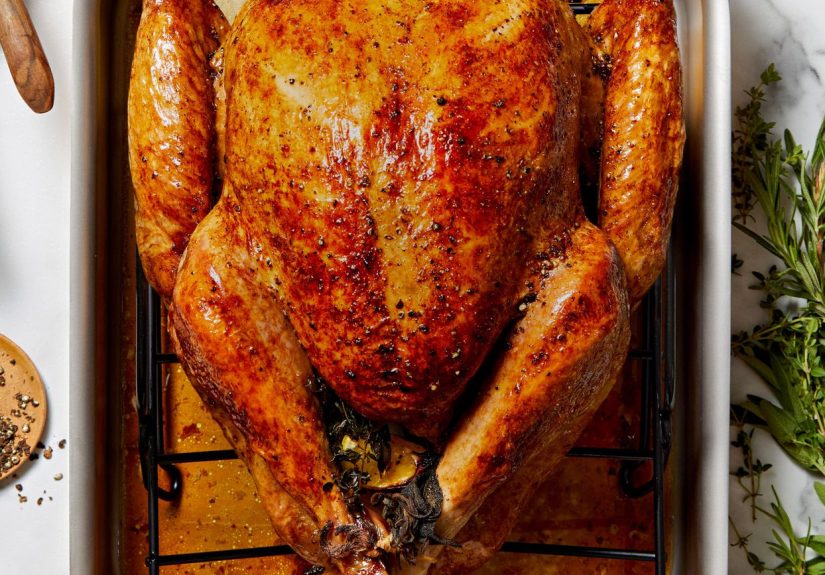
- Preheat oven to 325°F (regular roast).
- Set turkey on a rack, breast side up.
- Add aromatics to cavity (optional). If you dry-brined, you usually don’t need extra salt.
- Roast until the thickest part of the breast and thigh are at safe temp. Tent foil if skin browns too fast.
- Rest before carving.
Timing ballpark (unstuffed): Many guides land around the low-teens minutes per pound at 325–350°F,
but ovens vary, turkeys vary, and “my turkey is emotionally complex” varies. Start early and cook to temperature, not time.
Method 2: Spatchcock turkey (fast, even, crispy skin champion)
Spatchcocking (butterflying) means removing the backbone and flattening the turkey. It cooks faster and more evenly because the bird is a uniform thickness.
Bonus: more skin exposed to heat = more crispy goodness.
Why people convert after trying it once:
- Often cooks in under 90 minutes for mid-size birds
- Breast and thighs finish closer together
- Incredible browning
Spatchcock outline:
- Cut out the backbone with kitchen shears (save it for stock/gravy).
- Press the breastbone to flatten.
- Roast on a rack over a rimmed sheet pan.
- Use a hotter oven, often around 450°F, until done.
Method 3: Roast turkey in parts (maximum control, minimum drama)
If you want perfectly cooked white and dark meat without compromise, roast in parts:
breast, thighs, drumsticks, wings. Dark meat can stay in longer while the breast comes out earlier.
It also frees up space and speeds cooking. The only downside is you lose the “whole bird” centerpiece moment
but your guests will forgive you when they taste it.
Method 4: Upside-down roasting (a sneaky moisture hack)
Some cooks roast breast-side down for part of the time to protect the breast, then flip to brown.
It can work, but flipping a hot turkey is basically Thanksgiving CrossFit. If you’re confident and have help, go for it.
If not, use foil tenting and temperature management instead.
Timing, Temperature, and the Thermometer That Saves Friendships
The only doneness number that truly matters
Turkey is safe to eat when it reaches 165°F in the thickest parts. Check the breast and the inner thigh.
Resting matters too: once you hit temp, resting helps juices redistribute so your cutting board doesn’t turn into turkey tea.
Where to insert the thermometer (so you don’t measure the air)
- Breast: thickest part, avoiding bone
- Thigh: inner thigh near the joint, not touching bone
- If stuffed: center of stuffing must be checked too
A practical timing strategy (because “3–4 hours” is not a plan)
Use time charts only to plan your day, not to declare victory. Here’s a better method:
- Estimate when the turkey might be done based on weight and method.
- Add a cushion (30–60 minutes). Early turkey is fixable. Late turkey is chaos.
- Start checking temperature earlier than you think you need to.
- Pull the turkey when it’s done, then hold it warm (resting + tenting) while sides finish.
The Mid-Roast Playbook
Stop basting like it’s your full-time job
Opening the oven repeatedly drops temperature and slows cooking. Instead of constant basting,
focus on what actually improves results: dry-brining, proper oven heat, and protecting the breast if it browns early.
If you want extra shine, a quick high-heat finish or a brushed glaze near the end can give you that magazine-cover bronze.
Foil: friend, not foe
If the skin is browning too fast, loosely tent foil over the breast. Don’t wrap it tight like you’re sending it through the mail.
The goal is to slow browning while the interior catches up.
Rotate the pan (because ovens have personalities)
Many ovens run hotter on one side. If you notice uneven browning, rotate the pan once midway through roasting.
Just be quickyour oven heat is not a souvenir you want to let out.
Resting and Carving Without Regret
Resting: the easiest upgrade you can make
Rest the turkey before carving. For most birds, 20–30 minutes is a solid target.
Bigger birds can rest longer. This improves juiciness and makes carving cleaner.
Carving steps (simple and less terrifying)
- Remove legs and thighs first by cutting through the joint.
- Separate thighs and drumsticks if you want neat portions.
- Remove wings.
- Slice breast meat across the grain (thin-ish slices keep it tender).
- Arrange on a platter and spoon a little warm gravy over (not a floodsave the crispy skin).
Gravy That Doesn’t Taste Like Stress
Fast, flavorful gravy method
- Pour drippings into a separator (or skim fat with a spoon). Keep both fat and juices.
- Make a roux: cook a few tablespoons of fat with flour until it smells nutty.
- Whisk in drippings + stock (warm stock helps prevent lumps). Simmer until thickened.
- Season with salt, pepper, and a splash of something bright (a tiny bit of vinegar or lemon) if it tastes flat.
No drippings? No shame. Use stock, butter, flour, and a little soy sauce or Worcestershire for depth.
Gravy is forgiving. Unlike your uncle who argues about football rules.
Turkey Troubleshooting (Common Emergencies and Fixes)
“The breast is done but the thighs aren’t.”
This happens a lot with whole birds. Tent the breast with foil and keep roasting until thighs catch up.
If you’re really behind schedule, you can carve off the breast and return dark meat to the oven.
Thanksgiving is a meal, not a single continuous sculpture.
“The skin is too dark but the inside is undercooked.”
Loosely tent foil, lower oven temperature slightly, and keep going. Check thermometer placement to ensure you’re not reading near bone.
“It’s dry.”
If the turkey is already cooked and feels dry, slice it, ladle warm gravy over, and serve immediately.
For leftovers, reheat gently with broth or gravy under foil. Also: next time, dry-brine and pull at the right temperature.
The thermometer is the hero you deserve.
“I forgot to thaw it.”
If it’s frozen-solid and Thanksgiving is today, your best options are:
cold-water thawing (if time allows), buying a fresh/smaller bird, roasting turkey parts, or pivoting to a different main dish.
A “miracle thaw” on the counter is not a miracle; it’s a food safety hazard wearing a holiday sweater.
Real-World Thanksgiving Experiences (500+ Words)
Every Thanksgiving has its own little turkey storylinethe kind you retell next year while someone “just checks” the oven for the 900th time.
Here are a few common, very real kitchen experiences that tend to show up across American homes, plus what they teach you about roasting a turkey
without turning the holiday into an improv survival game.
The “I bought a 22-pounder for eight people” era
It starts innocently: “Bigger turkey equals more generous host.” Then reality arrives: huge birds take longer, cook less evenly,
and eat up oven space like a houseguest who brought three suitcases for an overnight stay. The lesson?
Two smaller turkeys (or one turkey plus an extra tray of thighs/drumsticks) can be easier to manage and often taste better.
You still get leftoversjust without the suspense thriller pacing of a five-hour roast.
The thawing panic that hits on Wednesday night
Someone opens the fridge and discovers the turkey is still half frozen. Suddenly, the cold-water method becomes the star of the show,
and the sink gets a job promotion. The most common mistake isn’t forgetting the methodit’s underestimating time.
Thirty minutes per pound is a long time when you’re also making pies, setting a table, and fielding “What can I bring?” texts.
The lesson: build a thawing calendar. It’s not overkill; it’s insurance.
The pop-up thermometer betrayal
Plenty of turkeys come with a pop-up timer. It’s comfortinglike having a tiny turkey butler. But it’s not precise enough to bet the holiday on.
You’ll hear the pop, everyone cheers, and then the turkey is either underdone in the thigh or overdone in the breast (or both, somehow).
The lesson: a real instant-read thermometer is the one kitchen tool that prevents 90% of turkey-related family drama.
The basting marathon (and why people finally stop doing it)
There’s always someone who believes basting is the key to moisture. They open the oven, baste, close it, repeatlike a ritual.
The turkey still dries out because the breast overcooked while the oven temperature yo-yoed.
The lesson most cooks learn: moisture comes from not overcooking and from seasoning strategies like dry-brining.
If you want a beautiful finish, do it strategically near the enddon’t treat basting like cardio.
The spatchcock conversion story
A relative shows up with kitchen shears and confidence. The turkey is flattened, roasted hot, and somehow done faster than the casseroles.
People notice: crispy skin everywhere, juicy slices, less waiting. It feels like discovering a shortcut that’s somehow legal.
The lesson: spatchcocking looks intense, but it’s one of the most reliable ways to get even cooking.
Once a family tries it, it often becomes the new tradition (and the old roasting pan quietly retires).
The gravy rescue mission
Even in great cooks’ kitchens, gravy occasionally turns lumpy or bland. The fix is nearly always the same:
whisk, simmer, season. A splash of stock loosens it, a pinch of salt wakes it up, and a tiny bit of acidity makes flavors pop.
The lesson: gravy is flexible. You can almost always save itso don’t panic and dump it. That’s turkey-slander.
The big takeaway from all these experiences is pretty comforting: most “turkey disasters” aren’t disasters.
They’re timing problems, temperature problems, or planning problemsand every one of those is solvable with a thermometer,
a little cushion in your schedule, and the willingness to use foil like a grown-up.
Final Checks for the Perfect Thanksgiving Turkey
- Plan the thaw (refrigerator time is measured in days, not vibes).
- Dry-brine if you can (better seasoning + juicier meat + crispier skin).
- Pick your method: classic whole roast, spatchcock for speed, or parts for ultimate control.
- Cook to temperature, not to a chart. Your thermometer is the truth.
- Rest before carving so juices stay in the turkey, not on your cutting board.
- Gravy is fixable. Your confidence should be, too.
If you do nothing else, remember this: a turkey doesn’t need constant attentionit needs the right plan and the right endpoint.
Hit your temperatures, rest it, carve it with purpose, and enjoy the moment when the room goes quiet because everyone is too busy eating.
That’s the real Thanksgiving victory lap.