Table of Contents >> Show >> Hide
- What Is a Ratio Coffee Machine?
- Why Ratio Coffee Machines Stand Out
- Ratio Four vs. Ratio Six vs. Ratio Eight Series 2
- What Brewing With a Ratio Coffee Machine Actually Feels Like
- The Downsides You Should Know Before Buying
- Who Should Buy a Ratio Coffee Machine?
- Experience With a Ratio Coffee Machine: Living With One Day to Day
- Final Thoughts
If most coffee makers look like they were designed by a committee whose only goal was “beige,” the Ratio coffee machine shows up like the stylish friend who somehow also knows how to make excellent brunch. That is the appeal in one sentence. Ratio machines are not trying to win you over with a dozen blinking buttons, mystery presets, or a control panel that feels like a small aircraft cockpit. Instead, they aim for something more ambitious: automatic coffee that tastes like a careful manual pour-over, wrapped in a machine you actually want to leave on the counter.
That promise explains why the Ratio name keeps popping up in conversations about premium drip coffee makers. Coffee people like the bloom cycle, the even water distribution, and the emphasis on temperature stability. Design people like the glass, metal, wood, and sculptural shapes. Everyone else likes the fact that you can push a button before your brain has fully booted up. In a world full of “smart” appliances that mostly create smarter reasons to be annoyed, Ratio takes a more elegant route. It tries to make great coffee with less fuss, not more.
This article takes a deep look at the Ratio coffee machine category as a whole: what makes the brand different, how the main models compare, what daily ownership feels like, who should buy one, and where the trade-offs live. Because yes, there are trade-offs. Beautiful coffee gear still needs to be cleaned. Gorgeous glass still needs to be handled like glass. And premium brewing performance still lives in the same universe as premium pricing. But for the right coffee drinker, Ratio can feel less like a kitchen appliance and more like a quiet little ritual upgrade.
What Is a Ratio Coffee Machine?
A Ratio coffee machine is best understood as an automatic pour-over-inspired brewer. The brand’s design philosophy revolves around mimicking the fundamentals of manual brewing: a bloom phase to wet the grounds first, controlled water delivery, strong brewing temperatures, and a showerhead or brew pattern meant to saturate the bed evenly. In plain English, the machine tries to do the careful barista stuff for you while you remain a heroic bystander holding a mug.
That matters because traditional drip coffee makers often fall short in familiar ways. They brew too cool, pour water unevenly, scorch coffee on a hot plate, or produce a pot that tastes flat, muddy, or weirdly bitter. Ratio’s machines chase a cleaner, more balanced cup. The result is coffee that tends to feel more articulate, with brighter flavor separation and better body than what many mass-market brewers deliver.
The company’s lineup also covers different brewing personalities. The Ratio Four is built for smaller batches and single-serve style brewing. The Ratio Six is the best-known middle ground and probably the model most people picture when they hear the brand name. The Ratio Eight, especially the newer Series 2 version, is the showpiece: part coffee maker, part countertop sculpture, part “yes, I absolutely care about the grain of that wood trim.”
Why Ratio Coffee Machines Stand Out
1. They prioritize brewing fundamentals over gadget overload
One of the smartest things about Ratio is what it does not do. It does not bury the user under menus, recipe trees, and a lot of digital noise. Many Ratio machines lean into one-button simplicity, but that simplicity is backed by serious brewing logic. The machine handles blooming, flow timing, and the overall brew sequence automatically. For people who love good coffee but do not want to play chemist every morning, that is a huge selling point.
2. The cup quality is the real reason people care
Let’s be honest: if the coffee were mediocre, the beautiful design would quickly become expensive kitchen décor. The reason Ratio has built such a strong reputation is that many reviewers consistently describe the coffee as rich, balanced, aromatic, and notably pour-over-like. That reputation is especially strong around the Ratio Six, which has become a favorite among people who want drip convenience without sacrificing flavor clarity. In other words, this is not a machine bought purely for aesthetics by people who think “single-origin” is a yoga pose.
3. Materials and design are treated as part of the experience
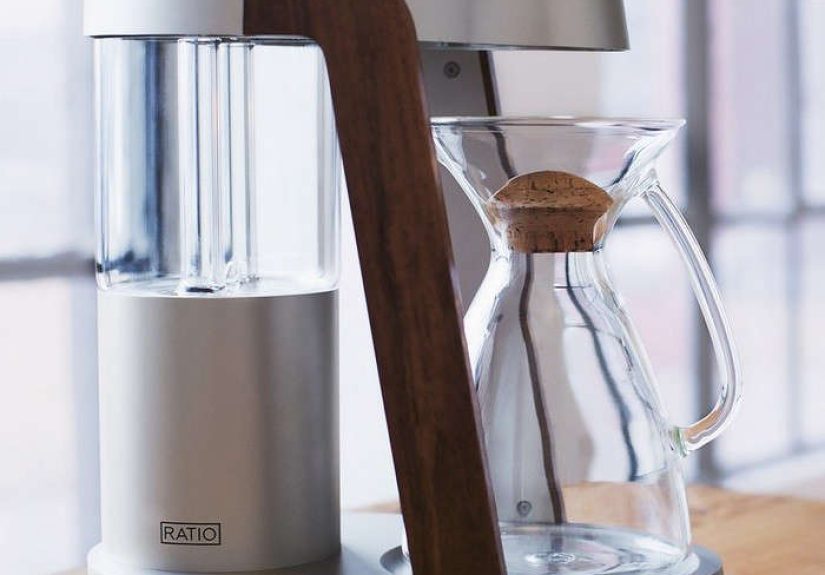
Ratio machines are premium objects, and they know it. Glass, stainless steel, die-cast aluminum, borosilicate components, hardwood accents, and minimal forms all contribute to a different feel than the average plastic-heavy brewer. That choice is not just about appearance. It also changes how owners talk about the machine. They do not simply say it works. They say it feels good to use. That might sound precious until you realize coffee is a daily ritual. When something sits on your counter every single day, the visual and tactile experience matters more than we pretend it does.
4. They avoid the burnt-coffee problem
One of the most beloved details in the Ratio world is the lack of a scorched, sad, all-day hot plate situation. The brand generally favors brewing that protects flavor rather than cooking the coffee into submission. On machines with thermal carafes, that means better heat retention without turning your second cup into a punishment. On glass-focused models, it reinforces the idea that coffee should be brewed well and enjoyed fresh.
Ratio Four vs. Ratio Six vs. Ratio Eight Series 2
Ratio Four: the small-batch specialist
The Ratio Four is the compact, small-batch member of the family. It is built for people who do not need a full pot and would rather brew one generous mug or a smaller serving with precision. If your household coffee math is usually “me, myself, and this one beautiful cup,” the Four makes a lot of sense.
Its appeal is not just the smaller size; it is the way the machine adapts the brewing profile for different volumes. That makes it more thoughtful than a lot of “single-serve” brewers that basically blast water and call it innovation. The Four is a great fit for apartment dwellers, solo drinkers, or couples who prefer quality over quantity and do not want to waste beans on oversized batches. The main compromise is heat retention. Since it uses a glass carafe and is designed for immediate serving, it rewards people who drink their coffee right away instead of letting it hang around while they answer five emails and reorganize their spice drawer.
Ratio Six: the sweet spot for most buyers
If the brand has a practical hero model, it is the Ratio Six. This is the one that tends to strike the best balance between performance, price, capacity, and ease of use. It is large enough for a household or a slow morning that turns into multiple cups, yet simple enough to feel effortless. The thermal carafe is a major advantage because it keeps coffee hot without the flavor damage caused by hot plates. That feature alone pushes the Six into “daily driver” territory for a lot of buyers.
The Six is also the model that most clearly communicates the Ratio philosophy. It feels streamlined, intentional, and focused on coffee first. It does not ask you to become obsessed with settings. It asks you to use good beans, a sensible grind, and proper ratios, then lets the machine do the rest. For many users, this is the Goldilocks choice: premium but not absurd, beautiful but still grounded, refined but not fussy in operation.
Ratio Eight Series 2: the flagship for design lovers and coffee purists
The Ratio Eight has long been the brand’s icon, and the Series 2 version sharpens that identity. This is the model for someone who wants top-tier design and high-end brewing in one object. It is dramatic without being loud, luxurious without looking tacky, and minimal in a way that still feels warm rather than clinical.
Performance-wise, the Eight Series 2 leans heavily into refined materials and improved internals. It is the machine most likely to make guests ask, “Wait, what is that?” before they ask for a second cup. It also offers flexibility that serious coffee drinkers will appreciate, including updated brew options for varying batch sizes. The obvious catch is cost. This is not the “I just need caffeine” choice. This is the “I care deeply about how my coffee tastes and how my kitchen looks at 7:15 a.m.” choice.
What Brewing With a Ratio Coffee Machine Actually Feels Like
Using a Ratio machine is refreshingly straightforward. You add water, place the filter, weigh your coffee, press the button, and let the machine handle the sequence. There is a little more ritual than with a basic supermarket coffee maker, but it is the good kind of ritual. You are still involved enough to feel intentional, just not so involved that your morning becomes a tiny competitive barista event.
The bloom phase is one of the biggest differences you will notice. Instead of immediately flooding the grounds, the machine gives them time to release gas and settle into better extraction. That sounds nerdy because it is nerdy, but it also tastes like something. Coffee comes out cleaner, rounder, and more expressive. Light and medium roasts especially tend to benefit, because their brighter notes have more room to show up rather than getting flattened.
Another underrated part of the experience is pacing. Ratio machines feel calm. There is no lot of beep-beep drama, no neon countdown, no nagging interface asking for confirmation like it is a software update. The machine brews, the room smells fantastic, and the whole process feels less like operating equipment and more like beginning the day properly.
The Downsides You Should Know Before Buying
No premium coffee machine is perfect, and Ratio is no exception. First, these machines are expensive. Even the more approachable options sit far above the budget-drip category. If you want the most coffee per dollar and do not care how it gets there, Ratio is probably not your lane.
Second, cleanup can be a bit more involved than with a simple one-piece basket-and-pot system. Some owners love the separate components because they feel more intentional and easier to care for properly. Others see a few extra parts and hear the distant sound of mild inconvenience. Both reactions are fair.
Third, the design-first approach means you should think about how you actually drink coffee. If you want set-it-the-night-before programmability, Ratio is not the obvious winner. If you want giant family-reunion volumes, also not ideal. If you want a compact machine to hide in a cabinet, the bigger models may laugh gently at your cabinet and refuse to cooperate.
Who Should Buy a Ratio Coffee Machine?
A Ratio coffee machine makes the most sense for someone who cares about flavor, appreciates good design, and wants a better morning routine without committing to fully manual pour-over brewing every day. It is ideal for the coffee drinker who has outgrown cheap drip machines but does not want espresso-level complexity or maintenance.
You are probably a strong candidate if you fit one of these profiles: the home brewer who loves specialty beans, the design-conscious kitchen upgrader, the couple who shares a morning pot, or the former pour-over devotee who would like excellent coffee with less hands-on effort. You may be a poor fit if your priorities are ultra-low cost, maximum programmability, or absolute indifference to aesthetics. And hey, there is no shame in that. Some people want a handcrafted oak bookshelf. Some people want a plastic bin that holds socks. Life is a spectrum.
Experience With a Ratio Coffee Machine: Living With One Day to Day
The most interesting part of owning a Ratio coffee machine is that the “experience” extends beyond the cup itself. In day-to-day life, it changes the mood of making coffee. A lot of coffee makers are purely functional. You use them because caffeine is a need and you are a mortal human with responsibilities. A Ratio machine feels different. It invites a slower, better start, even when the rest of the morning is chaotic.
Imagine a weekday routine with a Ratio Six on the counter. You wake up half-functional, measure out fresh beans, grind them, add water, and press one button. That is it. No fiddling with settings. No wondering whether you picked the correct brew mode from a list of choices that all sound like rejected software names. The machine begins its bloom and brew sequence quietly, and within minutes the kitchen smells like a café that has its life together. The thermal carafe means you are not racing the clock to pour immediately, and that changes the feel of the morning more than people expect. You can pour a cup, make breakfast, answer a message, then come back for a second cup that still tastes like coffee instead of warm regret.
Now picture the Eight Series 2 in a more design-focused kitchen. It becomes part of the room. Guests notice it. They ask about it. It does not disappear into the countertop landscape the way most drip machines do. There is a strange pleasure in owning something so useful that also looks deliberate. It makes the coffee corner feel curated rather than accidental. That sounds like a small thing until you realize how often we interact with that space.
There are practical experience notes too. Ratio ownership usually encourages better habits. People tend to weigh coffee more carefully, buy fresher beans, and pay more attention to grind size because the machine is capable enough to reward those details. Cheap brewers often flatten differences, so users stop caring. Ratio does the opposite. It makes small improvements noticeable, which can quietly level up your home brewing without making it feel like homework.
Of course, real ownership is not all cinematic steam curls and artisanal joy. There is cleaning. There are filters. There are moments when you wish the water tank were easier to fill or that one component required less handling. If you are the kind of person who wants zero effort beyond pressing a button and walking away, you may find the ritual slightly more involved than expected. But for many owners, that extra involvement is not a bug. It is part of why the machine feels satisfying. The process is simple, but not mindless.
Another common experience is that Ratio tends to make people drink their coffee more intentionally. Since the brewing quality is high, you notice flavor more. You slow down. You stop drowning everything in sweetener just because the base cup needs rescuing. A washed Ethiopian might taste floral and bright. A chocolatey Colombian might feel deeper and rounder. A medium roast blend may suddenly taste more structured than it ever did in a generic brewer. That is not magic. It is what happens when a machine gets the fundamentals right often enough that the beans can finally speak for themselves.
Over time, the emotional value becomes surprisingly clear. A Ratio coffee machine can turn an everyday habit into a small anchor point in the day. It is not just about “better coffee,” though yes, that is the headline. It is about having one routine that feels a little more thoughtful, a little more beautiful, and a lot less compromised. That is why people stay loyal to the brand. Once you get used to a machine that makes excellent coffee, looks good doing it, and asks very little from you in return, going back can feel like downgrading from a well-made tool to a noisy appliance with no personality.
Final Thoughts
The Ratio coffee machine occupies a very specific and appealing place in the market. It is for people who want convenience, but not flavor compromise. It is for people who appreciate design, but do not want design without substance. It is for coffee drinkers who love the results of pour-over, but not always the labor of doing one by hand before they have fully become a person in the morning.
If you want the best all-around value in the lineup, the Ratio Six is probably the strongest answer. If you brew small and want precision in a compact format, the Four is smart. If you want the flagship experience and a machine that feels almost museum-worthy on the counter, the Eight Series 2 is the statement piece. Whatever the model, the brand’s core idea stays the same: make beautiful coffee with calm, thoughtful automation. That is a pretty good mission for any morning.