Table of Contents >> Show >> Hide
- Why Omario Brunelleschi’s Childhood Illustrations Land So Deeply
- The Visual Language of Memory
- The Childhood Themes That Keep Returning
- Why Nostalgia Can Be So Emotional
- More Than Cute: Why This Work Matters Artistically
- What Modern Viewers See in These Illustrations
- The Experience of Looking at Art Like This
- Conclusion
Some art impresses you. Some art flat-out ambushes you. You think you are casually scrolling, minding your own business, and then suddenly an illustration of a grandparent in a warm kitchen, a sleepy kid on a couch, or a messy little adventure with friends reaches through the screen and taps a very specific corner of your soul. Next thing you know, you are staring into the middle distance, emotionally clotheslined by a memory you forgot you had.
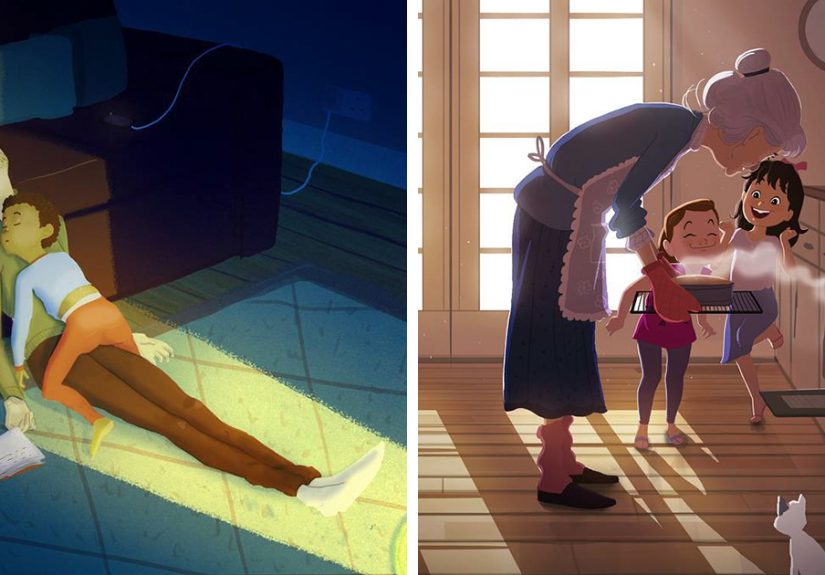
That is the effect of Omario Brunelleschi’s childhood illustrations. The English-Italian illustrator, known online as Omario2d, has built a body of work around small, tender, deeply human moments from youth: the smell of Grandma’s pie, the comfort of family rituals, the thrill of unsupervised play, the sweetness of first friendships, and the kind of everyday magic that feels enormous when you are little. His images are not loud. They do not beg for attention. They do something harder: they make viewers feel remembered.
That is why these illustrations resonate so widely. They are personal, yet somehow communal. They are specific, yet universal. They remind us that childhood is not just a period of life; it is a collection of textures, sounds, smells, routines, and relationships that continue to live quietly inside us. Brunelleschi does not simply draw children doing cute things. He illustrates emotional memory. And yes, that is exactly why the results may move you to tears.
Why Omario Brunelleschi’s Childhood Illustrations Land So Deeply
The first reason these works connect is that they are built around moments, not milestones. Many artists choose dramatic scenes, big statements, or grand symbols. Brunelleschi goes the other direction. He leans into the ordinary: a hot drink shared with a grandparent, a family outing, children drifting through a dreamy afternoon, a tiny act of affection between parent and child. These are not headline moments. They are heartline moments.
That distinction matters. Most people do not remember childhood as a tidy timeline of major events. They remember fragments. The smell of a kitchen in winter. The look of evening light on the way home. The first pet. The sound of friends laughing too hard over absolutely nothing. A blanket fort that felt like architecture. Brunelleschi understands that memory is less like a filing cabinet and more like a box of glowing scraps. His illustrations feel powerful because they honor that structure.
He also avoids one of nostalgia’s biggest traps: making the past feel fake. His work is warm, but it is not syrupy. Sentimental art fails when it pushes too hard, as if waving a giant emotional foam finger that says, “Cry now!” Brunelleschi is subtler. He lets body language, composition, and atmosphere do the heavy lifting. The tenderness is implied rather than announced. In other words, he trusts the viewer. That trust is a big part of why the images feel sincere instead of manipulative.
The Visual Language of Memory
Softness without vagueness
One of the most striking qualities in Brunelleschi’s childhood art is its softness. The edges often feel gentle, the colors inviting, the lighting almost wrapped in breath. But the images are not blurry in an empty way. They are emotionally focused. He knows exactly which details to sharpen and which to leave dreamy. That balance mimics the way memory works. We may forget the wallpaper pattern, but we remember the feeling of sitting safely beside someone we loved.
Sensory triggers everywhere
His art repeatedly circles back to sensory memory. That matters more than it might seem. People often think of nostalgia as visual, but memory is profoundly physical. Childhood lives in taste, smell, touch, temperature, and sound. A fresh pie cooling in Grandma’s kitchen is not just an image; it is aroma, heat, hunger, comfort, and family all rolled into one. A cup of hot chocolate shared with Grandpa is not just a beverage; it is ritual, closeness, and the kind of quiet attention that children never forget.
That is one reason these illustrations feel so emotionally rich. They suggest a world you can almost step into. You can feel the warmth in the room. You can imagine the soft chaos of a sleepover. You can hear the low murmur of adults talking in another room while a child dozes nearby. Brunelleschi’s best images are not just seen. They are re-experienced.
Body language over spectacle
Another strength is his use of body language. Childhood can be difficult to depict well because children are so often flattened into symbols of innocence, mischief, or cuteness. Brunelleschi’s characters feel more lived-in than that. A child leaning into a parent, the relaxed posture of trusted company, the absorbed concentration of play, the sleepy heaviness after a long daythese details make the work emotionally legible without needing melodrama.
This is where the illustrations become especially moving. They understand that love is often visible in posture before it is visible in expression. Safety has a shape. Belonging has a rhythm. Brunelleschi draws both.
The Childhood Themes That Keep Returning
Grandparents, kitchens, and domestic magic
Many of the most affecting images connected with Brunelleschi’s childhood series revolve around older relatives and home rituals. That is not accidental. Grandparents occupy a huge emotional place in memory because they often represent a slower, softer version of time. Their homes can feel like parallel universes where ordinary rules are suspended and comfort becomes a household policy.
In scenes involving pie, coffee, hot chocolate, or shared meals, the food is not the point. The point is care. The point is being expected, welcomed, and fed. That kind of attention can shape a whole emotional blueprint for life. Years later, a viewer may not remember the exact kitchen they once knew, but they remember the sensation of being loved in one. Brunelleschi taps directly into that memory channel.
Friendship before life became a scheduling app
Another recurring theme is friendship in its simplest form: unstructured, slightly chaotic, and gloriously offline. Sleepovers, wandering, joking, hanging around for no reason other than wanting to be togetherthese moments feel especially poignant now because modern life is so heavily filtered through screens, alerts, and calendars. Brunelleschi’s images often capture the kind of play that happened when boredom was not considered a crisis and imagination had room to stretch its legs.
That does not mean the work is anti-modern or aggressively “back in my day.” It simply recognizes what many viewers feel: that childhood intimacy was often built through physical presence, shared spaces, and long stretches of unoptimized time. No productivity hacks. No battery anxiety. Just vibes and maybe a scraped knee.
Family rituals as emotional architecture
Family trips, parent-child tenderness, little household routinesthese scenes matter because they create emotional architecture. A child may not understand the adult labor behind a family outing or a carefully prepared meal. What they understand is the resulting feeling: this matters, I matter, this is ours. Brunelleschi illustrates that beautifully.
Even when the scene is simple, it carries the emotional weight of continuity. This is what many viewers respond to: not perfection, but repetition. The little things adults do over and over again become the foundation of childhood memory. A familiar breakfast. A walk. A bedtime routine. A special holiday custom. In art, these details can seem modest. In life, they are huge.
Why Nostalgia Can Be So Emotional
There is a reason nostalgic art hits with unusual force. Research in psychology has consistently suggested that nostalgia is not just sentimental wallpaper. It can support feelings of social connection, self-continuity, meaning, and emotional resilience. In plain English, remembering good moments from the past can remind us who we are, where we belong, and what kinds of love helped shape us. That is powerful stuff for one humble illustration to carry.
It also helps explain why Brunelleschi’s work can make people teary without making them sad in a simple way. Nostalgia is a mixed emotion. It contains joy, longing, gratitude, absence, warmth, and ache all at once. You are happy the memory existed, moved by its beauty, and a little heartbroken because time only travels in one direction. It is the emotional equivalent of smiling with suspiciously shiny eyes.
Art centered on memory can be especially effective because images bypass the more argumentative parts of the mind. You do not need a thesis statement to understand a child resting safely against a parent or a grandparent making something warm for the family. The image reaches you before your inner critic can start filing paperwork. That immediacy is part of the emotional punch.
There is another layer, too: memory is often social. People tend to remember themselves in relation to others. A happy childhood memory is rarely just about a location or object. It is about who was there, how we were treated, and what the moment said about our place in the world. Brunelleschi’s illustrations are full of that relational energy. They are not just about childhood as scenery. They are about childhood as connection.
More Than Cute: Why This Work Matters Artistically
It would be easy to dismiss illustrations like these as simply charming. That would be a mistake. Brunelleschi’s work belongs to a larger artistic tradition in which memory and everyday life become serious creative material. Great art does not always need historical drama, elaborate symbolism, or museum-level gloom lighting. Sometimes its job is to preserve the fragile emotional truths that ordinary life would otherwise lose.
That is part of what makes autobiographical or memory-based illustration so compelling in the digital era. The internet is fast, loud, and ruthlessly disposable. Childhood memory art works against that current. It asks viewers to slow down and feel something unmarketably human. It values tenderness in a culture that often rewards speed, irony, and emotional distance. Frankly, that alone makes it a small rebellion.
Brunelleschi also understands one of the oldest rules in storytelling: the more specific the detail, the more universal the emotion can become. “A happy childhood” is vague. “The smell of a fresh pie baked by Grandma” is alive. “Family closeness” is abstract. “Grandpa making coffee while the kids get hot chocolate” is a scene. Viewers do not need to have lived those exact moments. The specificity gives them something to enter.
What Modern Viewers See in These Illustrations
Part of the appeal of Brunelleschi’s childhood images is timing. Audiences today are especially responsive to art that feels grounding, emotionally literate, and rooted in everyday intimacy. Many viewers are tired of polished emptiness. They are hungry for sincerity. They want work that feels handmade in both technique and feeling.
His illustrations also speak to a broader cultural longing for slower attention. Childhood before smartphones has become its own kind of emotional shorthand, not because the past was perfect, but because many people associate it with fuller presence. You were where you were. You looked at the people in front of you. You noticed the weather. You sat in the kitchen. You got bored enough to invent things. Brunelleschi’s art captures that atmosphere without turning it into a lecture.
And perhaps that is the secret: these images do not demand that viewers return to childhood. They simply invite them to remember what childhood felt like at its bestsheltered, curious, silly, loved, and gloriously unaware of email.
The Experience of Looking at Art Like This
Seeing art built from childhood memory can feel strangely physical. First there is recognition, quick and almost involuntary. Then comes the emotional lag, that tiny pause when your brain realizes the image is not just pretty, it is personal. A drawing of a kitchen becomes your kitchen. A warm drink in small hands becomes the winter afternoon you had not thought about in twenty years. A sleepy child on a sofa becomes the version of yourself who still believed adults had every answer and blankets could fix most disasters.
That experience is hard to fake, which is why it is so valuable when an artist gets it right. Brunelleschi’s work does not merely show childhood as an era of innocence. It shows childhood as a way of receiving the world. Everything is bigger then: smells are richer, afternoons are longer, affection is simpler, and tiny rituals feel almost sacred. When viewers respond emotionally, they are not only reacting to the image in front of them. They are reacting to the flood of associated memory that image unlocks.
It is also worth noting that not everyone looks at this kind of art from the same emotional place. For some people, nostalgic illustrations are comforting because they mirror happy memories. For others, they are bittersweet because they represent the kind of tenderness they wish they had more of. That difference matters, and it is part of why the best memory-based art feels layered. It can soothe one viewer and ache inside another. It can make one person laugh and another person cry into their tea like a Victorian side character. Both responses are real.
What makes the experience meaningful is that the art creates room for reflection without being heavy-handed. You may start by admiring the technique, the warm tones, or the sweetness of the scene. But a few seconds later you are thinking about your grandfather’s hands, your childhood bedroom, the friend you lost touch with, the family trip that felt boring at the time and precious now. The illustration becomes a doorway, and memory walks through.
That is why images like these travel so well online. They are shareable, yes, but not because they are shallow. They are shareable because they help people say something they struggle to say directly. Posting a nostalgic illustration can be a way of saying, “I miss this.” Or, “This is what love looked like to me.” Or even, “I needed this reminder today.” In a world that often pressures people to communicate through hot takes, jokes, and algorithm-friendly reactions, that kind of emotional shorthand is quietly profound.
There is also a deeper comfort in realizing that memory itself can be collaborative. An artist remembers his childhood and turns it into images. A stranger sees those images and remembers their own life. Suddenly a deeply private moment becomes shared space. That may be the most moving thing about Brunelleschi’s work. It proves that tenderness travels. A pie in one kitchen can echo in a thousand others. A childhood scene from one family can awaken recognition in people from entirely different cultures, cities, and generations.
And maybe that is why these illustrations linger. They do not just show us where the artist has been. They remind us where we have been, too. They return us, briefly, to rooms we cannot re-enter except through feeling. They let us stand in the warm light of memory without pretending it can last forever. That combination of comfort and loss is exactly what gives nostalgic art its staying power. It does not trap us in the past. It helps us carry the best parts of it forward.
Conclusion
Omario Brunelleschi’s childhood illustrations work because they understand a simple truth: the moments that shape us are not always dramatic. Often, they are quiet. They happen in kitchens, on couches, during family outings, at sleepovers, or in those brief flashes of affection that children absorb without knowing they will treasure them later. His art transforms those fleeting experiences into something lasting.
That is why the work feels more powerful than ordinary nostalgia bait. It is not trying to sell the past as perfect. It is preserving the emotional texture of being cared for, being curious, being little, and being present in a world that still felt enormous and kind. Viewers respond because they recognize those textures immediately. Even when the artist’s memory is not their own, the feeling often is.
In the end, the tears these illustrations can bring are not only about sadness. They are about gratitude. They are about connection. They are about the strange miracle of art turning one person’s private memory into a shared emotional home. And honestly, if an illustration can do all that with a pie, a cup of cocoa, and a little afternoon light, it deserves a standing ovation and probably a tissue.