Table of Contents >> Show >> Hide
- The Short Answer
- Leatherman Arc: The Premium Everyday Beast
- Leatherman Signal: The Outdoor Specialist With Campfire Credentials
- Leatherman Arc vs. Signal: Side-by-Side Comparison
- Blade Steel, Tool Layout, and Real-World Usability
- Who Should Buy the Leatherman Arc?
- Who Should Buy the Leatherman Signal?
- Best Multitools 2025: So Which One Wins?
- Real-World Experience: What Ownership Actually Feels Like
- Final Thoughts
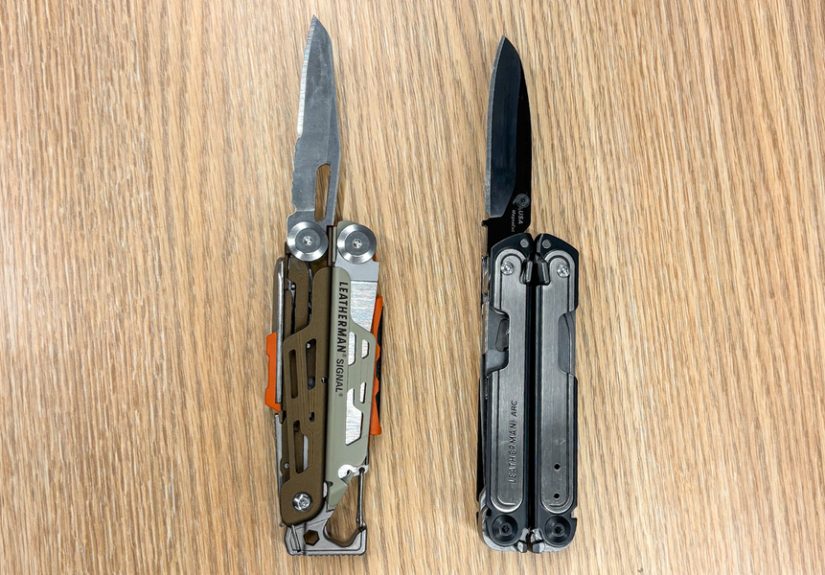
Choosing between the Leatherman Arc and the Leatherman Signal is a little like choosing between a luxury daily driver and a trail-ready pickup. Both will get the job done. Both are impressively capable. Both make you feel oddly powerful when a loose screw, stubborn wire, or campfire problem appears out of nowhere. But they are not trying to be the same tool, and that is exactly why this comparison matters.
If you have spent any time hunting for the best multitools in 2025, you have probably seen these two pop up again and again. The Arc has the shiny premium reputation, the fancy MagnaCut blade, and the “I paid real money for this, so yes, I will absolutely use it to open this box with confidence” energy. The Signal, meanwhile, has the outdoorsy charm of a multitool that packed its own campfire starter, whistle, and hammer and then asked whether you brought snacks.
So which one deserves your pocket, your backpack, or that precious slot in your emergency kit? Let’s break it down in plain English, without pretending every buyer needs the same tool. Because the truth is simple: the best multitool is not the one with the loudest fan club. It is the one that fits your actual life.
The Short Answer
If your multitool will mostly handle everyday carry tasks, home fixes, garage work, road-trip repairs, bike adjustments, package opening, cord cutting, and general “why is this thing suddenly loose?” moments, the Leatherman Arc is the better buy. It is more refined, more versatile, and better balanced for daily problem-solving.
If your tool will spend more time in a backpack, camping bin, hiking kit, truck console, or cabin drawer, the Leatherman Signal makes more sense. It is built around outdoor priorities, not office-drawer elegance. It gives you survival-leaning features the Arc simply does not bother to include.
In other words, this is not a straight-up winner-takes-all fight. It is more like a job interview. The Arc is applying for “premium all-around multitool.” The Signal is applying for “outdoor-ready adventure sidekick.” Both are very qualified. One just showed up wearing hiking boots.
Leatherman Arc: The Premium Everyday Beast
Why the Arc Gets So Much Attention
The Arc is the multitool that arrives with a reputation before you even unfold it. Its headline feature is the MagnaCut blade, which is the kind of knife steel that makes gear people suddenly speak in reverent tones and forget how normal conversations work. That premium blade is not marketing fluff. It gives the Arc a genuine edge in edge retention, corrosion resistance, and overall blade appeal.
But the Arc is not just a knife with pliers attached. What makes it special is how well the whole platform is designed for everyday use. It has outside-accessible tools, one-handed opening, locking tools, bit drivers, files, scissors, a pry tool, cutters, crimpers, and a well-rounded spread of functions that make sense in real life. Not fake movie-trailer life. Real life. The kind where you tighten a cabinet pull, snip zip ties, scrape something unpleasant off a battery terminal, and then immediately use the scissors on a clothing tag.
The Arc feels like Leatherman asked, “What if our multitool stopped feeling like a compromise and started feeling like a premium piece of gear?” That question is why the Arc has become such a favorite among EDC users, homeowners, tinkerers, and people who like their tools to feel smooth, modern, and expensive in a satisfying rather than ridiculous way.
What the Arc Does Best
The Arc shines when versatility is king. It is better than the Signal at the broad middle of multitool life: opening, cutting, trimming, tightening, filing, prying, and making quick repairs without needing a dedicated toolbox. The spring-action scissors are especially useful because scissors are one of those tools you think you can live without until you spend one week without them. Then suddenly every thread, clamshell package, loose strap, and zip tie becomes your sworn enemy.
The Arc is also easier to love if you care about access and ergonomics. The one-handed deployment and outside-accessible layout make it faster and less annoying to use. That matters more than spec-sheet nerds sometimes admit. A tool that is pleasant to access gets used more often. A tool that fights you every time you need it tends to become an expensive pocket decoration.
Where the Arc Falls Short
The Arc’s biggest weakness is obvious: price. This is not the multitool you buy because you found twenty dollars in a jacket pocket and felt adventurous. It is expensive, and that means expectations are sky-high.
Its other downside is that premium design does not magically make it perfect for every job. Some reviewers have noted that the FREE architecture, while excellent for one-handed access, comes with a bit of play in the pliers compared with more traditional heavy-duty tools. That does not ruin the Arc, but it does mean the Arc is optimized for convenience and versatility more than brute-force clamp work.
Also, if you mostly camp, fish, hike, and keep a multitool for outdoor contingencies, some of the Arc’s urban-friendly refinement may feel like overkill. It is a fantastic multitool. It is just not specifically trying to be your little wilderness goblin helper.
Leatherman Signal: The Outdoor Specialist With Campfire Credentials
Why the Signal Has a Loyal Following
The Signal is one of the easiest multitools to understand at a glance. It is built for the outdoors. Not vaguely outdoorsy in a lifestyle-magazine way. Actually outdoors. Camping, hiking, backpacking, overlanding, fishing, hunting camp, emergency prep, and “I hope I never need this, but I’m glad it’s here” situations.
Its feature list tells the story immediately: ferro rod, emergency whistle, hammer, carabiner, saw, diamond-coated sharpener, combo blade, and a core set of pliers and drivers. The Signal is not trying to be the most elegant desk-to-driveway multitool. It is trying to be the tool you clip to your pack before heading somewhere with dirt, weather, and fewer second chances.
That design focus gives the Signal real personality. It feels purpose-built in a way many multitools do not. Plenty of multitools claim to be “for everything.” The Signal says, “No, no, I know exactly what I’m here for.” That confidence is part of its charm.
What the Signal Does Best
The Signal is at its best when your environment is less predictable. The hammer is handy for tent stakes and small field tasks. The ferro rod and whistle are not gimmicks if you actually camp or keep a prepared kit. The sharpener is clever, because outdoor blades eventually need touch-ups and the Signal assumes you may not have a workbench waiting nearby.
It is also lighter than the Arc and slightly longer in closed length, giving it a lean, trail-friendly personality. It does not feel like a luxury tool first and an outdoor tool second. It feels like a companion piece for rougher use, with a mix of practical implements and just enough survival flavor to be genuinely useful.
And while the Signal is less fancy than the Arc, it is not some stripped-down budget beater. It is still very much a Leatherman: durable, thoughtfully arranged, and capable of handling a broad mix of repair and cutting tasks. It simply spends more of its design budget on outdoor readiness.
Where the Signal Falls Short
The Signal’s weakness is also easy to define: it sacrifices some everyday convenience to prioritize the outdoors. Most notably, it lacks scissors. That is a surprisingly big deal for many users. If your multitool handles a lot of urban or household tasks, scissors are not a luxury. They are one of the most-used tools on the whole platform.
The Signal also does not offer the same broad “generalist” toolkit feel as the Arc. You get a diamond-coated sharpener, but not the kind of file versatility some people want for workshop or repair use. Its combo blade is useful, but less appealing than the Arc’s premium plain-edge blade if you value cleaner slicing and easier day-to-day cutting.
So yes, the Signal is smart and capable. But if your life is more apartment, garage, office, and glove box than campsite, trail, and backcountry, you may end up paying for features you admire more than you actually use.
Leatherman Arc vs. Signal: Side-by-Side Comparison
| Category | Leatherman Arc | Leatherman Signal |
|---|---|---|
| Tool Count | 20 tools | 19 tools |
| Current Price | Premium, around $249.95 | Lower, around $149.95 |
| Weight | 8.6 oz | 7.5 oz |
| Main Blade | MagnaCut plain-edge blade | 420HC combo blade |
| Opening Style | Outside-accessible, one-handed, locking tools | More traditional layout with outdoor-specific tools |
| Standout Features | Scissors, bit drivers, file set, premium blade, pry tool | Ferro rod, whistle, hammer, carabiner, sharpener |
| Best For | EDC, home repairs, general use, premium buyers | Camping, hiking, emergency kits, outdoor adventures |
| Main Trade-Off | Expensive | No scissors and less daily-use flexibility |
Blade Steel, Tool Layout, and Real-World Usability
Blade Performance
This is one of the clearest wins for the Arc. Its MagnaCut blade gives it serious appeal as both a multitool and a knife. If you care about sharpness lasting longer, better corrosion resistance, and a more premium cutting experience, the Arc is the better choice by a comfortable margin.
The Signal’s combo blade is still useful, tough, and totally serviceable. It just does not carry the same premium cutting feel. For many campers, that will be fine. For knife enthusiasts and daily users, the Arc is much more satisfying.
Tool Access and Ergonomics
The Arc feels more modern. Its outside-accessible layout and smoother one-handed operation are not just nice in theory; they make it faster to use in practice. That is a real advantage when you are working with one hand full, balancing on a ladder, standing by a bike rack, or trying to fix something in bad lighting before your patience files for divorce.
The Signal is more utilitarian. It is not clumsy, but it is clearly designed with field readiness in mind rather than polished EDC pleasure. It feels more like a rugged camp companion than a multitool trying to impress knife people on the internet. Depending on your priorities, that is either a drawback or exactly the point.
Feature Balance
This is where the matchup gets wonderfully unfair. The Arc wins if you judge by broad versatility. The Signal wins if you judge by outdoor specialization. The Arc gives you the better all-around toolkit. The Signal gives you a more mission-specific one.
That is why so many debates about these two tools go sideways. People keep asking which is better when they should be asking, “Better for what?” A multitool is not a personality test. It is a problem-solving device. Match the device to the problems.
Who Should Buy the Leatherman Arc?
Buy the Arc if you want one multitool that handles the widest range of everyday jobs with the fewest compromises. It is a great choice for homeowners, apartment dwellers, EDC fans, cyclists, road-trippers, DIY hobbyists, and anyone who appreciates premium materials and smooth access.
It is also the better option if your multitool often replaces reaching for a small toolbox. The scissors, files, bit drivers, and premium blade make it feel more complete. If you only want to buy one high-end multitool and carry it regularly, the Arc makes a very strong case.
Who Should Buy the Leatherman Signal?
Buy the Signal if your multitool is part of an outdoor kit first and an everyday tool second. It makes a ton of sense for campers, hikers, backpackers, overlanders, anglers, hunters, scout leaders, and anyone building a capable emergency or vehicle setup.
The Signal also works well for buyers who want a purpose-driven tool instead of a luxury multitool. It is practical, field-friendly, and genuinely clever in the way it bundles preparedness features without becoming absurdly bulky.
Best Multitools 2025: So Which One Wins?
Here is the honest verdict: the Leatherman Arc is the better multitool for most people, while the Leatherman Signal is the better multitool for specific people.
That may sound like a politician’s answer, but it is not. It is the useful answer. For the average buyer who wants the strongest mix of cutting performance, everyday usability, and overall flexibility, the Arc is the winner. It simply covers more ground with fewer compromises.
But if you are the kind of person whose weekends involve tents, trailheads, camp kitchens, fire-starting, and “let’s just keep this in the truck in case” preparedness, the Signal is not second place. It is first place in its own division.
So if your life is mostly cardboard, cordage, screws, small repairs, and urban chaos, buy the Arc. If your life is mostly campfire smoke, wet gear, trail snacks, and the possibility of needing to hammer a tent stake before sunset, buy the Signal.
Real-World Experience: What Ownership Actually Feels Like
Living with the Arc and living with the Signal are two very different experiences, and that difference shows up almost immediately. The Arc feels like the multitool version of a premium everyday carry knife that went to graduate school and learned electrical crimping. It opens smoothly, the tools are laid out intelligently, and it keeps rewarding you for carrying it in ordinary life. One day it is trimming frayed paracord. The next day it is tightening a loose cabinet handle, opening packaging without turning the contents into confetti, and clipping a tag off a new jacket. It feels polished. It feels deliberate. It feels like a multitool designed for people who actually use multitools often, not just admire them in product photos.
The Signal feels different in the hand and even more different in context. It makes the most sense when you are outdoors, near a trail, tossing gear into a truck bed, or setting up camp with cold fingers and fading daylight. The carabiner, whistle, ferro rod, and hammer all seem oddly specific until you are in exactly the kind of environment they were made for. Then the Signal starts to look very smart. It is the multitool equivalent of the friend who may seem overprepared at first, right up until something goes wrong and suddenly everybody is asking that friend for help.
The biggest ownership mistake people make is buying the Arc because it is premium when they really need the Signal because they live outdoors on weekends. The second biggest mistake is buying the Signal because it looks adventurous when they actually spend 90 percent of their time using a multitool for daily cutting, snipping, tightening, and fixing. That is when the missing scissors start to sting. That is when the Arc’s better blade steel and more versatile tool layout begin to look worth the money.
There is also a comfort factor that does not show up clearly on a spec sheet. The Arc tends to feel more like a daily companion. You carry it because it is useful in a hundred little ways, and over time that convenience justifies its higher price. The Signal feels more like a trusted kit tool. You appreciate it most when conditions are messy, gear needs field repair, or the whole point is being prepared away from home. It has less of that “use me for everything” personality and more of a “keep me close when the setting gets unpredictable” vibe.
In the long run, the better ownership experience usually comes down to one question: where will this multitool spend most of its life? If the answer is pocket, desk, glove box, garage, and daily carry rotation, the Arc is the smarter, happier choice. If the answer is backpack, campsite, truck, fishing bag, and emergency kit, the Signal feels more natural. Neither tool is wrong. But the right one will feel uncannily right within the first week, and the wrong one will make you wonder why you paid extra for features you barely touch.
Final Thoughts
The Leatherman Arc vs. Signal debate keeps going because both tools are good enough to make people passionate. That is the nice way of saying the internet loves a gear argument. But once you strip away the hype, the answer becomes refreshingly simple.
The Arc is the better premium multitool for everyday carry, home tasks, and wide-ranging versatility. The Signal is the better multitool for camping, outdoor preparedness, and adventure-focused use. One is the polished generalist. The other is the field-ready specialist.
Pick the one that matches your environment, not the one that wins the loudest online debate. Your future self, standing in a garage or a campsite with a problem to solve, will appreciate the good judgment. Also, your cardboard boxes should probably be nervous.