Table of Contents >> Show >> Hide
- What Is a Cyst, Exactly?
- What Cysts Look Like in Photos and Imaging
- Common Causes of Cysts
- Main Types of Cysts
- Symptoms: When a Cyst Is Quiet and When It Is Not
- How Cysts Are Diagnosed
- Treatments: Watch, Drain, Remove, or Treat the Cause
- Can Cysts Be Prevented?
- Common Real-World Experiences People Report
- Final Thoughts
If the word cyst makes you imagine something dramatic, ominous, and ready to audition for a medical soap opera, take a breath. Most cysts are benign, many are small, and quite a few are discovered by accident during an exam or imaging study. Still, “most are harmless” is not the same thing as “all are harmless,” which is why cysts deserve a closer look.
In plain English, a cyst is a closed sac or pocket of tissue that can be filled with fluid, air, pus, keratin, or other material. Cysts can form in the skin, ovaries, breasts, kidneys, wrists, behind the knee, and in many other parts of the body. Some fade quietly into the background. Others become painful, inflamed, infected, or big enough to interfere with daily life. A few can mimic tumors or need testing to rule out something more serious.
This guide breaks down what cysts are, what they often look like in photos and scans, the most common causes, the major types, treatment options, and realistic prevention strategies. No scare tactics. No miracle cures. No “just pop it at home” nonsense.
What Is a Cyst, Exactly?
A cyst is not one single disease. It is a broad term for a sac-like structure that forms in tissue. What is inside that sac depends on the type. A skin cyst may hold keratin and dead skin cells. A breast or kidney cyst is often fluid-filled. A Baker’s cyst behind the knee contains joint fluid. A ganglion cyst near the wrist contains a thick, slippery fluid connected to a joint or tendon sheath.
That variety is why the word cyst can sound simple while meaning very different things in real life. A tiny epidermoid cyst on the neck and a symptomatic ovarian cyst are both cysts, but they do not behave the same way, are not diagnosed the same way, and definitely do not belong in the same “one-size-fits-all” treatment bucket.
What Cysts Look Like in Photos and Imaging
The title mentions images, and that matters because cysts are often recognized by how they look on the skin or on imaging tests.
On the skin
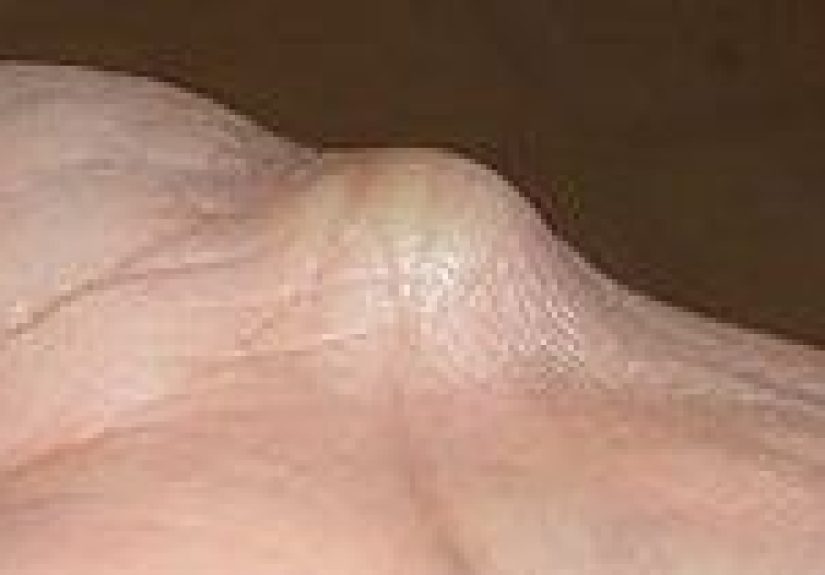
Skin cysts often appear as round or dome-shaped bumps under the skin. An epidermoid cyst may have a small central opening or “punctum,” and when inflamed it can turn red, tender, and warm. Some feel soft, while others feel firm and movable. Ganglion cysts on the wrist can look like smooth lumps that change size over time, sometimes getting larger with activity and smaller with rest.
On ultrasound
Ultrasound is one of the most useful tools for telling a fluid-filled structure from a solid mass. A simple cyst usually looks smooth, well-defined, and fluid-filled. That is especially helpful for ovarian, breast, kidney, and Baker’s cysts. In the breast, ultrasound helps distinguish a simple cyst from a solid lump. In the kidney, ultrasound can reveal round or oval sacs that are often found incidentally.
On CT or MRI
CT scans and MRIs are often used when a provider needs more detail. MRI is especially useful for cysts near joints, such as occult ganglion cysts, and for Baker’s cysts when doctors want to look for underlying knee problems like a meniscus tear. CT and MRI can also help sort out whether a kidney cyst looks simple and harmless or whether it has features that need more evaluation.
The bottom line: a lump that “looks like a cyst” is not always a cyst. That is why imaging, aspiration, or biopsy sometimes enters the chat.
Common Causes of Cysts
Cysts can form for several reasons, and the cause depends heavily on the type:
- Blocked ducts or glands: This is common in some skin and breast cysts.
- Trapped skin cells: Epidermoid cysts develop when surface skin cells get trapped under the skin and keep producing material.
- Hormonal changes: Ovarian cysts often form during ovulation. Breast cysts also seem linked to hormonal fluctuations.
- Joint or tendon irritation: Ganglion cysts arise from structures around joints and tendon sheaths.
- Underlying joint problems: Baker’s cysts often develop because of knee arthritis, cartilage injury, inflammation, or a meniscus tear.
- Age-related changes: Simple kidney cysts become more common with age.
- Inherited conditions: Some cyst-related diseases, such as polycystic kidney disease, run in families and are very different from isolated simple cysts.
- Infection, inflammation, trauma, or parasites: Less commonly, cysts may be related to these factors depending on location.
Main Types of Cysts
1. Epidermoid cysts
These are among the most common skin cysts. They are usually slow-growing, benign lumps filled with dead skin cells. They often appear on the face, neck, scalp, or trunk. Many are painless unless they become inflamed or infected. People often call them “sebaceous cysts,” but that label is usually inaccurate. If you squeeze one at home, you are not performing surgery; you are auditioning for an infection.
2. Ovarian cysts
Ovarian cysts are fluid-filled sacs that form in or on an ovary. Many are functional cysts related to ovulation and go away on their own. Some cause no symptoms at all, while others trigger bloating, pelvic pressure, or one-sided lower abdominal pain. Problems become more urgent if a cyst ruptures, bleeds, or twists the ovary. Rarely, an ovarian cyst can be cancerous, and the risk increases with age.
3. Breast cysts
Breast cysts are usually benign fluid-filled sacs. They may feel soft, firm, round, or movable, and they sometimes become more noticeable before a menstrual period. Many do not need treatment at all. If they are painful or large, fine-needle aspiration may both confirm the diagnosis and relieve symptoms by draining the fluid.
4. Ganglion cysts
These are the most common lumps in the hand and wrist. They are noncancerous and often arise from tissue around a joint. They can appear, shrink, disappear, and come back like they are following their own mysterious calendar. Some cause no symptoms. Others press on nearby nerves and cause pain, tingling, or weakness.
5. Kidney cysts
Simple kidney cysts are common, especially as people get older. They are often harmless and discovered during imaging for some unrelated reason. Most do not affect kidney function. Trouble starts only when a cyst becomes infected, bleeds, grows large enough to cause pain, or blocks blood or urine flow. That is very different from polycystic kidney disease, a genetic condition that can damage kidney function over time.
6. Baker’s cysts
A Baker’s cyst forms behind the knee when joint fluid builds up and bulges backward. It often occurs along with arthritis, inflammation, or a meniscal tear. Some cause only a feeling of fullness; others lead to stiffness, swelling, or pain. A ruptured Baker’s cyst can mimic a blood clot, which is one reason sudden calf swelling should never be brushed off.
Symptoms: When a Cyst Is Quiet and When It Is Not
Many cysts are symptom-free. Others announce themselves more dramatically. Symptoms depend on location, size, inflammation, infection, or pressure on nearby structures.
Common symptoms include:
- A round lump under the skin or in soft tissue
- Pain, tenderness, or soreness
- Redness, warmth, or drainage if inflamed or infected
- Pressure, bloating, or pelvic pain with ovarian cysts
- Breast tenderness or a lump that changes with the menstrual cycle
- Wrist pain, tingling, or weakness with ganglion cysts
- Behind-the-knee fullness, stiffness, or swelling with Baker’s cysts
- Blood in the urine, fever, or flank discomfort in complicated kidney cysts
Red flags that need prompt medical evaluation
- A rapidly growing lump
- Severe or sudden pain
- Fever, spreading redness, or significant warmth
- Bloody fluid from an aspirated cyst
- A breast lump that persists, feels firmer, or comes with skin changes
- Sudden pelvic pain, faintness, or heavy bleeding
- Calf swelling or shortness of breath when a Baker’s cyst is possible
- Night pain, unexplained weight loss, or other features that raise concern for something other than a simple cyst
How Cysts Are Diagnosed
Diagnosis usually starts with a history and physical exam. If a cyst is visible or easy to feel, a clinician will often assess size, tenderness, mobility, and any signs of infection.
From there, testing may include:
- Ultrasound: Often the first choice for breast, ovarian, kidney, and Baker’s cysts
- X-rays: Useful for ruling out bone or joint problems, though they often do not show the cyst itself
- CT or MRI: Helpful when more detail is needed
- Fine-needle aspiration: Used to remove fluid and help identify the cyst type
- Biopsy: Needed when a mass is solid, suspicious, persistent, or not behaving like a simple cyst
- Blood or urine tests: Sometimes used for kidney-related evaluation or broader workups
The key principle is simple: doctors are not just confirming that a cyst exists. They are deciding whether it is harmless, inflamed, infected, recurring, pressing on important structures, or masquerading as something more serious.
Treatments: Watch, Drain, Remove, or Treat the Cause
Treatment depends on the cyst’s type, location, symptoms, and risk profile.
Observation
Many cysts do not need immediate treatment. Small, painless ganglion cysts, simple breast cysts, uncomplicated ovarian cysts, and many simple kidney cysts are often watched over time.
Aspiration or drainage
This is common for breast cysts, some ganglion cysts, Baker’s cysts, and certain inflamed or symptomatic cysts. It can relieve pressure and provide diagnostic information. The catch? Draining the cyst does not always remove the “root,” so recurrence is possible.
Medication
If inflammation is the issue, a clinician may use steroid injections in selected cases. Antibiotics are used when a cyst is infected, but not every red, swollen cyst is truly infected. Dermatology guidance specifically warns against routinely prescribing antibiotics for inflamed epidermoid cysts unless infection is confirmed.
Surgical removal
Surgery may be recommended when a cyst is repeatedly painful, keeps coming back, interferes with function, looks suspicious, or causes complications. For skin and ganglion cysts, removing the entire cyst wall or sac helps reduce the chance of recurrence. For ovarian cysts, surgery may be needed when there is pain, persistence, postmenopausal concern, bleeding, or torsion risk.
Treating the underlying problem
This matters especially for Baker’s cysts and some recurrent cysts. If the knee inflammation, arthritis, or meniscal tear is not addressed, the cyst often returns. Likewise, some skin cysts are more likely to recur if only drained and not fully excised when appropriate.
What not to do
Do not squeeze, lance, cut, or “empty” a cyst at home. That can worsen inflammation, introduce infection, delay real diagnosis, and turn a manageable problem into a mess with very bad Yelp energy.
Can Cysts Be Prevented?
Prevention is tricky because many cysts are not fully preventable. Still, there are ways to lower risk or reduce complications.
- Do not pick or squeeze skin cysts: This lowers the chance of inflammation and infection.
- Manage acne and skin irritation: Since some skin cysts are linked to blocked glands or trapped skin cells, good skin care may help in certain cases.
- Address joint strain and underlying injuries: For ganglion and Baker’s cysts, treating repetitive stress or knee problems may reduce recurrence.
- Follow gynecologic care plans: Some people with recurring ovarian cysts may benefit from hormonal management such as birth control pills, depending on the cause and their medical history.
- Keep follow-up appointments: Monitoring matters when a cyst is being watched rather than treated.
- Know your baseline: Regular breast awareness and routine medical care help people notice new or changing lumps earlier.
In short, prevention is often less about stopping the first cyst forever and more about avoiding inflammation, catching changes early, and managing the conditions that help cysts form or recur.
Common Real-World Experiences People Report
The following experiences are composite, educational examples based on common patterns people describe when dealing with cysts. They are not individual patient stories, but they reflect what many people actually go through.
“I thought it was just a pimple that had commitment issues.”
A lot of people first notice a skin cyst because it looks like a stubborn bump that refuses to leave. At first it is painless, easy to ignore, and mostly annoying because it lives in a very visible place like the jawline, neck, or upper back. Then one day it gets red, puffy, and tender, and suddenly a tiny bump becomes the center of the week’s emotional drama. Many people try warm compresses, cover it with clothing, and promise themselves they will not poke it. Then they poke it. That usually makes things worse. After finally seeing a clinician, they learn it is an epidermoid cyst and that inflammation does not always mean infection. For many, the biggest relief is simply finding out that the lump is benign and manageable.
“My wrist lump had a social life of its own.”
People with ganglion cysts often describe the lump as weirdly unpredictable. It may be obvious after a long day typing, lifting, or exercising, then seem smaller the next morning. Some say it is painless but awkward, especially when it sits right where a watch band or wrist brace rubs. Others notice tingling or a dull ache when the cyst presses on a nearby nerve. One common experience is frustration with recurrence: aspiration may flatten the lump, only for it to return later like a sequel nobody requested. Even so, many people feel reassured once they understand that ganglion cysts are usually harmless, and that observation is often a reasonable option if pain and function are not major issues.
“I found a breast lump and immediately panicked.”
This is one of the most understandable reactions on the list. People often describe discovering a new breast lump in the shower and going straight from “What is that?” to “Oh no.” Many breast cysts turn out to be benign, but the emotional experience before imaging can be intense. Some report that the lump felt round, movable, and more tender right before a period. Others say the discomfort came and went with the menstrual cycle. Ultrasound often brings an enormous sense of relief when the radiologist identifies a simple fluid-filled cyst. If aspiration is needed, many people are surprised by how quickly symptoms improve after the fluid is removed. The experience is a strong reminder that not every lump is cancer, but every new or changing lump deserves evaluation.
“My knee felt tight, then my calf swelled, and I had no idea what was happening.”
People with Baker’s cysts often talk about a sensation of fullness behind the knee before they ever use the word cyst. It may feel tight when bending the leg, especially after walking, climbing stairs, or standing for long stretches. Some think they simply overdid exercise or aggravated arthritis. When the cyst is larger, swelling and stiffness can become obvious. If it ruptures, the experience can be alarming: fluid tracks down the calf, causing pain and swelling that can feel serious enough to mimic a blood clot. Even when the cyst itself is not dangerous, the uncertainty can be stressful. Many people only get lasting relief once the underlying knee issue, such as arthritis or a meniscal tear, is treated rather than the fluid pocket alone.
Final Thoughts
Cysts are common, varied, and often far less frightening than they first appear. Many are benign and need little more than observation. Others need aspiration, medication, or surgical removal. The most important rule is not to guess based on appearance alone. A lump may indeed be “just a cyst,” but it can also mimic infection, inflammation, a solid mass, or another condition entirely.
If a cyst is painful, growing, inflamed, recurrent, or showing up in a high-stakes location like the breast, ovary, kidney, or behind the knee, getting it evaluated is the smart move. In medicine, calm beats guessing, and ultrasound beats internet bravado every time.