Table of Contents >> Show >> Hide
- What Is Starfish Cactus, Exactly?
- Best Growing Conditions for Starfish Cactus
- How to Water Starfish Cactus Without Loving It to Death
- Do You Need to Fertilize It?
- How to Encourage Flowers
- How to Propagate Starfish Cactus
- Repotting and General Maintenance
- Common Problems and How to Fix Them
- Can Starfish Cactus Grow Outdoors?
- Where It Looks Best in the Home
- What Growing a Starfish Cactus Actually Feels Like
- Final Thoughts
Note: This is a clean HTML <body> section written in standard American English for direct web publishing, with no source links or citation placeholders.
If you have a soft spot for weird plants, Stapelia hirsuta may be your next great obsession. Commonly called starfish cactus or starfish flower, this eye-catching succulent is famous for its thick, angular stems and its fuzzy, star-shaped blooms that look like they were designed by a botanist with a flair for drama. The flowers are gorgeous. The smell? Less gorgeous. Think “nature’s prank gift” rather than “fresh bouquet.”
Still, don’t let the infamous odor scare you away. Starfish cactus is surprisingly easy to grow once you understand what it wants: lots of light, warm temperatures, sharp drainage, and a watering routine built on restraint rather than enthusiasm. In other words, this is not the plant for people who treat every houseplant like a thirsty fern.
Here’s how to grow and care for starfish cactus the smart way, from choosing the right soil to encouraging blooms without accidentally drowning the poor thing.
What Is Starfish Cactus, Exactly?
Despite the common name, starfish cactus is not a true cactus at all. Stapelia hirsuta is a succulent in the dogbane family, the same broad plant family that includes milkweeds. It comes from southern Africa and grows in dry, bright conditions where the soil drains quickly and water never hangs around for long.
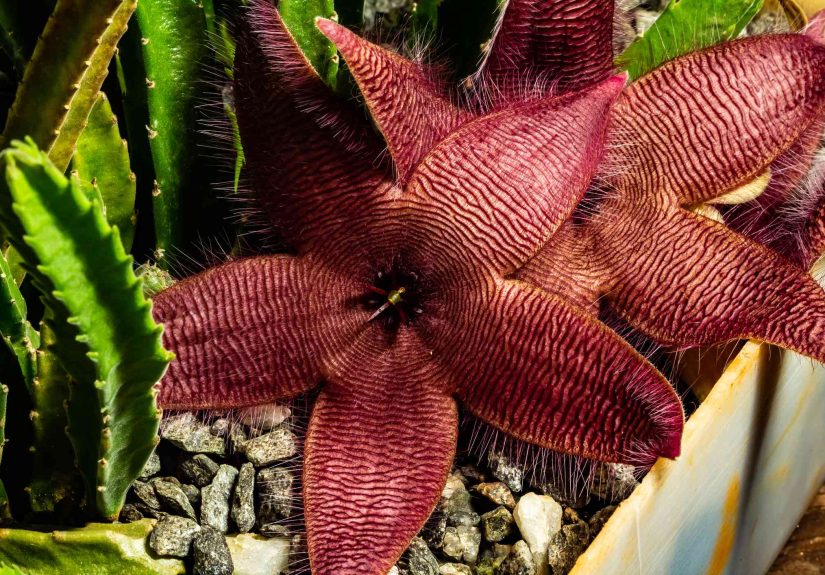
The plant forms clumps of upright to sprawling stems that are four-angled, fleshy, and usually spineless. Those stems do all the heavy lifting because the plant has little to no showy foliage. When mature and happy, it produces large, star-shaped flowers that are usually maroon, burgundy, purple-red, or muted reddish brown and covered with fine hairs. These blooms can be wildly beautiful, but they also smell like rotting meat because the plant relies on flies for pollination. Yes, really. It is basically floral theater with a very committed marketing strategy.
As a bonus, starfish cactus is generally considered a beginner-friendly succulent. It is also not known to be toxic to cats and dogs, though it is still best to keep curious pets from chewing any houseplant just to avoid stomach upset and general household chaos.
Best Growing Conditions for Starfish Cactus
Light: Bright, Strong, But Not Always Brutal
Starfish cactus grows best in bright light with several hours of direct sun or very strong indirect light. Indoors, a south-facing or west-facing window is usually the sweet spot. Outdoors, it can handle full sun in mild conditions, but in very hot climates it appreciates some protection from punishing afternoon rays.
If the plant is not getting enough light, you may notice stretched, weak stems, slow growth, or a stubborn refusal to bloom. If it gets blasted with sudden intense sun after living indoors, the stems can redden, purple up, or scorch. A little color change from sun stress is not always a crisis, but crispy damage is your cue to ease off.
The best strategy is gradual acclimation. If you move the plant outdoors for summer, give it a few days in bright shade or gentle morning sun before introducing stronger light.
Temperature and Humidity: Warm and Dry Wins
This succulent likes warmth. During active growth, starfish cactus is happiest in temperatures roughly between 70 and 95 degrees Fahrenheit. It can cope with heat, but prolonged extreme temperatures may slow it down. In winter, keep it above 50 degrees Fahrenheit, and never let it sit out in frost.
Low humidity is ideal. This is one of those plants that prefers dry air and excellent airflow. Humid rooms, soggy patios, and waterlogged corners are not its love language.
Soil and Pot: Drainage Is the Whole Game
If there is one rule that matters more than all the others, it is this: plant starfish cactus in a gritty, fast-draining mix. Use a cactus or succulent potting mix and improve it further with coarse sand, pumice, perlite, or small gravel if needed. The goal is a potting medium that dries quickly and never stays swampy around the roots or stem bases.
A shallow terra-cotta or clay pot with drainage holes is often the best choice. Clay allows moisture to evaporate through the pot walls, which helps reduce the risk of rot. A shallow pot also suits the plant’s growth habit better than a deep one. If you want to add a top dressing of gravel or grit, that can help keep moisture away from the stems and make the container look a little more polished, too.
How to Water Starfish Cactus Without Loving It to Death
Overwatering is the fastest way to turn a healthy starfish cactus into compost with ambition. This plant is drought tolerant and far happier with slightly too little water than slightly too much.
Use a soak-and-dry approach. Water the plant thoroughly until excess runs from the drainage hole, then wait until the potting mix dries out completely before watering again. Do not give it little sips every few days. That only keeps the soil damp, which is exactly what this plant hates.
During spring and summer, when the plant is actively growing, you will water more often. During fall, start tapering off. In winter, water very little. If the plant is being kept cool and somewhat dormant, it may need almost no water at all for a while. If it is staying in a warm indoor room through winter, give only enough moisture to keep the stems from shriveling severely.
Instead of watering by the calendar, use the plant and soil as your guide. A starfish cactus in a small clay pot near a bright window may dry out faster than one in a large plastic pot with weaker light. The schedule depends on light, pot size, season, airflow, and your home environment.
Signs Your Watering Routine Needs Help
- Soft, mushy stems: usually too much water or early rot.
- Yellowing and collapse at the base: classic wet-feet trouble.
- Wrinkled or slightly shrunken stems: often thirst, but also possible root damage.
- No growth for ages: could be low light, cold temperatures, or roots sitting in stale wet soil.
Do You Need to Fertilize It?
Not much. In fact, starfish cactus does perfectly well without frequent feeding. If you want to give it a boost, use a diluted low-nitrogen cactus fertilizer once or twice during spring or summer. That is enough. Heavy feeding tends to create weak, overly lush growth and can reduce the tidy, resilient habit you want from a succulent.
Skip fertilizer during fall and winter or anytime the plant is resting.
How to Encourage Flowers
Let’s be honest: most people grow Stapelia hirsuta for the blooms. The flowers are outrageous in the best possible way. To encourage starfish cactus to flower, focus on the basics rather than secret tricks.
- Give it bright light with some direct sun.
- Keep it warm during the growing season.
- Do not overpot it; slightly snug roots are often fine.
- Allow proper dry periods between waterings.
- Avoid sudden environmental changes once buds form.
Blooms usually appear in summer or fall and may last only a few days to a week, so enjoy the show while it lasts. Also, this is the moment when many growers decide the plant would look lovely on a porch rather than in the living room. You will understand why the first time it flowers near your sofa.
How to Propagate Starfish Cactus
Propagation is one of the most satisfying parts of growing this plant because it is usually straightforward. Stem cuttings are the easiest method.
Step-by-Step Propagation by Cuttings
- Choose a healthy stem during spring or summer.
- Use a clean knife or pruners to make a neat cut.
- Set the cutting aside in a warm, dry, shaded place until the cut end calluses. Depending on thickness, this can take several days or longer.
- Lay the cutting on top of a dry or barely moistened gritty succulent mix rather than burying it deeply.
- Keep it in bright, indirect light and water very lightly only after the mix dries again.
- Once roots begin to form, pot it normally and continue with standard care.
You can also propagate by seed, but cuttings are faster, easier, and much more common for home growers.
Repotting and General Maintenance
Starfish cactus does not need frequent repotting. In fact, it often stays content in the same pot for years. Repot only when the plant becomes crowded, the soil has broken down, or you suspect root problems.
When repotting, move only one pot size up. A huge pot full of damp mix is an engraved invitation to rot. Refresh the plant in early spring or early summer if possible, trim away any dead or damaged roots or stems, and wait about a week before giving it a deep watering. That pause lets disturbed roots settle and lowers the chance of rot.
Pruning is minimal. Mostly, you are just removing dried, damaged, or diseased stems.
Common Problems and How to Fix Them
Root Rot and Stem Rot
This is the number one problem and almost always traces back to excess moisture. If the stems are soft, blackening, or collapsing, unpot the plant immediately. Remove all rotten tissue with a sterile blade, let healthy pieces dry, and restart them in fresh gritty mix. Sometimes taking cuttings is the quickest rescue plan.
Mealybugs and Other Sap-Sucking Pests
Mealybugs are the main pest to watch for on starfish cactus. They hide in crevices and feed on the stems, weakening the plant and setting it up for secondary disease issues. If you spot white cottony clusters, isolate the plant and treat early. A cotton swab dipped in rubbing alcohol can help on small infestations. For larger problems, use a succulent-safe treatment and improve airflow around the plant.
No Flowers
If your plant looks healthy but refuses to bloom, the most likely causes are insufficient light, too much fertilizer, overly wet growing conditions, or simple immaturity. Some plants need time before they start performing their weird little floral opera.
Red or Purple Stems
This can happen from strong sun, cool conditions, or seasonal stress. Mild color change is not automatically a problem. If the stems remain firm and the plant continues to grow, it may just be responding to bright conditions. If the tissue looks scorched or dry, move it to slightly gentler light.
Can Starfish Cactus Grow Outdoors?
Yes, but only in frost-free or near-frost-free conditions. In most of the United States, starfish cactus is best grown as a container plant that spends warm months outdoors and cool months inside. A bright patio, covered porch, or sunny protected deck can be an excellent summer home as long as the plant is sheltered from nonstop rain and heavy humidity.
Outdoor time often improves flowering because the plant gets stronger light and better airflow. Just remember to bring it inside before chilly nights settle in.
Where It Looks Best in the Home
Because the stems are architectural and the flowers are pure conversation starters, starfish cactus works beautifully in minimalist pots, sunny office corners, bright kitchen windows, and small succulent collections. A low, wide clay bowl suits it especially well.
There is just one placement rule worth underlining in permanent marker: when the flower buds open, you may want some distance between the plant and wherever people gather to eat, work, or discuss candle fragrances with sincerity.
What Growing a Starfish Cactus Actually Feels Like
The experience of growing starfish cactus is a little different from growing other houseplants, and that is part of its appeal. It does not ask for daily attention. It does not wilt theatrically because you skipped one watering. It does not drop leaves in protest because the room was two degrees cooler than yesterday. Instead, it mostly sits there looking like a green sculpture, quietly minding its business until one day it decides to become the strangest plant in the room.
Many growers go through the same emotional arc with Stapelia hirsuta. First, there is curiosity. The plant looks unusual enough to earn a spot on the windowsill, but it still seems manageable. Then comes overconfidence. Because it is a succulent, it appears almost indestructible, which tempts people to water on autopilot or tuck it into a cute pot without drainage. The plant responds by becoming soft, sad, and vaguely offended. That is usually when the lesson lands: starfish cactus is easy, but only if you respect its need for dryness.
Once you figure that out, the relationship gets much better. You learn to read the stems. Firm, plump growth means all is well. Slight wrinkling means it is probably ready for a drink. Mushy or darkened areas mean you took generosity too far. It becomes a plant that teaches restraint, which is oddly useful in gardening and in life. Not everything thrives on constant intervention.
Then, of course, there is the bloom experience. People who have never grown starfish cactus tend to focus on the flower shape and color, and fair enough. The blooms are spectacular up close, with rich tones, dramatic texture, and those tiny hairs that make them look almost unreal. But long-time growers know the flower is really a full sensory event. You notice the bud swelling near the base of the stems. You get excited. You maybe take photos. And then the bloom opens, and suddenly the room smells like a mystery best solved by opening a window.
That moment is part of the charm. It turns the plant into a story, not just decor. Guests lean in, admire it, and then immediately ask, “Wait… what is that smell?” If you enjoy plants that spark conversation, starfish cactus is basically undefeated.
There is also a quiet satisfaction in how forgiving this plant can be once it is established. Break a healthy stem by accident? It can become a new plant. Forget to water for a bit? It usually survives with only minor drama. Need something for a bright windowsill that does not demand tropical humidity or endless fussing? This plant volunteers as tribute. In a world full of precious houseplants with very strong opinions, starfish cactus is refreshingly practical.
For many gardeners, that is the real reason it becomes a favorite. Yes, the bloom is outrageous. Yes, the scent is unforgettable in a way nobody asked for. But the plant also rewards patience, teaches smart watering habits, and looks striking even when it is not in flower. It is weird, resilient, low-maintenance, and impossible to ignore. Honestly, that is a pretty strong résumé for a houseplant.
Final Thoughts
If you want a succulent that goes beyond the usual aloe, jade, or echeveria routine, starfish cactus is an excellent choice. Give it bright light, warm temperatures, sharply drained soil, and a watering schedule based on dryness rather than guilt. Keep it on the dry side, protect it from cold, and resist the urge to fuss. Do that, and Stapelia hirsuta can reward you with years of sculptural growth and some of the most unforgettable flowers in the houseplant world.
Just maybe do yourself a favor and admire those blooms from a respectful distance the first time they open.