Table of Contents >> Show >> Hide
- A Premium Controller With Real Appeal
- The Glue Problem Starts Early
- Fragile Parts Change the Whole Ownership Equation
- The Sticks Feel Better, But the Old Worry Has Not Vanished
- Even the D-Pad Conversation Has Not Gone Away
- Why This Matters More Than a Typical Hardware Complaint
- Should You Still Buy It?
- The Ownership Experience: What This Controller Feels Like After the Honeymoon
- Final Verdict
- SEO Tags
At first glance, the Switch 2 Pro Controller looks like Nintendo did exactly what fans wanted: keep the comfy shape, tighten the build, add a headphone jack, sprinkle in remappable back buttons, and call it a day. That sounds great, because the original Pro Controller already had a loyal fan club. Why reinvent the wheel when you can just make the wheel smoother, quieter, and a little more expensive?
Then the teardowns showed up and kicked down the door like a boss battle.
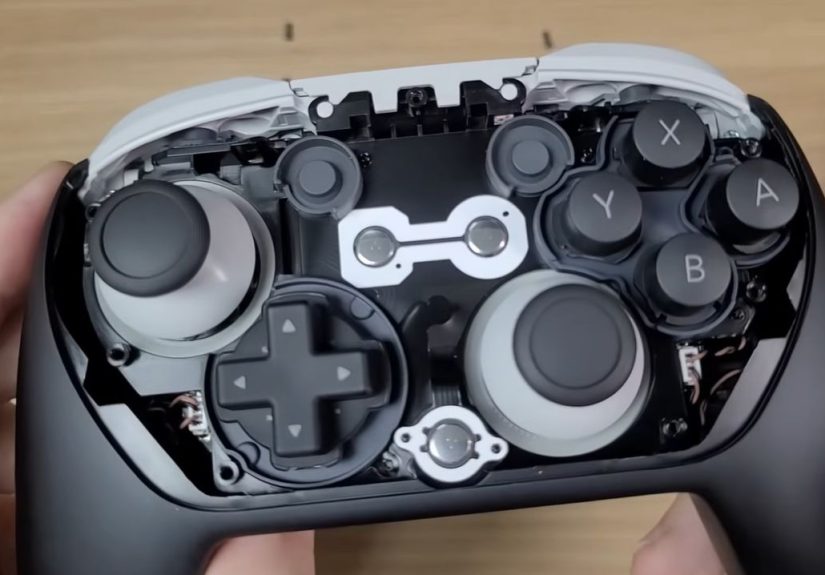
Suddenly, the story around Nintendo’s premium pad changed. Yes, the Switch 2 Pro Controller feels excellent in the hands. Yes, it adds useful quality-of-life upgrades. Yes, plenty of early impressions praised the ergonomics, the refined sticks, and the premium finish. But once the shell came off, another truth emerged: this is the kind of controller that seems happy to be admired, not repaired. If you ever need to replace the battery, fix a drifting stick, or tinker with the D-pad, you may find yourself staring at glue, delicate ribbon cables, thin plastic, and enough tiny internal obstacles to make your screwdriver question its career choices.
That tension is what makes the Switch 2 Pro Controller so interesting. It might be one of Nintendo’s best-feeling controllers ever. It might also be one of its most frustrating to service. For players who only care about what happens during gameplay, this may not matter much. For modders, repair-minded owners, and anyone who keeps hardware long enough to see batteries age and joysticks wear down, it matters a lot.
A Premium Controller With Real Appeal
Let’s be fair before we start throwing adhesive at the wall. On paper, the Switch 2 Pro Controller has a lot going for it. Nintendo gave it features people actually asked for instead of weird gimmicks nobody requested in a fever dream. There is a C button for GameChat, GL and GR back buttons that can be remapped, a 3.5mm audio jack for headsets, motion controls, HD Rumble 2, amiibo support, and the overall familiar shape that many players already loved.
The design philosophy is easy to understand. Nintendo kept the successful silhouette, then refined the details. Official developer commentary suggests the controller was redesigned from scratch, with quieter “smooth-gliding” sticks and grips shaped for better finger room and a more seamless feel. In plain English: Nintendo wanted this thing to feel nicer, sound less clicky, and sit in your hands like it pays rent there.
That seems to have worked. A lot of early impressions praised the controller for feeling more ergonomic and more polished than its predecessor. The back buttons are useful without screaming for attention, and the added headset support makes the controller feel more in line with what players expect from a modern premium pad. The battery life also looks strong, with Nintendo listing roughly 40 hours of use and about 3.5 hours of charging time. That is the kind of stat sheet that makes couch players nod approvingly and immediately forget they were supposed to budget this month.
In other words, Nintendo clearly nailed the front-end experience. The trouble starts when you want to go beyond the front end.
The Glue Problem Starts Early
If you judge a controller by how easy it is to open, the Switch 2 Pro Controller does not exactly greet you with a friendly handshake. Teardown reports show that one of the first steps is removing a glued-on faceplate just to reach the initial screw. That is not a charming quirk. That is a warning label in disguise.
Glue in consumer electronics is not new, but it always changes the relationship between the owner and the product. A screwed-together device says, “You may enter.” A glued-together device says, “You may enter, but I will remember this.” Once adhesive becomes part of the opening process, simple maintenance becomes risky. You can scratch the finish, crack trim, weaken the fit, or create reassembly issues that make the controller feel less solid than before.
That is especially frustrating in a premium accessory. A cheaper controller can sometimes get away with cut corners because it is trying to hit a lower price. A premium controller is supposed to deliver both comfort and confidence. The Switch 2 Pro Controller seems to do the first part beautifully while fumbling the second part the moment you reach for a pry tool.
Fragile Parts Change the Whole Ownership Equation
The glue is only the opening act. Once inside, teardown coverage points to thin plastic sections, delicate ribbon cables, and a layered internal layout that does not seem designed with easy replacement in mind. That matters because controllers are not decorative bowls. They are high-touch, high-wear devices. They get squeezed, tossed on couches, used during marathon sessions, packed into travel bags, and occasionally dropped during moments of competitive enlightenment.
Even careful owners run into long-term wear. Batteries degrade. Sticks loosen. Buttons get mushy. Triggers collect dust and grime. A good controller should survive ordinary use, but a truly great controller should also be maintainable when ordinary use catches up with it.
That is where the Switch 2 Pro Controller invites criticism. Reports suggest the battery is not easily accessible and that you have to work past multiple components before reaching it. That is a headache waiting for its time to shine. Rechargeable batteries are consumable parts. Not “if” parts. Not “maybe” parts. They are “someday this will matter” parts. Building a premium controller that treats battery replacement like a secret side quest is not a very consumer-friendly move.
The same logic applies to fragile clips, cable routing, and reassembly challenges. Even if a skilled repair tech can eventually get the controller apart and back together, the process looks much harder than it needs to be. And for average owners? It may be the kind of job that turns a small repair into a full-on “guess I live with this now” situation.
The Sticks Feel Better, But the Old Worry Has Not Vanished
Here is where the story gets especially complicated. Nintendo says the new sticks are quieter, smoother, and more refined. Hands-on impressions back that up. By most accounts, the sticks feel excellent in everyday use. They glide well, they feel responsive, and they help the controller make a strong first impression.
But feel and long-term durability are not the same thing.
Teardown reporting indicates that the Switch 2 Pro Controller still uses potentiometer-based joystick technology rather than Hall effect or TMR sensors. For gamers who do not spend their evenings reading controller internals for fun, here is the simple version: potentiometers are common and can work well, but they are also more associated with wear over time and stick-drift anxiety. Hall effect and TMR options are often praised because they rely on magnetic sensing and are generally seen as more durable solutions.
That does not automatically mean every Switch 2 Pro Controller is destined for drift doom. It does mean Nintendo did not completely silence the concern. After years of drift discourse around Nintendo hardware, many players hoped this would be the moment the company went all-in on more durable stick tech. Instead, the company improved the feel without fully removing the long-term question mark.
What makes this more irritating is that the sticks appear modular, which sounds good until you remember what it takes to reach them. A theoretically replaceable part is less reassuring when getting to it involves adhesive removal, careful disassembly, and reapplying materials you probably did not want to destroy in the first place. It is like being told your apartment has a spare key, but the key is locked inside a smaller apartment.
Even the D-Pad Conversation Has Not Gone Away
Nintendo fans have debated the Pro Controller D-pad for years, and the Switch 2 version has not escaped scrutiny. Some early impressions praised the controller overall but still flagged concerns about false directional inputs, especially in games where precision matters more than vibes. Fighting games, retro platformers, and menu-heavy titles are usually where this issue becomes obvious. If a D-pad reads an unintended direction while you are trying to do something exact, the result ranges from mildly annoying to “I absolutely pressed down, why am I walking into lava?”
That has led some enthusiasts to discuss tape fixes and DIY modifications, which is where the repair-hostile design comes back to haunt the controller. A finicky D-pad is one thing. A finicky D-pad wrapped in a controller that is annoying to open is another. Nintendo may have created a device that feels premium in the hand while still sending hobbyists straight to the stress aisle.
Why This Matters More Than a Typical Hardware Complaint
Some people will shrug and say, “It is just a controller.” But that argument gets weaker the higher the price goes. When a controller sits in premium territory, buyers reasonably expect three things: excellent performance, long-term durability, and a sane path to maintenance. The Switch 2 Pro Controller seems to deliver strongly on the first, decently on the second so far, and shakily on the third.
That matters because controllers occupy an awkward category in modern gaming. They are accessories, but they are also essential interfaces. If your controller fails, your whole play experience suffers. And because they are used so often, they experience wear more like shoes than like decorative tech. No one is shocked when a battery ages or a joystick starts acting up after heavy use. What owners want is confidence that these common issues do not automatically turn the device into e-waste with nice buttons.
Nintendo’s design choices make the Switch 2 Pro Controller feel like a product built for the showroom first and the service bench second. That may be acceptable to players who replace accessories every few years. It is much less charming for players who value repairability, sustainability, or the simple human desire to keep expensive things working.
Should You Still Buy It?
Honestly? Maybe. And that is the annoying part.
If you primarily care about comfort, reliable wireless play, premium first-party integration, long battery life, and a controller that feels great for docked-mode gaming, the Switch 2 Pro Controller still makes a strong case for itself. It clearly offers a polished everyday experience. For many players, that will outweigh all the teardown drama because they may never open the controller at all.
But if you are the type of owner who thinks about stick drift before it happens, who keeps hardware for many years, who prefers repairable devices, or who likes to mod and maintain your gear, you should go in with eyes wide open. This is not a friendly playground for tinkerers. It is a premium controller with some very non-premium repair habits.
That is why the title practically writes itself: prepare for glue and fragile parts. Not because the controller is bad in actual gameplay, but because the ownership story becomes less cheerful the moment something goes wrong.
The Ownership Experience: What This Controller Feels Like After the Honeymoon
The most realistic way to understand the Switch 2 Pro Controller is to imagine its life in phases. Phase one is the honeymoon phase, and wow, it is a good honeymoon. You unbox it, notice the finish, wrap your hands around the grips, click the buttons a few times for no medically necessary reason, and think, “Yep, this is nice.” The smoother sticks feel refined. The shape is easy to like. The back buttons are there if you want them and invisible enough if you do not. You plug in a headset, map a few controls, and settle into docked mode like a person who has absolutely made the correct financial decision.
Then comes phase two: the lived-in phase. This is where the controller starts revealing what kind of relationship it wants with you. For straightforward play, it remains impressive. Long sessions are comfortable. Battery anxiety is not a huge issue. For action games, platformers, open-world adventures, and the usual Nintendo-heavy lineup, it does its job with confidence. In normal use, the controller feels like a premium object, and that counts for a lot. Controllers are intimate hardware. You are literally holding your entire game experience in your hands.
But phase three is where the mood changes, and phase three is called “something weird happened.” Maybe the battery starts fading after a few years. Maybe a stick starts acting suspicious. Maybe the D-pad annoys you in a game that demands precision. Maybe you simply want to peek inside because you paid premium money and would like premium peace of mind. That is where the controller stops feeling like a polished companion and starts feeling like a guarded vault.
The ownership anxiety is not about daily performance; it is about what happens when daily performance is no longer perfect. A premium controller should inspire confidence over time, not just admiration on day one. With this one, there is a nagging sense that the best version of the product is the unopened version. The more you imagine needing to service it, the more the glossy first impression starts to look like a magician’s distraction. “Please admire the smooth-gliding sticks,” the controller says, while quietly standing in front of the glue.
That is why the Switch 2 Pro Controller inspires such mixed reactions. It is easy to love as an object. It is harder to trust as a long-term investment. You can absolutely see why many players will buy it and never regret it. You can also absolutely see why repair-minded users look at teardown photos and begin muttering the sort of words normally reserved for printers and tax software.
In practical terms, the experience is likely to be excellent right up until the moment you need the controller to be more than excellent. You need it to be durable, maintainable, forgiving, and intelligently designed beneath the shell. That is where things get messy. Not dramatic, flaming-wreck messy. More like “careful, that cable is tiny, where did that adhesive go, and why was this necessary?” messy. And that is the real takeaway: the Switch 2 Pro Controller is not a disaster, but it is a reminder that premium feel and premium serviceability are not the same thing. Nintendo clearly prioritized how this controller plays. The debate is whether it gave enough thought to how this controller ages.
Final Verdict
The Switch 2 Pro Controller is a classic modern hardware contradiction. It is sleek, comfortable, feature-rich, and by many early accounts a joy to actually use. It also appears unnecessarily hostile to repair, packed with adhesive and delicate internals that turn basic maintenance into a nerve test with screws.
If all you want is a great-feeling first-party controller for the Switch 2, this accessory may still be one of the best options available. But if you care about long-term ownership, repairability, and the basic idea that an expensive controller should not act like a sealed treasure chest, there is good reason to be cautious.
Nintendo seems to have built a controller for the first thousand hours of fun, not necessarily for the moment hour one thousand and one asks for a battery swap or a stick replacement. And that is the real issue. The Switch 2 Pro Controller is not hard to like. It is just a lot harder to trust once you know what is hiding under the faceplate.