Table of Contents >> Show >> Hide
Some houses politely introduce themselves. Others kick open the screen door, smell faintly of salt and old lumber, and dare you to fall in love. The cottage at the center of Wonder Valley Fixer-Upper: A Seaside Cottage Redone belonged firmly in the second category. Perched on Bailey Island, Maine, and bought through a foreclosure auction, the place was more weather-beaten character than polished charm when Alison and Jay Carroll got it. Think leaky roof, cramped bedrooms, deep-purple carpet, and the overall energy of a retired lobster shack that had seen some things.
And yet, that is exactly why the renovation works so well. The best seaside cottage remodels are not about bleaching every surface white and tossing in a decorative oar like it is legally required. They succeed because they respect what the house already is, then make it brighter, smarter, and more livable. This one does all three. The Carrolls kept the soul, removed the headaches, and turned a rough fixer-upper into a breezy, colorful coastal retreat that feels practical enough for real life and stylish enough to make design lovers start muttering, “Okay, fine, now I want a mudroom.”
That mix of romance and restraint is what makes this renovation worth studying. It is not just pretty. It is useful. It solves the everyday problems of coastal living, from airflow and sandy shoes to storage and moisture, while still leaving room for delight. And delight, for the record, is doing plenty of heavy lifting here.
From Sight-Unseen Gamble to Maine Treasure
The backstory already sounds like the opening scene of a home-renovation movie with suspiciously good lighting. After losing out on several Maine properties during the hot pandemic-era market, the couple got a call about a foreclosure auction on Bailey Island, a place already woven into Jay’s family history. They bought the home sight unseen, won the bid while sitting cross-country in their pajamas, and then drove back east with tools and determination. It was equal parts dream, gamble, and “Well, this should be interesting.”
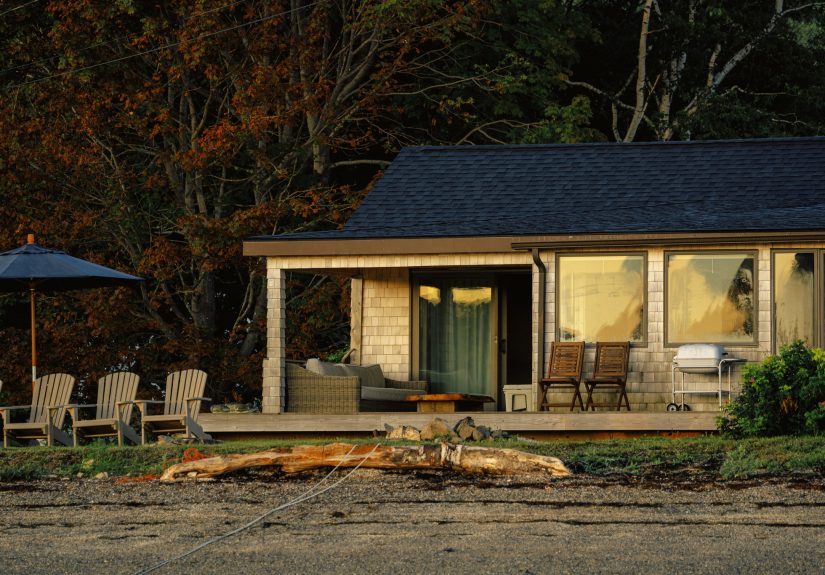
Interesting, as it turned out, was an understatement. The house had a leaky roof, outdated utilities, messy yard conditions, and rooms that felt more cramped than cozy. But it also had the one thing you cannot manufacture with even the most expensive renovation budget: a setting. The cottage sat in the middle of a cove with views toward Maine’s famous Cribstone Bridge, the kind of location that makes even demolition dust feel slightly poetic.
Rather than trying to erase the structure’s humble origins, the renovation leaned into them. That decision matters. The most compelling coastal cottage renovations tend to preserve scale, texture, and memory. If you remove every creak, every worn detail, and every odd little quirk, you may end up with a beautiful house, but not necessarily a believable one. Here, the Carrolls understood the assignment: save the charm, fix the failures, and make the whole place feel like it belongs exactly where it sits.
What the Renovation Changed, and Why It Works
First, They Handled the Unsexy Stuff
No one frames a photo of “all new utilities,” but that is often what separates a dreamy renovation from a photogenic headache. The cottage got the essential upgrades first: structural shoring, a new roof, a new deck, yard cleanup, and the infrastructure needed to make the house functional. That is the quiet intelligence behind many successful fixer-uppers. Before the paint colors, before the vintage hooks, before the charming ceramic bowl that absolutely nobody needed but everyone loves, the bones have to stop arguing with the weather.
That logic is especially important in a waterfront home. Coastal properties ask more from materials and systems than inland homes do. Moisture lingers. Salt air accelerates wear. Sand arrives uninvited and behaves as though it pays rent. So the practical upgrades in this renovation are not boring footnotes. They are the reason the rest of the house gets to look so easy.
Then, They Added Space That Actually Earns Its Keep
One of the smartest moves was the addition of a mudroom and a room for Bo. In a beach cottage, a mudroom design is not a luxury. It is a peace treaty between the outdoors and your floors. This one was designed with pegboard storage and breathable organization, a small but thoughtful choice that fits the reality of beach life. Wet towels, sandy shoes, bags, layers, shells, mysterious rocks that children insist are treasurethere has to be somewhere for all of it to land.
The guest room also pulls double duty, which is exactly what smaller cottages need. A compact home becomes more generous when its rooms are flexible. That is part of the charm of old cottages: they teach you to be clever instead of merely spacious. This renovation honors that spirit instead of trying to outbuild it.
They Let the House Breathe
The added porthole windows are not just whimsical. They improve airflow from back to front, which is an underrated move in a coastal home. Cross-ventilation matters in places where warm months can get muggy and every open breeze feels like free therapy. The portholes also give the house a playful maritime note without making it look like someone panic-shopped a “nautical decor” aisle. That restraint is important. A coastal home should nod to the water, not cosplay as a shrimp boat.
Why the Design Feels So Good
Because It Brightened the Interior Without Scrubbing Away Its History
Before the renovation, the main room was wrapped in knotty pine and shellac, with grape-purple carpet doing its best to lower morale. Instead of removing every trace of the original cottage mood, the Carrolls kept the knotty pine on the ceilings and used warm whites on the walls and brighter white on the trim to pull in light. That is a subtle but powerful strategy. In many beach cottage interiors, white works best when it is layered and warm, not cold and surgical.
The revealed hardwood floors helped, too. Few renovation moments are more satisfying than pulling up sad old carpet and discovering wood underneath, like finding buried treasure without the inconvenience of pirates. The result is a space that feels calmer and brighter while still grounded in age and texture.
Because the Color Story Has a Pulse
A lot of coastal interiors rely on the usual suspects: white, pale blue, driftwood beige, repeat. This home does use seaside color logic, but it gives the palette a little attitude. Orange appears in the kitchen through the Blue Star range handles and the recessed Smeg fridge, echoing the Wonder Valley brand packaging. Patchwork wood flooring in the mudroom and guest room was painted a classic seaside blue. The bathroom went boldly monochromatic with India Yellow across walls, ceiling, floor, and sink, plus tonal shower tile.
That is what keeps the cottage from feeling like a generic “before and after.” It understands that a coastal color palette does not have to be timid. Sea-and-sky shades can coexist with mustard, orange, brass, and weathered neutrals when the materials and light keep the space anchored.
Because It Loves Objects With Stories
Antiques, painter’s palettes, nautical knots, seagrass mats, salvaged details, and handmade pieces give the cottage its lived-in texture. That layered feeling shows up again and again in well-designed coastal homes: natural fibers, aged metals, old wood, rattan, linen, practical ceramics, and collected objects that look earned rather than staged. The point is not clutter. It is character.
This is where the renovation gets especially smart. A cottage can feel too polished very quickly, and once that happens, it loses some of the easygoing magic that makes cottage living appealing in the first place. Here, the rooms feel curated but not over-managed. You get the sense that people actually eat, shower, sleep, and track in sand here. In a beach house, that is a compliment.
Big Lessons From a Small Coastal Renovation
1. Preserve What Gives the House Its Accent
Not every old detail deserves sainthood. Some things should absolutely be removed, particularly if they leak, rot, or smell like 1987. But the best fixer-upper projects figure out which original features give the house its identity. In this case, the cottage kept its modest footprint, wood character, and casual spirit. That decision makes the finished home feel authentic rather than overproduced.
2. Choose Materials That Can Take a Beating
A coastal house needs finishes that look better with wear, or at least do not collapse emotionally after one season of wet feet and salt air. Easy-clean backsplash materials such as ceramic or porcelain tile make sense in hard-working kitchens. Humid utility spaces benefit from tougher paint finishes like satin or semi-gloss. Bathrooms need moisture-friendly surfaces and good sealing. Outdoor areas near the coast benefit from weather-resistant materials, and classic options like cedar shingles remain popular because they naturally resist rot and insects while fitting the traditional coastal look.
In other words, the prettiest material is not always the right material. In a seaside fixer-upper, beauty has to earn its keep.
3. Let Storage Be Part of the Design
The pegboard closet, under-storage in the mudroom, and multiuse guest room all point to a truth small-house owners know well: every square foot should have a job. Good storage is not about hiding life. It is about making life easy enough that the house stays charming after Labor Day.
4. Use the View, the Light, and the Breeze as Building Materials
One of the most successful design choices here was treating airflow and sightlines as seriously as cabinetry and fixtures. Windows frame water views. Doors connect the cottage to the deck and cove. The portholes help air move. That approach is common in strong seaside home renovation projects because the environment is not background scenery. It is part of the architecture.
5. A Little Whimsy Goes a Long Way
A vintage porthole in the outdoor shower. A pizza oven in the backyard. An orange polka-dot light. These details matter because they prevent the renovation from becoming too sensible. A house needs logic, yes, but it also needs a few lines of poetry. Preferably the kind that can survive a sandy dog and a wet swimsuit.
The Cottage’s Real Achievement
The real triumph of Wonder Valley Fixer-Upper: A Seaside Cottage Redone is not that it became more stylish. Plenty of homes become more stylish. The triumph is that it became more itself. The renovation did not flatten the cottage into a trend. It clarified its personality.
That is why the project feels memorable. It understands that a good fixer-upper renovation is not an argument between old and new. It is a negotiation. Keep the charm. Improve the comfort. Honor the place. Make room for real life. Add a little weirdness. Try not to ruin the view.
Frankly, that is a strong philosophy for both houses and people.
Seaside Cottage Experiences: What This Kind of Home Actually Feels Like
Reading about a coastal renovation is one thing. Imagining yourself inside it is another. And that is where this cottage really gets under your skinin the best possible way. A redone seaside cottage is not just a visual experience; it is a full-body one. You hear it before you understand it. The door clicks shut with a little extra honesty. The floorboards speak up as you walk to the kitchen. The wind taps the windows like it has opinions. Somewhere outside, a gull sounds offended by everything.
Morning in a place like this begins with light, not alarms. The sun hits the walls gently, then bounces off warm whites, painted wood, and whatever ceramic bowl is currently pretending not to be decorative. The kitchen feels awake before you are. Coffee on the stove or counter somehow tastes more competent near salt air. If there is a porthole window nearby, even better. A round window can make even a sleepy Tuesday feel like a maritime adventure, minus the mutiny.
By late morning, the practical brilliance of the renovation starts to show itself. The mudroom catches sandy shoes before they invade the rest of the house. Pegs hold bags, jackets, hats, and beach gear in plain sight, which is helpful because no one has ever truly “put away” beach gear in the history of humankind. Good storage in a seaside cottage does not feel fussy. It feels merciful.
Afternoons in a coastal cottage have their own rhythm. Doors open. Air moves through. The house exhales. You notice how much a well-placed window matters, how much a deck changes daily life, how much a durable floor lowers stress. You are not tiptoeing around the house trying to preserve perfection. You are living in it. That distinction is everything. A successful cottage renovation invites use. It does not beg for protection.
Then there is the emotional side of the experience, which is harder to measure and probably the whole point. Seaside cottages tend to make ordinary routines feel cinematic. Folding towels becomes less annoying when there is a water view nearby. Chopping onions in a small kitchen feels almost romantic until the onions remind you who is in charge. Reading in a breezy bedroom with seagrass underfoot feels like winning a very small, very personal lottery.
Evenings are where the house really earns its legend. Outdoor showers feel absurdly luxurious after a day near the water. A pizza oven turns dinner into an event. Lamps come on. Brass catches the last light. The rooms get quieter, softer, and somehow more generous than they looked at noon. Old cottages are good at that. They shrink and expand emotionally depending on the hour.
And perhaps that is the deepest appeal of a redone seaside cottage: it does not need to be grand to feel unforgettable. It just needs to be thoughtful. Give it honest materials, a sense of humor, a place for wet shoes, and a window aimed at something beautiful, and suddenly the whole house feels like a reminder that comfort is not the same thing as excess. Sometimes comfort is a painted floor, a salty breeze, and a home that knows exactly what kind of life it wants to hold.
Conclusion
Wonder Valley Fixer-Upper: A Seaside Cottage Redone succeeds because it treats renovation as both craft and common sense. It keeps the cottage spirit intact while solving the practical realities of coastal living. The result is bright but not bland, nostalgic but not stuck, stylish but not precious. More importantly, it shows that the best coastal cottage makeover is not about manufacturing a fantasy. It is about refining what is already there until the house can finally do what it was meant to do: catch the light, hold the breeze, welcome the mess, and make everyday life feel just a little more beautiful.