Table of Contents >> Show >> Hide
- Why This Stacking Stool Still Matters
- The Design Breakdown
- Why It Feels So Los Angeles
- An Early Signal of a Bigger Design Sensibility
- How to Use a Stacking Stool Like This in a Real Home
- What Makes the Piece Visually Effective
- Who This Stool Appeals To
- Extended Experience: What Living With a Stacking Stool Like This Actually Feels Like
- Final Thoughts
Some furniture pieces beg for attention with dramatic curves, celebrity pedigrees, and enough upholstery to start their own zip code. Then there are the quiet overachievers: the pieces that slip into a room, do three jobs before lunch, and somehow still look cool doing it. The Stacking Stool from Atelier Studio in Los Angeles belongs firmly in that second camp. It is the kind of design that does not need to shout. It just shows up with reclaimed wood, steel, good proportions, and the smug confidence of an object that knows it will still look relevant long after trendier furniture has emotionally combusted.
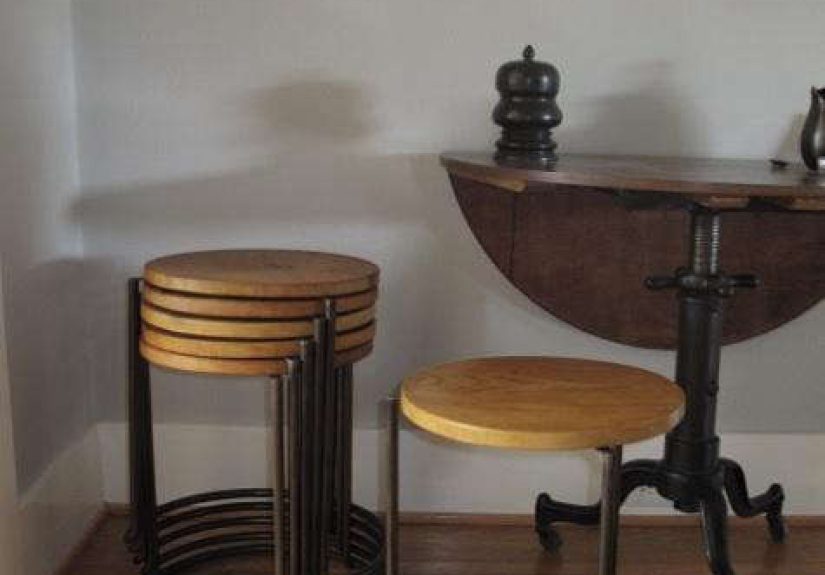
Originally highlighted in 2010, the stool stood out for a mix of materials that felt both grounded and modern: a wood top made from reclaimed poplar taken from a 1900s Ohio barn, paired with a graphite-colored steel base. On paper, that combination sounds simple. In person, or even in photographs, it reads as something richer: industrial but not cold, rustic but not kitschy, minimal without becoming boring. That balance is hard to achieve. Plenty of furniture tries. A lot of it ends up looking like a coffee shop waiting area. This stool does better.
For anyone interested in Los Angeles furniture design, stacking stools, reclaimed wood furniture, or flexible pieces for smaller homes, this design still deserves a second look. Not because it is loud, but because it is smart. And in furniture, smart ages better than flashy.
Why This Stacking Stool Still Matters
The best stools are tiny utility heroes. They are extra seating when friends appear, side tables when your sofa demands company, plant stands when your ficus develops ambition, and improvised bedside tables when square footage is not exactly abundant. A stackable stool takes that flexibility one step further. When not in use, it tucks away neatly instead of occupying precious floor space like an entitled armchair.
That kind of versatility is a big reason stools remain favorites in American design coverage, especially for compact homes and multi-use rooms. Editors and designers regularly point to stools as the type of furniture that can move from kitchen to bedroom to living room without needing a formal announcement. In other words, the stacking stool is not just a seat. It is a strategy.
The Atelier Studio stool gets this right because it understands two things at once: function and atmosphere. Function is obvious. Atmosphere is harder. Many practical pieces are useful but visually forgettable. This one has presence. The reclaimed poplar top adds age, texture, and natural variation, while the graphite-toned steel base sharpens the silhouette. Put those together and you get a piece that feels handmade, architectural, and easy to live with.
The Design Breakdown
1. A top with actual history
The reclaimed poplar is not a generic “distressed” finish cooked up by a factory trying to fake authenticity. The wood was described as coming from a barn in Ohio dating to the 1900s, which gives the piece a real material story rather than a marketing bedtime tale. That matters. Reclaimed wood carries irregular grain, tonal variation, old marks, and a slightly worn honesty that newer lumber usually cannot imitate without looking like it went through a themed photo booth.
In design terms, that kind of wood does something valuable: it softens modern interiors. A room filled only with crisp metals, hard edges, and polished surfaces can start to feel emotionally unavailable. Add reclaimed wood, and suddenly the room has memory. It feels touched by time. That warmth is a major reason reclaimed materials keep appearing in conversations about more thoughtful, sustainable furniture.
2. A steel base that keeps things disciplined
If the wood brings soul, the graphite-colored steel brings order. The base does not compete with the seat. It frames it. That balance is what keeps the stool from leaning too rustic or too industrial. It lands in a sweet spot that many contemporary furniture brands still chase today: clean geometry with enough texture to avoid sterility.
Graphite is also a smart choice. Bright chrome might have pushed the design into retro diner territory. Jet black could have looked too severe. Graphite sits in the middle, giving the stool a muted, architectural quality that plays well with wood floors, concrete, plaster, stone, and the layered neutrals that modern California interiors love so much.
3. Stackability that is actually useful
Let us pause to praise stackability, one of furniture design’s least glamorous and most heroic qualities. A good stacking stool lets you own multiple seats without feeling like you are running a banquet hall. In small apartments, studios, guest rooms, kitchens, and flexible live-work spaces, that is a real advantage. When the stools are not needed, they become compact. When company shows up, they become social infrastructure.
This is where the Atelier Studio design feels especially forward-thinking. Long before “small-space living” became a nonstop lifestyle headline, the logic was already here: furniture should earn its footprint. A stool that stacks is simply more efficient than one that sits around taking up room while contributing very little beyond moral support.
Why It Feels So Los Angeles
Although the reclaimed wood came from Ohio, the stool still reads unmistakably like a Los Angeles furniture piece. That is because Los Angeles design often thrives on contrasts: polished and raw, cinematic and casual, modernist and lived-in. The city has long embraced furniture that feels sculptural but not fussy, stylish but not trapped behind velvet ropes. This stool fits that mindset beautifully.
Its mix of salvaged wood and steel also taps into a broader California design language that values natural material, honest construction, and a sort of relaxed sophistication. It does not look precious. It looks usable. That matters in Los Angeles, where the fantasy is not just a beautiful home, but a beautiful home that still allows you to set down a coffee cup without filing a request in triplicate.
The fact that the stool was available through Lawson-Fenning also adds to its LA credentials. Lawson-Fenning has long been associated with California furniture culture, with an emphasis on craftsmanship, purposeful materials, and modern forms that feel warm rather than mechanical. That retail context helped frame the stool not as a novelty object, but as part of a larger design conversation happening in Los Angeles.
An Early Signal of a Bigger Design Sensibility
One of the most interesting things about this stool is how clearly it foreshadows the design language later associated with Gabriel Abraham’s Los Angeles studio work. Later coverage of Abraham’s furniture and lighting describes a practice shaped by film and production design, informed by research, atmosphere, architectural references, and a refined blend of modernist structure with warmer European influences. Seen through that lens, the Atelier Studio stacking stool feels less like a one-off object and more like an early clue.
You can already see the ingredients: disciplined form, cinematic material contrast, and a willingness to let an object tell a story through texture rather than ornament. The stool does not rely on decorative excess. It relies on restraint. That is often the harder route, because restraint gives viewers nowhere else to look if the proportions are off. Here, the restraint works.
How to Use a Stacking Stool Like This in a Real Home
Kitchen seating without visual clutter
In a kitchen, a stool like this makes immediate sense. It suits breakfast counters, casual perches, or flexible seating for guests hovering near the food, which is where guests mysteriously gather no matter how much seating you planned elsewhere. Because the design is open and compact, it does not visually bulk up a room the way fully upholstered seating can.
Side table duty in the living room
Design editors keep returning to the same point: stools are excellent double-duty pieces. Place one next to a sofa with a tray on top, and it behaves like a side table. Pull it out when visitors arrive, and suddenly it is extra seating. The Atelier Studio version is especially good at this because its materials feel elevated enough to stand beside nicer upholstery and lighting without looking temporary.
Bedroom nightstand alternative
Small bedrooms often do not have room for traditional nightstands, especially when the bed itself is already negotiating borders with the wall. A sculptural stool can solve that problem elegantly. The flat wooden top offers a place for a book, lamp, or glass of water, while the compact footprint keeps the room from feeling overfurnished.
Studio and office flexibility
In creative workspaces, stools are often the first pieces to prove their value and the last ones anyone wants to give up. They move easily, adapt fast, and can support informal collaboration without turning a room into a boardroom. A stacking version makes even more sense in spaces that need to shift between solo work and group activity. That is the kind of practical intelligence designers tend to appreciate over time.
What Makes the Piece Visually Effective
The stool’s appeal is not just about usefulness. It is also about proportion and contrast. The reclaimed wood top has visual density and age. The steel base has linear precision. One element feels organic; the other feels engineered. Good furniture often lives in that tension. Too much warmth and a piece can become soft or rustic in a heavy-handed way. Too much metal and it can feel chilly. This stool lands somewhere more nuanced.
It also benefits from being honest about what it is. The design does not pretend to be a throne, a sculpture, a manifesto, or a lifestyle intervention. It is a stool. A really good one. That modesty is part of the charm. In a design world that occasionally behaves as though every chair deserves a documentary, there is something refreshing about an object that simply gets the brief right.
Who This Stool Appeals To
This piece would especially appeal to people who love modern industrial furniture, California design, and small pieces that do more than one job. It also makes sense for buyers who prefer furniture with visible material character over slick perfection. If you like knotty grain, subtle wear, metal with a quiet finish, and forms that feel architectural rather than decorative, this stool is very much in your lane.
It is also a smart fit for those who are tired of disposable furniture. Because the design is materially grounded and visually restrained, it is less likely to date quickly. That matters. Trendy furniture often starts out charming and ends its life as an embarrassing time capsule. This stool avoids that trap by staying close to essentials: shape, material, function, and craft.
Extended Experience: What Living With a Stacking Stool Like This Actually Feels Like
The lived experience of a stool like this is where the design story gets more interesting. On day one, it is easy to admire the reclaimed wood, the steel base, and the neat little stackable format. On day thirty, what matters more is how often the piece quietly solves problems. That is the difference between furniture that photographs well and furniture that earns a permanent address.
In a real home, a stacking stool like the one from Atelier Studio rarely stays in one role for long. In the morning, it can sit by a kitchen counter holding coffee and toast while the rest of the room wakes up slowly. By afternoon, it may migrate to the living room to act as a side table for books, headphones, or a laptop. Later, when friends come over, it becomes an extra seat with no drama, no assembly, and no awkward folding-chair energy. That kind of fluidity is deeply appealing because most people do not live in magazine spreads. They live in rooms that have to adapt.
There is also a tactile pleasure to a piece like this. Reclaimed wood is rarely uniform, and that is exactly the point. It tends to look better the closer you get. The grain, the tonal shifts, the tiny imperfections, the sense that the material had a life before this one, all of that makes the stool feel less anonymous. Steel, meanwhile, gives the piece confidence. It grounds the softer, more storied top with a crisp line and a hint of toughness. Together, the materials create a daily experience that feels balanced rather than precious.
Another overlooked pleasure is visual calm. Many small, useful pieces are utilitarian in the least flattering sense. They do the job, but they look apologetic while doing it. This stool does not apologize. It is compact, but it does not look flimsy. It is simple, but it does not look generic. In a room with layered textures, art, books, and everyday objects, that calm confidence is a gift. The stool contributes without stealing the scene.
People who live in smaller homes would especially notice the advantage of stackability over time. Owning three or four extra seats is wonderful until those seats start colonizing the room. A stackable stool avoids that problem by shrinking its footprint when not needed. That makes hosting easier, cleaning easier, and layout changes far less annoying. It is one of those features that seems minor until you have lived without it, and then suddenly it feels indispensable.
There is an emotional side to the experience too. Furniture made from reclaimed material often carries a subtle sense of continuity. It feels less disposable. Less temporary. In an era when so much furniture is designed for quick turnover, a piece with old wood and durable metal feels almost reassuringly stubborn. It suggests longevity. It hints that design can still be practical, beautiful, and responsible at the same time. That is not a bad legacy for a stool.
Final Thoughts
The Atelier Studio stacking stool from Los Angeles remains memorable because it solves a very old design problem with unusual grace: how to make a humble, useful object feel special without making it ridiculous. Its reclaimed poplar top brings history and warmth. Its graphite-colored steel base adds structure and modernity. Its stackable form gives it the flexibility that contemporary homes still need.
More than a decade later, the stool still feels current because the fundamentals are strong. It is compact, versatile, material-rich, and visually composed. It works in kitchens, bedrooms, living rooms, studios, and just about anywhere a home needs a seat, a surface, or a little extra intelligence. In other words, it is exactly the sort of furniture that survives trend cycles with a slight smirk. And honestly, that is the kind of confidence more furniture should aspire to.