Table of Contents >> Show >> Hide
- What Counts as an “AI Stock Bubble,” Anyway?
- Why AI Stocks Feel Like Dot-Com 2.0 (and Why Investors Are Nervous)
- Why AI Might NOT Be a Classic Bubble (At Least Not Everywhere)
- So… Is an AI Stock Market Bubble Inevitable?
- Where the AI Bubble Risk Is Highest (and Where It’s Lower)
- What Could Trigger an AI Stock Market Correction?
- How This AI Cycle Differs From the Dot-Com Bubble
- Investor Checklist: Bubble Signs to Watch Without Panicking
- How to Think About AI Stocks in a Smart, Non-Dramatic Way
- The Bottom Line: Bubble Inevitable? A Correction is Likely, but AI Isn’t Going Away
- Extra: Real-World Experiences and Lessons From Living Through AI Market Mania (500+ Words)
AI is the hottest thing Wall Street has seen in years. It’s powering eye-popping earnings, fueling trillion-dollar market caps, and turning every CEO on CNBC into an “AI-first visionary” overnight. (Even if their “AI strategy” is basically a chatbot taped to a spreadsheet.)
So here’s the big question investors keep askingusually right after buying the top and right before panic-selling the bottom:
Is an AI stock market bubble inevitable?
The honest answer is: a bubble somewhere in AI is extremely likely. But whether it becomes a full-blown market-wide meltdown (dot-com style) depends on three things: earnings, adoption, and how much money keeps chasing the same “AI exposure” story.
Let’s break it all down: what the AI boom really looks like, why it feels bubble-ish, where it’s genuinely different from 1999, and how investors can think about risk without turning into a doomsday prepper with an Excel addiction.
What Counts as an “AI Stock Bubble,” Anyway?
A bubble isn’t just “stocks going up.” A bubble is when prices rise mainly because:
- Investors expect other investors to pay even more later
- Valuations detach from realistic cash flows
- The story becomes more powerful than the business fundamentals
In other words: the market starts pricing in a future that requires physics to take a lunch break.
And here’s the tricky part: bubbles are easy to spot… after they pop. That’s why serious research groups debate them endlesslybecause “bubble” is often only obvious in hindsight.
Bubble vs. Boom: A Key Difference
A boom can be healthy if it’s driven by:
- real productivity gains
- actual revenue growth
- strong demand for products/services
A bubble forms when the excitement spreads into companies with weak economics, vague AI narratives, and “trust us bro” projections.
Why AI Stocks Feel Like Dot-Com 2.0 (and Why Investors Are Nervous)
The comparisons to the late 1990s aren’t random. Reuters highlighted how the AI-driven rally sparked déjà vu: soaring mega-cap tech leadership, valuation expansion, and a market narrative dominated by a once-in-a-generation technology shift.
Here are the biggest reasons AI investing triggers bubble alarms.
1. Valuations Are Pricing In Perfection
Many AI-exposed companies trade as if:
- AI adoption is instant
- AI margins are infinite
- competition politely doesn’t show up
That’s not how capitalism works. Competition shows up early, loudly, and usually wearing a hoodie while undercutting your prices.
2. Huge “AI” Spending Is Creating Circular Hype
One major concern is circularitywhere:
- Big Tech buys AI chips and cloud capacity
- Chip and cloud providers boom in revenue
- Markets reward them with higher valuations
- That encourages even more AI spending
This loop can be healthy if end-customer demand keeps rising. But if adoption stalls, the system gets wobbly fast.
3. Even AI Leaders Are Warning It Looks “Bubble-Like”
This isn’t just skeptical journalists. Some of the most important people in AI are publicly warning about frothy behavior.
Google DeepMind CEO Demis Hassabis has cautioned that parts of today’s AI investment environment look “bubble-like,” especially massive early funding rounds into startups without solid products.
When the people building the rocket say, “Guys… maybe stop lighting fireworks inside the fuel tank,” it’s worth listening.
4. Concentration Risk: A Few Stocks Are Carrying the Market
The AI trade has been heavily concentrated. A small set of mega-cap tech and semiconductor names have driven an outsized chunk of index returns.
That’s not automatically baduntil it is. Because if leadership cracks, the whole market can suddenly “discover gravity.”
Goldman Sachs has pointed out that concentration risk is high and diversification matters even if tech keeps leading.
Why AI Might NOT Be a Classic Bubble (At Least Not Everywhere)
Now the other side: AI investing isn’t purely hype. Unlike many dot-com era companies, today’s biggest AI beneficiaries are often:
- highly profitable
- cash-rich
- already embedded in the global economy
That changes the risk profile dramatically.
1. Real Earnings Exist (Not Just “Website Traffic”)
Many leading AI-related firms are producing real cash flow, not just “future potential.” And even some market commentators argue that weaker names have already been “taken out” through correctionsleaving stronger players standing.
Dot-com had pets.com. AI has data centers with actual customers.
2. The Infrastructure Buildout Is Tangible
AI’s growth is tied to physical constraints:
- chips
- data centers
- power grids
- networking equipment
This matters because it creates a real-world bottleneck: you can’t “vibe” your way into GPU capacity. That makes parts of AI less speculative than pure software hype cycles.
3. AI Has a Plausible Productivity Story
The Federal Reserve has openly discussed generative AI as a force that could reshape productivity and the broader economythough outcomes are uncertain and depend on how AI is integrated into real business activity.
If AI genuinely increases productivity across industries, then higher valuations for AI beneficiaries may end up looking reasonableeven if the ride is volatile.
So… Is an AI Stock Market Bubble Inevitable?
In some corners of the market, yessomething bubble-like is close to inevitable.
But the more precise (and useful) answer is:
- An “AI hype bubble” is likely.
- An “AI mega-cap earnings bubble” is less certain.
- A full market crash depends on macro conditions and concentration.
Think of it like this: AI is a real technology shift. But the stock market can still overpay for real things. Humans have been doing that consistently since… humans.
Where the AI Bubble Risk Is Highest (and Where It’s Lower)
Highest Risk: “AI Story Stocks” With Weak Fundamentals
These are companies where:
- the AI angle is mostly branding
- revenue is flat but the stock is “AI up 300%”
- the business model depends on cheap money or endless funding rounds
These are the names that tend to implode when sentiment shifts.
Medium Risk: Infrastructure Overbuild
AI needs massive compute, but the danger is capacity overshoot:
- everyone builds data centers at once
- power becomes constrained
- demand normalizes
- pricing power fades
This is how good businesses can still become bad stocksfor a while.
Lower Risk: Firms With Durable Moats + Real Cash Flows
Some companies have advantages that extend beyond the AI hype cycle, such as:
- existing enterprise ecosystems
- sticky cloud platforms
- distribution and customer relationships
- strong balance sheets
These firms can still get overvalued, but they’re less likely to go “to zero” like speculative dot-com names.
What Could Trigger an AI Stock Market Correction?
If you’re looking for the “pop” mechanism, it usually comes from one of these:
1. Adoption Doesn’t Spread Beyond Big Tech
Microsoft CEO Satya Nadella has warned that if AI adoption remains concentrated among big tech and wealthy nations, the boom could become more speculative than sustainable.
Translation: if AI doesn’t become broadly useful, markets may stop paying “everything premium” prices.
2. Earnings Misses + Lower Guidance
Nothing kills a hype cycle faster than a CFO saying:
“We’re seeing some demand normalization.”
That one sentence has ended more rallies than any government regulation ever could.
3. Rising Rates or Tighter Liquidity
Speculative investing thrives when money is cheap. If capital becomes more expensive, the market becomes less forgivingespecially for companies that need constant funding.
4. Competitive Pressure and Margin Compression
AI is a brutally competitive space. If model performance becomes commoditized, margins could shrink in places investors are currently assuming will be cash-printing machines.
How This AI Cycle Differs From the Dot-Com Bubble
Dot-Com Then: The Internet Was Real, But Business Models Were Not
The internet changed the world. But many dot-com companies:
- had no path to profitability
- burned cash endlessly
- were valued on “eyeballs” and vibes
AI Now: The Economics Are Real, but Expectations Are Unreal
Today, the leading AI companies often have:
- proven revenue streams
- strong profit margins
- massive enterprise demand signals
But the risk is that investors extrapolate early growth foreverforgetting that even revolutionary tech hits constraints.
Academic work comparing the eras notes the dot-com period featured overly optimistic analyst expectations and weak explanatory power of fundamentals during peak bubble behavior.
Investor Checklist: Bubble Signs to Watch Without Panicking
If you want to avoid getting caught in a bubble blow-off (or at least reduce the odds), watch for:
1. “AI” Suddenly Appearing in Every Earnings Call
If a company goes from “we sell industrial screws” to “we’re an AI-enabled screw platform,” you may want to… ask follow-up questions.
2. Massive Funding Rounds for Vague Startups
When seed-stage startups raise billions with no product, bubble math may be happening.
3. Price Moves Detached From Guidance
If a stock rallies 40% after “we might explore AI partnerships,” congratulations: you’ve found narrative trading.
4. Too Much Market Dependence on a Few Winners
When a tiny group of stocks holds up the entire index, volatility tends to increase.
How to Think About AI Stocks in a Smart, Non-Dramatic Way
You don’t have to choose between:
- “AI will save humanity and my portfolio”
- “AI is a scam and we’re all doomed”
The reasonable middle path looks like:
1. Separate “AI Adoption” From “AI Stock Returns”
AI can change the world and still be a mediocre investment at the wrong price.
2. Respect Valuation (Even When It’s Boring)
Yes, valuation is boring. But so is losing money.
3. Diversify AI Exposure
Instead of betting everything on one AI darling, consider spreading exposure across:
- chips and compute
- cloud infrastructure
- enterprise software
- power and cooling
- AI cybersecurity
4. Expect Volatility as a Feature, Not a Bug
Transformational technology cycles are never smooth. The “AI trade” will likely experience multiple drawdowns even if the long-term trajectory is up.
The Bottom Line: Bubble Inevitable? A Correction is Likely, but AI Isn’t Going Away
Let’s land this plane without spilling coffee on the passenger next to us.
Is an AI stock market bubble inevitable? Not in the sense that the entire market must implode. But pockets of AI speculation almost certainly will deflatebecause that’s what markets do when excitement outruns reality.
The key difference from many past bubbles is that much of today’s AI boom is riding on real demand, real infrastructure, and real earnings. That doesn’t eliminate bubble riskit just means the fallout may look more like:
- a rotation
- a valuation reset
- a shakeout of weak players
…instead of a total financial apocalypse.
If you’re investing in AI, the best mindset is simple:
Assume AI will keep transforming business. Also assume the market will overreact along the way.
Extra: Real-World Experiences and Lessons From Living Through AI Market Mania (500+ Words)
Let me tell you what it actually feels like to invest during an AI boombecause spreadsheets don’t capture the emotional journey of watching your portfolio swing like a caffeinated squirrel on a trampoline.
First comes the discovery phase. You read a few articles. You see a chart. You hear someone casually say, “AI is the next industrial revolution,” and your brain goes, “Wow. I too would like to retire early.”
Then comes the research phase, which mostly consists of opening 17 tabs, reading half of two reports, and deciding that you have now mastered semiconductor supply chains.
After that, you start noticing something strange: everything is AI.
- Your bank is “AI-powered.”
- Your grocery store is “AI-enhanced.”
- Your toaster is “AI-ready.”
At this point, you’re not sure whether you’re investing in a technology shift or being gently roasted by the marketing departments of America.
The next experience is the “earnings call effect.” You listen to a CEO say “generative AI” and the stock jumps 9%. The CEO doesn’t even explain what they mean. The analysts don’t push back. The market just nods like it totally understands. You realize the stock market is sometimes less like an economics machine and more like a very sophisticated group chat.
Then, inevitably, you hit the valuation anxiety stage.
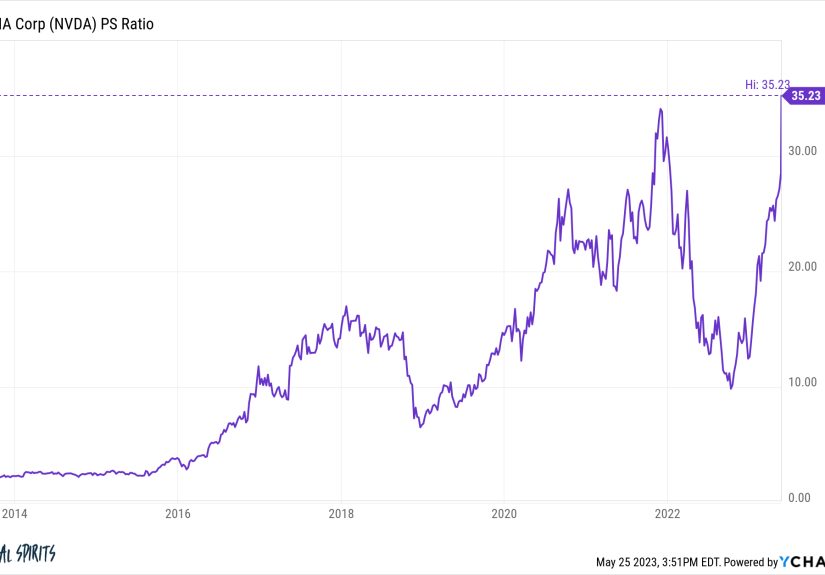
You look at a company’s price-to-sales ratio and think, “This is either the future, or I’m funding a very expensive optimism hobby.”
You start comparing everything to the dot-com bubble. You go down a rabbit hole reading about 1999. You discover that people once bought stocks because a company added “.com” to its name. You laugh. And then you realize some people today are basically doing the same thingjust with “AI” in the press release instead of “internet.”
Now comes the volatility phase. One week, your AI holdings feel invincible. The next week, a single headline about chip export controls or cloud spending cuts makes the entire sector wobble.
It’s during these swings that you learn a brutally useful lesson: great companies can be terrible trades at the wrong moment.
You also learn that “AI exposure” is not the same as “AI profitability.” Some firms will spend billions building AI capabilities that customers love… but shareholders won’t, because profits get delayed by years of infrastructure costs.
The most valuable investing experience in this cycle is realizing that the AI boom has multiple layers:
- The hype layer: vibes, headlines, social media.
- The adoption layer: customers actually using AI tools daily.
- The monetization layer: companies turning usage into profit.
- The productivity layer: society-wide gains that show up in economic data.
And these layers don’t move at the same speed. Hype is instant. Adoption is slower. Monetization takes time. Productivity takes even longer. Markets, unfortunately, price everything like all four layers will happen by next Tuesday.
So what’s the real experience-driven takeaway?
The AI trend can be real and still create bubble-like stock behavior.
The best move I’ve seen investors make isn’t predicting the exact top or bottom. It’s building a strategy that survives both outcomes:
- If AI keeps compounding, you participate.
- If AI valuations correct, you don’t get wiped out.
That means position sizing, diversification, and the humility to admit you might be early, late, or just emotionally overinvested in your own thesis.
Because in an AI-driven market, the most advanced intelligence you can deploy isn’t artificial.
It’s patience.