Table of Contents >> Show >> Hide
- Why The Design of Everyday Things Still Matters
- The Big Ideas That Make the Book So Useful
- Who Should Read This Book?
- What Makes the Book So Readable?
- How the Book Applies to Modern Life
- Is The Design of Everyday Things Worth Reading Today?
- Reader Experiences: What It Feels Like to Live With This Book After You Read It
- Conclusion
Some books entertain you. Some books educate you. And some books quietly ruin every badly designed door, faucet, stovetop, and remote control for the rest of your natural life. The Design of Everyday Things belongs proudly in that last category.
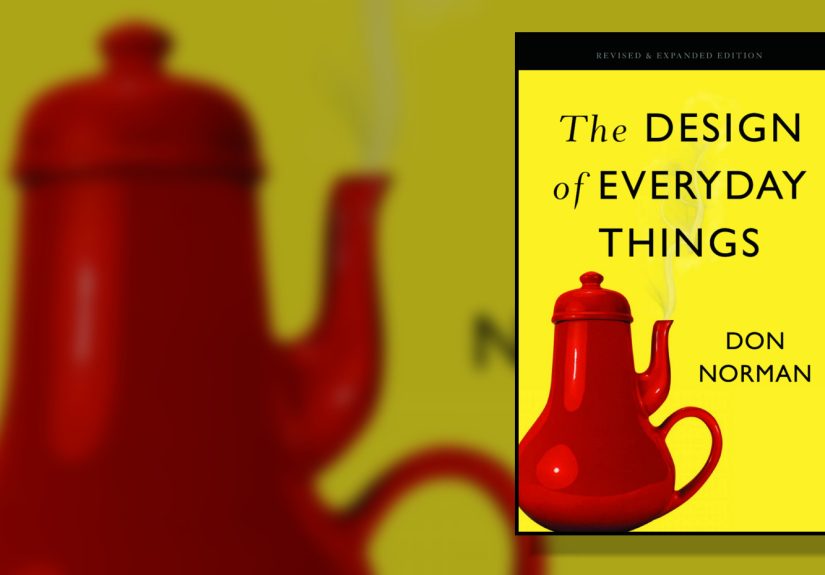
Written by Don Norman, this classic design book is one of those rare reads that manages to be smart without acting smug about it. It explains why everyday objects can feel either beautifully obvious or wildly insulting. You know the feeling: a door says “pull” with all the confidence in the world, but only opens when pushed. Suddenly, you are not just entering a building. You are starring in a tiny public tragedy.
That is exactly why this book matters. The Design of Everyday Things is not just for designers, engineers, UX professionals, or people who enjoy arguing with coffee machines before sunrise. It is for anyone who uses things, which is a very large club. The book helps readers understand how good design works, why bad design keeps happening, and how human-centered thinking can make products, services, and digital experiences far less annoying.
If you are looking for books you should read on usability, human-centered design, product thinking, or even just everyday common sense dressed in very sharp clothes, this one deserves a place near the top of the stack.
Why The Design of Everyday Things Still Matters
Plenty of design books age like old software: technically important, but a little dusty and oddly enthusiastic about problems nobody has anymore. Norman’s book is different. It remains relevant because the central issue has not changed: people still blame themselves when products fail them, even when the design is the real culprit.
That idea alone makes this book worth reading. Norman argues that when people struggle with an object, the problem is often not a lack of intelligence or effort. It is poor design. That sounds simple, but it is surprisingly liberating. A confusing interface is not a moral test. A terrible checkout flow is not a character-building exercise. A stove with mysterious controls is not “intuitive” just because the manufacturer had good intentions.
The book also bridges physical and digital design beautifully. Even though it discusses familiar objects like doors, switches, phones, and appliances, the lessons transfer directly to websites, apps, dashboards, wearable devices, and software tools. In other words, if you have ever rage-clicked a button that looked decorative or stared at a form field wondering what planet it was designed for, this book is still speaking your language.
The Big Ideas That Make the Book So Useful
1. Good design should make the right action visible
One of Norman’s most practical lessons is that people should be able to tell what to do just by looking. Good design reduces guessing. It does not require a treasure map, a support ticket, and emotional recovery time.
This is where the book’s discussion of affordances and signifiers becomes famous. In plain English, affordances describe what an object allows someone to do, while signifiers help communicate that possibility clearly. A flat metal plate on a door suggests pushing. A handle suggests pulling. A button that looks tappable should not be hiding in the visual witness protection program.
Once you understand this idea, the world becomes a strange museum of missed opportunities. Suddenly, you notice light switches that need labels, website menus that vanish like stage magicians, and office printers that appear to have been designed by a committee of riddlers.
2. Feedback is not optional
Good systems respond to people. If you press a button, flip a switch, submit a form, or start a machine, something should happen to confirm the action. Feedback tells users that the system heard them and that the world has not drifted into chaos.
Norman shows how important this is in both simple and complex situations. A click, a glow, a message, a sound, or a movement can reassure users and guide them forward. Without feedback, people repeat actions, panic, make mistakes, and begin to suspect the product is haunted.
This principle matters even more today in digital design. Whether it is a progress bar during checkout, a vibration on a phone, or a clear success message after saving work, feedback keeps users oriented. Silence, on the other hand, is how confusion starts writing its memoir.
3. Mapping should feel natural
Mapping refers to the relationship between controls and results. When the connection is clear, users can predict what will happen. When it is unclear, they are forced into trial and error.
The classic example is a stovetop with four burners and four knobs arranged in a way that makes no earthly sense. Which knob controls which burner? Nobody knows. Breakfast becomes an unsupervised experiment. Norman uses examples like this to show that design should mirror the user’s mental expectations. Controls should align naturally with the things they affect.
This idea shows up everywhere, from elevator panels to media players to smart home apps. Good mapping lowers cognitive load. Bad mapping turns ordinary tasks into low-stakes puzzle games nobody asked to play.
4. Constraints can be helpful
Most people hear the word “constraints” and immediately picture rules, limits, and no fun allowed. Norman gives the term a better reputation. In design, constraints can prevent errors and guide users toward the right action.
Physical constraints, logical constraints, cultural conventions, and semantic cues can all help people understand what is possible. A USB plug only fits one way, although it does occasionally behave like it has a personal vendetta. A form that prevents impossible dates is more helpful than one that accepts nonsense and fails later. A well-designed system narrows confusion without making users feel trapped.
This is one reason the book resonates so strongly with UX design and product design teams. It reminds creators that good design is not about unlimited freedom. It is about building experiences that make success easier and error less likely.
5. Human error is usually design error wearing a fake mustache
One of the most memorable themes in The Design of Everyday Things is that people are not the problem nearly as often as systems suggest. Humans make slips and mistakes, yes, but design can either reduce those problems or practically invite them in for coffee.
Norman does not excuse carelessness. He simply insists that designers must account for real human behavior instead of imaginary perfect users who are infinitely patient, never distracted, and apparently sleep nine hours a night. Good design respects the fact that people get tired, rushed, stressed, and interrupted. It plans for reality.
That perspective feels especially modern in an age of overloaded apps, endless notifications, and interfaces that seem to assume users are operating with laser focus and angelic calm. Most of us are not. Most of us are trying to reset a password while reheating leftovers and answering a text. Design should meet us there.
Who Should Read This Book?
This is one of those rare books that works across professions. If you are a UX designer, product designer, developer, marketer, founder, teacher, architect, researcher, or manager, there is something in here for you. But the audience is even broader than that.
Readers who are not “design people” often enjoy the book just as much because it gives language to frustrations they already feel. It explains why some products seem effortless and others feel like they were created during a power outage. It sharpens observation. After reading it, you begin to notice the hidden logic of objects all around you.
Students love it because it is foundational. Professionals value it because it remains practical. Curious readers appreciate it because it turns ordinary life into a fascinating case study. And anyone who has ever wrestled with a shower control in a hotel will feel seen at a spiritual level.
What Makes the Book So Readable?
For a book rooted in cognitive science and design principles, it is impressively readable. Norman does not bury readers under jargon or perform intellectual gymnastics just to prove he can. He uses concrete examples, clear explanations, and everyday situations that make the ideas stick.
That accessibility is one reason the book has become a classic. It does not merely tell you what good design is. It teaches you how to spot it, question it, and apply it. You can read a chapter and immediately start seeing examples at home, at work, in your car, on your phone, or halfway through a maddening self-checkout experience.
There is also something satisfying about a book that respects the reader’s intelligence while still being direct. It feels like learning from the rare expert who can explain complex ideas without turning the room into a lecture hall of despair.
How the Book Applies to Modern Life
Some readers assume a classic design book will focus too heavily on older objects and miss the realities of modern technology. That is not the case here. In fact, The Design of Everyday Things may be even more useful now because our devices and systems are more complex, more connected, and often more hidden than ever.
Today’s design challenges involve touchscreens, gestures, voice interfaces, smart devices, subscription platforms, and AI-assisted systems. Yet the same principles still matter. People need clear signals. They need understandable controls. They need feedback, consistency, and conceptual models that make sense.
If anything, modern products make Norman’s case stronger. When interfaces become less physical, the burden on signifiers becomes greater. When features multiply, clarity matters more. When users interact across devices and channels, mapping and feedback become essential. The book does not feel outdated. It feels like a reminder that technology changes faster than human psychology.
Is The Design of Everyday Things Worth Reading Today?
Absolutely. Not because it is famous, and not because every design reading list seems legally required to include it, but because it genuinely changes the way you think. It helps you move from passive frustration to active understanding. Instead of muttering, “Why is this so annoying?” you start asking, “What assumptions did the designer make, and where did the system fail the user?”
That shift is powerful. It improves how you design, how you evaluate products, how you communicate problems, and even how you understand people. The book encourages empathy, not just efficiency. It reminds us that design is not decoration. It is communication, behavior, decision-making, and trust.
So yes, this is one of the books you should read. It is smart, practical, surprisingly entertaining, and endlessly useful. It will not make every badly designed object disappear, sadly, but it will make you much better at understanding why those objects fail. That may not fix the office microwave, but at least you will be judging it with a stronger vocabulary.
Reader Experiences: What It Feels Like to Live With This Book After You Read It
One of the funniest things about reading The Design of Everyday Things is that it does not stay politely on the page. It follows you around. Quietly at first. Then very aggressively.
You read a chapter at night, nod along, maybe underline a few lines, and think, “Interesting. Very insightful. I am now a person who understands usability principles.” The next morning, you walk into a café, reach for a door, and instantly realize the handle is lying to you. It looks like a pull door, but the thing only opens when pushed. In that moment, Norman’s voice echoes in your mind, and suddenly breakfast feels academic.
That is the real experience of this book: it rewires observation. It makes ordinary life more legible. You stop treating small frustrations as random personal failures and start seeing patterns. The microwave with six identical buttons is not “advanced.” It is unclear. The streaming app that hides basic controls behind vague icons is not “minimalist.” It is evasive. The online form that erases your work because one field was formatted incorrectly is not “secure.” It is rude.
Readers often describe a strange double effect after finishing the book. First, they become much more critical of bad design. Second, they become much more appreciative of good design. A well-placed handle, a clear label, a checkout page that behaves logically, a dashboard that tells you exactly what happened and what to do next, all of it starts to feel like a small miracle. Good design becomes visible not because it screams for attention, but because it removes friction so gracefully.
There is also a professional side to the experience. For designers, developers, product managers, and founders, the book can feel like a reset button. It clears away a lot of vanity. It reminds you that the point is not to impress other people in your industry with cleverness. The point is to make things work for actual humans who are busy, distracted, and gloriously imperfect.
For students, the experience is often even more dramatic. Many come to the book expecting theory and leave with a toolkit. Suddenly class projects are not just about making something attractive. They are about building conceptual models, clarifying system behavior, reducing errors, and creating interfaces that communicate. It is like someone turned the lights on in a room that was previously full of mood boards and optimism.
For general readers, the pleasure is different but just as real. The book makes the world more interesting. Waiting in an airport, using a vending machine, checking into a hotel, setting a thermostat, using a car dashboard, all of these become little field studies. Daily life starts offering examples everywhere. Some are elegant. Some are absurd. Many are both.
And perhaps the most lasting experience is empathy. Once you absorb Norman’s ideas, it becomes harder to mock people for getting confused by systems. You begin to see how often products set users up to fail. That shift matters. It makes you a better designer, yes, but also a more patient person. You understand that confusion is usually a signal worth studying, not a flaw worth ridiculing.
So the experience of reading The Design of Everyday Things is not just educational. It is practical, slightly hilarious, and a little irreversible. After this book, the world is still full of poorly designed objects. The difference is that now you can see exactly why they are failing, and that makes you both more annoyed and, oddly enough, more hopeful. Because if bad design is made, good design can be made too.
Conclusion
The Design of Everyday Things earns its reputation because it does more than explain design. It explains people. It shows how usability, feedback, mapping, constraints, and human-centered design shape nearly every object and interface we touch. It is insightful without being dry, practical without being simplistic, and timeless without feeling trapped in the past.
If you want a book that sharpens your thinking, improves your eye for detail, and makes everyday experiences far more understandable, this is one you should read. Just be warned: after finishing it, you may never look at doors the same way again.